
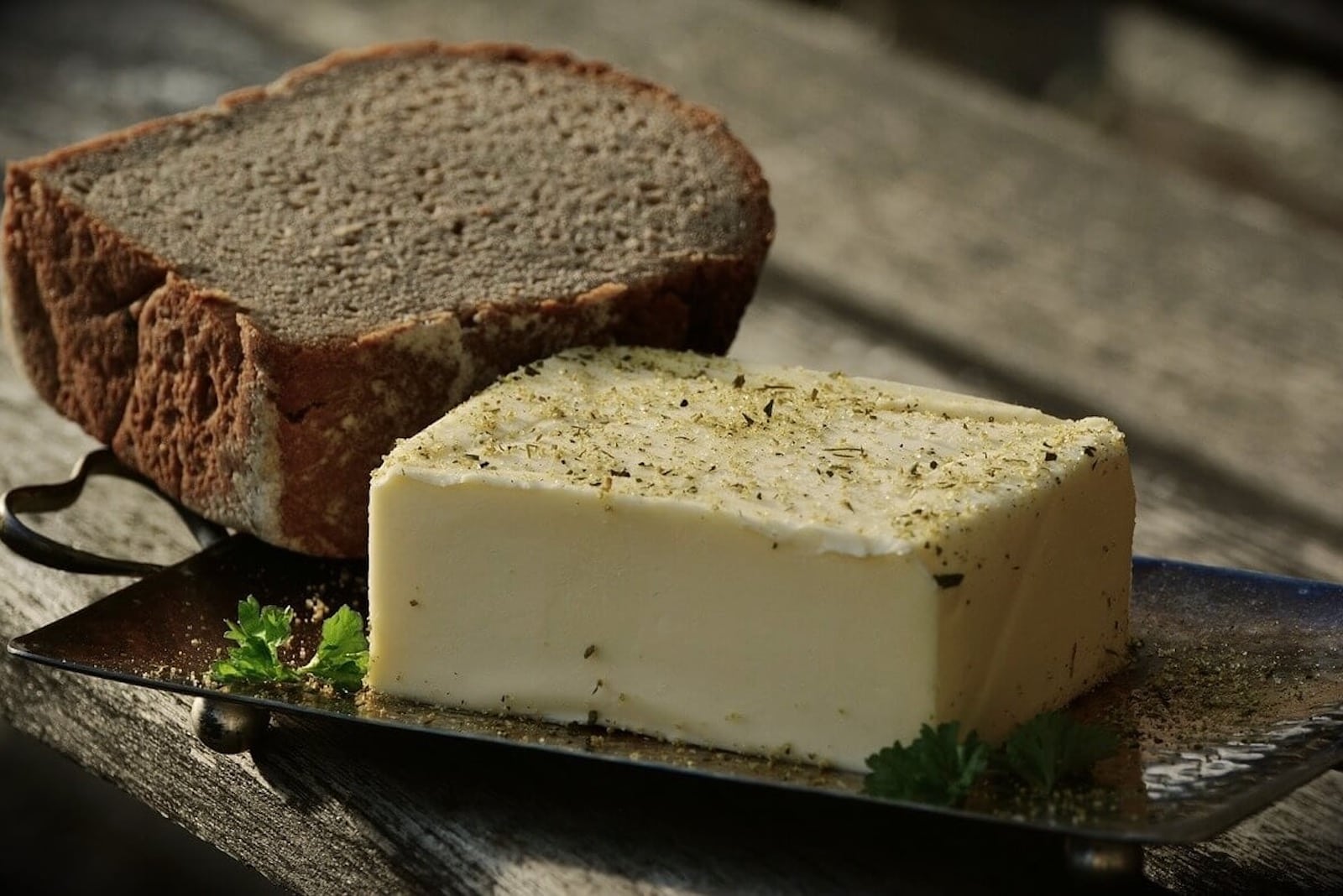
Making cannabutter at home is easier than you think — and it’s the foundation for virtually every cannabis recipe. Whether cookies, cakes, or savory dishes: Cannabis-infused butter (also called hash butter) is the most popular way to consume cannabis edibles. In this guide, you’ll learn step-by-step how to make cannabutter, what dosage is right, and what temperatures to watch for.
📑 Inhaltsverzeichnis
- What is Cannabutter and Why Do You Need It?
- Cannabutter Dosage: How Much Cannabis Do You Need?
- The Three Most Important Temperatures for Perfect Cannabutter
- Cannabutter Recipe: Quick Method with Decarboxylated Cannabis
- Cannabutter from Raw Cannabis: The Classic Method
- Pro Tip: Cannabutter as Ghee (Clarified Butter)
- Frequently Asked Questions About Making Cannabutter
What is Cannabutter and Why Do You Need It?
Many people believe cannabis must always be dissolved in butter to be effective. This is practical, but not strictly necessary. The human body absorbs plant compounds reliably as long as they are properly ground. However, fat has clear advantages: It distributes the active ingredient evenly throughout the dish — important when, say, a batch of cookies should each contain the same amount of THC. Additionally, cannabinoids keep very well in fat, and when frozen, almost indefinitely.

Not only butter works as a base, but all lipophilic carrier substances: coconut oil, olive oil, any vegetable oil, or animal fat. The crucial point is that THC and CBD must be decarboxylated (heat-treated) before consumption.
Cannabutter Dosage: How Much Cannabis Do You Need?
With fully decarboxylated cannabis containing 8–12% THC, even small amounts are sufficient:
- 0.2 grams — noticeable, light effect (beginners)
- 0.5 grams — strong dose (experienced users)
- 1.0 gram — only for very advanced consumers
- 2 grams cannabutter — very strong dose, use with caution
Many cannabutter recipes and experience reports assume much higher doses. This is often because the active ingredient wasn’t fully decarboxylated — or was simply burned during baking.

The Three Most Important Temperatures for Perfect Cannabutter
When working with cannabis and butter, three temperature points are crucial:
- 120°C (248°F) — proteins in butter burn, making it inedible
- 120–140°C (248–284°F) — optimal range for decarboxylation (THC and CBD are activated)
- Above 160°C (320°F) — THC begins to vaporize and is lost
The golden rule: Decarboxylate cannabis at 140°C (284°F), then dissolve in butter (under 120°C/248°F), and don’t bake goods hotter than 160°C (320°F).
Was dich auch interessieren könnte...
Cannabutter Recipe: Quick Method with Decarboxylated Cannabis
If you already have decarboxylated cannabis, making cannabutter is incredibly simple: The activated material only needs to steep in warm butter for fifteen minutes. The finer it’s ground, the faster the active ingredient dissolves.
With decarboxylated hash oil, it’s enough to swirl it in warm fat until the resin dissolves. Ground herbs that you don’t want to eat should steep in the cannabutter for half an hour — ideally in a bowl over boiling water. Tip: Pack the herbs in a tea filter to separate them more easily afterward.
Cannabutter from Raw Cannabis: The Classic Method
If the cannabis wasn’t decarboxylated beforehand, the cannabis butter must steep in a water bath much longer — at least one hour. The traditional „green butter“ even cooks for four hours. This method uses trim and the long cooking time ensures the active ingredient is decarboxylated and completely extracted even from stems and leaves.
For this, plant material and butter are gently simmered in a pot full of water for four hours. Then strain everything through a sieve to remove the plant matter. Once cooled, solid cannabutter floats on the water surface and can be skimmed off. Typically, 50 grams or more of plant material and several sticks of butter are used.
Pro Tip: Cannabutter as Ghee (Clarified Butter)
Those who want to simultaneously dissolve and decarboxylate THC can clarify the butter into heat-resistant ghee. This involves carefully heating butter and skimming off the rising foam until no more bubbles appear. The result is a wonderfully nutty, aromatic product — known among Indians and Goa travelers as „Bang Ghee.“
In clarified butter, cannabis can be directly decarboxylated and dissolved at 140°C (284°F) within fifteen minutes. Modern cannabis cooks actually use a deep fryer for this — the thermostat maintains the right temperature consistently.
Frequently Asked Questions About Making Cannabutter
How Much Cannabis Do You Need for Cannabutter?
For a single serving, 0.2–0.5g of decarboxylated cannabis is sufficient. For one stick of butter (250g), typically 3–7g is used, depending on desired strength. With 2 grams per serving, you’ll get a very strong effect.
How Long Does Cannabutter Last?
In the refrigerator, cannabutter keeps for about 2–3 weeks. Frozen, it remains potent for several months, as cannabinoids are very stable in fat. Use an airtight container.
Can You Use Coconut Oil Instead of Butter?
Yes — coconut oil works particularly well since it has a high proportion of saturated fatty acids that bind cannabinoids efficiently. The preparation works identically to butter. Other fats and oils are also suitable as a base.