

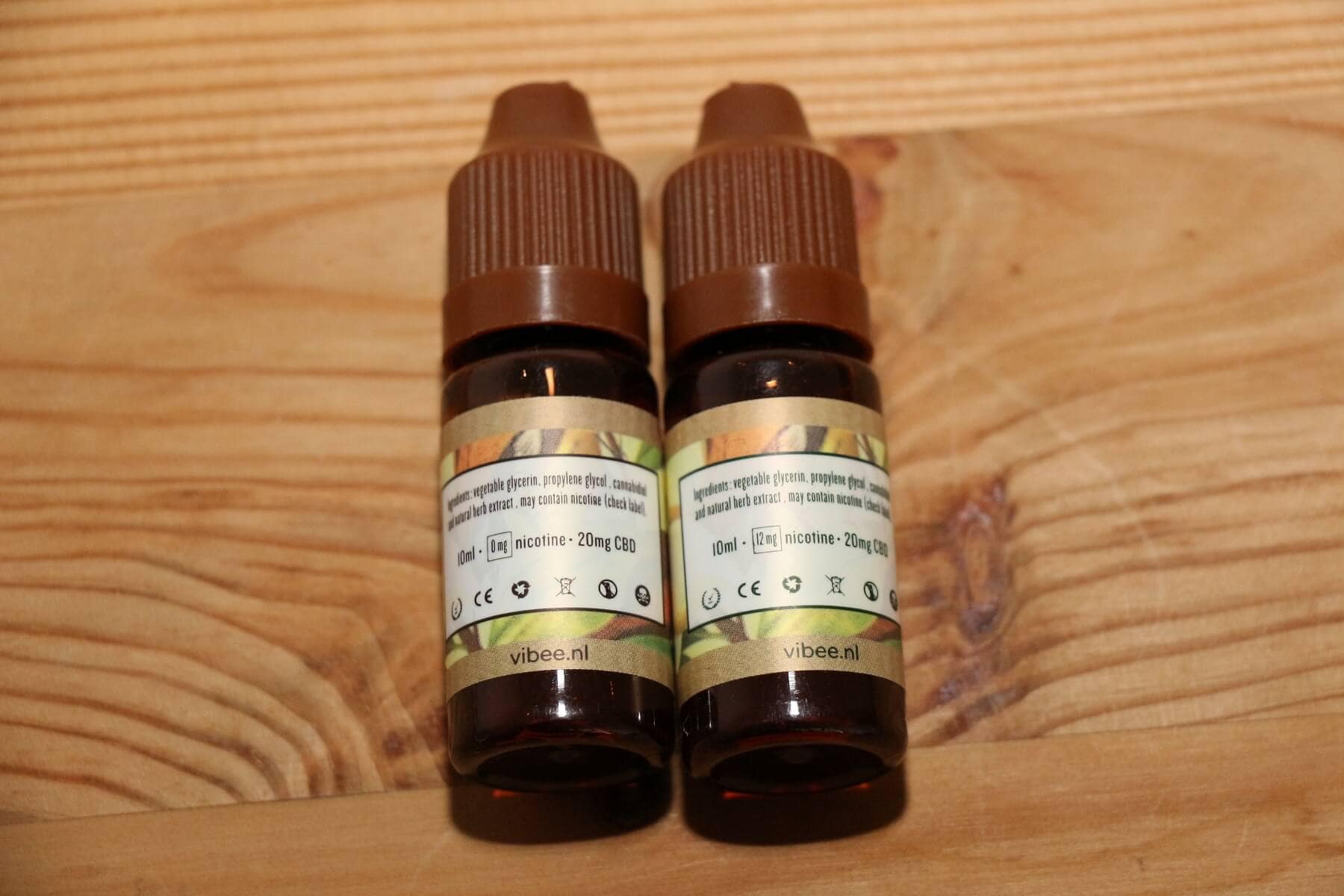
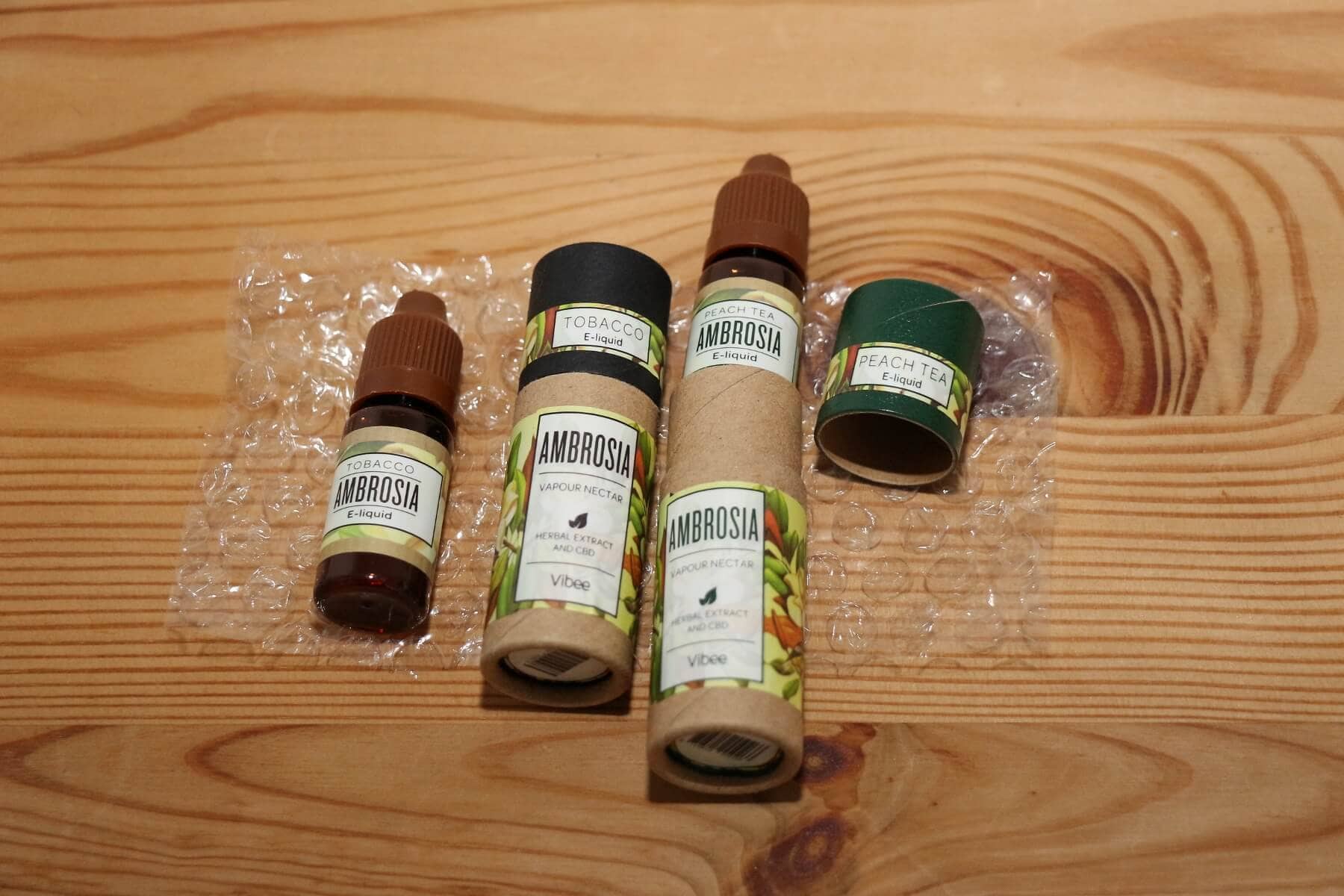
For an extensive product test, the retail and wholesale company Jelly Joker provided us with two CBD liquids, each containing 10 ml, one with and one without nicotine. „Tobacco“ with 20 mg CBD and „Peach Tea“ with 20 mg CBD plus 12 mg nicotine. CBD is a non-intoxicating compound with high medical potential. Those who benefit medically from CBD can now use it as CBD liquid, though those using nicotine liquids should not inhale too much at once.
📑 Inhaltsverzeichnis
According to the packaging, this is „Pharmagrade“ quality, though it’s a freely available consumer product. When sold for medical use, it becomes a medical product and can only be distributed under this declaration by specialized dealers with pharmaceutical licenses, which Jelly Joker possesses. It can produce medical effects, and many sources explain that CBD can be very helpful for addiction recovery from nicotine or opiates, and possibly other substances.

Gonzo wrote the following test report, with one of his acquaintances diagnosed with MS testing the CBD liquid. To preview the product test conclusion: those wanting to treat themselves with CBD will find other options, but anyone who enjoys e-cigarette vaping certainly won’t go wrong with a tasty CBD liquid as a supplement. As explained in the test: those with health issues should urgently test whether CBD might provide significant relief. It’s legal, non-addictive, and non-intoxicating.
CBD Liquid: Ambrosia Vapour Nectar – Herbal Extract and CBD
Much has been heard lately about the medical benefits of using CBD (Cannabidiol) for a variety of medical conditions.
CBD research is still largely in its infancy, yet certain, albeit controversial, trends seem to be emerging.
Various clinical studies on pain relief seem to suggest that a 1:1 mixture of THC and CBD has the best analgesic effects. For other medical conditions, different ratios may apply, which can also vary due to the patient’s individual disposition.

Since CBD is relatively low in most cannabis strains compared to psychoactive THC, many renowned seed banks are currently working to breed medical hemp varieties with significantly higher CBD content. While previous cannabis strains had THC levels between 12 and 20% and CBD levels between 0.6 and 2%, current CBD cultivars already achieve a THC-CBD ratio of nearly 1:1 with respective compound levels of approximately 6%.
This means potentially more medically effective strains are already available to medical cannabis patients.
The CBD hype has created corresponding market demand. This has led not only to the mentioned new cultivars, but also to the development of (nearly) pure CBD substances for oral application or increasingly to CBD liquids intended for vaporization with e-cigarettes.
These CBD extracts are legally available in many countries, provided the residual THC content doesn’t exceed 0.2% in the EU or up to 1% in Switzerland.
Jelly Joker kindly provided us with Ambrosia brand CBD liquids for today’s test. The liquids come in „Tobacco“ and „Peach Tea“ flavors, each available with and without nicotine. The bottle contains 10 ml of liquid with 20 mg CBD added.
Based on values from commercial cannabis strains, this amount corresponds roughly to the CBD content of one gram of marijuana, thus the daily dose of a moderate medical cannabis consumer. 10 ml of liquid equals approximately three times the capacity of a large e-cigarette vaporizer. One can vape throughout the day until the bottle is empty and the compound absorbed.
Our test subject was Anke, who was diagnosed with Multiple Sclerosis (MS) five years ago. Initially, she received high doses of Novalgin and Tramal, a strong opioid analgesic, for her severe pain over two years. Since Anke could no longer tolerate the heavily sedating effects and associated concentration weakness bordering on confusion, she turned to cannabis on a friend’s recommendation.
Normally, Anke smokes one to two grams of good quality cannabis throughout the afternoon and evening, without particularly high CBD content. This helps her significantly reduce pain and relax mind and body. The psychoactive effects of THC sometimes hinder her, but this is nothing compared to the side effects of the medications she previously consumed daily. Anke is more mobile, can participate in life again, and is more socially compatible under cannabis.
These positive effects of cannabis in MS patients correspond to recent scientific research.
Analysis of six studies on „Cannabis and Multiple Sclerosis“ consistently showed a trend toward reduced spasticity and improved mobility in MS patients using cannabis products as therapeutics (BMC Neurology 2009, December 4, 2009)
Was dich auch interessieren könnte...
Anke tested the liquid during increasing pain in three ways
1) Pure liquid without accompanying cannabis consumption
2) Pure liquid, followed by cannabis consumption after a 10-minute break
3) Cannabis consumption with immediately following liquid vaporization
She took 30-40 puffs from the e-cigarette over 10-15 minutes each time. This corresponds to about 2 ml, equivalent to 4 mg CBD, the compound content of 0.2 grams of conventional marijuana.
Anke reached the following conclusion
Pure liquid produced barely noticeable pain-relieving, slightly relaxing effects. She considered that the little she thought she felt might have been due to a placebo effect.
The result with subsequent cannabis consumption was similar. Here she felt the pain-relieving effect of cannabis was slightly enhanced.
She felt the CBD effects most noticeably when vaping immediately after cannabis consumption. This was even more pronounced the more liquid she vaporized. By the end of the test phase, she had vaporized about 5 ml over one hour. The pain-relieving effect was significantly enhanced, and the effects of THC were prolonged. These are individual sensations that could vary significantly in other patients, especially with different conditions.
The modest effects likely relate to two factors. First, the CBD content distributed across the liquid volume is significantly too low. Doubling or tripling the compound content would be advisable. Second, utilizing this low compound content with a vaporizer producing normal vapor and the associated time required for consumption is challenging.
Those wanting to consume liquids should look for particularly high-vapor-producing vaporizers, „liquid devourers“ and suitable battery carriers. Only this way is it possible to vaporize larger amounts of liquid in shorter time periods and correspondingly absorb more CBD faster.
Ultimately, it’s recommended for every medical cannabis patient to at least experiment with CBD.
Perhaps it works pure for you? Maybe you need to consume less cannabis to achieve the desired medical effect? CBD is also interesting from legal considerations. Since it’s legal, pure consumption cannot lead to legal complications. Even driving licenses shouldn’t be at risk with CBD-only consumption. CBD isn’t tested for. The metabolite THC-COOH detected in many tests only forms from THC consumption. Even reaching the 0.2% THC limit in CBD extracts poses no danger.
This would correspond to 0.0004 grams of THC in the entire liquid bottle compared to 0.1-0.2 grams per gram of cannabis. An amount that would hardly reach 1.0 nanogram of active THC. The associated THC-COOH accumulations in the body shouldn’t be sufficient to classify the consumer as a regular cannabis user and thus lose their license.
These are all factors that constantly hang over medical cannabis consumers like the sword of Damocles regarding license revocation. For many, this is an important reason to at least reduce cannabis consumption. Whether all this is worth a price of €29 per bottle is something each person must decide for themselves.