
📑 Inhaltsverzeichnis
People with skin conditions often benefit from hemp extract products. This is due to various cannabinoids that work with the endocannabinoid system to help alleviate patient suffering. Polyunsaturated fatty acids also play a significant role.
Cannabis – A Blessing for the Skin
„This is certainly a less serious case because the defendant consumed marijuana for her psoriasis, which makes the condition more bearable,“ the „Aachener Zeitung“ quoted a judge in January 2007 who was evaluating a somewhat unusual case. It involved a then 43-year-old woman who was stopped by police at the Marienberg border crossing, coming from the Netherlands with 148.5 grams of marijuana in her luggage. She immediately explained to officers that she had purchased the cannabis for personal use to alleviate her condition’s symptoms. Due to financial constraints, she had obtained her medication of choice from the Netherlands, as it was simply too expensive in her home region.

Charges were still filed, with prosecutors accusing her of cannabis trafficking. However, the defendant was able to refute this charge, leading the judge to show leniency and issue a mild sentence of eight months probation. Only the importation of marijuana was penalized, and the drug trafficking charge was dismissed. The defendant justified her actions as follows: „I’ve suffered from psoriasis since I was 18.“ In 1997, she had been at a party where she smoked a joint, after which she noticed a significant improvement in her condition. The marijuana had helped her more than all other medications she had tried. Since 2000, her disease had not returned.
This woman is not alone in her experience. Skin diseases are widespread. Northwestern University in Illinois, for example, reported in June 2016 that three percent of the world’s population suffers from psoriasis. Many patients with chronic skin conditions report improvement in their symptoms after taking preparations based on cannabis plant compounds. Symptoms of eczema (dermatitis), psoriasis, and even acne can be alleviated. This is due to the endocannabinoid system becoming imbalanced during inflammation. Taking cannabinoids can help the system regulate itself again. Additionally, the polyunsaturated fatty acids extracted from the plant provide significant benefits.
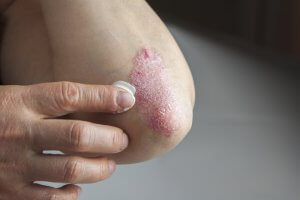
Causes, Symptoms and Treatment of Skin Diseases
Skin diseases arise from inflammatory reactions in the body, whether from external or genetic influences. Both factors together can also trigger and worsen a condition. External influences include lifestyle habits and circumstances such as poor diet, obesity, stress, smoking, and alcohol consumption. Climate or allergies, such as dust mite allergies, can also lead to chronic skin disease outbreaks.

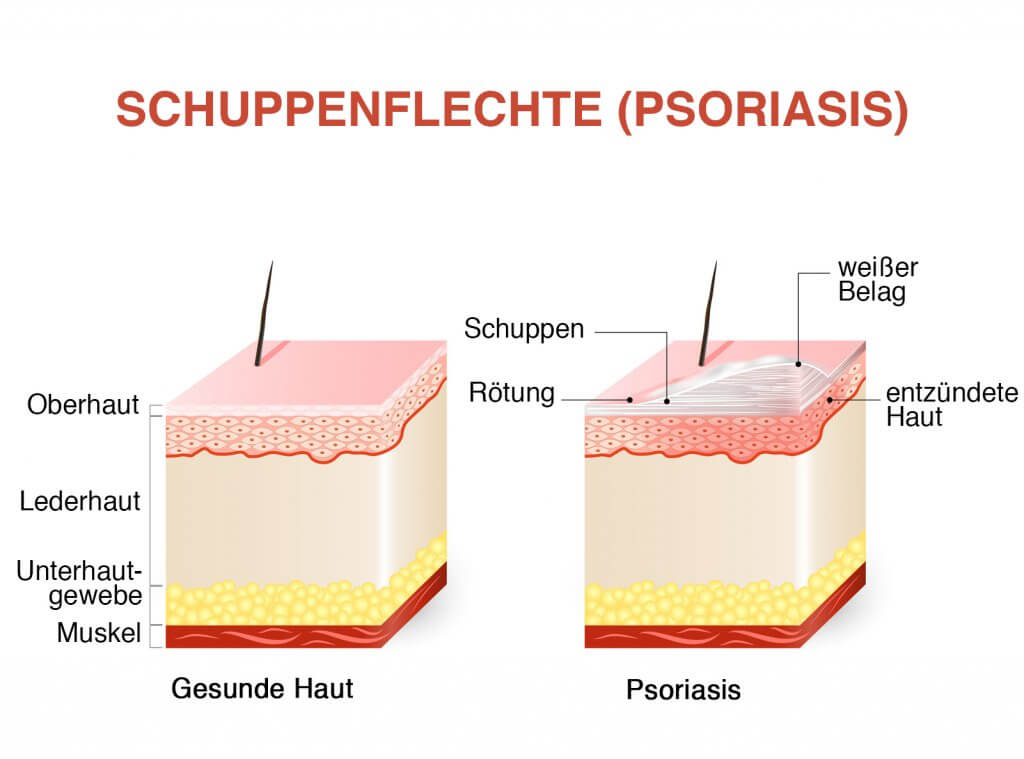
When skin changes occur, such as through eczema or psoriasis, this is due to an incorrect immune system response. It’s important to note that eczema results from allergic reactions to external influences. Psoriasis, however, is an autoimmune disease caused by immune system malfunction. In psoriasis, accelerated cell renewal occurs in the epidermis, the outer skin layer. This normally takes 28 days in healthy skin, but only eight days in psoriasis patients, resulting in excess cells and scale formation. The exact causes and reasons for this are not yet fully understood. However, it has been established that psoriasis is often genetically determined.
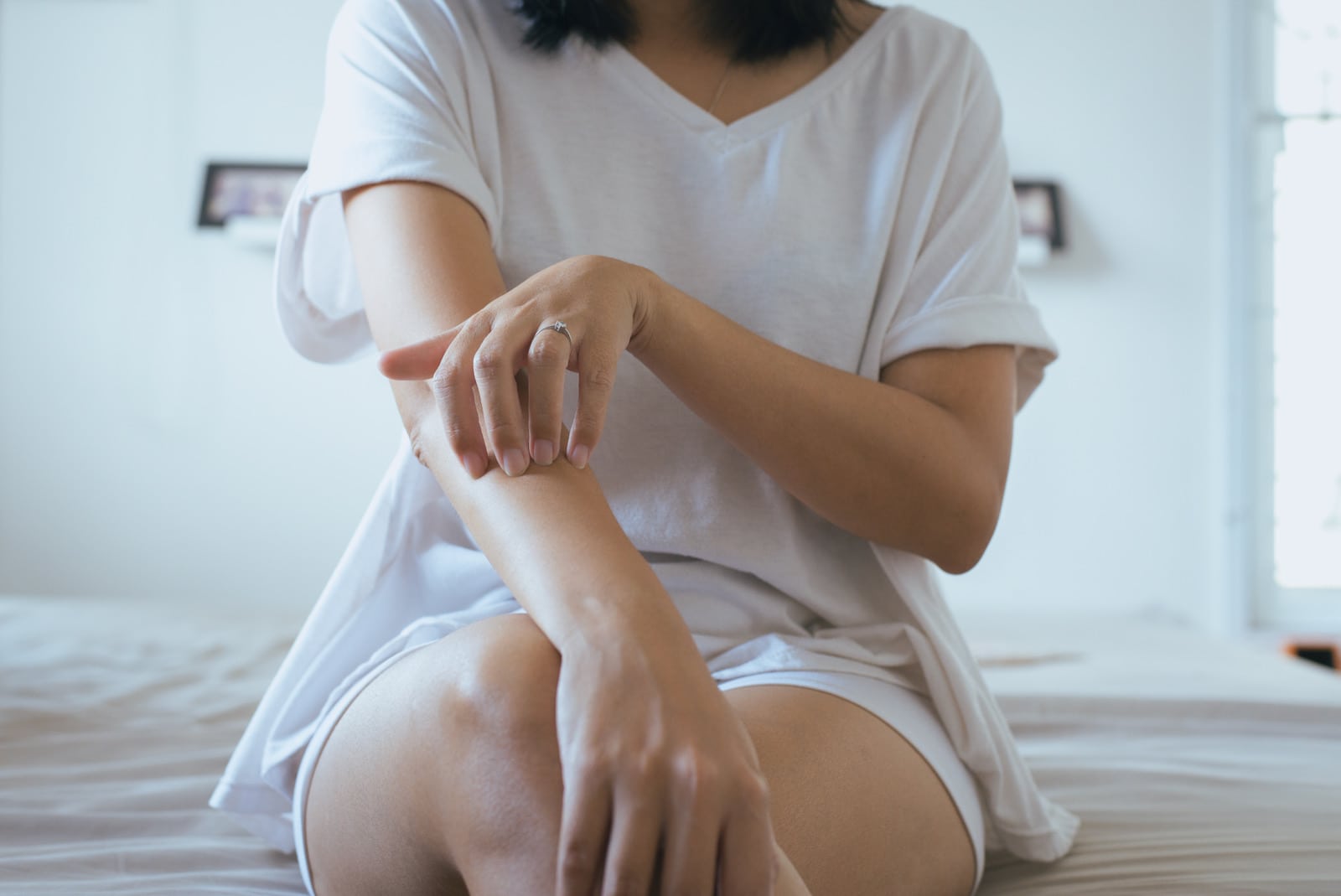
Patients consequently experience symptoms such as dry, brittle, and reddened skin, as well as rashes with swelling, blisters, and wounds. This is usually accompanied by severe skin itching, often at joints, hands, face, and scalp, but also at other body locations.
In psoriasis, the disease can also affect joints, leading to psoriatic arthritis. The consequences include joint pain and deformity. People with dermatitis can also develop painful and inflamed joints. Skin diseases can also lead to psychological problems, including anxiety and depression.
Symptoms are typically treated with creams or ointments containing cortisone and/or vitamin D3 derivatives. In severe cases, UV-A light therapy is also employed. So-called biologics, also known as biotherapeutics or immunologics, are frequently used. The latter medication can cause more harm than help to patients. This can particularly lead to serious infections, as biologics suppress the body’s immune system.
Furthermore, the side effects of cortisone preparations used in milder cases are well-known. These can include blood pressure increases, increased susceptibility to infections, or interference with hormonal regulation.

Positive Results from Science
As alternatives to conventional medications, various oils and moisturizing substances have become established. These include oils or salves made from hemp. The plant’s compounds can treat a whole range of symptoms.
One reason for this is the endocannabinoid system. Scientists proved in 2009 that skin also possesses one and is involved in processes affecting cell multiplication, differentiation, and death. This circumstance suggests that a disrupted endocannabinoid system could be responsible for chronic skin disease.
A 2013 follow-up study confirmed this. Researchers found that the body’s own cannabinoid anandamide plays a role in genes for skin differentiation, while cannabidiol (CBD) and cannabigerol (CBG) regulate the spread of cell differentiation. This simultaneously supported a 2007 study stating that cannabinoids slow the spread of living skin cells, counteracting dead cell buildup. This suggests that cannabis-based preparations can help combat skin disease symptoms.
Patient itching is particularly alleviated. This is supported by a study recently published in the „Journal of the American Academy of Dermatology“ by American scientists who compared various research results on this topic. They subsequently concluded that many skin diseases should be treatable with hemp plant substances.
Studies showed, for example, that pruritus – a skin condition also associated with severe itching – completely disappeared in patients after taking cannabis preparations twice daily for three weeks. Other inflammatory skin diseases also improved. However, the evaluated studies were mostly laboratory tests on animals, with clinical human studies lacking, said study leader Dr. Robert Dellavalle from the University of Colorado. Nevertheless, he considers cannabis treatment an option when other preparations don’t work.
Why Cannabis for Psoriasis?
As alternatives to typically prescribed medications, beeswax, almond oil, or olive oil are often applied to skin for symptom relief or taken as dietary supplements through food. Generally, these provide skin moisture. But that’s not the only advantage, as the particularly high content of polyunsaturated fatty acids in these substances can not only provide moisture but also inhibit itching and inflammation. They’re considered more effective than preparations with low polyunsaturated fatty acid content. It’s even suspected that a deficiency of these fatty acids could lay the foundation for the disease.
It’s relatively well-established that skin diseases respond well to polyunsaturated fatty acid treatment. This is particularly true for hemp seed oil. Finnish researchers reached this conclusion in 2005 when they compared hemp seed oil with olive oil and found the former significantly more effective for treating eczema.


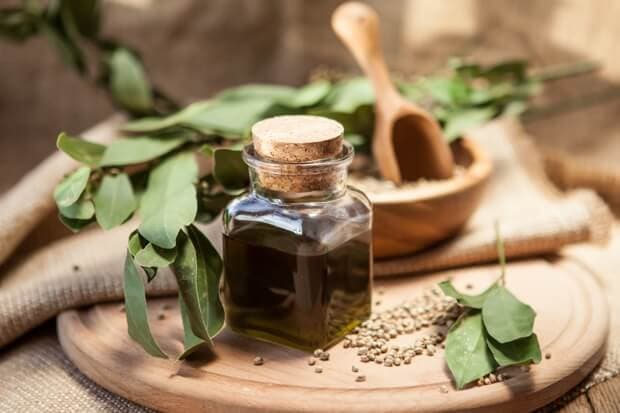
A cannabis-based oil can therefore help better than other oils. This is due to hemp seed oil’s composition. Hemp seeds consist of 90 percent polyunsaturated fatty acids. The ratio of omega-6 to omega-3 fatty acids is 3:1, which scientists consider ideal. Furthermore, hemp also contains gamma-linolenic acid. A deficiency of this is bad for skin and can contribute to chronic disease.
But this isn’t hemp’s only advantage over other medications or alternative oils and salves. The polyunsaturated fatty acids combined with cannabinoids ensure the plant doubly benefits skin. Cannabinoids like CBD and THC, which bind to receptors in the endocannabinoid system, not only participate in cellular processes but also have well-known anti-inflammatory effects and bring overactive immune systems under control. Additionally, they have antifungal and antibiotic effects, which can help combat wounds and scales.
Help in Various Ways
There are different ways to consume the plant’s compounds.
- Hemp seed oil can be used in food preparation, for example mixed into salads. Recipes and hemp seed oil suppliers can easily be found online.
- Salves, creams, lotions, and balms are applied locally to affected skin areas and can also help with joint pain. They’re easy to make yourself. Instructions can be found online, and finished products from various manufacturers are also available.
- Another option is smoking cannabis flowers, though experts advise against this as it risks absorbing toxins that could promote skin disease. If patients still prefer inhalation, vaporizers are recommended.
Benefits naturally depend on both product quality and the severity of the patient’s condition. While the entire disease disappears in some, it only inhibits itching in others. Proper dosing and especially sufficient CBD concentration, which is completely free of adverse effects, should be considered. Thus, treating chronic inflammatory skin diseases with hemp can be a blessing for sufferers.