📑 Inhaltsverzeichnis
Many shrubs and trees benefit significantly from pruning. A cherry tree should have its growing tip removed after several years of development, as it will then produce more fruit. However, you should never do this with a pear tree. Beech trees grow naturally, but when planted densely and regularly pruned, they form a hedge.
Is It Actually Necessary to Prune Hemp Plants?
Pruning hemp plants helps them „function“ as desired, though typically perennial plants are pruned, whereas cannabis is an annual. Should you prune hemp plants? This always depends entirely on the situation. If the plant isn’t growing as desired and pruning would make it do so, then it should be pruned. In many cases, this isn’t necessary.

There are growers (perhaps not many today) who claim that once the plant has formed flowers, you must remove the tip. This releases hormones that slow further growth, and if you cut this tip, the plant will continue growing considerably longer.
Was dich auch interessieren könnte...
Once the marijuana plant begins flowering, it typically grows at a rapid pace. When flower buds form after three weeks, they actually release hormones that stop the plant’s height growth. However, it still produces many more leaves and the flowers get thicker, causing the plants to grow in width. If the top flower is removed, there are still plenty of flowers on the plant that will continue to slow height growth.
Other theories suggest you can turn the plant upside down for a few minutes multiple times during the phase with small flower buds, and this has positive effects. The hemp plant is still being researched, and certainly the purpose of some practices will be scientifically proven or disproven. However, the fact is that commercial growers don’t do any of this, which suggests that you can typically expect more work than benefit, it does nothing at all, or could even cause harm. If a practice has positive effects with one hemp plant, this can’t always be generalized to all other strains.

Pruning Hemp Plants: When and Why?
There’s hardly an experienced grower who hasn’t fundamentally misjudged their flowering room with new clones or seedlings at some point. One problem is that the area doesn’t green up because the plants don’t grow enough.
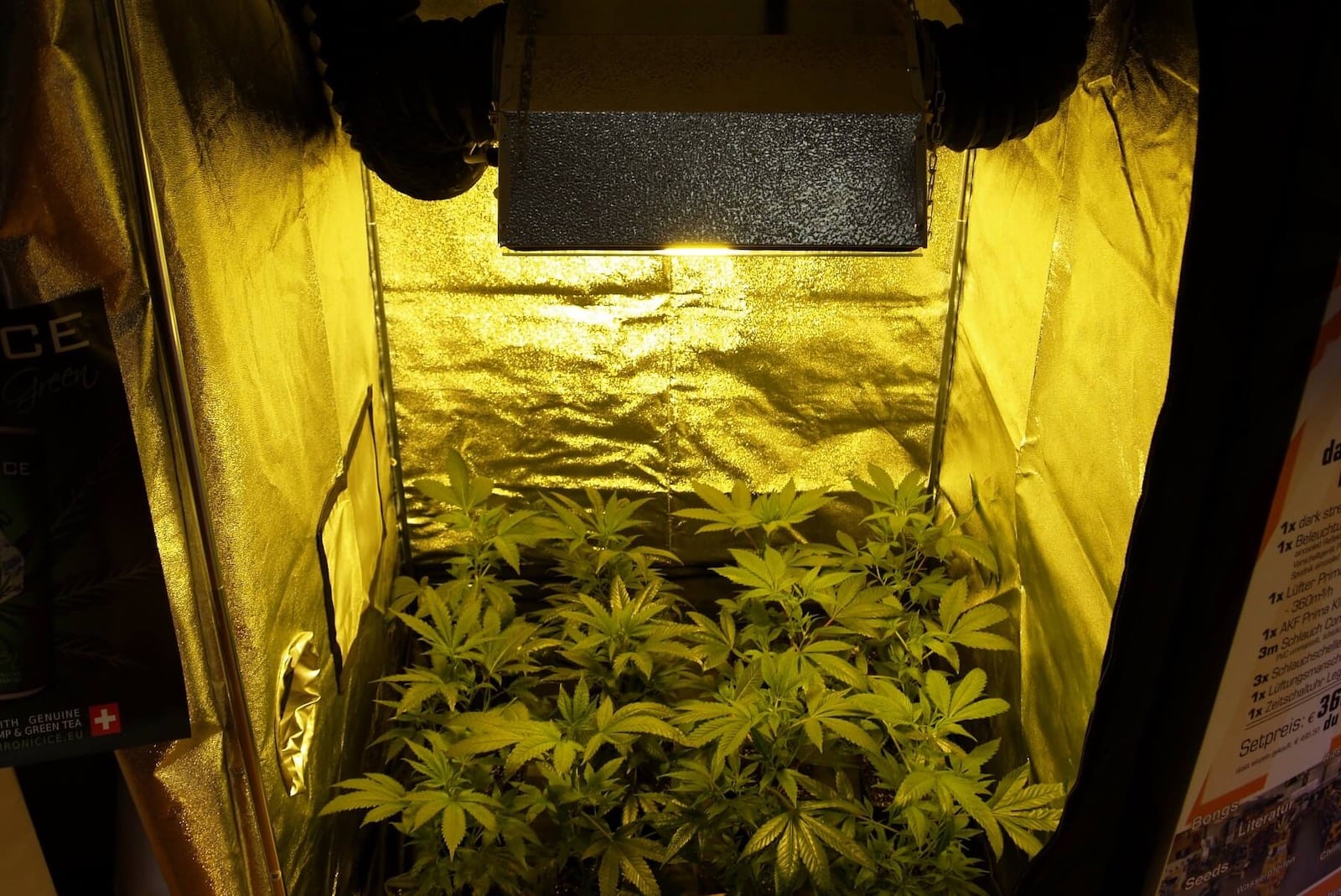
Anyone who can should push all plants together and turn off some light sources – saving electricity is cheaper and more ecological! The other problem is that plants become too tall or overgrow each other. If they get too tall, they should be pruned even during flowering if you can’t tie them down. If they’re overgrowing each other, many shoots should simply be cut away, preferably in time.
When everything overgrows, harvest work will take longer and yield less. This also applies to outdoor growers. If hemp grows taller than corn, the risk of total loss is naturally much higher. Pruning hemp plants this way is an act of desperation that you’d rather avoid. But those who prune hemp in these situations can save themselves quite a bit.
Another reason to prune the hemp plant would be to remove not the shoots, but leaves. Those working with a Sea of Green often have so little light in the lower leaf levels that the leaves become pale and even wilt. This could encourage mold and pest infestation. Removing these leaves that have become unimportant anyway is never wrong. Many growers also remove these lower leaves otherwise, explaining that they rob the plants of energy. In the last week or two of flowering, all other large leaves can also be removed so the flowers with their flower leaves have all the light to themselves.
However, you can also simply leave them on the plants. You can do many things, but you don’t have to – that’s marijuana growing!
Pruning Hemp Plants in Pre-Flowering
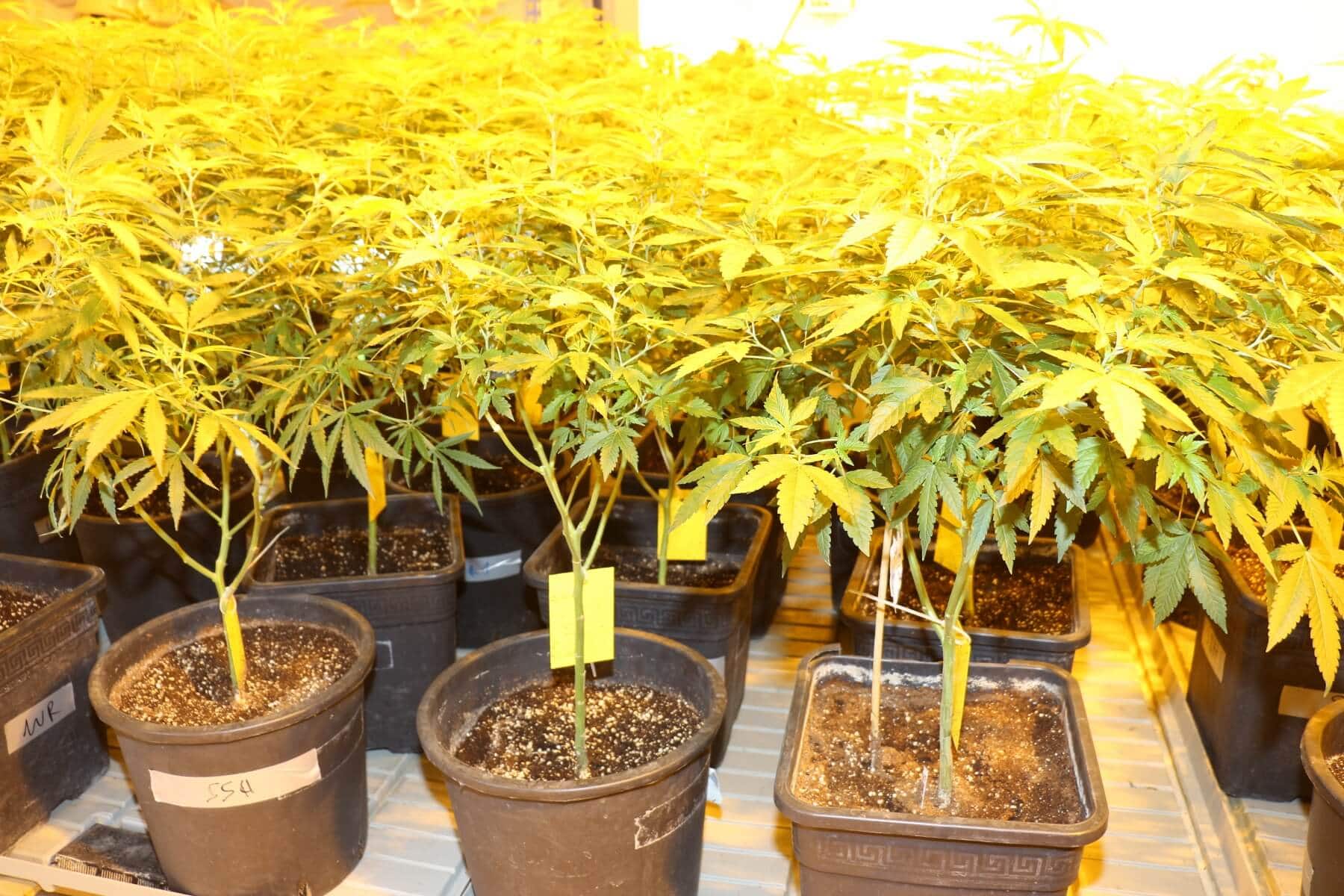
Many growers know their hemp plants very well because they always use the same homogeneous seeds or work with clones. If an otherwise good plant simply grows like a corn plant, 16 to 25 of them would need to be placed on one square meter to optimally green it. However, if the young plant has its tip taken twice, allowing lower shoots to develop, the plant typically grows with 3 to 5 main shoots. (When pruning hemp plants, the so-called internodes must remain as side shoot starts.)
Even if such a marijuana plant would grow completely without side shoots, it will more than just green the square meter this way with nine small bushes. (Assumed growth heights up to 100 cm.) A truly bushy-growing genetics would fill the square meter with only 4 plants without pruning. However, there are specimens here that should be pruned to thin them out a bit. The right number of strong shoots will bring the best results in quality and quantity.
Pruning Mother Plants
There are various ways to prune mother plants. Many think you let them grow 1.5 to 2 meters high and then continuously take new cuttings for years. That would work, but it can also be done differently – it always depends on the strain what exactly works: The remaining seedlings or cuttings grow to 30 to 40 cm high, then the growing tip is taken. But care is taken that the plant can shoot out again, so the shoots are cut above the internodes. These regrowing shoots are taken again 14 to 21 days later, so shoots can grow again. Far more mother plants are needed, but they remain smaller and can be cultivated even with fluorescent tubes.
It’s basically always one level that’s cut back down, but the shoots aren’t cut from the entire height of the plant. This is also because the plant only grows upward and nothing new will shoot out at the bottom. Professional cutting gardeners combine both techniques. They raise the mother plants so they can be harvested continuously in their development from 50 cm to 200 cm height, and not just on the upper level.
Those who only need cuttings every 2 months should still thin the mother plants every few weeks. In any case: With each new branching in the framework, the growth sap is hindered, and even with sufficient light, even the best grower won’t be able to use their mother plant economically forever. With heavy branching, the plants not only get higher and higher, the cuttings also become weaker after a certain point.
Conclusion
Experience makes the difference. Even those who master the theory will never develop the skill of someone who can truly combine this knowledge with experience.