

📑 Inhaltsverzeichnis
- Hazelnut Bush (Corylus avellana)
- Papaya (Carica papaya)
- Eucalyptus (Eucalyptus spp.)
- Mint (Mentha spp.)
- American Red Clover (Trifolium pratense var. expansum)
- Damiana (Turnera diffusa)
- Skullcap (Scutellaria lateriflora)
- Elder (Sambucus spp.)
- Dandelion (Taraxacum spp.)
- Additional Nicotine-Free Smoking Herbs
- Conclusion
- Frequently Asked Questions About Tobacco Substitute Herbs
For some, nicotine-free herbal cigarettes and herbal tobaccos are effective tools that can ease the nicotine withdrawal process, while tobacco-free cannabis users primarily use them as tobacco substitutes for their grass or hash blends. For this purpose, nicotine-free smoking mixtures available online and in head shops are preferred, such as Knaster®, greengo®, or NTB herbal cigarettes®.
Many consumers also create their own personal smoking blend, which isn’t particularly difficult considering that many suitable plants either grow right outside their front door or, if not available locally, can be easily obtained through pharmacies or ethnobotanical specialty retailers.

Here’s a selection of various plant species that, when properly prepared, have long been used as smoking herbs of ethnobotanical relevance. The first four in this selection—hazelnut, papaya, eucalyptus, and mint—are contained in both NTB herbal cigarettes® and greengo® tobacco. The subsequently presented plant species—red clover, damiana, skullcap, elderberry, and dandelion—belong to the central ingredients of various Knaster® varieties.
Hazelnut Bush (Corylus avellana)
The hazelnut bush, also known as common hazel, is a shrub species from the botanical plant family of birches (Betulaceae) that thrives in native deciduous forests. The dried leaves serve as an active ingredient drug used both as a traditional remedy and as an ingredient in smoking mixtures. In herbal cigarettes, for example, their proportion amounts to 67%. Active compounds identified in the dried leaves include the antioxidant chlorogenic acid, essential oil, tannins, flavonoids, taraxasterol, and β-sitosterol. In folk medicine, hazelnut leaves are used to treat varicose veins, phlebitis, and hemorrhoids, among other conditions.

Papaya (Carica papaya)
The papaya or melon tree is primarily famous as a supplier of papaya fruits. Less known is the traditional use of the leaves, which, like the seeds, are used medicinally by numerous indigenous cultures. For example, to treat tissue damage, infections, cancer, or digestive disorders. Nigerian folk medicine also knows the therapeutic smoking of papaya leaves for asthma and other bronchial diseases. Additionally, smoked papaya leaves, whose active ingredients include the polyketide alkaloid carpaine, the mustard oil glycoside glucotropaeolin, the digestive enzyme papain, and saponins, are attributed with a slightly muscle-relaxing effect. When smoked or burned as incense, they emit a fruity aroma.

Eucalyptus (Eucalyptus spp.)
Species of the eucalyptus genus belong to the traditional healing trees of Australian Aborigines and are the favorite plants of koalas. Besides eucalyptus oil, it’s primarily the dried leaves of older trees that are of medicinal benefit, mainly in the context of asthma and cold diseases like sore throat, hoarseness, and cough. They have expectorant and mucus-dissolving effects. Eucalyptus leaves contain up to 3% essential oil with the main component 1,8-cineole (eucalyptol). Furthermore, tannins, flavonoids, triterpenes, and the phloroglucinol derivatives euglobals and eucalyptin have been identified.
Mint (Mentha spp.)
„As a teenager, I didn’t like tobacco. So I stuffed my pipe with a mixture of crumbled hashish and crushed peppermint leaves. That not only tasted good but also worked well in me“.
Christian Rätsch
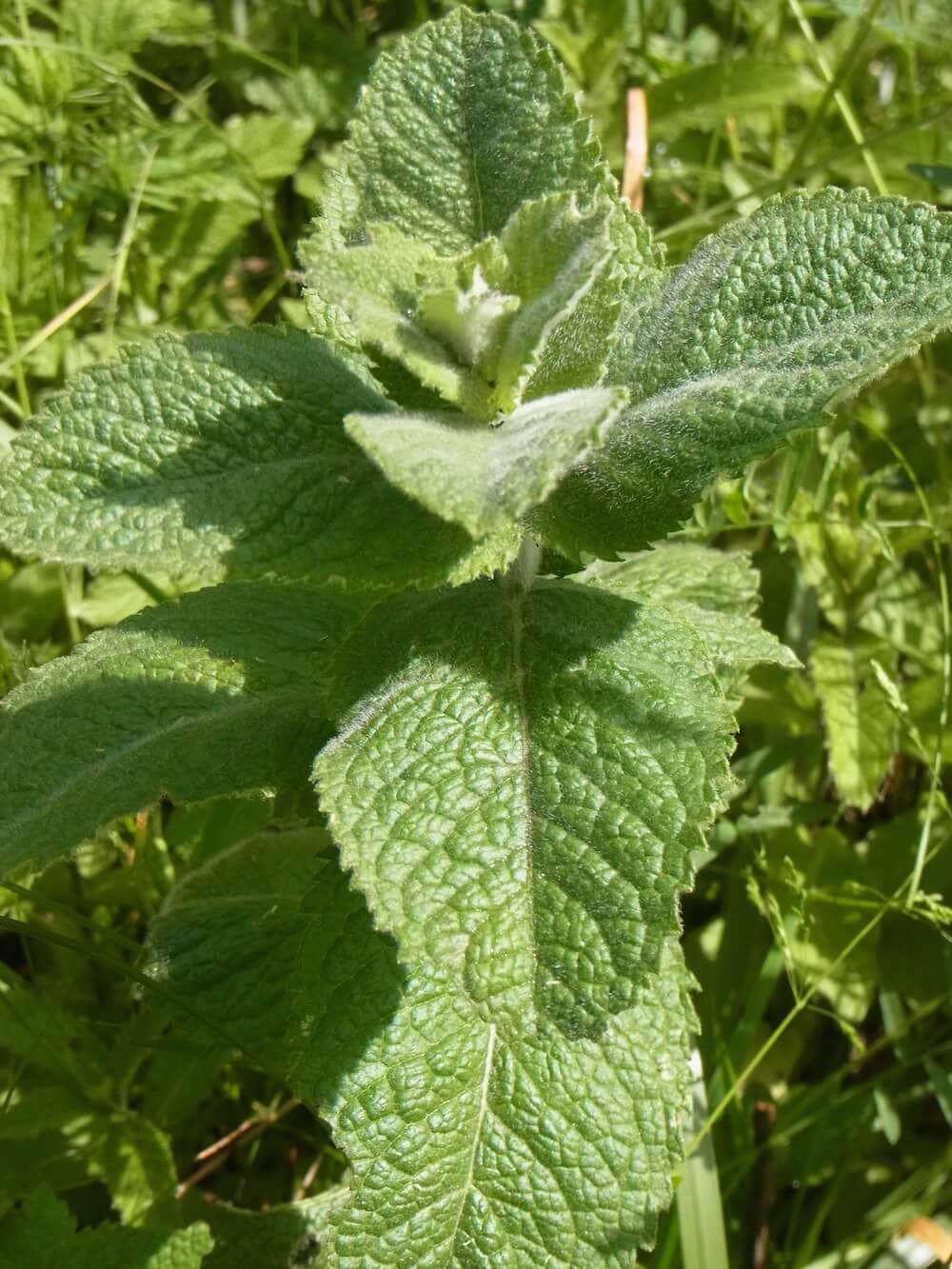
Mint species are rich in essential oil, which contains menthol, menthone, menthyl acetate, menthofuran, and a little jasmone. Lamiaceae tannins and flavonoids are additional active compounds in dried mint leaves, which are used in both folk and conventional medicine, for example, to treat spasmodic gastrointestinal complaints or cold diseases. That mint is also an ancient smoking herb contained in many traditional smoking mixtures is nothing new, just like cigarettes flavored with mint and menthol aromas.
American Red Clover (Trifolium pratense var. expansum)
American red clover is a close relative of the meadow clover (Trifolium pratense) found locally, which contains the following active compounds: essential oil with methyl salicylate (wintergreen oil), methyl anthranilate, and eugenol as main components, as well as thiocyanates, glycosides, and isoflavonoids.
In folk medicine, for conditions like whooping cough, ulcers, and skin diseases, as well as for smoking purposes, the dried flower heads are preferably used.
Damiana (Turnera diffusa)
Damiana is an ancient ritual plant that was probably used by the Mayans in prehistoric times. It served both as a mildly psychoactive ritual plant and as a valuable remedy. For example, Indigenous ethno-medicine knows damiana as an effective asthma remedy, as a stimulating and euphoric tonic, and as a libido-enhancing aphrodisiac. Tea infusions from the dried herb and leaves, which are also smoked or burned as incense in traditional contexts, also have diuretic (water-driving) effects. Active compounds identified in Turnera diffusa include bitter compounds and tannins, arbutin, resin, tannin, and an essential oil containing over twenty different substances, including 1,8-cineole (eucalyptol), α-pinene, β-pinene, and para-cymene. Many cannabis users who mix their grass with damiana leaves report very positively about the interaction. Damiana supports or potentiates the cannabis effect and doesn’t counteract it like tobacco does.
Skullcap (Scutellaria lateriflora)
This plant species from the mint family (Lamiaceae) has its botanical home in North America. The now globally cultivated skullcap, also called „scullcap“ or „mad dog weed“ in English, is still valued by various Indian tribes as important plant medicine. Primarily as a sedative with antispasmodic effects. In many cases, a mild „high“ is described after consumption, which is why the plant is also known as a popular marijuana substitute in some countries. Skullcap contains essential oil, resin, flavonoids (wogonin among others), tannins, and the glycoside scutellarin, which ultimately induces the psychoactive effect. The effective dose is one to two grams of dried and smoked leaf or herb material. However, the skullcap content in Knaster® tobaccos is calculated so low that it won’t produce any psychoactive effect.
Elder (Sambucus spp.)
The leaves of elder species are also known worldwide as tobacco substitutes. The most widespread elder species in Central Europe is the black elder (Sambucus nigra), which grows almost everywhere as a ruderal plant and is very easy to find. From an ethnobotanical perspective, all parts of the elder plant are of significant relevance. However, it’s primarily the active-rich flowers that, due to their diaphoretic effect, are still used today to treat feverish cold diseases. In smoking mixtures, however, only the leaves are used. These contain essential oil, flavonoids, tannins, and the hydrocyanic acid glycoside sambunigrin, among other compounds.
Dandelion (Taraxacum spp.)
The widely known dandelion, which probably needs no major introduction, is also found in some smoking mixtures. The bright yellow flower heads are used for this purpose, which contain bitter compounds (taraxinic acid glycoside among others), triterpenes (taraxasterol among others), carotenoids, flavonoids, minerals, and a high content of potassium salts. Folk medicinal application of dandelion occurs, for example, with inflammation, rheumatism, or digestive disorders.
Additional Nicotine-Free Smoking Herbs
There are numerous other plants that, while not used in the mentioned nicotine-free substitute products, have long been known in ethnobotany as traditional smoking herbs. They can also be wonderfully used for creating a homemade and cost-effective smoking mixture: mugwort (Artemisia vulgaris), betony (Betonica officinalis), birch leaves (Betula spp.), nettle leaves (Urtica spp.), flowers of the male hemp plant (Cannabis spp.), coltsfoot leaves (Tussilago farfara), hop flowers (Humulus lupulus), lady’s mantle herb (Alchemilla spp.), mouse-ear hawkweed (Hieracium pilosella), lavender flowers (Lavandula angustifolia), rose petals (Rosa spp.), marsh marigold (Caltha palustris), thyme herb (Thymus spp.), sweet woodruff herb (Galium odoratum), and grapevine leaves (Vitis vinifera).
Conclusion
If someone is thoroughly determined to quit nicotine consumption, they can achieve it without using any nicotine-free plant substitutes. Nevertheless, some ex-smokers describe that nicotine-free smoking mixtures initially helped them make certain situations more psychologically bearable. Especially those situations normally associated with ritualized cigarette consumption, for example, after a meal.
For other people who aren’t fully willing to give up smoking, nicotine-free smoking mixtures will very likely not represent an adequate cigarette substitute, either short-term or long-term. Not even when tobacco doesn’t taste good to them at all.
However, people who strictly reject tobacco consumption but don’t want to give up the cannabis high can achieve good results with the presented tobacco substitutes. And certain plants, like damiana, even form a synergistic psychoactive connection with cannabis in terms of effects. Some people also describe that mouse-ear hawkweed in combination with cannabis produces synergistic effects for them, although this doesn’t apply to every person.
When cannabis is smoked with a nicotine-free smoking mixture whose ingredients don’t have any notable psychoactivity themselves, it works comparatively as if one were smoking pure grass, according to experience reports.
However, anyone who believes that smoking nicotine-free herbs is healthy is wrong. Because inhaled smoke, regardless of origin, always contains combustion substances that are potentially harmful to health. For example, substances like benzene, phenols, and heavy metals that also arise in cigarette smoke and can lead to considerable damage, such as bronchitis, cardiovascular diseases, or even cancer.
Accordingly, smoking plant-based and nicotine-free tobacco substitutes also has some disadvantages, but also, and these are not to be despised, numerous advantages. For example, they contain neither addictive nicotine nor any questionable additives. Moreover, if obtained directly from Mother Nature, they are very inexpensive. Dark dealings of powerful industries are also not supported, and the homemade smoking mixture from nature knows no taxes either.
But only the homemade ones, because herbal cigarettes®, for example, are interestingly subject to tobacco tax, even though they contain no tobacco.
Frequently Asked Questions About Tobacco Substitute Herbs
Can you really smoke dandelion?
Yes — dried dandelion leaves can be used as a nicotine-free tobacco substitute. The smoke is mild and slightly sweet. Dandelion contains no psychoactive substances but works well as a base for herbal mixtures.
Which herbs work best as tobacco substitutes?
Popular nicotine-free alternatives are damiana (slightly euphoric), mullein (very mild smoke), raspberry leaves (neutral), mugwort (aromatic), and peppermint (fresh). Often several herbs are mixed to achieve the desired taste and smoking character.
Is smoking herbs healthier than tobacco?
Herbal mixtures contain no nicotine and are therefore not addictive. However, burning any plant material produces tar and carbon monoxide. A vaporizer is the healthier alternative to smoking — whether with tobacco or herbs.