
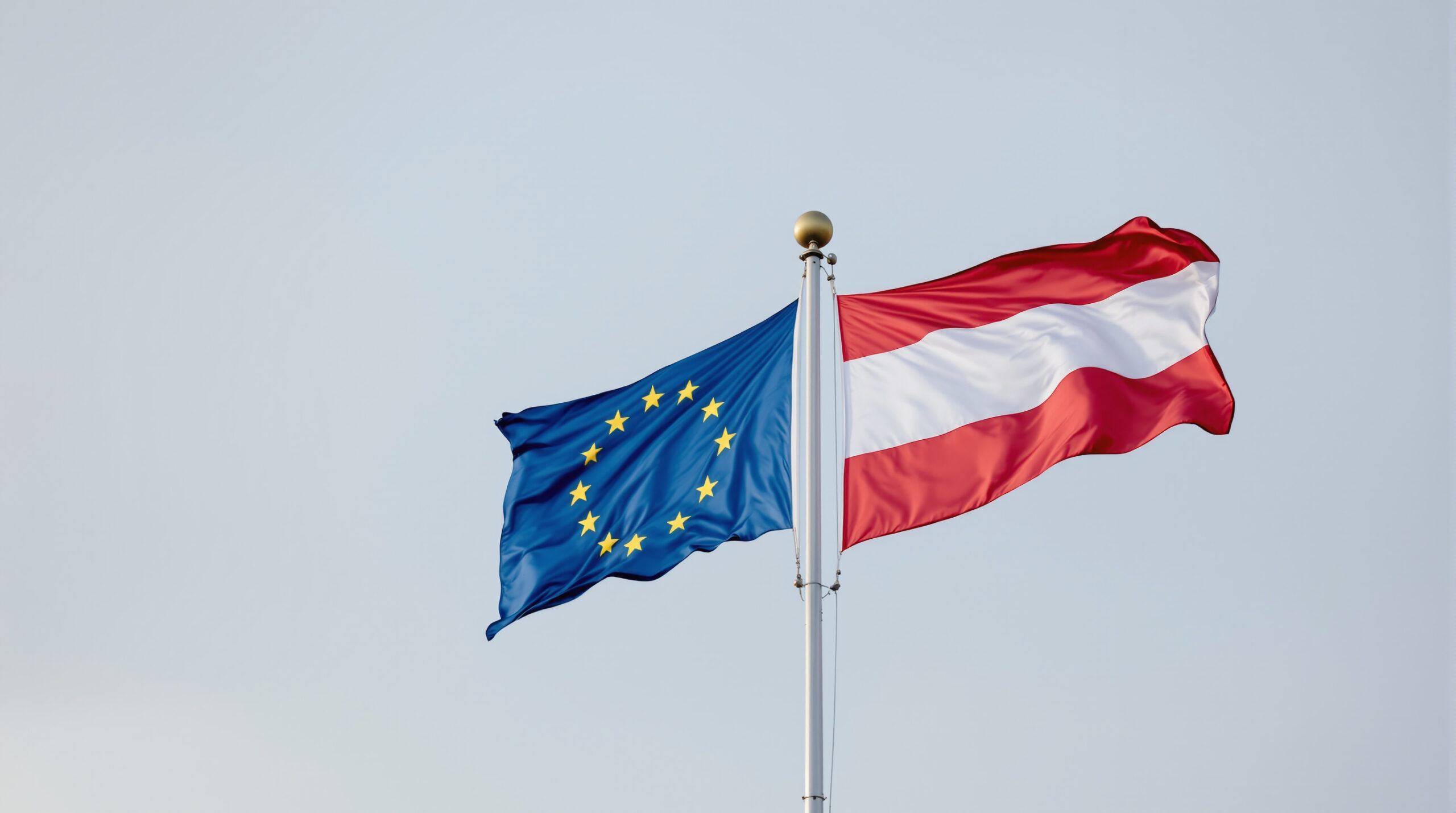
The Core Issue: Article 75 of the Schengen Implementing Convention
The dispute centers on a rule that appears straightforward on paper. Article 75 of the Schengen Implementing Convention allows travelers to transport prescribed controlled substances across internal borders. The requirement: an official certificate from the health authority of the country of origin. For people legally prescribed cannabis flowers in Germany or the Czech Republic, this should theoretically permit travel to Austria.
📑 Inhaltsverzeichnis
In practice, it doesn’t work. According to ARGE CANNA, Austria refuses to recognize Schengen certificates for medical cannabis as valid documents. Affected patients report confiscated medication and criminal proceedings initiated despite holding valid paperwork. The situation at border crossings illustrates just how tight the restrictions are. Austria now sits as a prohibition island between Germany and the Czech Republic.
Parliament and Commission Responses
The petition, numbered 0491/2026, was received by the European Parliament on February 16, 2026. The Committee on Petitions declared it admissible and forwarded the file to the Committee on Civil Liberties, Justice and Home Affairs as well as the Committee on the Environment, Public Health and Food Safety for information. That was a procedural victory. The substantive response proved disappointing. Parliament cited the competence of member states, noting that no harmonized legal framework for medical cannabis exists in the EU, and since Austria bans cannabis flowers nationally, no grounds for intervention could be found.


In parallel, a complaint to the EU Commission (reference CPLT(2026)01016) was filed on the same date: February 16, 2026. The goal was to trigger an infringement procedure against Austria. The Commission declined. Its reasoning: Schengen regulations don’t specify a particular list of medications. A certificate merely documents that a prescription exists in the country of origin—it doesn’t automatically legalize possession in a member state that hasn’t approved cannabis for medical purposes.
The Gap This Response Reveals
The Commission answered a question that had previously been left conveniently unresolved. The Schengen certificate is not a European travel document for medical cannabis. It only documents that a prescription exists. Whether possession remains legal in the destination country is determined solely by national law. Anyone traveling from Germany to Austria with cannabis flowers remains at risk, regardless of how complete their paperwork is. This aligns with what we’ve outlined in our guide on traveling with medical cannabis.
For European policy debate, this is a striking finding. The single market grants extensive freedoms for pharmaceuticals, yet free movement of an entire class of active compounds stops at national borders. Similar conflicts between national drug law and Union law are not new. The question of cannabis reclassification at the UN and Hungary’s case before the European Court of Justice already demonstrated how limited the leverage of European institutions is in this area. Austria’s own legal framework remains contradictory, as evidenced by regulations on CBD flowers in Austria.
Strategic Shift: Back to National Courts
The Commission offered ARGE CANNA a hint: the path to justice runs through national courts. The organization is now acting on that guidance. It’s supporting the lawsuit of Helena D., a multiple sclerosis patient fighting for the right to grow cannabis flowers for personal medical use. We’ve previously reported on her case when the Vienna resident filed her claim.
The precedent comes from Germany. In Germany, patients won the right to home cultivation before the Cologne Administrative Court, long before legislators responded. Such a landmark case in Austria would reverberate, as it directly challenges the proportionality of the national flower ban. The Brussels route isn’t permanently closed. As is often the case in EU law, it simply leads through a national proceeding and a possible referral to the European Court of Justice. That experts view the current handling of cannabis as unacceptable is hardly a new finding.
Frequently Asked Questions
What does Article 75 of the Schengen Implementing Convention regulate?
The provision allows travelers to transport physician-prescribed controlled substances for personal use across Schengen internal borders. Required is a certificate certified by the competent authority of the country of residence. It’s typically valid for a maximum of 30 days.
Can I travel to Austria with a German cannabis prescription?
For dried flower forms, it’s inadvisable. According to the EU Commission, the Schengen certificate doesn’t legalize possession in the destination country if that country hasn’t approved the drug form. Austria continues to ban cannabis flowers. If you want to be certain, clarify transport possibilities in advance with the Austrian authorities.
Why didn’t the EU Commission launch an infringement procedure?
Because it found no violation of Union law in Austria’s practice. The Commission argues that Schengen rules don’t prescribe specific medications. The decision about which drug forms are approved rests with member states.
What does ARGE CANNA’s strategic shift mean in concrete terms?
The organization is shifting resources from European proceedings to a national test case. It’s supporting the lawsuit of a Vienna MS patient seeking legal home cultivation rights. The goal is a precedent that makes Austria’s prohibition practice subject to judicial review.
Is there a unified European framework for medical cannabis?
No. The European Parliament explicitly stated in its response that no harmonized legal framework exists. Each member state regulates approval, prescription, and reimbursement independently. This creates significant disparities within the single market.
Sources: ARGE CANNA, Transparency Report „Our Fight at EU Level“ of July 19, 2026; Petition to the European Parliament, Ref. 0491/2026; Complaint to the European Commission, Ref. CPLT(2026)01016; Convention Implementing the Schengen Agreement, Article 75.





Sollten EU-Länder medizinisches Cannabis aus Nachbarländern anerkennen müssen?
Branchen-Update
News, Analysen und Reportagen — mehrmals im Monat direkt in dein Postfach.
Folge uns