Hardly any product has preoccupied the Austrian hemp market in recent years as much as CBD flower. For years, dried flowers existed in a legal gray zone, were sold, banned, allowed again, and finally reclassified in court. Anyone wanting to know today whether and where CBD flowers can legally be purchased in Austria must therefore distinguish between two things: the question of narcotics law and the question of tax and monopoly law. The current status hinges on precisely this separation. This article classifies the legal situation objectively and explains what has applied since the landmark ruling of the Administrative Court.
📑 Inhaltsverzeichnis
CBD Flowers in Austria: Legal Overview
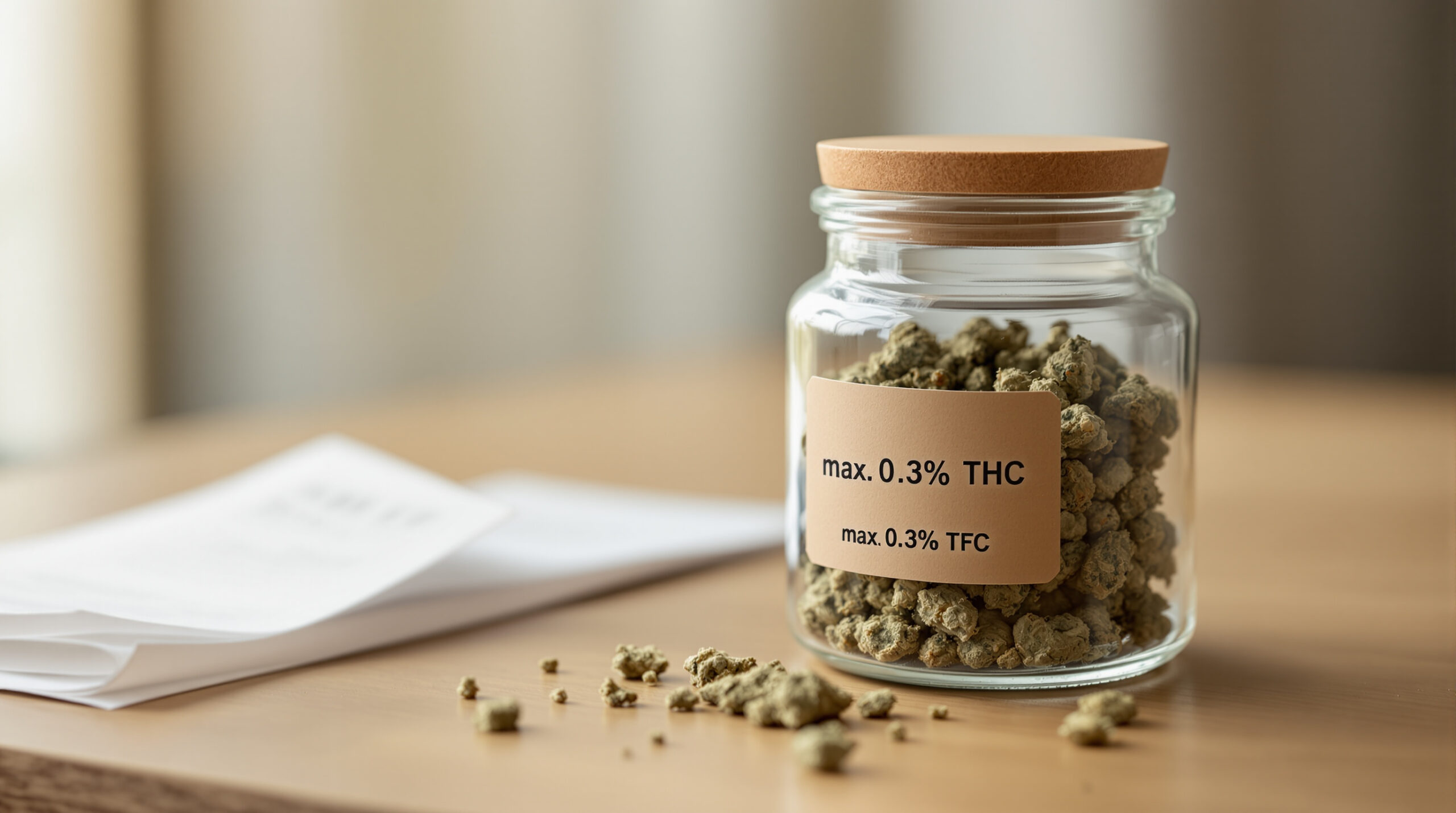
The starting point is undisputed and has not changed. Cannabis with a THC content of at most 0.3 percent is not subject to narcotics law in Austria. Such hemp flowers are therefore not a narcotic drug, their possession is not punishable, and their production is basically permitted. But that’s where the simple answer ends. Because a product that is not a narcotic can still be subject to other regulations. That is precisely the case with CBD flowers.
For years, it was disputed whether dried hemp flowers could be freely sold in specialty shops. Authorities argued at times using pharmaceutical law, consumer protection, or the threat of misuse as smoking material. A sales ban for CBD shops was imposed at one point and later ruled unlawful by the court. However, the decisive turning point did not come from narcotics law, but from tax law.


The VwGH Ruling on Tobacco Tax and Its Consequences

On January 29, 2025, the Administrative Court ruled in decision Ro 2024/16/0006 that dried hemp flowers with at most 0.3 percent THC are subject to tobacco tax. The reasoning is straightforward: if a plant is intended or suitable to be smoked, the tobacco tax law treats it like other smoking tobacco. This means a tax rate of 34 percent applies to CBD flowers. For the industry, this was a bombshell because it shifted the flowers into a completely different regulatory framework.
The real explosive power lies in the aftereffects. Anyone subject to tobacco tax simultaneously falls under the tobacco monopoly law. And this law clearly states that monopoly goods may only be distributed to end consumers through licensed tobacco shops. The Federal Ministry of Finance drew the obvious conclusion from this in April 2025 and determined that pure hemp shops can no longer sell smokable CBD flowers to consumers. A tax classification thus became a distribution matter. Our article on the ongoing legal dispute over CBD flowers traces how this prolonged struggle came about.
The scope of this decision is important. It explicitly affects smokable flowers. Other forms of delivery remain outside as long as they are not intended for smoking. This distinction is key to understanding the current market situation.
Transitional Solution Until 2028 and Rules from 2029
An abrupt sales ban would have eliminated an established industry overnight. Therefore, the federal government agreed at the end of 2025 on a statutory transitional solution designed to orderly transition the market into the new system. The compromise gives existing businesses time while also defining a clear end date.
Specifically, CBD shops are allowed to continue selling flowers until the end of 2028, provided they apply for an appropriate hemp license. This license comes with conditions. The business must have existed since early 2025 and must have predominantly carried hemp products with at most 0.3 percent THC. This is intended to prevent new providers from quickly jumping into the phasing-out regulation. This phase ends in early 2029. From then on, low-dose cannabis products may only be obtained through approved wholesalers and distributed exclusively through regulated trade. The specialty retail as many consumers know it will disappear in this form. Our article on the transitional solution for CBD flowers until 2028 addresses the political background and timeline in more detail.
For retailers, the transition period above all means planning security for a defined time. Anyone wanting to continue selling must apply for the license in time and fulfill tax obligations. Anyone planning to transition to other product categories now has a reliable roadmap. For consumers, it means that sources of supply will change significantly in the medium term.
Where Can You Buy CBD Flowers Right Now?
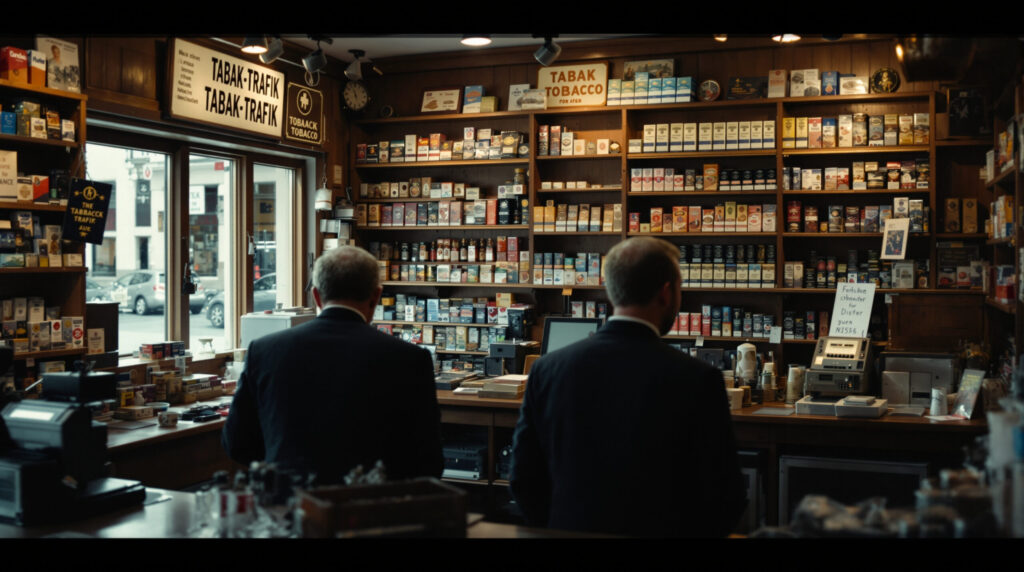
In the current transition phase, there are two legal routes. On the one hand, licensed CBD shops continue to sell the flowers as long as they meet the requirements and remit the tobacco tax. On the other hand, licensed tobacco shops may offer the taxed flowers because as monopoly holders they are already authorized to distribute them. Both routes currently exist in parallel, though the tobacco shop channel will remain the determining one long-term.
Caution is warranted with online retail. Since the flowers fall under the monopoly, direct sales of taxed smoking products to end customers via web shops are legally problematic and largely impermissible. Anyone encountering supposedly cheap offers online should carefully check who is selling and whether tax obligations are being met. A low price is often an indication of untaxed goods.
The situation is considerably more relaxed with other CBD products. Oils, extracts, cosmetics, and many other applications are not intended for smoking and therefore do not fall under tobacco tax. They remain in regular retail and available online. For food products, however, European Novel Food regulations also apply, which require separate authorization. For anyone wanting to fundamentally understand the difference between flowers and extracts, our overview of the legal situation of CBD cultivation in Austria provides further information.
CBD Flowers in Road Traffic: The Underestimated Risk

Probably the most consequential point for everyday life has nothing to do with the purchase itself. Even legally obtained CBD flowers contain small residual amounts of THC. In Austria, there is no statutory THC limit for driving a vehicle. As soon as traces of a substance subject to narcotics law are detectable during a traffic stop, impairment is usually presumed. This can lead to charges and, in the worst case, to license revocation, even though the product itself is completely legal.
For consumers, this is a real trap because the legality of the product and driving fitness diverge here. Anyone regularly consuming CBD flowers and dependent on a driver’s license should know the risk. As practical protection, lawyers recommend keeping purchase receipts to demonstrate if necessary that only CBD products were consumed. This does not replace proof of driving fitness, but it can help in the proceedings.
Ultimately, the legal situation for CBD flowers in Austria remains a balancing act between legal goods and strict distribution regulation. Anyone buying today should pay attention to proper taxation, keep the receipt, and keep in mind that the market will fundamentally shift by 2029. For the industry, the transition period is a breathing space; for consumers, it is above all a signal to keep a close eye on their own sources of supply.
Frequently Asked Questions
Are CBD flowers legal in Austria?
Yes, CBD flowers with at most 0.3 percent THC are not a narcotic drug and their possession is legal. However, sales are regulated because the flowers are subject to tobacco tax and tobacco monopoly. Sales are currently permitted through licensed shops and tobacco retailers.
Why can’t regular CBD shops sell the flowers freely anymore?
The Administrative Court ruled in 2025 that smokable hemp flowers are subject to tobacco tax. This automatically places them under the tobacco monopoly law, which reserves distribution to end consumers primarily for tobacco shops. Pure hemp shops therefore need a special license.
What changes in 2029?
In early 2029, the transition period for licensed CBD shops expires. After that, low-dose cannabis products may only be obtained through approved wholesalers and distributed through regulated trade. Free specialty retail of flowers will thus end in its current form.
Does the sales ban also apply to CBD oil?
No. Tobacco tax affects only smokable flowers. CBD oils, extracts, and cosmetics are not intended for smoking and remain available in regular retail and online. For products intended for consumption, European Novel Food provisions also apply.
Can I drive a car after consuming CBD flowers?
Sollten CBD-Blüten in Österreich frei verkauft werden dürfen?
That’s risky. In Austria, there is no THC limit for road traffic; even detectable traces can result in a fine and license revocation. Even legally purchased CBD flowers contain small THC residues. If you need to drive, you should refrain from consuming before the drive.


Branchen-Update
News, Analysen und Reportagen — mehrmals im Monat direkt in dein Postfach.
Folge uns