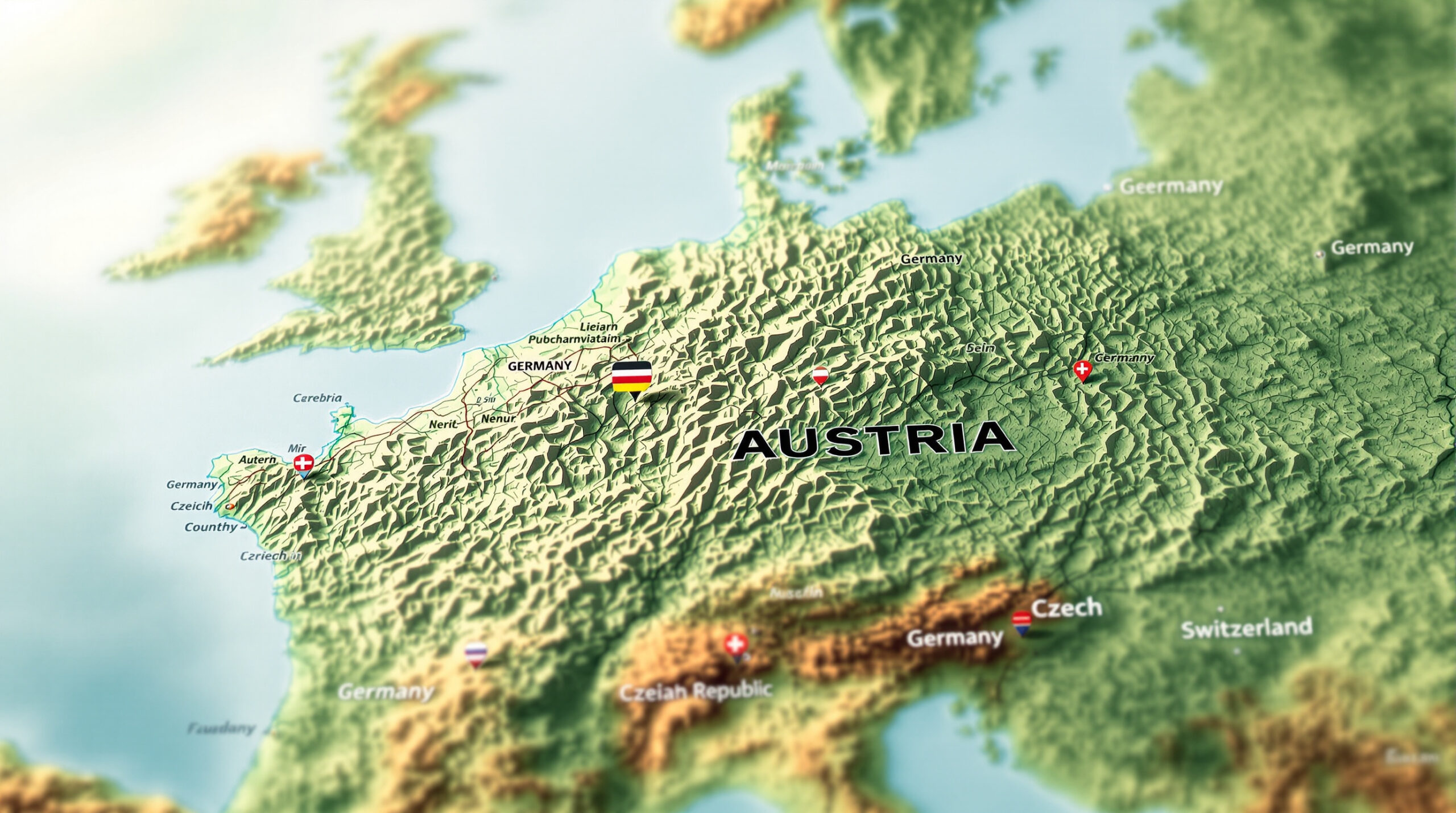
Germany regulates, Czechia has permitted home cultivation since January 2026, Switzerland is testing controlled sales. In the middle of this shifting European landscape, Austria clings to prohibition. For travelers, the justice system, and even the state as a cannabis producer, this creates contradictions that become increasingly difficult to explain.
📑 Inhaltsverzeichnis
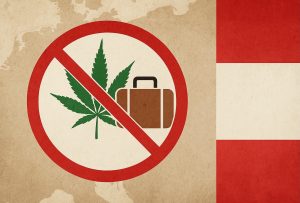
Within just a few years, the map of cannabis policy across Europe has shifted around Austria. Almost all neighboring countries are moving forward, yet the republic itself remains stationary. This creates a situation that could be described as border limbo: cannabis legally acquired or cultivated in one country becomes a criminal substance again upon crossing into the next.
All Around Liberalizing, Austria Stays Put
Germany’s Consumption Cannabis Act has been in effect since April 2024. Adults are permitted to grow up to three plants at home, possess 50 grams in their residence, and carry 25 grams with them; additionally, around 290 cultivation associations are licensed nationwide. Even in 2026, there is no indication this partial legalization will be reversed.


Czechia has followed suit in the east. Since January 1, 2026, home cultivation and possession for adults over 21 are decriminalized: up to three plants per person, a maximum of six per household, plus 100 grams at home and 25 grams outside. However, Czech lawmakers explicitly rejected regulated retail sales and cannabis social clubs. To the west, Switzerland is testing controlled distribution and sales in several cities through scientifically monitored pilot programs.
Austria, by contrast, remains bound by the Narcotic Substances Act (SMG). The acquisition, possession, and cultivation of THC-containing cannabis for recreational purposes remain prohibited. The country is thus increasingly becoming a prohibition island surrounded by liberalizing neighbors.
What Really Happens at the Border

Anyone who legally cultivates in Czechia or legally possesses cannabis in Germany and enters Austria with any remaining amount is back in criminal territory. Under the SMG, what matters is not the gross weight, but the content of pure active substance. For the so-called threshold quantity—which determines the severity of the offense under Austrian drug law—values around 20 grams of pure delta-9-THC or 40 grams of THCA apply.
To determine this pure substance content at all, seized material is sent to a laboratory for chemical analysis. If a small amount for exclusively personal use is found, diversion under Section 35 SMG applies in practice—the principle of „therapy instead of punishment“: prosecutors routinely dismiss such cases, and conviction is rare. This significantly mitigates the consequences for those affected, but does nothing to change the fact that each incident initially occupies police, laboratories, and the justice system.
The Paradox of the State Plantation
Austria’s unique approach becomes most apparent when examining the country’s only legal cannabis plantation. Since a legislative change in 2008, the Agency for Health and Food Security (AGES) has been permitted to grow medicinal cannabis under state monopoly; the facility is located in Vienna-Donaustadt. There, selected clones are cultivated under controlled conditions to achieve high, consistent levels of active compounds.
The catch: In Austria, prescribing cannabis flowers is legally prohibited; only extracts and preparations such as dronabinol are permitted. The harvest must therefore by law be sold to licensed pharmaceutical companies, which extract the active substances from it, including to German company Bionorica as a dronabinol manufacturer. The state thus cultivates high-quality THC cannabis itself and supplies it to the pharmaceutical industry, even across borders, while prohibiting the flower in its own country for recreational use and even by prescription.
Austria produces state cannabis for export to the pharmaceutical industry while simultaneously criminalizing the flower in its own country.
Citizen Ideas and Open Questions
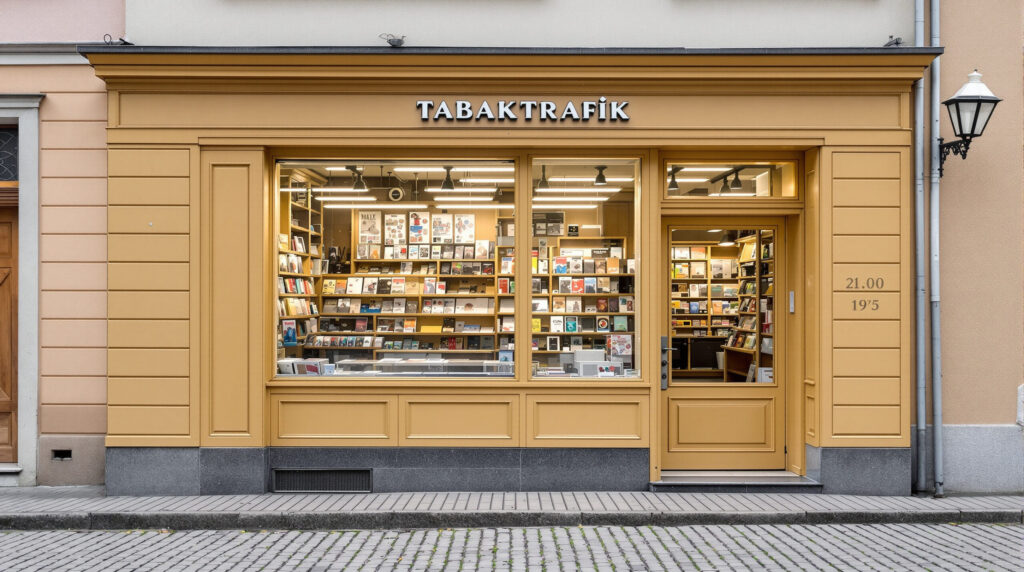
Into this tension field come repeated proposals from the public. One anonymously submitted concept to this editorial office outlines sales through the existing network of Austrian tobacco shops, complete with a digital consumption card. Such a network actually exists: at the end of 2025, the Chamber of Commerce counted around 4,300 tobacco shops nationwide, a number that is declining.
Such models demonstrate the search for pragmatic solutions, but they raise their own questions. One proposal, for example, ties access to mandatory psychological evaluation every two years—something data protection officers and constitutional lawyers would likely view critically. Reliable figures on costs and revenues are typically absent from such concepts; they remain political discussion contributions, not finished legislation. What is worth taking seriously, however, is the underlying finding: reform pressure no longer comes solely from the scene, but from simple geography.
How Long Can the Island Hold Out?
Sollte Österreich das Cannabis-Verbot wie die Nachbarländer lockern?
A political majority for regulation along German or Czech lines is not currently in sight in Austria. At the same time, the status quo becomes increasingly difficult to justify with each liberalizing neighbor: travelers find themselves in legal conflict over quantities that are already decriminalized elsewhere, and the state defends a prohibition that it undermines itself as a producer. Whether and when Austria responds to this remains open. That the question is being asked at all is now unavoidable.


Branchen-Update
News, Analysen und Reportagen — mehrmals im Monat direkt in dein Postfach.