
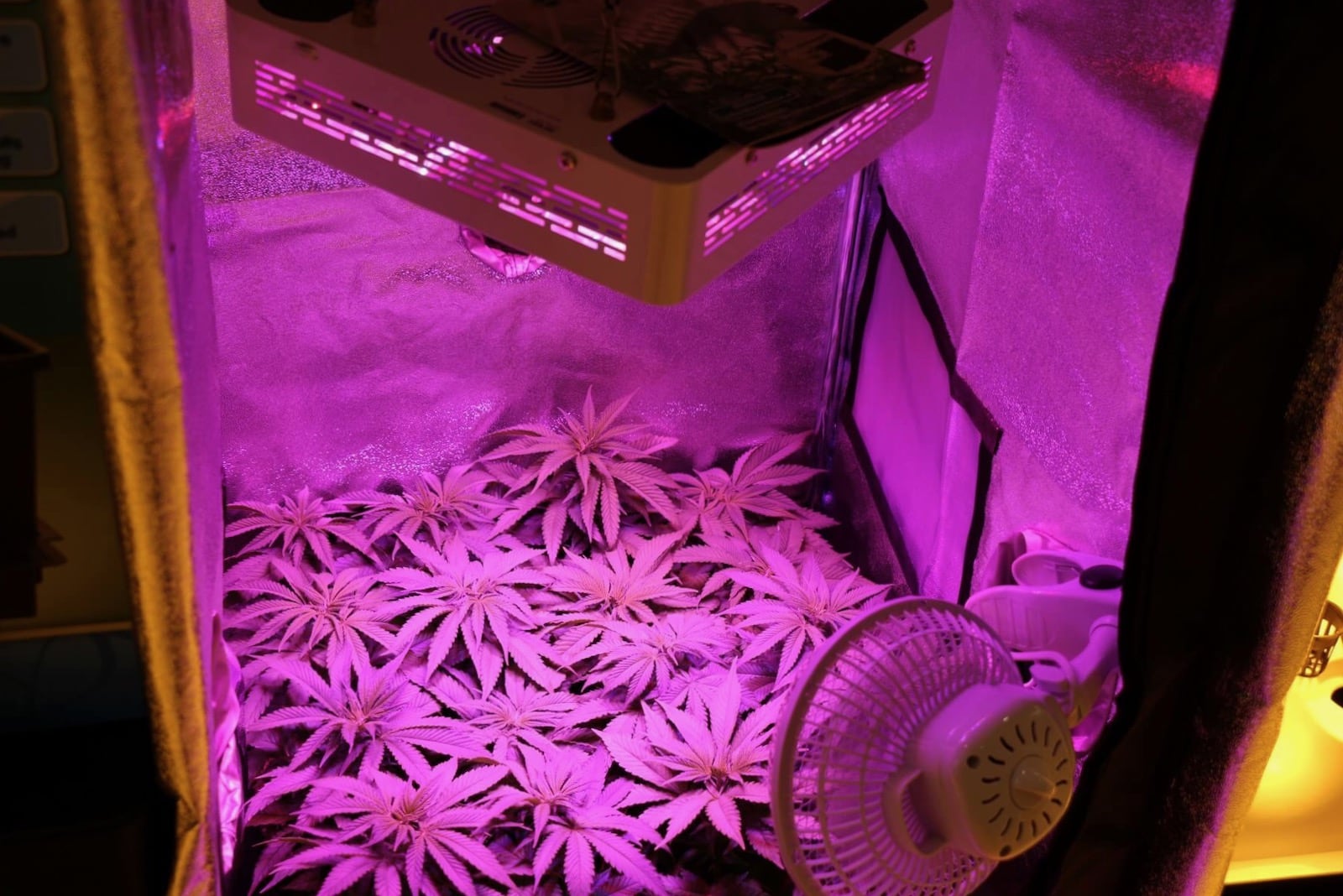
Light is complex and the right light spectrum for hemp is not achieved with every lamp. There are different ways to assign a value to light. There is the nm range, which captures electromagnetic waves with a value. Nm refers to the wavelength in meters from 10 to the power of -15 to 10 to the power of 7. The range visible to humans is from 400 to 700 nm.
📑 Inhaltsverzeichnis
Indoor Hemp Growing – Always Use Lamps with Plant Light Spectrum
Light sources are usually specified with Kelvin as a value for color temperature. For most light sources, this involves coverage of a light arc and the average is given as a Kelvin value. The wattage, amperage, or voltage numbers, on the other hand, are important for connecting the light sources: some of these require not only a socket, but also a ballast and of course the right voltage on the line.

There are other measurement terms for light. However, the grower should always make sure to choose a plant light with light spectrum for hemp. On second glance, attention should be paid to the Kelvin value. For pre-flowering and the first 14 days of flowering, a Kelvin value of approximately 6000 to 6500 Kelvin should be chosen, this is blue plant light. For actual flowering, it should be approximately 2700 Kelvin as red plant light.
The Right Light Spectrum for Hemp – Key Points
- Always choose a light source for growing plants
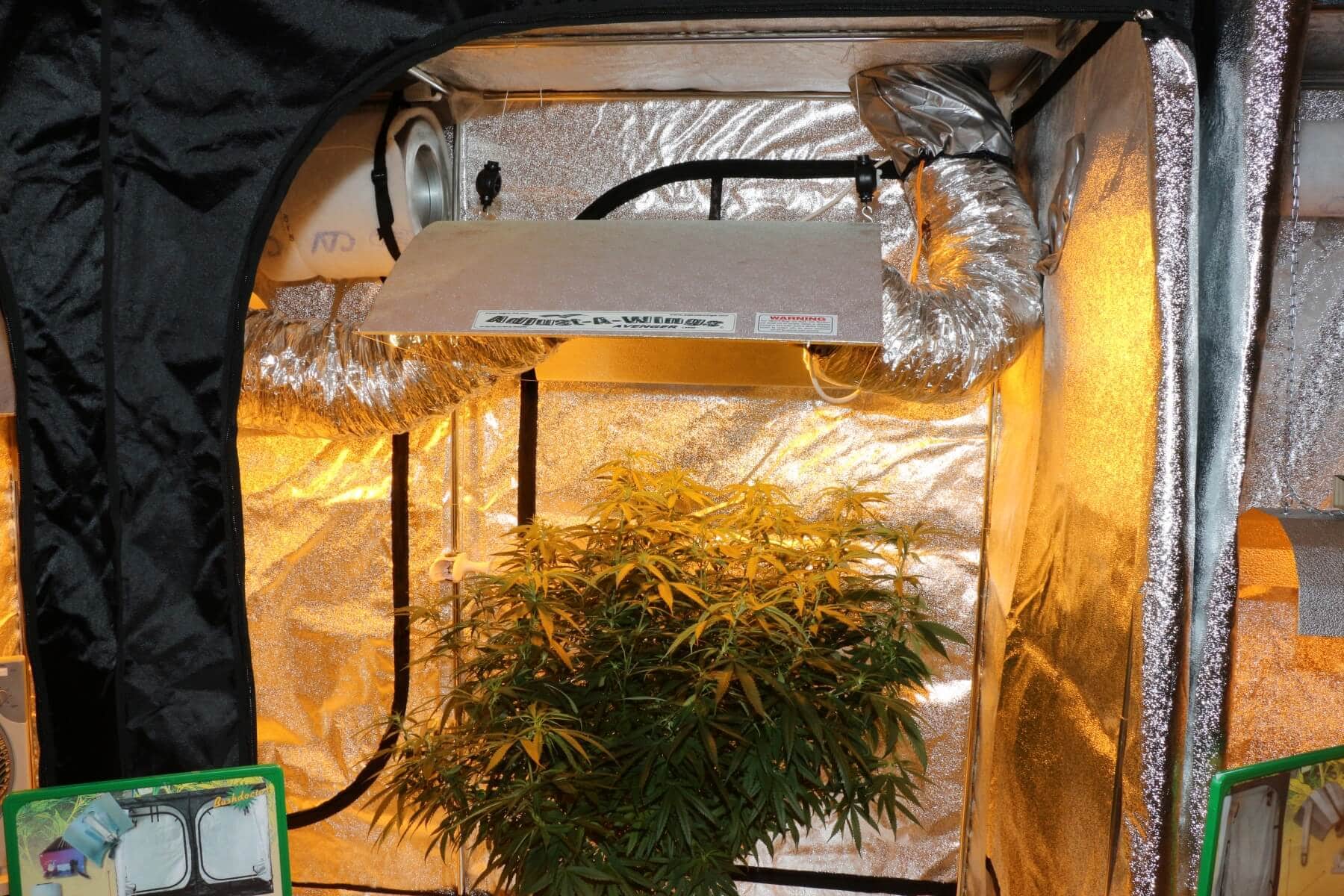
- 6000 to 6500 Kelvin as blue light for pre-flowering with approximately 200 to 300 watts per m²
- 2700 Kelvin as red light for flowering with approximately 350 to 800 watts per m²
- More lux or lumens per watt are better, 36 watt fluorescent tubes are uneconomical
Correct Light Spectrum for Hemp Alone Is Not Enough
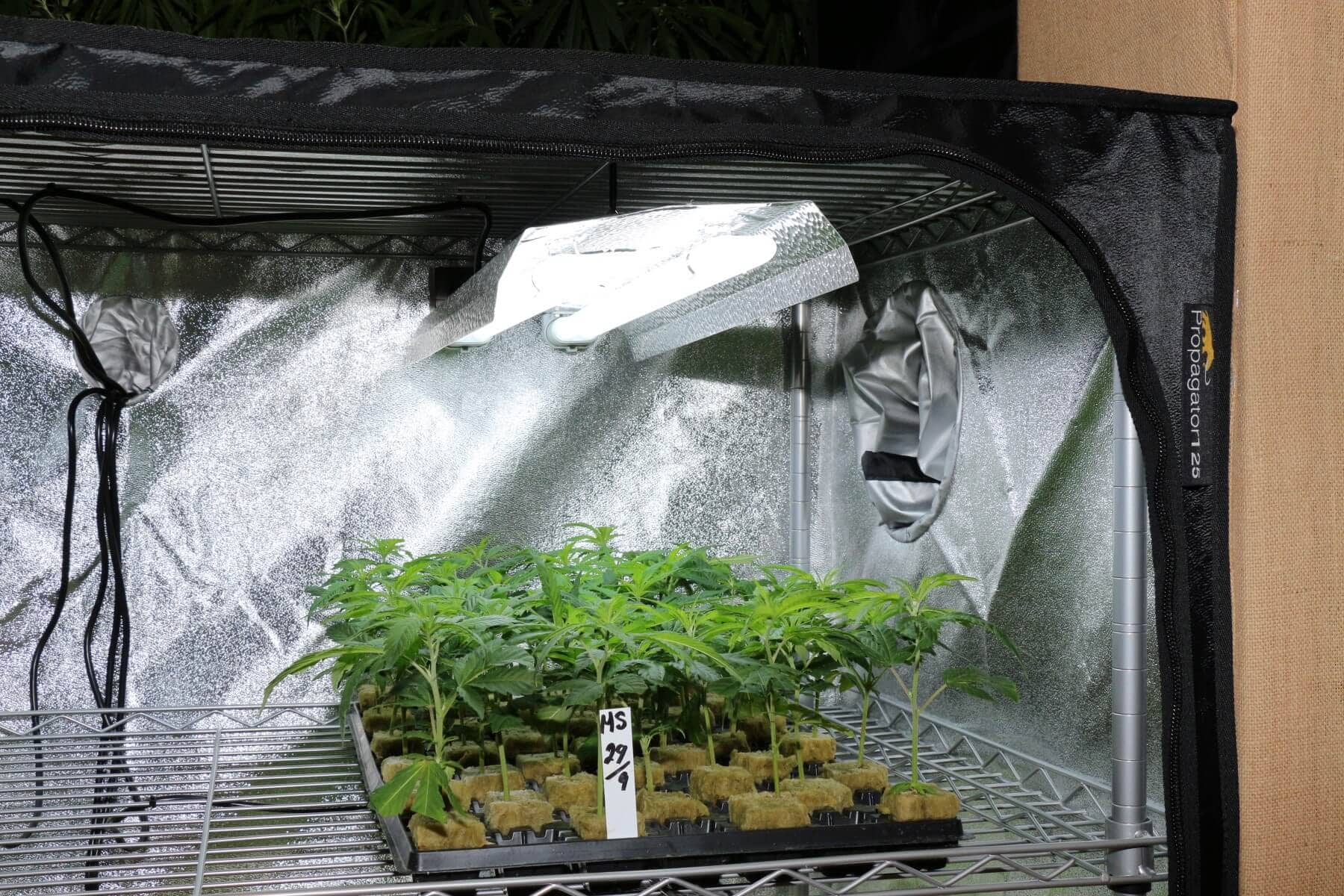
The Kelvin value is essentially an average of the light arc. This can also contain green light with 480 to 560 nm, which however makes no sense for the plant. Plants primarily need red and blue light, though other ranges can also have positive effects in certain proportions. Therefore, plant light fixtures should always be chosen. Depending on the stage, more blue or more red light is needed.
That’s just the light spectrum for hemp, but light intensity is also crucial. There are new LED lamps or the not-so-new energy-saving lamps and these are very bright to the human eye. Many think that an energy-saving lamp with 2700 Kelvin can not only replace another lamp but also save a lot of electricity. Many dealers promote their energy-saving lamps with such claims. It may be possible to save some electricity now, but not much, and LEDs have significantly higher acquisition costs.

Energy-saving lamps only make sense if you want to generate less heat or appreciate the somewhat differently developing marijuana. Energy-saving lamps are said by some growers to have positive properties on marijuana. However, those who need the heat in winter should use warm sodium pressure lamps and heat a bit during the night phase.
The light spectrum for hemp must be right, and the light pressure must also be right. 20 watt energy-saving lamps will not replace 100 watt sodium vapor lamps, mercury vapor lamps, or halogen spotlights, and probably never will in the future. Even with energy-saving lamps, you should work with approximately 350 to 600 watts per m² to achieve the same yields per m².
There are light sources that are less efficient. These are usually normal incandescent bulbs and fluorescent tubes. Those who want to know exactly should compare light sources with suitable light spectrum for hemp. How many lumens or lux (just different units of measurement) are emitted per watt? This is a crucial value for choosing plant light lamps!
Was dich auch interessieren könnte...
LEDs can reproduce a point in the light arc and appear very bright to the human eye. However, for plants, this bright-appearing light is not sufficient; light pressure must also be built up, which can currently only be achieved through the sun or sufficient wattage per m² with the right light source.
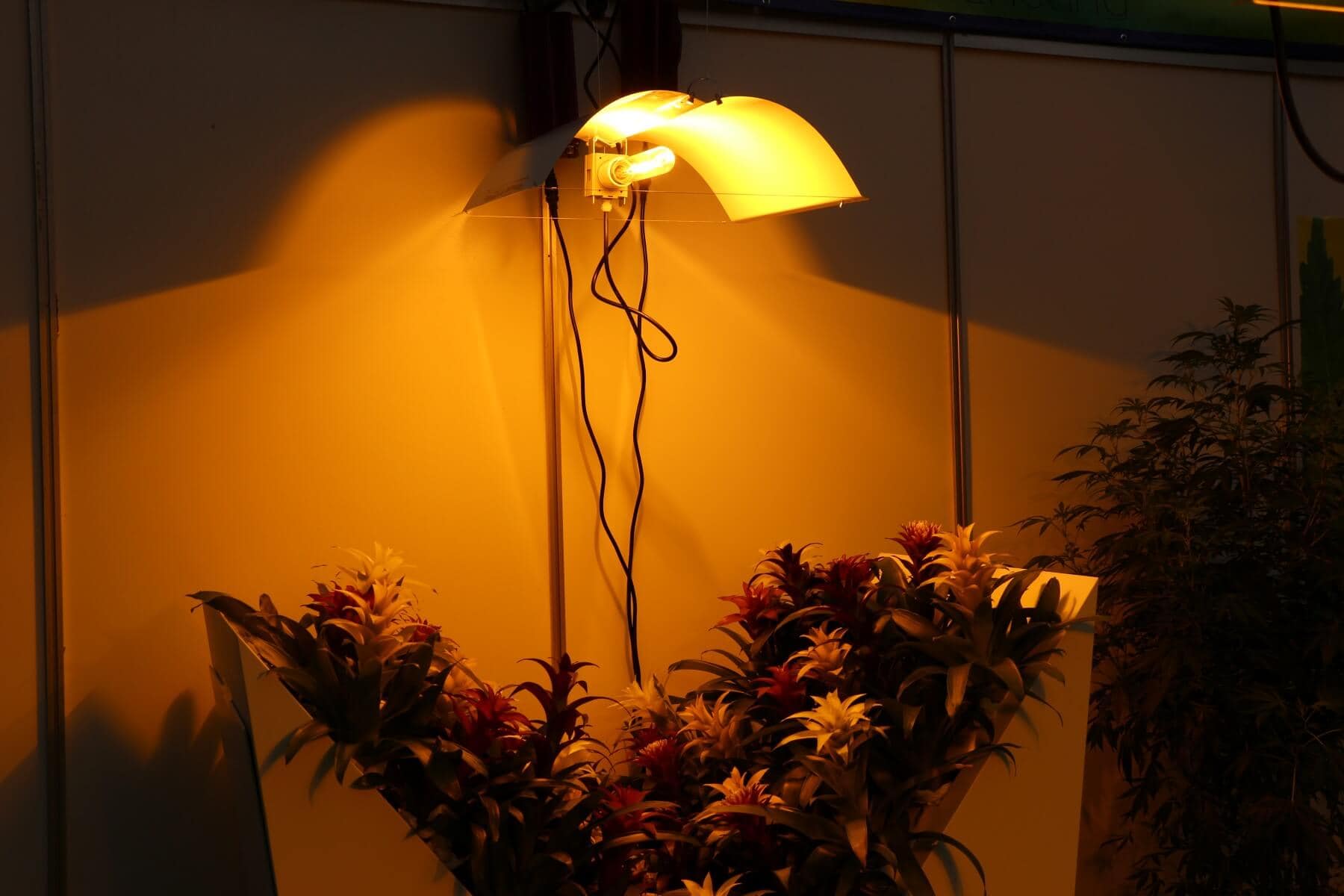
Light Spectrum for Hemp: UV Light?
Recently, more and more news is circulating that UVB light leads to up to over 20% higher THC production. In the light arc, there are ranges visible and no longer visible to humans. Both can be crucial with some ranges in the light spectrum for hemp. Therefore, there are opinions that the best outdoor weed grows in mountains. The higher you go, the more intense the UV light becomes.
When someone moves a plant from indoor to outdoor, you can often observe how all the foliage dies turning white. The plant must first get used to UV light and continues growing with young shoots. UVC light in particular is also critical for plants.
In the light spectrum for hemp, however, UVB light is supposed to make the difference, which is also used in tanning salons. Since the information is still quite vague, the indoor grower should simply experiment themselves and from hemp flower formation onwards use a commercially available UVB lamp with 10% of the lighting capacity (400 watt sodium vapor lamp + 40 watt UVB lamp) – these are not very expensive. Afterwards, everyone can decide for themselves whether the marijuana is better or worse with or without UVB light or whether it makes any difference at all. In a large plantation, you can of course start with a UVB lamp at one point and make a direct comparison. Is the marijuana under the UVB lamp different from that at the opposite corner of the grow room?
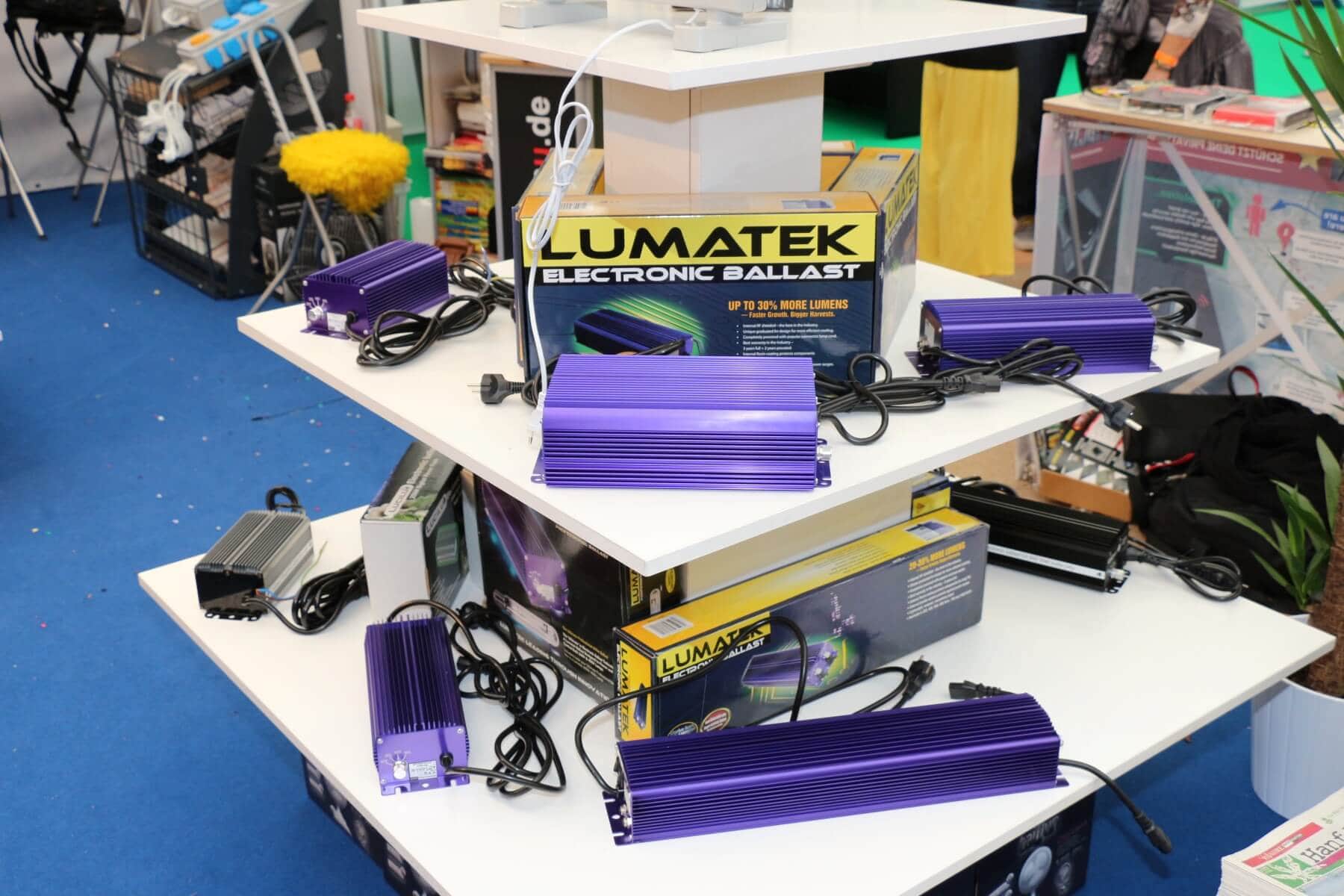
In many LED plant lamps, UV light is directly added to the light spectrum for hemp. A single LED can always only cover one point in the light arc. Therefore, LEDs with red and blue light are always housed together in a plant light LED lamp, and some of these devices also have a few LEDs that cover the UV range. Manufacturers explain that the right combination of different points from the light arc is crucial for plant light LEDs and thus harvest results.
The light spectrum for hemp can be achieved with various lighting techniques. However, fine-tuning the perfect light spectrum can only improve previous results in the long term, not only with new lighting technologies like LEDs.