
When running, the body produces its own cannabinoids—and significantly longer than previously measured. A new study from the University of Duisburg-Essen, which tracked marathon and ultramarathon runners across distances up to 230 kilometers, demonstrates this effect. Most notably, anandamid rose throughout the entire distance and remained elevated even after crossing the finish line. This research offers fresh insights into an age-old question: what causes the so-called runner’s high?
📑 Inhaltsverzeichnis
Endocannabinoids During Marathon: Study Design
The study was published in early September in the journal BMC Medicine. Lead author Michael Siebers from the Institute for Forensic Psychiatry and Sexual Research at the University of Duisburg-Essen, with Johannes Fuss as senior author, emphasizes that nearly all previous human measurements involved exercise lasting under 60 minutes. What actually happens in the body during multi-hour running remained largely unknown.
The team therefore conducted two field studies under real-world conditions. In the first, 19 trained runners completed a marathon. In a second session, the same participants walked for an equal duration as a comparison. Blood samples were taken at the start, every 14 kilometers, at the finish line, and 45 minutes after completion. In the second study, 36 ultramarathon runners provided blood samples before and after their races—specifically the TorTour de Ruhr with distances of 100, 160, and 230 kilometers.


Researchers measured anandamid (AEA) and 2-arachidonoylglycerol (2-AG), among other markers. Both messenger molecules bind to the same receptors as THC. For background information, see our article The Endocannabinoid System Explained. Participants simultaneously rated their euphoria, anxiety, and pain levels on standardized scales.
Anandamid Rises Steadily, 2-AG Arrives Late
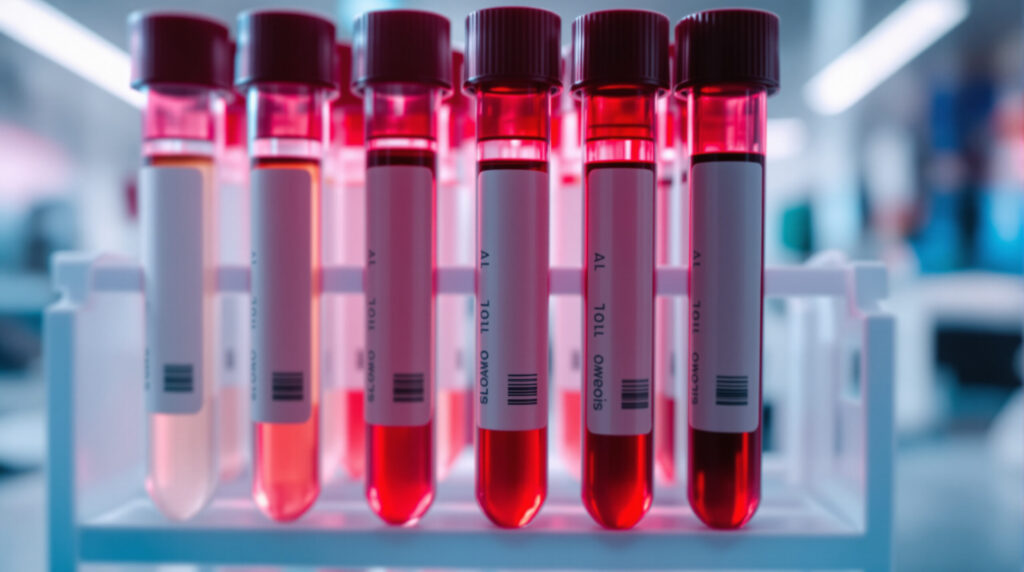
The clearest finding concerns anandamid. During the marathon, levels rose steadily and remained significantly elevated 45 minutes after the finish. During the walk, changes were minimal, though anandamid still gradually increased. In ultramarathon runners, values were higher after all three distances compared to pre-race baseline.
2-AG followed a different time pattern. In the marathon, it rose significantly only in the later running phases and early recovery. After ultramarathons, it was elevated at all distances. Researchers interpret this as a delayed response more closely linked to recovery than to the exertion itself.
Runner’s High: Euphoria, Anxiety, and Pain Compared
Differences emerged between the distances in terms of subjective experience. After the marathon, runners reported more euphoria and less anxiety than after the walk. Pain increased from kilometer 28 onward. During the ultramarathon, anxiety declined and pain increased, while euphoria showed no significant change.
This aligns with an observation many runners recognize: the high doesn’t sustain indefinitely. Eventually, exhaustion and pain dominate. However, the study only shows that messenger molecules and subjective feelings occur simultaneously. It does not establish causation. The authors accordingly note cautiously that both phenomena occurred in parallel.
What This Means for Cannabis Enthusiasts
Runner’s high was long attributed to endorphins. This research team has previously challenged that view. In 2015, Johannes Fuss and colleagues demonstrated in mice that the calming and pain-relieving effects of running depend on cannabinoid receptors. Two researchers from that study, including Fuss himself, contributed to this new work. The current human measurements now provide data from actual competitions rather than laboratory settings.
No consumption recommendations can be derived from this study. It examines the body’s own messenger molecules, not the effects of THC or CBD during exercise. We’ve compiled information on how cannabis affects athletic performance in our article Cannabis and Sport: Performance Inhibitor or Recovery Aid? A broader overview is available in Cannabis and Sport: The Complete Guide. That sport itself can become a burden is illustrated in an earlier article exploring whether exercise addiction becomes an addiction prevention topic. How openly some athletes approach cannabis is demonstrated by the incident involving MMA star Nate Diaz smoking a joint during public training.
Frequently Asked Questions
What is runner’s high?
Runner’s high is a euphoric sensation experienced by runners during prolonged endurance exercise. It’s characterized by well-being, reduced anxiety, and altered pain perception. The exact messenger molecules responsible remain incompletely understood.
What are endocannabinoids?
Endocannabinoids are messenger molecules the body produces naturally. The most well-known are anandamid and 2-AG. They act on the same receptors as cannabinoids from the cannabis plant and are involved in mood, pain, and stress regulation, among other functions.
How many runners were studied?
The marathon study included 19 trained runners; the ultramarathon study included 36. Ultramarathoners completed either 100, 160, or 230 kilometers. Blood samples were collected during and before/after the races.
Does this study prove endocannabinoids cause the runner’s high?
No. The study shows that messenger molecules increase during running and mood simultaneously changes. Whether one causes the other cannot be determined from these data alone.
Can cannabis replace runner’s high?
This study makes no statement on that. It measures only the body’s endogenous substances, not the effects of THC or CBD. Those considering cannabis before or during exercise should consider its effects on coordination and cardiovascular function.
Note: This article reflects the status as of September 17, 2026, and is not health advice. It does not contain efficacy claims about cannabis products.
Hast du selbst schon einmal ein Runner's High erlebt?
Sources: Siebers M, Huvermann D, Siebers C et al.: Endocannabinoid dynamics across marathon and ultramarathon running: evidence from two field studies. BMC Medicine (2026), DOI 10.1186/s12916-026-05186-z (PubMed 42681668). Fuss J, Steinle J, Bindila L et al.: A runner’s high depends on cannabinoid receptors in mice. PNAS 112 (2015), DOI 10.1073/pnas.1514996112. Bubatznews, September 16, 2026.






Branchen-Update
News, Analysen und Reportagen — mehrmals im Monat direkt in dein Postfach.
Folge uns