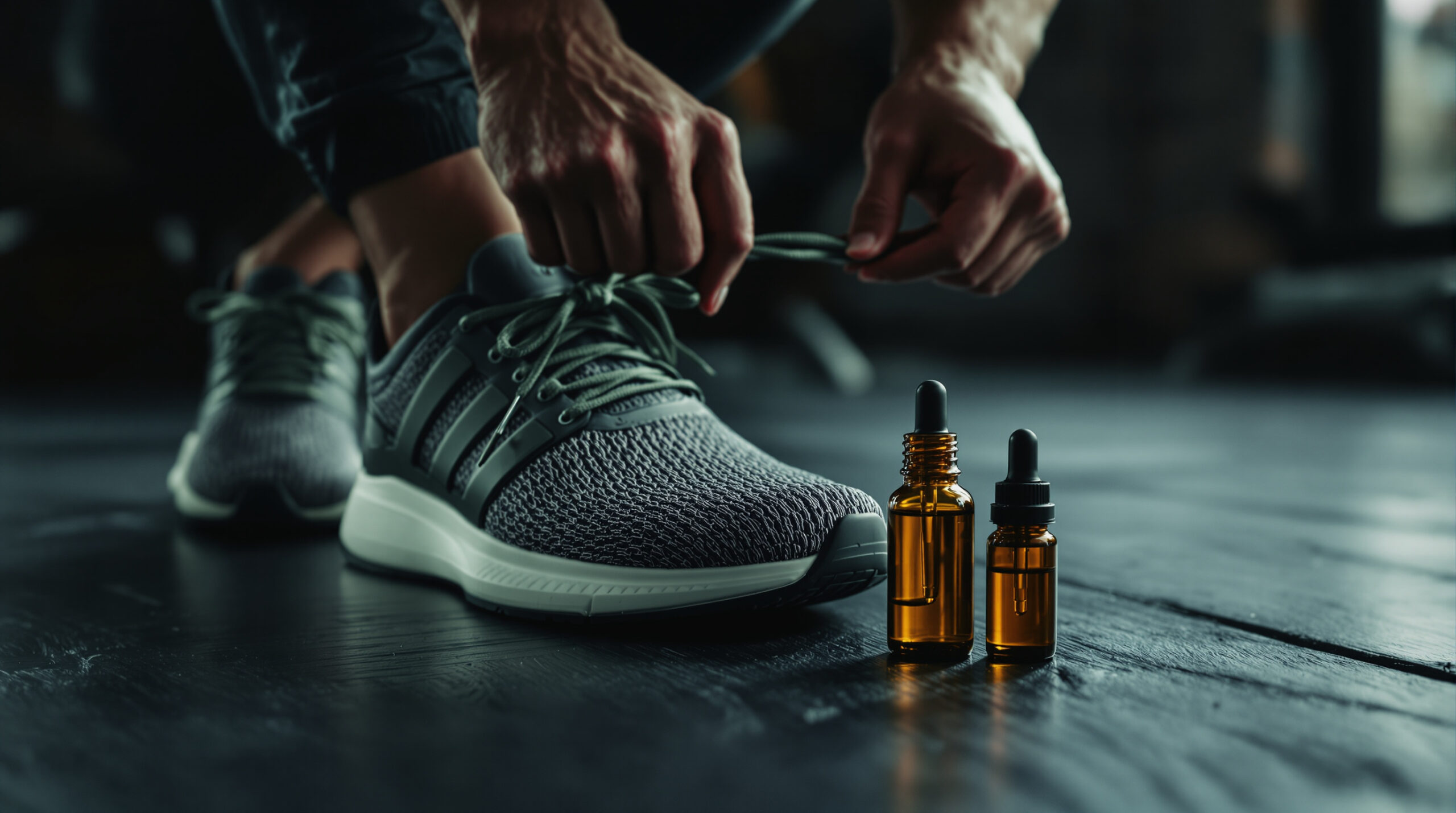
Hardly any topic divides the fitness scene as reliably as the question of whether cannabis and sport go together. Some swear by a relaxed run after a joint, others see consumption as a sure path to worse times. The honest answer lies somewhere in between and depends primarily on which cannabinoid is involved, when it is consumed, and what exactly is meant by performance. Someone who goes into a workout acutely high experiences something different than someone who uses CBD for recovery.
📑 Inhaltsverzeichnis
This article separates robust study findings from campfire mythology. It covers the acute effects of THC on heart rate and coordination, the role of the body’s endocannabinoid system in the so-called runner’s high, and the question of whether CBD is really a recovery aid or just a well-marketed promise. In the end, there’s a sober look at who benefits from consumption around training and for whom it becomes a real performance brake.
Cannabis and Sport: What Happens Acutely in the Body
Acute THC consumption measurably changes how the body responds to exertion. The heart beats faster, heart rate can rise noticeably immediately after consumption, and with first-time users or high doses, blood pressure climbs too. THC works through the endocannabinoid system, which regulates heart rate control among other things, and can even affect the heart’s electrical conduction. For healthy recreational athletes, this is usually unproblematic at moderate doses, but it explains why exertion under THC influence feels different.


The distinction between perceived and measured performance is crucial. Those who run high often report a smoother, more pleasant run. Objective parameters like kilometer times or watt values remain the same or even drop slightly. The subjective perception of effort increases rather, reaction time is delayed, and fine motor skills suffer. The frequently described better experience is based on altered perception, not on real performance gains. For most endurance and strength goals, acute THC is therefore best neutral and worst hindering.
The Runner’s High and the Role of Endocannabinoids
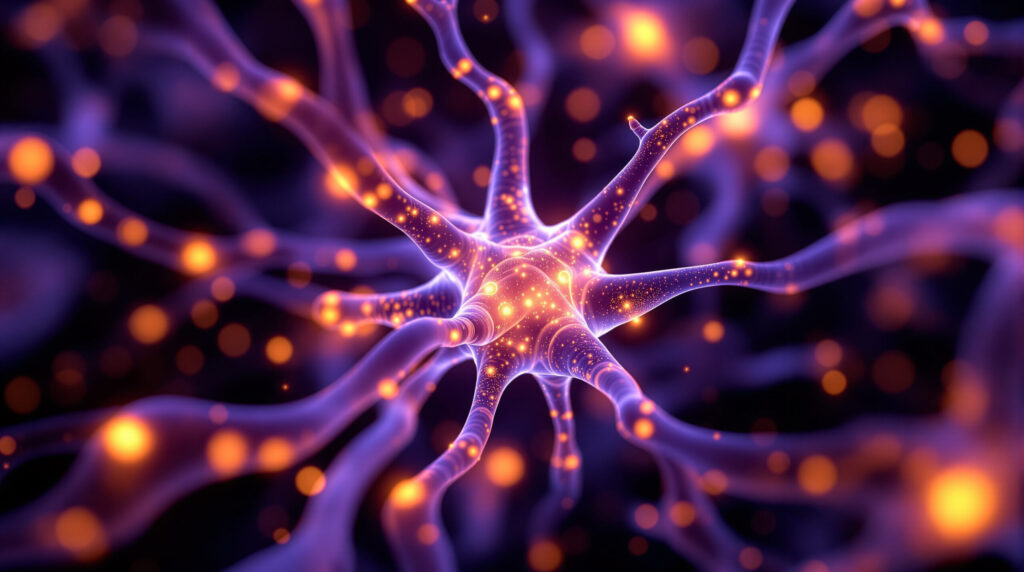
For a long time, runner’s high was thought to be the work of endorphins. Newer research tells a different story. Physical exertion reliably increases the level of the body’s own cannabinoids, foremost among them anandamide, which is fondly called the bliss molecule because of its mood-lifting effects. This increase is seen across different forms of exertion, from running to swimming to strength training, and occurs in both trained and untrained people. Unlike large endorphin molecules, anandamide can cross the blood-brain barrier and thus directly affect mood.
Animal experiments support the connection. In mice, voluntary running on a wheel reduces anxiety and pain perception, and when cannabinoid receptors are pharmacologically blocked, this effect disappears. Cannabinoid receptors are therefore apparently indispensable for central aspects of runner’s high. So when someone experiences that relaxed euphoric state after a long session, they have in a sense activated their own cannabis system. We explain in detail how this endogenous network works in our article on the endocannabinoid system. Here lies the irony of the debate: the body produces its own high, while supplied THC makes exertion more difficult.
CBD as a Recovery Aid: What Studies Show

While THC usually brakes during training, CBD has established itself as the better-researched cannabinoid for sports purposes. It is not psychoactive, does not noticeably affect reaction time, and has not been on the World Anti-Doping Agency’s banned list since 2018. A 2025 meta-analysis published in the Journal of the International Society of Sports Nutrition with eight studies and over three hundred subjects found a reduction in inflammatory markers of twelve to eighteen percent at a daily dose of around one hundred fifty milligrams of CBD. Subjective pain perception after intense training decreased by approximately twenty-two percent, and sleep quality improved measurably.
These findings are interesting but must be put in proper perspective. CBD is not an acute performance enhancer and not a booster before the effort. It doesn’t make anyone faster or stronger at the moment of exertion. The potential benefit lies in recovery: less inflammation, less pain, better sleep, and thus over time potentially higher training volume. Better recovery is basically the only seriously discussed way in which a substance from the cannabis plant can deliver performance improvement over time. For those who want to delve deeper into the mechanisms, details can be found in our overview of CBD for Athletes.
Despite all the enthusiasm, the data base remains thin. Many effects are supported by small samples and anecdotal reports rather than large controlled studies. Especially in competitive sports, reliable data is almost completely lacking. CBD is therefore more of a promising component in recovery management than a proven miracle cure. Those who try it should have realistic expectations and observe the effect on themselves rather than relying on marketing promises.
Which Sports Suffer Most from Cannabis
The negative effects of acute THC don’t affect all disciplines equally. Precision sports like target shooting, archery, golf, or darts suffer most because fine motor skills and focus are directly affected. Even slight coordination impairment costs crucial percentage points here. Technical team and racquet sports like tennis, basketball, or volleyball lose noticeably in reaction and anticipation because the game demands fast, precise decisions.
It looks somewhat different for monotonous endurance performances where altered perception makes the effort seem more bearable without dramatically worsening purely physical performance. But here too: more pleasant doesn’t mean better. If you compete in a sport where reaction speed, coordination, or fine motor skills matter, you should strictly avoid acute THC before competition. The entertainment value of a relaxed training session is no match for the performance loss when it counts.
Doping, Law, and the THC Limit in Competition
For ambitious competitive athletes, the regulatory side is at least as important as the physiological. The World Anti-Doping Agency continues to list THC as a substance prohibited in competition, with a threshold of one hundred fifty nanograms per milliliter in urine. This regulation remains unchanged in the prohibited list effective January 2026. Outside of competition, THC is not prohibited, but the definition of the competition period begins the evening before the event. Those who consume in advance can still be above the threshold depending on consumption amount and metabolism.
CBD has been removed from the banned list since 2018 and remains allowed in 2026. However, here lurks an underestimated trap: contaminated CBD products often contain traces of THC that can accumulate in the body with regular use. Even small individual doses add up, and in doubt, the positive test looms. Competitive athletes should therefore only use products with independent analysis certificates. We shed light on how sports federations handle the issue and where the gray areas lie in our article on Cannabis as a Doping Agent in Sport.
Frequently Asked Questions
Does Cannabis Make You More Capable Before Training?
No. Acute THC increases subjective well-being but doesn’t improve objective performance values like times or watt values. On the contrary, it increases heart rate, delays reaction, and impairs fine motor skills. The felt better workout is altered perception, not true performance improvement.
Does CBD Really Help with Recovery?
There is increasing evidence for it. A 2025 meta-analysis found at around one hundred fifty milligrams of CBD daily a reduction in inflammatory markers, less pain after training, and better sleep. CBD doesn’t work as an acute performance enhancer but can indirectly support training volume through better recovery. However, the data base remains limited.
Is Runner’s High the Same as a Cannabis High?
Not quite, but the systems overlap. In runner’s high, the body releases its own cannabinoids like anandamide, which act on the same receptors as THC. This explains the relaxed euphoria after prolonged exertion. It’s body-generated and much milder than a high from supplied THC.
Can I Take CBD as a Competitive Athlete?
Basically yes, because CBD has not been on the WADA banned list since 2018 and remains allowed in 2026. The risk lies in contaminated products that contain traces of THC and can accumulate. Use only products with independent analysis certificates to avoid a positive doping test.
Which Sports Suffer Most from THC?
Nutzt du Cannabis gezielt rund um dein Training?
Precision sports like target shooting, archery, golf, or darts suffer most because focus and fine motor skills are directly affected. Racquet and team sports like tennis, basketball, or volleyball also lose reaction and anticipation. In monotonous endurance sports, the effect is less pronounced, but THC doesn’t bring true improvement there either.





Branchen-Update
News, Analysen und Reportagen — mehrmals im Monat direkt in dein Postfach.
Folge uns