Anyone who trains regularly and smokes cannabis knows the locker room debates. Some swear by the joint after their workout, others consider cannabis and sport incompatible. Those who seriously look for evidence land somewhere between study findings, anecdotes, and a dramatically shifted regulatory landscape. This guide clarifies what current research actually says about „doing sports while high,“ where consumption sabotages performance, where it can support recovery, and what rules apply in competition.
📑 Inhaltsverzeichnis
- Doing Sports While High: What Actually Happens in the Body
- The Endocannabinoid System and Runner’s High
- Cannabis Before, During, or After Training
- CBD in Sport: Recovery, Sleep, and Inflammation
- Cannabis and Muscle Building: What Research Shows
- WADA, NADA, and 2026 Competition Rules
- Yoga, Meditation, and Movement-Oriented Practice
- Practical Recommendations for a Sensible Coexistence
- Risks That Must Be Taken Seriously
- Frequently Asked Questions
- 💬 Fragen? Frag den Hanf-Buddy!
With cannabis legalization in Germany, the topic has long since left the shadows. Professional athletes openly discuss CBD, hobbyists experiment with tinctures, and the World Anti-Doping Agency has massively raised its THC threshold for competitions. Yet the question of whether smoking before sport makes sense remains one of the most contentious at the intersection of cannabis consumption and training science. The answer depends far more than commonly assumed on the cannabinoid, timing, and goals.
Doing Sports While High: What Actually Happens in the Body
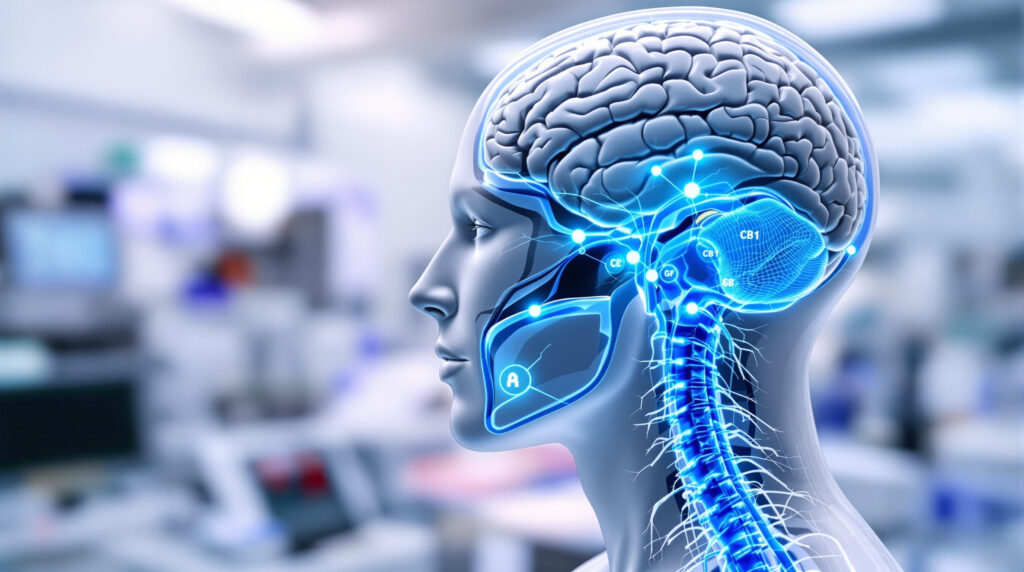
Once THC enters the bloodstream, it docks at CB1 receptors in the central nervous system. These receptors sit in precisely those brain regions responsible for motor control, coordination, and reaction time. Studies show measurable decreases in reaction speed, eye-hand coordination, and the ability to quickly shift attention between different points of focus. Getting on the treadmill high, you probably won’t notice problems with a slow steady run. During sparring, powerlifting, or team sports, that’s a different story.


There’s also the cardiovascular reaction. THC immediately increases heart rate after consumption, often by twenty to fifty beats per minute. If you’re already training in the aerobic or anaerobic range, you’re shifting your personal performance threshold downward. The subjective impression of sweating more easily or getting out of breath faster isn’t imagination. Cardio sessions under THC influence feel more strenuous without actual performance gains. The training effect doesn’t get better—it gets worse.
Things get more interesting when looking at muscle itself. A 2022 study from the University of Northern Colorado found no direct negative effect of THC on maximum strength performance in bench press. Participants didn’t lift less weight acutely. What did show up reproducibly was increased perception of effort. In other words: while high, the same training stimulus feels harder without better results. For those who understand sport as a disciplinary ritual, THC tends to strip away the mental edge that makes intense sessions possible in the first place.
The Endocannabinoid System and Runner’s High

For a long time, the famous runner’s high was thought to be the work of endorphins. Research now knows that picture was too simple. Endorphins are too large to cross the blood-brain barrier. The euphoric, pain-dampening mood after longer endurance exertion is primarily carried by anandamide, an endocannabinoid produced by the body that is chemically related to THC. Anandamide binds to the same CB1 receptors that cannabis also activates. In this sense, sport is a natural tool for ramping up your own cannabinoid system.
This mechanism is more than a nice detail from sports physiology. It explains why some people experience cannabis and movement as mutually reinforcing, while others report a dull, tired feeling. For those wanting to understand the underlying receptor pathways, our background piece The Endocannabinoid System Explained offers a detailed introduction. The short version: sport already stimulates the body’s own cannabinoid system without external consumption. THC can overlay, change, or dampen this effect, depending on dose and individual sensitivity.
The second important messenger in this network is 2-AG, another endocannabinoid that rises after exertion and participates in the body’s inflammation-regulating response. This is precisely where one reason lies for why many athletes find CBD after training more interesting than THC before training. For more on the key molecule behind runner’s high, Anandamide: Our Organism Gets High offers a grounded overview of the research.
Cannabis Before, During, or After Training
The question of right timing usually determines whether cannabis and sport clash or complement each other. From a performance physiology perspective, there’s little to recommend THC before training. For technical sports like climbing, tennis, or team sports, reduced attention risks not just lost training progress but also injuries. Current consumption before intense sessions is rated as unfavorable by nearly all sports science authorities.
Cannabis during training is impractical anyway. During moderate activities like yoga, long walks, or easy cycling, consumers report altered body awareness. Movements feel more conscious, breathing comes to the foreground, monotonous exertion feels less tiring. Those seeking this feeling find a low dose and relaxed sports a field clearly separate from the competitive world.
After training, the benefits shift completely toward recovery. The body is in an inflammatory repair phase after intense sessions. This is where CBD primarily works, because it mainly binds to CB2 receptors located in immune cells and muscle tissue. The result is a modulated inflammatory response that can lower subjective pain perception and accelerate recovery. A 2025 meta-analysis of over three hundred subjects in the Journal of the International Society of Sports Nutrition found a reduction in inflammation markers of twelve to eighteen percent on average with a daily dose of one hundred fifty milligrams of CBD.
CBD in Sport: Recovery, Sleep, and Inflammation
In recent years, CBD has established itself as the significantly better-researched cannabinoid for athletic purposes. Unlike THC, it doesn’t act psychoactively, doesn’t noticeably affect reaction time, and has been off the World Anti-Doping Agency’s banned list since 2018. Professional athletes and hobbyists turn to CBD for three reasons: pain relief, faster recovery, and better sleep. Research supports these applications with varying evidence density, but overall is significantly stronger than five years ago.
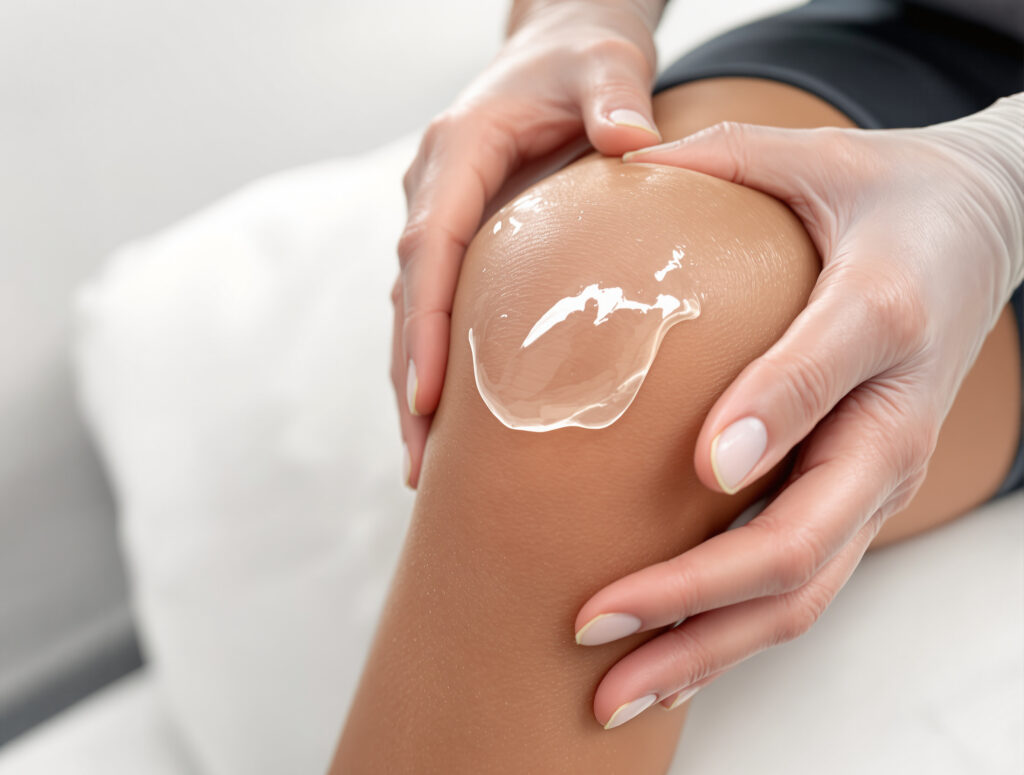
For pain after hard training or minor injuries, CBD in topical form as gel or cream can reduce local discomfort. For systemic use via oil or capsules, daily doses between fifty and two hundred milligrams are typical. Those with chronic training pain will find detailed discussion of mechanisms in our article CBD for Chronic Pain: An Alternative with Substance.
Sleep is recovery’s underestimated pillar. During deep sleep, the body releases growth hormone, repairs muscle fibers, and consolidates motor learning. CBD can ease falling asleep and improve subjective sleep quality without tomorrow’s typical hangover effect from conventional sleep aids. Our article The Influence of Cannabis on Sleep and Dreams offers an overview of research on THC, CBD, and sleep architecture.
For acute sports injuries like ligament sprains, bruises, or minor muscle tears, CBD is often applied alongside the classic PRICE protocol. It doesn’t replace medical diagnosis but can contribute to pain and inflammation modulation. A detailed overview of indications and research findings is available in Cannabis for Sports Injuries.
Cannabis and Muscle Building: What Research Shows
In bodybuilding and strength sports, concern persists that cannabis lowers testosterone and sabotages muscle building. Research paints a more nuanced picture. Acutely, THC can briefly lower testosterone and increase cortisol release. Both effects are, however, small in magnitude and reverse within hours. Studies of regular consumers show no systematically reduced testosterone levels; some even find slightly elevated values. Findings are heterogeneous; a clear negative effect on hormone balance can’t be derived from credible research.
The often-cited damage to muscle protein synthesis also barely withstands close scrutiny. Occasional cannabis use doesn’t measurably endanger muscle gains as long as training stimulus, protein intake, and sleep are adequate. Someone hitting the gym five times weekly and taking macros seriously won’t lose gains from smoking a joint on the weekend. The much bigger levers lie in sleep duration, total calories, and training consistency.
What strength athletes should watch is interaction with the central nervous system. Heavy compound lifts like squats, deadlifts, or bench press demand full attention and clean technical execution. Training high in the gym increases injury risk without improving training stimulus. For those wanting to integrate cannabis into their lifestyle, timing consumption for evening after the last set, not the hour before, works better.
WADA, NADA, and 2026 Competition Rules
Those active in organized sport must follow the World Anti-Doping Agency’s banned list. THC and natural cannabinoids remain on this list, but exclusively as in-competition prohibited substances. Outside competition, cannabis is permitted, though with THC metabolite half-lives of several days to weeks, this is deceptive freedom. Traces in urine or hair remain detectable long after consumption.
Critical since 2013 is a threshold that’s been raised several times. Currently the analytical limit is one hundred fifty nanograms of THC carboxylic acid per milliliter of urine. Previously it was fifteen nanograms. The tenfold increase followed scientific reassessment: traces from recreational use several days before competition shouldn’t count as doping. Only consumption close enough to competition to have measurable psychoactive effect should count as violation. CBD was completely removed from the banned list in 2018 and is permitted in competition and outside, provided it contains no relevant THC contamination.
The 2026 banned list made no changes to this system. Professional athletes in disciplines with regular testing should still be cautious because full-spectrum CBD products can contain unintended THC contamination. Deeper discussion of the political debate is available in our article World Anti-Doping Agency Wants to Review Cannabis Status, which contextualizes the recurring debate about completely removing cannabis from the banned list.
Yoga, Meditation, and Movement-Oriented Practice
Beyond competition and strength training lies a separate world where cannabis and movement have belonged together for decades. Yoga, Tai-Chi, Qigong, and meditative walking follow different logic than competitive sport. Here attention counts—breath and feeling one’s own body—not watts or finish time. In this practice, a low cannabis dose can enhance perception of subtle sensations and reduce mental overlay.
Dosing matters here too. Going into intense breathwork with too high a THC dose can bring dizziness or anxiety instead of clarity. Experienced practitioners recommend starting with very small amounts, preferably strains with balanced THC and CBD or clear CBD dominance. High-CBD strains reduce anxiety risk and support the relaxed, grounded baseline mood helpful in yoga practice.
This tradition isn’t new. Ayurvedic medicine used cannabis for centuries in spiritual and physical practices. What’s changed is the ability to make effects predictable with standardized products and controlled doses. Today consumption relies not on chance strain variation but on lab analysis and defined cannabinoid profiles.
Practical Recommendations for a Sensible Coexistence
Those wanting to permanently integrate cannabis into their sports life benefit from a simple rule: separate contexts. Performance sessions, technical exercises, and competitions belong in sober daylight hours. Recovery, gentle mobility work, and sleep prep fit better into the cannabis-friendly part of the day. This separation prevents the most common trap hobbyists fall into—mixing both worlds into diffuse mediocrity.
Choice of consumption form plays a larger role than often realized. Inhalative forms work within minutes with manageable duration, practical for daily control. Edibles take longer to work and last many hours, which can be pleasant after evening training but leads to incalculable effects before training. Topical CBD products are especially practical in sports life because they work locally without systemic burden.
Those experimenting should keep a simple training diary. Note consumption timing, dose, strain, and subjective feeling during and after the session. After weeks, you’ll see which combinations feel good and which trigger tiredness, concentration loss, or worsened sleep. This individual data collection is more valuable than any blanket recommendation because cannabis response varies widely and depends on genetics, tolerance, and daily form.
Risks That Must Be Taken Seriously
As nuanced as discussion of cannabis benefits and harms in sport should be, some risk groups must be clearly separated. People with cardiovascular conditions, heart rhythm disorders, unexplained hypertension, or family history of sudden cardiac events should avoid acute cannabis consumption before physical exertion. The combined stress from THC-raised heart rate and athletic effort can significantly increase individual risk.
The same applies to those disposed toward psychotic episodes. High-potency THC can trigger relapses, a risk further amplified during intense physical activity through adrenaline and sensory overload. Those with personal or family history of psychosis, mania, or severe anxiety disorders should avoid THC and consider CBD products only under medical guidance.
In team sports and disciplines with high injury risk, responsibility toward teammates shouldn’t be underestimated. Taking the field high endangers not just personal health but that of teammates and opponents too. In organized leagues, confirmed consumption during competition leads to bans far more painful than brief pre-competition abstinence.
The legal situation around traffic also deserves attention. Those driving or cycling to training should know that while THC blood limits were raised after German legalization, driving under acute effects remains prosecutable. This applies to ambitious hobbyists who still believe themselves fit for short distances after consumption. Self-assessed driving fitness is demonstrably distorted under THC, additionally problematic in sports contexts because already high physical demands further impair perception.
Frequently Asked Questions
Is it dangerous to do sports while high?
For moderate activities without injury risk and without preexisting conditions, acute risk for healthy adults is low. Before intense, technical, or high-demand sessions, however, consumption is considered unfavorable because reaction time and coordination measurably suffer and heart rate rises additionally. For those with heart problems, hypertension, or disposition toward psychosis, THC should be avoided before physical exertion altogether.
Does cannabis harm muscle building?
Research provides no solid evidence that occasional use slows muscle building. Acutely, THC can slightly lower testosterone and increase perceived effort, but both effects are small and short-lived. For those training regularly, consuming adequate protein, and sleeping well, moderate cannabis use won’t measurably set back progress.
When is CBD useful after training?
CBD can reduce inflammation markers and subjective pain perception after intense sessions while improving sleep quality. Typical daily doses range from fifty to two hundred milligrams depending on body weight and individual response. Topical gels and creams suit locally limited complaints; oils or capsules work for systemic effects throughout the day.
What does WADA 2026 say about cannabis in competition?
THC remains prohibited in competition, but the analytical threshold since 2013 is one hundred fifty nanograms per milliliter of urine—ten times higher than before. Outside competition, use is permitted, though long THC metabolite detectability can still cause positive tests. CBD was completely removed from the banned list in 2018 and is permitted in and out of competition.
Does cannabis help with sports injuries?
Cannabis doesn’t replace medical treatment of sports injuries. CBD can, however, be used alongside pain and inflammation modulation, especially for chronic training pain, light bruising, or muscle tension. For acute injuries like ligament tears or fractures, standard first aid remains protocol.
Which sports best suit cannabis?
Movement-oriented practice with low injury risk and meditative character like yoga, Tai-Chi, walks, or easy cycling is frequently described as compatible. Sports with high reaction demands, heavy loads, or team dynamics are unsuitable because reduced attention increases injury risk and performance drops.
More Articles on This Topic
- Cannabis Oil for Sleep Disorders: Effects, Dosage, and Application in Mental Health Contexts
- Hemp Leather Reimagined – Thanks to Research Funding
Hast du schon mal bekifft Sport gemacht?







Branchen-Update
News, Analysen und Reportagen — mehrmals im Monat direkt in dein Postfach.
Folge uns