What the Mandate Actually Says
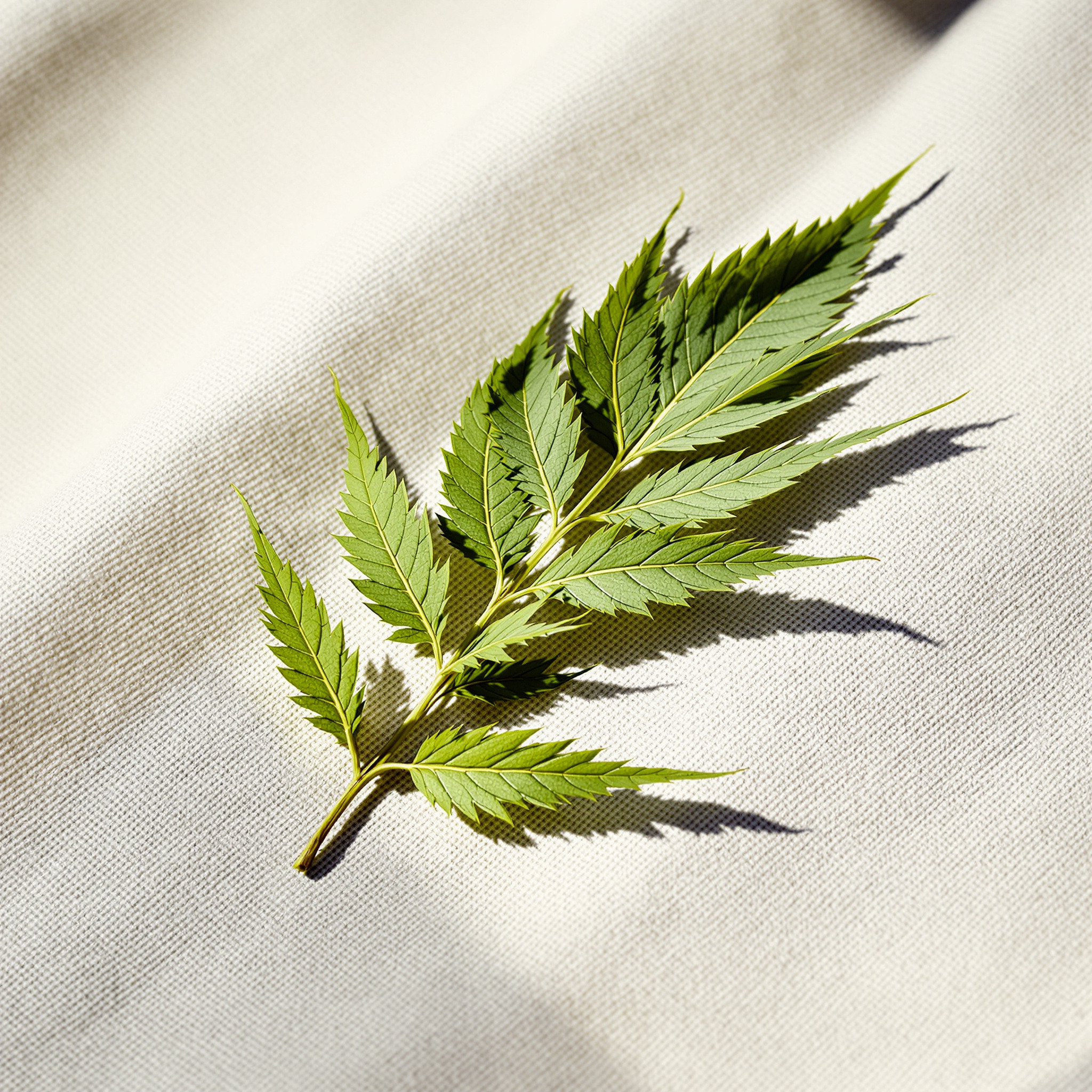
On October 19, 2026, the EU Council’s Special Committee on Agriculture passed a partial negotiating mandate to revise the agricultural market organization. The text includes a provision the hemp sector has sought for years: not just straw and fiber, but „all other parts of the hemp plant“ should qualify as agricultural products. This includes leaves and flowers.
📑 Inhaltsverzeichnis
We reviewed Council document 14647/26 directly because coverage of this decision often overstates its scope in some areas while understating it in others.
The Council wants to expand the „flax and hemp“ sector in Annex I of Regulation (EU) No. 1308/2013 beyond raw hemp. Going forward, four product categories will be covered, each with its own tariff classification:


- Raw hemp, tariff number 5302, as before
- Hemp seed for sowing, 1207 99 20
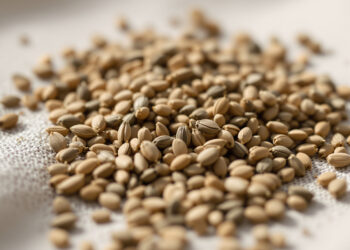
- Hemp seeds not intended for sowing, 1207 99 91
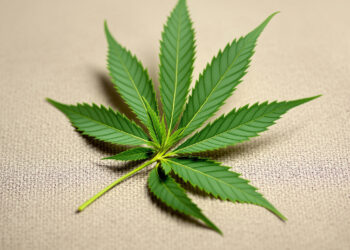
- All other parts of the hemp plant, 1211 90 86—including leaves and flowers
This is tied to three mandatory conditions: a Cannabis sativa L. variety registered in the Common Catalogue, a THC content of no more than 0.3 percent, and certified seed under Directive 2002/57/EG (or conservation varieties under Article 10 of Directive 2008/62/EG). Hemp seeds not intended for sowing can be marketed without these additional requirements.
Two provisions in the draft go beyond marketing. Products that don’t meet the conditions may still be marketed for medical and scientific purposes under EU, international, and national law. Member states must also use administrative controls to ensure non-compliant hemp products don’t enter the market or are removed from it. A one-year transition period applies to existing stocks from plantings before the cut-off date.
The Council bases this on the Kanavape ruling of the European Court of Justice (C-663/18), which established that non-psychoactive cannabinoids like CBD from low-THC varieties are not controlled substances under international drug treaties. According to current scientific understanding, varieties with no more than 0.3 percent THC pose no likely health risk.
The Loophole Is in the Preamble
Anyone reading only the product categories might think this is a European flower approval. It isn’t. Recital 22a explicitly states that member states may introduce or maintain national rules on the end-use of all parts of the hemp plant and products derived from it, to protect public health and safety, provided they comply with EU law and Article 36 of the EU Treaty in particular.
This splits the question in two. Marketing as an agricultural product is harmonized at EU level; permitted use remains national. For Germany, this means the „intoxication clause“ in Section 1 of the Cannabis Consumption Act—which only permits hemp if use for intoxication is excluded—is exactly this kind of end-use rule. Under this framework, it would remain in place.
Notably, the Council says both things in the same text. Recital 20 identifies national bans on specific hemp products as a problem: they could undermine market organization, create legal uncertainty and internal market barriers, and lead to unfair competition between farmers in different member states. Two recitals later, it permits them again under the heading of end-use.
This contradiction isn’t editorial—it’s the compromise. And it shifts the decision to a level where courts, not lawmakers, operate: the reference to Article 36 means a national restriction must be proportionate and genuinely health-protection-driven. Anyone challenging a German rule on this basis must litigate.
What This Mandate Explicitly Is Not
A partial mandate is the Council’s negotiating position for talks with the European Parliament. It has no legal force, it’s not enacted law, and it’s not even the Council’s complete position on this file—only on selected chapters. Hemp is one of them.
There’s also a detail often lost in summaries: every date in the draft appears in square brackets. Hemp marketing, production, and import rules are supposed to apply from „1 January at the earliest following entry into force.“ That’s not a date—it’s a placeholder. When these rules would actually take effect is open, and anyone basing investment decisions on them is betting on brackets.
Who This Affects in Practice
The mandate is immediately relevant for the part of the industry working with leaves and flowers from certified hemp and currently living with the question of whether the material is even an agricultural product. This classification determines customs treatment, market organization, and funding eligibility—not permission to sell to consumers. The two are regularly confused.
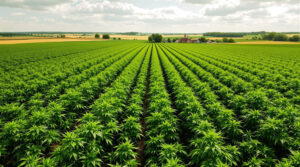
For cultivation itself, nothing changes at the critical point. The THC threshold stays at 0.3 percent. The Bundestag hearing in October, where farming associations and scientists argued for raising it to 1 percent while the Federal Institute for Risk Assessment opposed it, runs parallel to a European text that simply confirms the old limit. We documented the details of that hearing in our report on the hemp hearing.
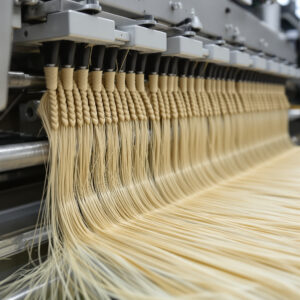
And for processing—the area where Europe is actually making progress right now—the mandate is more background music than driver. A fiber processing plant doesn’t get built because of a tariff number. What’s being constructed in Portugal is described in our piece on the wet-spinning mill in Santo Tirso; the organization of the entire value chain is detailed in our complete guide to hemp and industry.
How to Spot the Next Move
Next comes negotiation between Council and Parliament. Three things matter more than headlines about flowers: whether Parliament backs the end-use clause in Recital 22a or strikes it, whether the square brackets become real dates, and whether the 0.3 percent threshold even gets revisited in trilogue talks. If the clause stays and the limit stays, little changes for the German market except that the debate will now happen against a European template instead of a German one alone.



Sollten EU-Staaten die Hanfblüten-Nutzung national weiter einschränken dürfen?
Branchen-Update
News, Analysen und Reportagen — mehrmals im Monat direkt in dein Postfach.