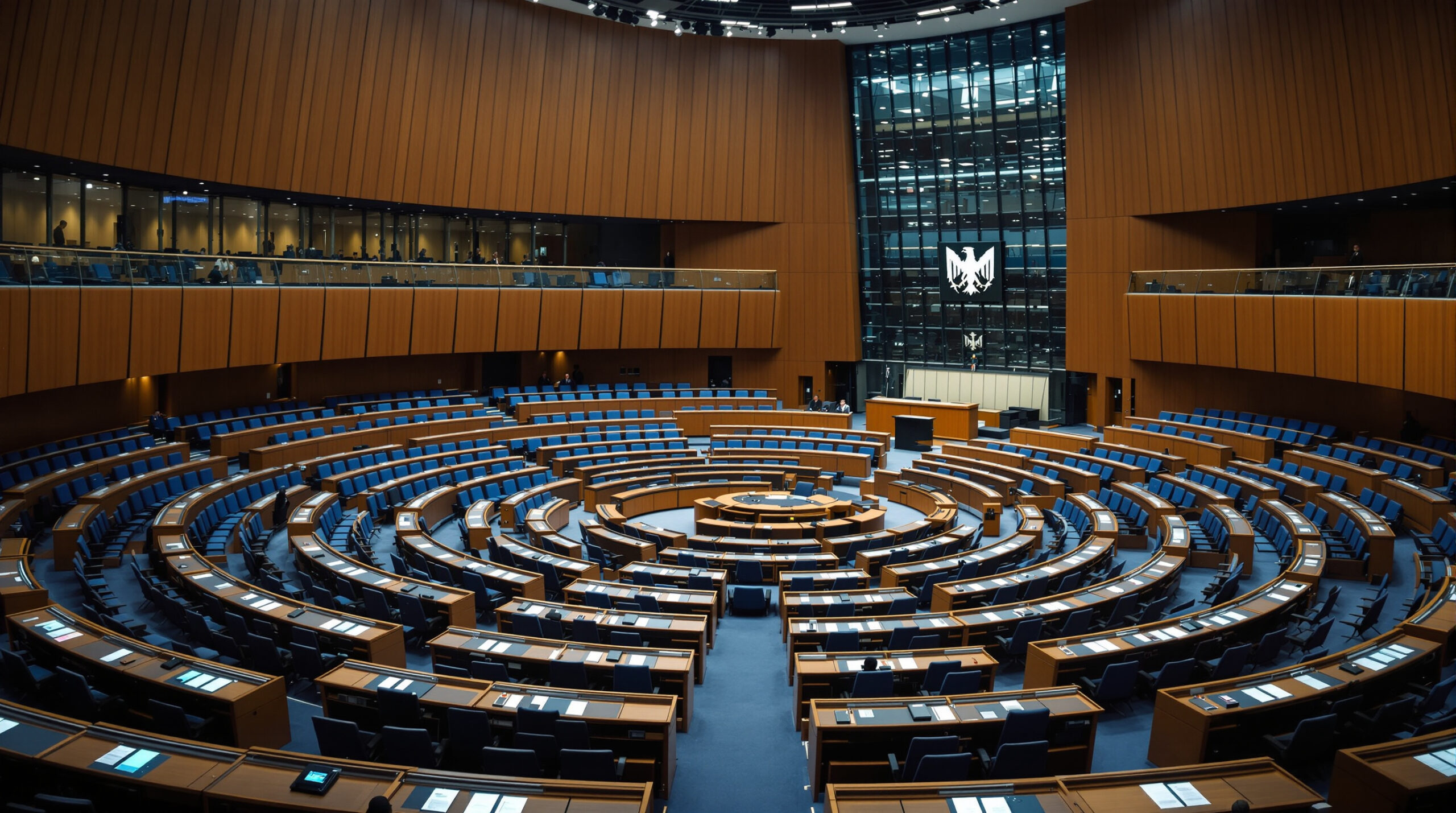
The Agriculture Committee of the German Bundestag heard expert testimony on hemp legalization on October 14, 2026. The basis is a bill from the Greens that seeks to remove the abuse clause, raise the THC threshold to one percent, and allow indoor cultivation. Agriculture and science supported the draft. Clear opposition came from the Federal Institute for Risk Assessment, specifically from a perspective that has rarely appeared in the debate: feed and food law.
📑 Inhaltsverzeichnis
- What the bill wants to change regarding hemp
- Who spoke at the hearing
- Farmers Association and Science: Support for one percent threshold
- Cannabis Industry Association: Resolution without changes demanded
- Tobacco tax is not in the legislative text
- The objection comes from the feed trough
- The objection: Law alone does not bring farms back
- Assessment: Agreement on substance, dispute over sequence
- Frequently Asked Questions
- 💬 Fragen? Frag den Hanf-Buddy!
What the bill wants to change regarding hemp
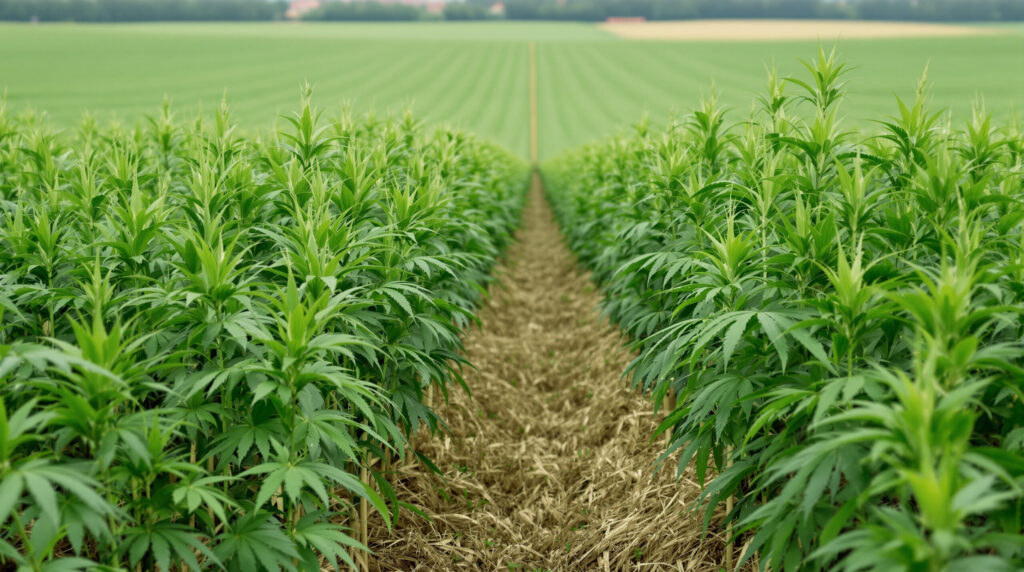
The draft bears the reference number 21/2116 and dates from October 7, 2025. It amends the Cannabis Consumption Act in three places. First, the abuse clause in § 1 Number 9 is eliminated. Until now, it has only permitted handling of hemp if misuse for intoxication purposes is excluded. How far this formula reaches in practice was recently demonstrated by a proceeding in Bavaria, which we reported on in our article about the acquittal of a hemp dealer.
Second, the THC value in the definition of hemp rises from 0.3 to 1 percent. Preparations should also not exceed this limit. Third, agricultural enterprises may now cultivate hemp in closed spaces. The draft explicitly does not permit edibles for intoxication consumption. Control of indoor cultivation is to be handled by the Federal Agency for Agriculture and Food. The draft estimates their additional expenses at 10,250 euros per year.


Who spoke at the hearing
The hearing was the 35th session of the Committee for Agriculture, Food and Home Affairs and lasted two hours. The Legal Committee and Health Committee participated in an advisory capacity. Felix Drewes spoke as an individual expert, as did Simone Graeff-Hönninger, Professor of Crop Production at the University of Hohenheim. For the German Farmers Association, Katharina Geiger from the Crop Production Department spoke.
The two seats that remained open as of October 8 on the proposal of the Union faction went to the Federal Institute for Risk Assessment. Robert Pieper and Bernd Schäfer represented the only fundamentally critical positions there. In addition, one expert each spoke at the suggestion of the Greens and the Left faction.
All three describe the initial situation with the same figures from the Federal Agency. In 2026, 438 farms cultivated hemp on 5,785 hectares. In 2022 there were still 889 farms. The area has grown compared to the previous year, but the number of growers continues to decline. Our article provides the European comparison, covering the growing cultivation area in Poland.
Farmers Association and Science: Support for one percent threshold
The Farmers Association explicitly welcomes the draft. The abuse clause creates criminal risks that farms cannot calculate. Consumer and youth protection can be provided by the respective specialist laws, such as food law or tobacco law. Additionally, the association demands a tolerance rule for minor THC exceedances. A farm with an approved variety should not lose its entire harvest after a hot summer.
Graeff-Hönninger argues from a breeding perspective. The 0.3 percent threshold acts as a genetic bottleneck. She refers to a 2024 analysis showing that EU-registered varieties average 2.5 percent CBD. Swiss varieties under that country’s one percent threshold achieve 13.6 percent. With such narrow selection, resistances and adaptability have also been lost. According to her account, the 0.3 percent value would remain unchanged for EU direct payments. In her assessment, there is no documented misuse of hemp for intoxication purposes. We have already evaluated the available figures on the intoxication clause.
Cannabis Industry Association: Resolution without changes demanded
One day before the hearing, the Cannabis Industry Association submitted its own statement. The association, which according to its own information represents around 90 companies and associations, supports the draft in all respects and recommends the committee „promptly and without modifications to pass it,“ so that farms have legal certainty before the next growing season. With this, the association goes further than the three experts who support the draft but name improvements needed.
More interesting than the support are the two cases with which the association bases its demand. In Dithmarschen, the Itzehoe public prosecutor’s office ordered the seizure of 3.7 hectares of hemp fields along with products and production facilities in August 2022, even though cultivation had been approved since 2019 and THC content was below 0.2 percent. At Hanf-Zeit GmbH in Steinheim, North Rhine-Westphalia, the state criminal police seized goods worth approximately 250,000 euros in March 2021. Both proceedings ended without conviction: one in December 2022 under § 153a of the Code of Criminal Procedure following payment of 1,500 euros each, the other in May 2024 following payment of 2,000 euros, accompanied by consent to destruction of the goods.
This is the actual finding behind the debate over the abuse clause. These cases were not about convictions but about dismissals in exchange for payment. Economic damage occurred nonetheless because the goods had already been seized or destroyed at that point. Whoever asks about the effect of a criminal provision must therefore not look at conviction rates but at what a search does to a farm with seasonal harvests.
Tobacco tax is not in the legislative text
One point of the draft is discussed in the industry as a fourth amendment but does not appear in the legislative text: tobacco tax. Article 1 amends exclusively the Cannabis Consumption Act, Article 2 regulates entry into force. An amendment to the Tobacco Tax Act is not provided for. Tax liability appears only in the cost sections, and then as a consequence: if hemp becomes marketable as a plant-based smoking product, it is subject to existing tobacco tax law.
The draft calculates additional tax revenue of approximately 2.544 million euros per year from this. Against this, the customs administration faces a permanent need for five additional positions, personnel expenses of approximately 227,000 euros in 2026 and approximately 454,000 euros from 2027 onward, plus a one-time implementation cost of roughly 46,000 euros. For business, the draft estimates the one-time burden at approximately 9,000 euros, primarily for permit applications and registration as a recipient of tax stamps. The industry association accepts the tax obligation as a „reasonable compromise“ but points out that a tax law classification does not answer the product law question. Whether a hemp smoking product is marketable is not decided by tax law.
One figure in the draft is now outdated. All cost calculations assume entry into force on January 1, 2026. This date has passed; the draft is from October 2025. The amounts should therefore be read as magnitudes, not as budget allocations for the current year.
The objection comes from the feed trough
The sharpest objection came from Robert Pieper of the Federal Institute for Risk Assessment, and it concerns an area rarely discussed in the hemp debate: feed. According to a model calculation by the institute, a dairy cow eating approximately one kilogram of hemp daily with 0.3 percent THC exceeds the toxicological reference value by roughly 130 times. Cannabinoids transfer into the milk in this process.
Because there are currently no maximum levels for feed at the EU level, Pieper called the abuse clause „our last bastion.“ He does not fundamentally reject it: it could be eliminated once comparable maximum levels apply or a feeding ban exists. But not before that.
His colleague Bernd Schäfer made the same argument for food. Many consumers are not aware that hemp-containing food products can contain psychoactive substances; children are particularly affected. Current food law is „in no way“ adequate for this, especially since maximum levels exist essentially only for products from hemp seeds, not for leaves and flowers.
Remarkable about this criticism is that it does not defend the abuse clause because it is good, but because nothing else exists. The institute sees it as a stopgap for missing feed and food law. This also contains the answer from supporters: consumer and animal protection belong in specialist law and not in criminal law, argued Graeff-Hönninger and the Farmers Association. Support for the BfR did come, however, from an unexpected quarter: from the Left faction’s expert, who called for a common concept for maximum levels in food. Without this, the risk merely shifts from the farmer to the processor.
The objection: Law alone does not bring farms back
Felix Drewes reads the draft most carefully. He works at Merseburg University, is deputy chairman of the Hemp Network, and speaks as an individual expert. He calls the removal of the clause appropriate and overdue. He considers raising it to one percent defensible. But it does not address the main risk of domestic cultivation. Goods from EU cultivation with certified seed already count as hemp today regardless of THC content. The economic risk lies in EU subsidies at 0.3 percent and in maximum levels for food. The draft does not touch either.
Drewes also points to a technical collision. The federal government has submitted its own new version of the cultivation notification with its Deregulation Act. Both measures replace the same paragraph in the Cannabis Consumption Act and must be coordinated with each other. From his perspective, what matters for practice is primarily missing processing facilities and requirements that apply per farm. They burden small areas disproportionately. Our overview explains which requirements currently apply to cultivation and licensing of hemp in Germany.
Assessment: Agreement on substance, dispute over sequence
After the hearing, a clear picture emerges. There is little dispute about the goal itself: that the abuse clause places farmers under general suspicion and that recreational misuse of hemp is not documented—no one seriously contested this, not even the BfR. The dispute is over sequence. Should the threshold rise and the clause fall before feed and food law catch up, or only after? Anyone who followed the hearing now knows what the draft might fail or stall on in committee, and it is not hemp policy but specialist law.
A hearing is not a decision in any case. The draft comes from the opposition and was referred to the committee without debate in March 2026. Hemp does not appear in the coalition agreement between the Union and SPD. Drewes counted: in approximately 12,700 plenary speeches in this legislative period, the word „hemp“ did not fall once through the end of September. Remarkable, then, is how close the draft lies to an earlier government proposal. According to his analysis, the legislative text deviates from the government draft of 2024 only in the THC value. So the removal of the clause was already government policy once, under the traffic light coalition. Whether today’s coalition takes up this thread again will be seen in committee deliberations after the hearing.
Frequently Asked Questions
What is the abuse clause for hemp?
The clause appears in § 1 Number 9 of the Cannabis Consumption Act. It permits handling of hemp only if misuse for intoxication purposes is excluded. Critics see in this a criminal liability risk for farmers, processors, and dealers, even with very low THC levels.
Does the one percent THC threshold for hemp already apply?
No. The 0.3 percent value continues to apply. The Green party draft has not been passed. The October 14 hearing was one step in the parliamentary process, which would need to be followed by committee deliberations and further readings in the plenum. For EU subsidy eligibility, the 0.3 percent value remains decisive in any case, as noted by the Left faction’s expert at the hearing.
Would the law permit sale of intoxicating hemp products?
No. The draft makes clear that edibles for intoxication consumption are not permitted. Preparations from hemp may contain no more than one percent THC. For food, cosmetics, and tobacco substitute products, the respective specialist law continues to apply.
What does indoor cultivation of hemp mean?
This refers to cultivation in greenhouses, plastic tunnels, and other enclosed spaces. Until now, this cultivation method has not been permitted for hemp. The draft provides for indoor cultivation especially for CBD-rich raw materials, since it makes little economic sense for fiber and seed.
How many farms grow hemp in Germany?
According to figures from the Federal Agency for Agriculture and Food, 438 farms cultivated hemp on 5,785 hectares in 2026. In 2022, 889 farms had grown hemp. The number of growers has thus more than halved.
Sollte der THC-Grenzwert für Nutzhanf auf 1 Prozent steigen?
Sources: German Bundestag, printed matter 21/2116 from 07.10.2025; Committee for Agriculture, Food and Home Affairs, agenda of the 35th session from 08.10.2026; Committee printed matters 21(10)88-A (Felix Drewes), 21(10)88-B (German Farmers Association) and 21(10)88-C (Prof. Dr. Simone Graeff-Hönninger), each from 05.10.2026; German Bundestag report „heute im bundestag“ No. 830/2026 from 14.10.2026 on the hearing; Statement of the Cannabis Industry Association e. V. from 12.10.2026 on the NLG; German Bundestag, referrals in simplified procedure, session from 19.03.2026.





Branchen-Update
News, Analysen und Reportagen — mehrmals im Monat direkt in dein Postfach.
Folge uns