Hemp is one of humanity’s oldest cultivated plants and simultaneously one of the most versatile in modern industry. What was self-evident for millennia disappeared behind a global prohibition regime in the 20th century. Today, in 2026, industrial hemp is experiencing a renaissance in Germany and Europe, fueled equally by climate discussions, sustainability pressures, and newly regulated cannabis policy. And in the midst of this transformation, one question repeatedly emerges that moves farmers, processors, and private individuals alike: What actually happens to hemp waste?
📑 Inhaltsverzeichnis
- What is Industrial Hemp? Definition, Distinction, and History
- Industrial Hemp in Germany 2026: Cultivation Areas, Regions, and Legal Framework
- The Most Important Industrial Applications of Industrial Hemp
- Hemp Waste: What Happens to Hemp Plant Residues?
- Industrial Hemp 2026: Reform Needs, Market Potential, and Future Perspectives
- Frequently Asked Questions
- 💬 Fragen? Frag den Hanf-Buddy!
This guide provides a comprehensive overview of industrial hemp in Germany, from legal foundations through major industrial applications to the question of how hemp residues are properly and meaningfully recycled. Whether you’re a farmer considering entry into the sector, a consumer seeking sustainable products, or a cannabis social club member wanting to know what happens to plant material after harvest: you’ll find all the answers here.
What is Industrial Hemp? Definition, Distinction, and History
Industrial hemp, also called fiber hemp, refers to cultivated varieties of the species Cannabis sativa L. that are specifically bred for their industrial properties. The decisive characteristic compared to consumption cannabis is the extremely low THC content: In the European Union, a limit of 0.3 percent tetrahydrocannabinol in dry material applies. German regulations follow this EU requirement and mandate approved varieties from the EU variety catalog.


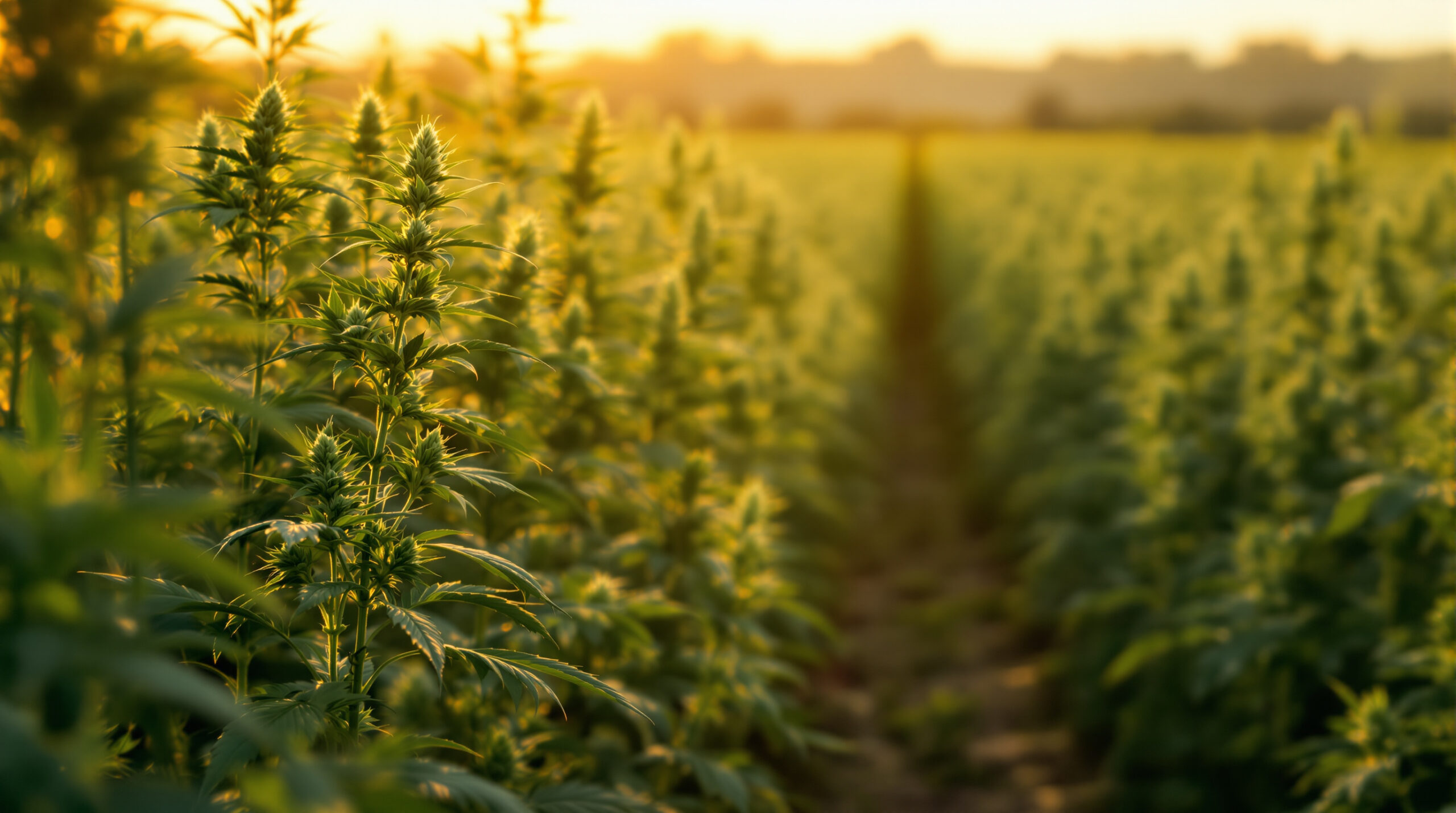
The difference is not only legally relevant but reflects genuinely different breeding objectives. While consumption cannabis varieties were selected for high cannabinoid levels, industrial hemp varieties have focused for centuries on yields of fiber, seeds, and oil. Modern industrial hemp varieties produce significantly more biomass per hectare than their psychoactive relatives and are designed for mechanical harvesting. Their stalks grow up to four meters high, with plant density ranging from 120 to 150 plants per square meter.
Historically, hemp was a standard field crop in Europe through the early 20th century. Rope, sails, clothing, paper—hardly any area of everyday life existed without hemp fiber. The Danish sail on Columbus’s Santa María was woven from hemp, Gutenberg’s first Bible printed on hemp paper. Only the spread of cheaper cotton, synthetic fibers, and finally the drug policy of the 20th century drove the plant from the fields. Today it is returning, driven by climate protection goals, the desire for regional raw materials, and a society that finally differentiates again between intoxication and raw material.
Industrial Hemp in Germany 2026: Cultivation Areas, Regions, and Legal Framework
Following the record year of 2024 with approximately 7,100 hectares of cultivation area, German industrial hemp cultivation experienced a noticeable decline in 2025: A total of 496 farms cultivated industrial hemp on 5,274 hectares, a decrease of 1,842 hectares compared to the previous year. For the third consecutive year, the number of cultivating farms declined, this time by 127. The causes are primarily economic pressure, a difficult market environment, and regulatory uncertainty. The average farm size is just under eleven hectares per operation, significantly smaller than in France, Europe’s market leader with over 20,000 hectares.
Regionally, cultivation concentrates in Saxony-Anhalt, Brandenburg, and Thuringia—states with large arable land and low precipitation that suit hemp plants well. The average farm size in Saxony-Anhalt is 37 hectares, indicating more agroindustrial structures than small farms. In the south, smaller farms dominate, specializing in premium products like hemp seeds or certified CBD raw materials, thereby achieving higher profit margins.
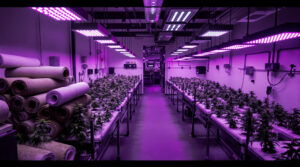
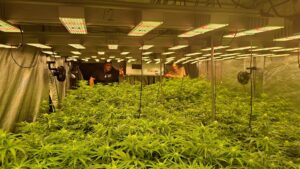
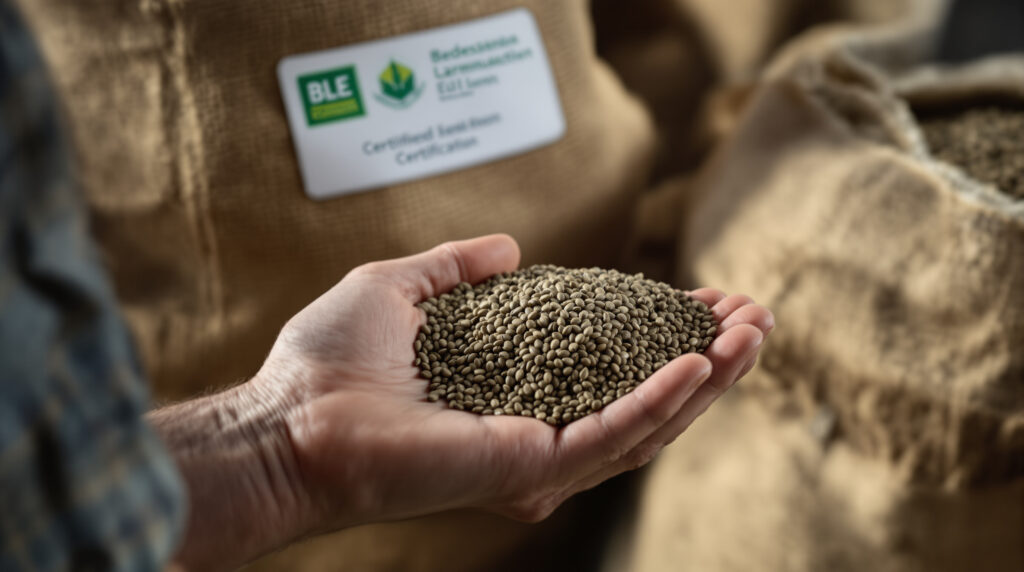
Industrial hemp cultivation in Germany is reportable. Farmers must submit their cultivation notification directly to the Federal Office for Agriculture and Food (BLE) no later than July 1 of the cultivation year. Only varieties from the EU variety catalog with certified seed and documented THC content below 0.3 percent are permitted. Indoor cultivation of industrial hemp is not yet allowed—a point that industry associations and the sector have criticized as a structural obstacle for years.
In February 2026, the BLE published an updated information sheet for farmers. Simultaneously, associations continue demanding fundamental reforms: central focuses are eliminating the misuse clause, raising the THC threshold to 1 percent as already valid in other EU countries, and permitting greenhouse cultivation. This would first enable standardization, year-round production, and new high-performance varieties. A corresponding proposal was pending in the Bundestag for a vote in 2026.
The Most Important Industrial Applications of Industrial Hemp
Industrial hemp is one of the most resource-rich plants a farmer can cultivate. Almost every part of the plant can be used—a characteristic highly relevant in times of circular economy thinking. The five main utilization pathways are fiber, shive, seeds, oil, and flower or leaf biomass. Hemp processing technology, from retting through breaking to hackling, determines which qualities are suitable for which industries.
Hemp Fiber: Textiles, Paper, and Composite Materials
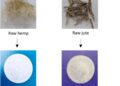
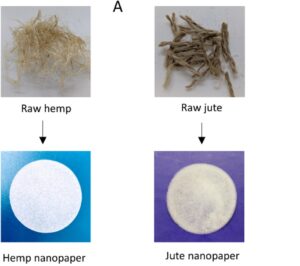
The bast fibers in the outer part of the hemp stalk represent the oldest and economically most significant product of the hemp plant. Long fibers yield high-quality textile yarns that exceed cotton in strength and durability. Shorter fibers and tow find use in specialty paper grades, including cigarette paper, banknote paper, and technical filters. Hemp textiles are experiencing a renaissance in the fashion industry: major brands seek alternatives to water-intensive cotton and petroleum-based polyester, and hemp requires only a fraction of the water.
In composite materials, hemp has long been industrially established. Natural fiber-reinforced plastics with hemp fiber content are used in the automotive, marine, and wind power industries. They are lighter than fiberglass, biodegradable, and processable with standard equipment. Hemp fiber’s strength should not be underestimated: with tensile strength of 550 to 900 MPa, it approaches values previously reserved for synthetic fibers while offering significantly better environmental profiles.
Hemp Shive: Building Materials, Insulation, and Hempcrete
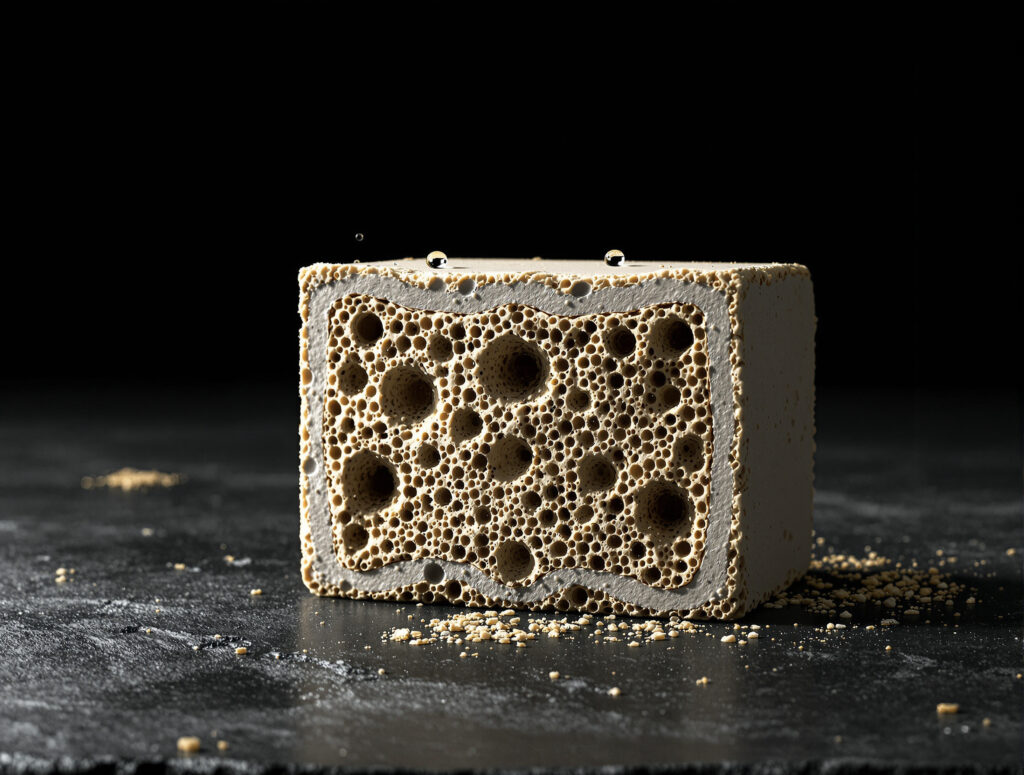
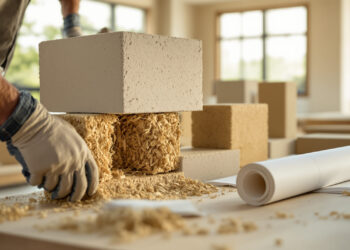
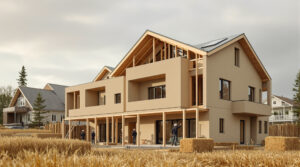
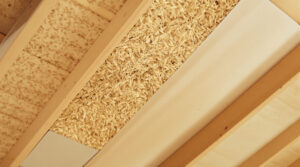
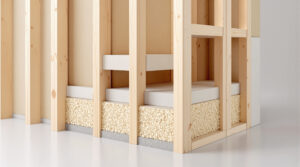
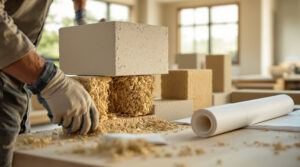
Shive consists of the woody core parts of the hemp stalk that result as a by-product during fiber extraction. Representing 50 to 60 percent of stalk weight, this is quantitatively the largest harvest by-product. Industrial hemp in construction is no longer a niche topic: hemp shive mixed with lime creates hempcrete, a building material that simultaneously insulates, regulates moisture, and binds CO₂. Hempcrete walls are being built in Germany, France, and Great Britain, with standardization procedures underway.
The composition of shive—approximately 35 percent cellulose, 18 percent hemicellulose, 21 percent lignin—makes it an extraordinarily versatile raw material. It can absorb up to four times its own weight in moisture and is completely compostable. As animal bedding, particularly for horses, hemp shive has found a stable niche. As an insulating material, it increasingly replaces mineral products that, while inexpensive, are problematic for recycling. And as filler for biopolymers, a new application field is emerging that could revolutionize the packaging industry.
Hemp Seeds and Hemp Oil: Food, Feed, and Cosmetics
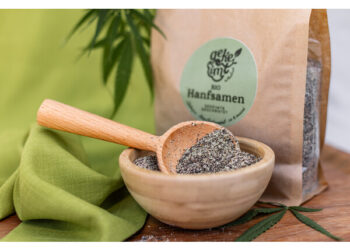
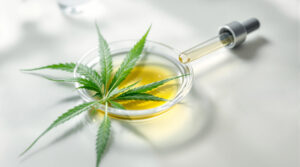
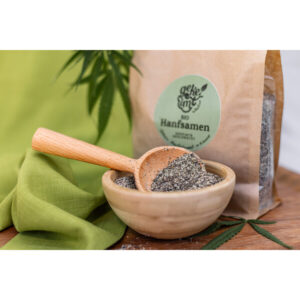
Hemp seeds rank among the most nutrient-dense seeds that agriculture can produce. Their protein content is around 25 percent, and their fatty acid composition with an omega-6 to omega-3 ratio of approximately 3:1 is considered nutritionally ideal. Cold-pressed hemp oil has a secure place in hemp food products, as salad oil, in capsules, or as an ingredient in functional foods. The oil cake remaining from pressing is a high-quality protein feed for animal husbandry.
In cosmetics, hemp-based ingredients play a growing role. Hemp in cosmetics must be clearly distinguished from CBD products: many cosmetics contain no cannabinoids whatsoever, only hemp seed oil, which is purely lipid-based and subject to no special regulation. It is considered skin-care beneficial, rich in vitamin E, and well-tolerated. Globally, the market for hemp-based beauty care is one of the fastest-growing segments of natural cosmetics.
Hemp Waste: What Happens to Hemp Plant Residues?
Hardly any topic currently moves more people than the question of proper hemp waste management, and from two very different directions. For industrial operations, it concerns the utilization of shive, tow, and residual biomass from fiber processing. For private individuals and cannabis social clubs, the Consumption Cannabis Act (CanG) raises the question of how harvest residues and plant material can be disposed of legally safely. What hemp waste actually is and why the statement „nothing is lost“ applies almost literally to industrial hemp, we’ve detailed in a separate article.
Hemp Waste in Industrial Processing
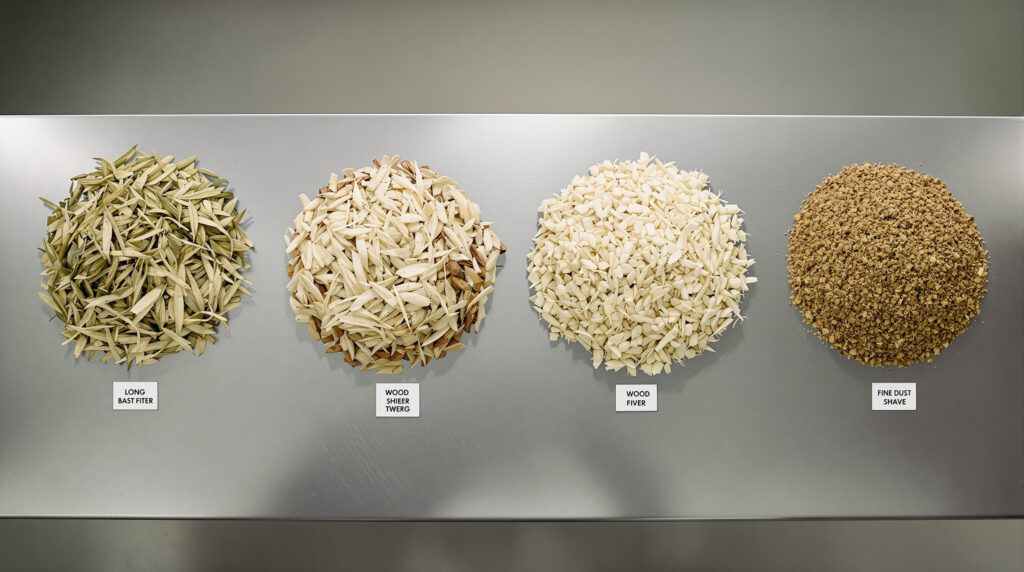
Industrial hemp processing operations generate hardly any true waste in the classical sense. During fiber extraction, shive results as the main by-product and is marketed, not disposed of. Tow—short and irregular fibers—finds buyers in the insulation material or paper industries. Dust components go to energy recovery. Hemp straw as raw material is now so sought-after that farmers sell it directly from the field before any fiber processing occurs. What rots as straw in other crops‘ fields has long had market value with hemp.
Leaf material and flower residues from industrial hemp production, typically unproblematic with low-THC varieties, can be composted or used as feed additive depending on regional regulations. Essential hemp oil distilled from flowers and leaves is another value stream that small and medium operations increasingly tap. True waste volume in a well-integrated industrial hemp production system tends toward zero, making hemp a prime example of circular economy.
Hemp Waste and the Consumption Cannabis Act: What Applies Since 2024?
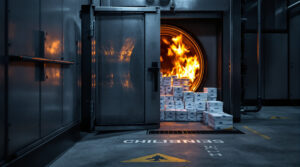
For private individuals and cannabis social clubs, the Consumption Cannabis Act, which took effect April 1, 2024, brought a new dimension to the hemp waste question. Whoever is allowed to grow up to three living plants at home, who receives up to 50 grams monthly in cultivation associations, inevitably has plant material to dispose of after harvest. Leaves, stalks, root balls, cutting waste: what of this is THC-containing plant material, and how is it legally safely disposed of?
The legislator’s answer is deliberately pragmatic. Residues from private home cultivation must be disposed of so they cannot be misused. In practice, this means: composting in one’s own garden is permitted in most federal states as long as the compost is not publicly accessible. Organic waste bins are basically possible if the material is mixed with other biomass and made unrecognizable. Recycling centers accept yard waste without perlite and without dried flower residues. Cultivation associations face stricter obligations: they must document disposal and demonstrably ensure that no material leaves the legal framework.
Important in this context: although dried cannabis flowers and leaves are technically hemp waste, they fall under the same possession limits as consumable material. A maximum of 50 grams of dry matter at the residence is legal; anything exceeding that must be disposed of promptly. Storing harvest residues as inventory can therefore quickly enter illegal territory, even if the sole intention is disposal.
Industrial Hemp 2026: Reform Needs, Market Potential, and Future Perspectives
The global industrial hemp market stands before a remarkable growth trajectory. Analysts project an increase from approximately 13.86 billion U.S. dollars in 2026 to over 71 billion U.S. dollars by 2034—an annual growth rate of nearly 23 percent. Germany is regarded as a core market in Europe, owing to its processing capacities, agricultural infrastructure, and new legal framework through CanG and EU regulation.
Nevertheless, Germany lags behind in European comparison. France cultivates over 20,000 hectares of industrial hemp and is Europe’s leading producer. Romania and Poland are catching up. In Germany, two regulatory hurdles primarily block the breakthrough: the indoor cultivation ban and the misuse clause, which permits authorities to refuse cultivation licenses if there is suspicion that THC is the aim of cultivation, even if the variety is legal and THC content far below the limit. This deters investors and hinders industry professionalization.
Association lobby efforts show initial results. A proposal for liberalizing industrial hemp cultivation lay before the Bundestag in 2026, with core demands: raise the THC threshold to 1 percent, permit indoor cultivation, eliminate the misuse clause. Should this framework become law, new product segments could emerge: high-aroma industrial hemp varieties for the food industry, standardized CBD raw materials for the European market, high-performance insulating materials from hemp shive for the building sector.
Simultaneously, hemp gains strategic significance as a climate crop. Hemp binds up to 13 tons of CO₂ per hectare during growth, improves soil structure through its deep root system, requires minimal pesticides, and serves as a preceding crop for numerous cultures. In agriculture under climate pressure, this is no marginal topic but strategic competitive advantage. Federal states like Bavaria and Lower Saxony are already working on support programs to systematically integrate industrial hemp into crop rotations. Lignite mining rehabilitation landscapes in the Lausitz are being examined as potential future cultivation regions.
Frequently Asked Questions
Is Industrial Hemp Cultivation Legal in Germany?
Yes, industrial hemp cultivation is legal in Germany, though strictly regulated. Farmers must use approved varieties from the EU variety catalog, provide certified seed proof, and register their cultivation with the Federal Office for Agriculture and Food (BLE) by July 1 of the cultivation year. The THC content of the cultivated plant may not exceed 0.3 percent in dry material. Anyone meeting these conditions cultivates legally, regardless of whether their goal is fiber, seeds, or shive.
What is the Difference Between Industrial Hemp and Cannabis?
Industrial hemp and consumption cannabis are botanically the same species, Cannabis sativa L., but were bred in different directions over decades. Industrial hemp varieties have THC content below 0.3 percent and thus no relevant intoxication value. Consumption cannabis varieties can achieve THC levels of 10 to over 25 percent. Industrial hemp may be cultivated by licensed farmers without a narcotics permit; consumption cannabis has been subject to the Consumption Cannabis Act since April 2024 and is only permitted within defined quantities for personal use or in cultivation associations.
How is Hemp Waste Properly Disposed Of?
The answer depends on whether it is industrial or private hemp waste. In industrial hemp: virtually everything has a buyer—shive for building materials, tow for insulation, dust for energy, leaves for animal feed. True waste barely occurs. For private individuals growing at home: composting in your own garden is permitted as long as the compost is not publicly accessible. Dry plant material may be disposed in organic waste bins or as yard waste at recycling centers, without dried flowers, without perlite. Mind possession limits: anything over 50 grams of dry matter at your residence must be promptly disposed.
Which Parts of the Hemp Plant are Industrially Used?
The hemp plant enables nearly complete utilization. Bast fibers from the outer stalk area go into textiles, paper, and composite materials. Shive from the stalk core is processed into building materials, insulation, and animal bedding. Seeds serve as food or are pressed for hemp oil. Flowers and leaves provide essential oil or extracts. Root residues and dust go to energy recovery or back to the field as fertilizer. What would be waste in other crops is typically another value stream in hemp.
Where is Industrial Hemp Most Cultivated in Germany?
Sollte Nutzhanf in Deutschland stärker gefördert werden?
The largest cultivation areas concentrate in Saxony-Anhalt, Brandenburg, and Thuringia—states with large arable land, sandy soils, and relatively low precipitation. Saxony-Anhalt records the largest individual farms in German industrial hemp cultivation with an average of 37 hectares per operation. In southwestern Germany and Bavaria, smaller farms dominate, often specializing in premium segments like hemp seeds or certified raw materials for the food industry. Overall, the potential of German cultivation area is considerably larger than currently utilized; regulation remains the decisive bottleneck.




Branchen-Update
News, Analysen und Reportagen — mehrmals im Monat direkt in dein Postfach.
Folge uns