
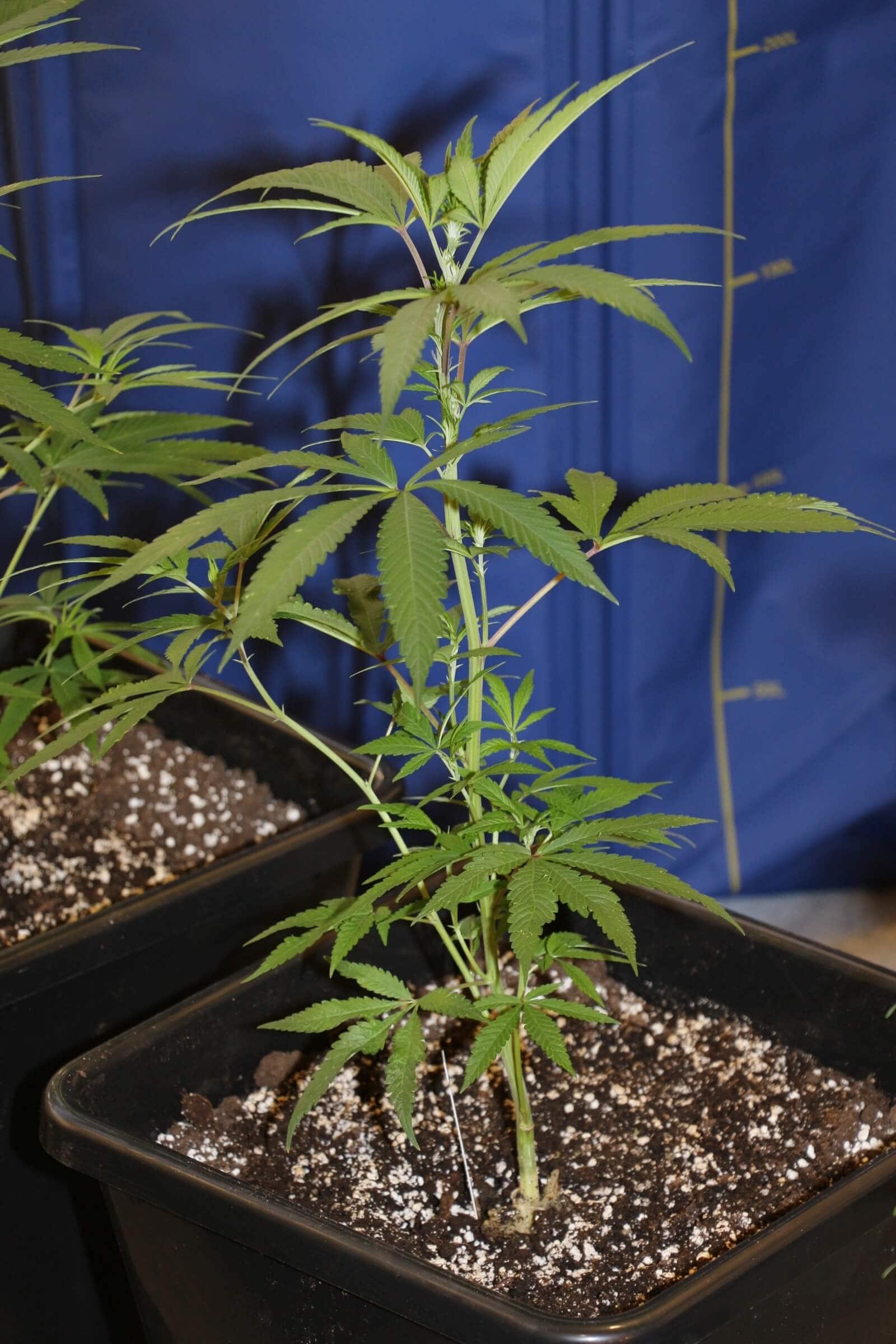
Are your cannabis plants stretching? Are they growing thin, tall and unstable upward instead of compact and bushy? Stretching is one of the most common problems in indoor cultivation — especially for beginners. The causes range from improper lighting to unfavorable genetics to nutrient problems. In this guide, you’ll learn why cannabis stretches and how to permanently fix the problem.
📑 Inhaltsverzeichnis
Why Do Cannabis Plants Stretch? The Most Common Causes
1. Light Deficiency — The Most Common Reason
The most typical cause of stretchy growth is incorrect or insufficient light. It’s not just about duration — quality and intensity matter. For the vegetative phase, up to 6500 Kelvin (blue spectrum) should be used, and for flowering 2700–3500 Kelvin (red spectrum). Fluorescent tubes with 36 watts should hang directly over the plants at about 20 cm distance, while a 250-watt HPS adequately illuminates one square meter.

2. Plant Genetics
Some cannabis strains naturally grow tall without building stability. Pure sativas especially tend to stretch. If this is consistently a problem, only a strain change helps — Indica-dominant varieties grow more compactly.
3. Nutrient Deficiency or Wrong Growing Medium
Nutrient-poor soil with incorrect pH promotes stretchy growth. Particularly a nitrogen ratio that’s too high compared to other nutrients encourages vertical growth. Pots that are too small or plants placed too close together can also be the cause.
Do Fans Help Against Stretching?
Many growers swear that fans solve the problem. This is only partially true. Air movement can strengthen stems somewhat, but without addressing the actual cause (usually light deficiency), wind alone won’t stop stretching. Outdoors, wind, temperature fluctuations and full sunlight spectrum work together for stable growth — this combination can hardly be replicated indoors.

Was dich auch interessieren könnte...
How to Really Fix Stretching
The solution almost always lies in the basics:
- Optimize lighting: Sufficient watts per square meter, correct spectrum, proper distance
- Humidity: 60–80% for seedlings, then 50–65%. Below 40%, stems become thin and woody
- Pot size: Sufficiently large pots so the plant can grow outward
- Support: Indoor plants never have stems as strong as outdoor ones — indoor growers support their plants with stakes or plant netting
Pro Tip Against Stretchy Growth in Seedlings
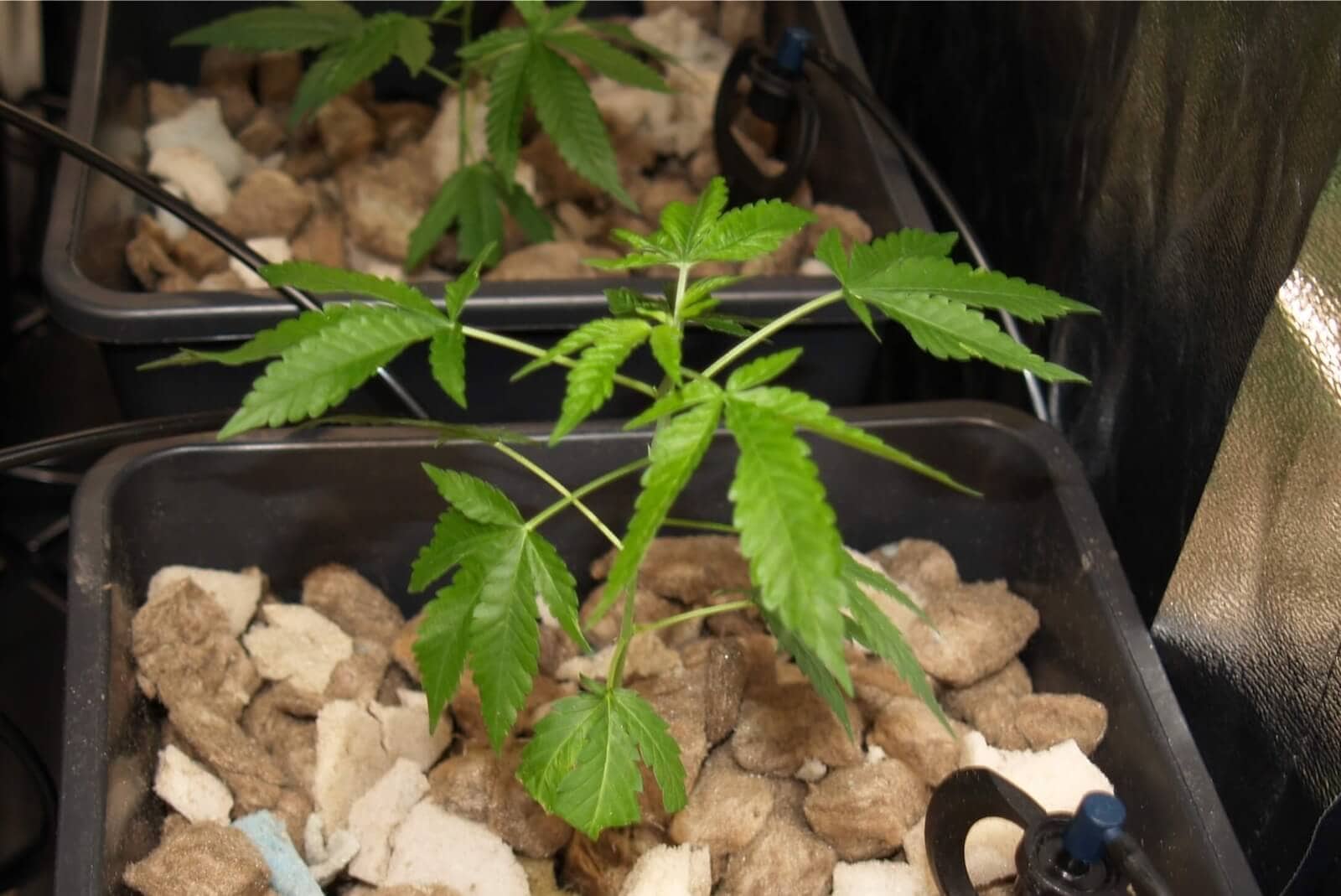
Seedlings almost always grow somewhat stretchy in the first three weeks — even under optimal conditions. A proven trick: When sowing, leave the top 3–4 cm of the pot empty. When the seedling starts to become woody after 2–3 weeks, simply add soil up to the cotyledons. New roots form on the buried stem, making the plant more stable.

Modern Methods Against Stretching
- LED lighting: Modern LEDs provide optimal spectrum with less heat. In early vegetative phase, blue LED light prevents stretching particularly effectively (distance: 30–40 cm)
- Low Stress Training (LST): Gently bending branches promotes lateral growth — plants become bushier and more stable
- Screen of Green (ScrOG): A net over the plants distributes growth evenly and prevents individual shoots from shooting upward
- CO2 enrichment: In professional grow rooms, controlled CO2 supplementation promotes more compact, stronger growth
Frequently Asked Questions About Cannabis Stretching
When Does a Cannabis Plant Start Stretching?
When the internodes (distances between leaf levels) become disproportionately large, the stem remains thin, and the plant forms no or only stunted side branches. Stretchy growth is especially common in the first 2–3 weeks after germination.
Can an Already Stretchy Plant Still Be Saved?
Yes — by immediately improving light conditions and supporting the plant. For seedlings, the stem can be stabilized by adding soil. Larger plants benefit from LST or ScrOG nets.
Do Indoor Plants Always Stretch More Than Outdoor?
Generally yes — indoors lacks the natural stimuli like wind, UV radiation and temperature fluctuations that create strong stems outdoors. With modern LEDs and good ventilation, however, the difference can be significantly reduced.