
📑 Inhaltsverzeichnis
First and foremost: Less is truly more when it comes to vaporizing. First, a vaporizer is much more efficient than other consumption methods, and second, good airflow is crucial. It’s relatively pointless to pack the herb chamber full (especially with coarse plant material), as most of the active compounds won’t be released.
It’s important to grind the material as finely as possible, but not too fine, as particles will then be drawn through the vaporizer’s screen, which both spoils the experience and quickly leads to screen clogging. The plant material should ideally be ground finer than if you were rolling a joint. Generally speaking: the finer the material, the faster and more efficiently the active compounds are extracted – the vapor becomes thicker. Depending on the device, the herb chamber should only be filled high enough so that the hot air has the opportunity to flow through all the material rather than just bypassing it around the edges. With vaporizers that have glass herb chambers, you should be able to see the plant material swirling. If you want to vaporize extracts, you should use the appropriate accessories from the manufacturer. If these aren’t available, they can be sandwiched between two layers of herb to prevent them from falling onto the heating element or being drawn through the screen.

The Draw is Mind-Blowing
Generally speaking: the longer the draw on the mouthpiece, the more intensive and consistent the extraction process. It makes sense to count to ten at the beginning to get a feel for a good draw as a beginner. Caution – this can already release many active compounds. If you’re unsure, just „sip“ first and wait for either (sometimes barely visible) vapor or a noticeable effect. Vaporizers have a remarkable effect that falls somewhere between oral consumption and smoking. The effects creep in slowly but then become quite pronounced.
Was dich auch interessieren könnte...
Generally, a temperature of 185°C-195°C is recommended. (Portable) devices with fixed temperature settings operate exactly in this range. This provides a well-balanced effects profile. Depending on the vaporizer model and preferences, the temperature can be adjusted during the session. Up to 200°C is „safe,“ meaning there’s no risk of combustion and it’s guaranteed that only vapor and no smoke is inhaled. Above 230°C, the plant material will definitely ignite. The lower temperature limit is around 160°C, where most of the aromatic and flavor compounds as well as some THC are released. Depending on the moisture and active compound content of the starting material, the useful temperature range is between 185°C and 215°C. In some cases, especially when using a water filter, you can venture slightly above 215°C.

Full Power!
Especially bong smokers are accustomed to thick smoke and intensely onset effects. Those who don’t want to give this up can carefully approach the maximum possible temperature in the range of 220°C – 230°C and connect a bong with standard joint and adapter to tube-style vaporizers. In this case, however, you must be aware that what you’re inhaling is no longer pure vapor, as partial oxidation of the plant material occurs.
A little tip: Such a bong used as a vaporizer water filter also works excellently as an inhaler for respiratory ailments. Simply add a little table salt to lukewarm water and inhalation becomes very pleasant and protects the throat from inflammation. Note: Temperatures above 215°C should generally be considered „dangerous“ in a vaporizer – so be careful that nothing burns.
Am I Really at the „Destination“?
The duration until a vaporizer load is consumed depends on the device, temperature, inhalation duration and frequency, quality, and moisture content of the material used. Therefore, it’s difficult to specify an exact endpoint for a session. I usually estimate about 10-15 minutes per load. Over time, you develop a feel for when it’s finished. Also, visible vapor naturally stops appearing, though this isn’t a definitive indicator.
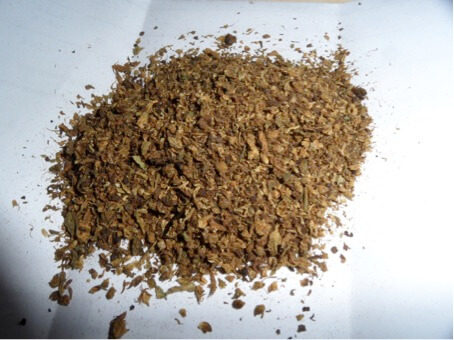
It’s best to simply take a look at the material in the herb chamber. Ideally, this should have a deep brown color and be nearly odorless. Larger quantities of vaporizer waste mostly smell faintly sweet, indicating some residual active compound content. I’m not aware of any device that has 100% efficiency. If the temperature was clearly too low, the material will be yellowish to light brown; if it was too high, it will be blackish-brown and smell slightly burnt.
Boiling Points of the Most Important Cannabinoids for Effects
- THC: 157°C, euphoric, pain-relieving, relaxing effects, the most psychoactive cannabinoid, primarily responsible for marijuana’s well-known effects
- CBD: 160°C-180°C, mildly psychoactive, reduces anxiety and spasms, antipsychotic, anti-inflammatory, weakens THC’s psychoactive effects (reduces paranoia)
- CBN: 185°C, sedating, antibiotic effects, is a breakdown product of THC
- THCV: 220°C, pain-relieving and euphoric effects, modulates THC’s effects