

First off: There are highly bred marijuana strains that generally tolerate significantly more fertilizer. However, there are also marijuana strains that tolerate much less fertilizer. Anyone who fertilizes these sensitive strains the same way as commercial marijuana strains will quickly destroy them. Properly fertilizing marijuana during flowering is therefore also a matter of the marijuana strains being used.
📑 Inhaltsverzeichnis
As a Plant, Marijuana Also Requires the Right Nutrients to Grow
Anyone growing original sativas and haze strains that don’t finish flowering in three to four months should give much less fertilizer. Even half the amount suggested by the manufacturer might still be too much, as nutrient salts also accumulate in the soil or rockwool mats. This is especially true when dealing with „landraces“ – fertilization should be very cautious.

Proper Fertilization During Flowering
Plants require more fertilizer especially during the flowering phase. If fertilizer instructions indicate giving one ml during pre-flowering, then three to five ml of fertilizer per liter of water should now be added to properly fertilize marijuana during flowering. Those growing in soil who don’t want to over-fertilize should use only three ml or even less per liter of water in this situation.
Over-fertilization can be quickly identified when the upper leaves curl upward at the tips and sides, with tips drying out more than a centimeter while potentially remaining green as they dry. In this case, two liters of clear water per liter of pot volume can be flushed through to wash away excess nutrients. In hydroponics, this is simple since you already have an irrigation system and suitable growing media. The water shouldn’t be cold or very warm and should be pH-adjusted before flushing.
With soil, flushing plants becomes problematic when waterlogging persists for days afterward. This should be avoided as much as possible, or evaporation should be promoted during those few days. In cases of critical over-fertilization in soil, simply withholding fertilizer won’t suffice, so potential waterlogging may represent the lesser evil. After flushing, marijuana flowering plants can be properly fertilized again by simply following manufacturer guidelines.

Choosing the Right Fertilizer for the Growing Medium During Marijuana Flowering
It’s better to prevent over-fertilization altogether. Therefore, a good fertilizer suited to the growing medium should be used that plants can tolerate even in high dosages. A complete component fertilizer should be chosen where individual nutrients aren’t added separately, potentially causing under- or over-fertilization. Better fertilizer can be absorbed more efficiently, offers a balanced nutrient mix, leads to root burn less quickly, and will generally provide better results. There are several good fertilizer manufacturers on the market offering quality fertilizers for soil, rockwool, coco, or aeroponics. Always follow manufacturer instructions for proper application of the fertilizer being used. This is especially important with multi-component fertilizers to properly fertilize marijuana during flowering. Here, individual components are given in different dosages during various growth phases of the marijuana plant.
Was dich auch interessieren könnte...
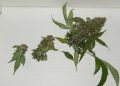
Good growing soil, unlike hydroponic media, provides a buffer zone for fertilizer. It absorbs fertilizer and the plant can take what it needs. Whether there’s little or somewhat more fertilizer in the soil doesn’t matter to a certain degree. Therefore, beginners are always advised to start growing in soil first, as it’s most forgiving of mistakes like excessive fertilization. This means EC and pH meters can be dispensed with – properly fertilizing marijuana flowering is easier in soil. Some fertilizers even push the pH value in the irrigation water into the optimal range; Hesi and Ferro are among these.
Photo Information
Title photo:
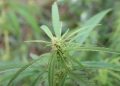
The marijuana flowering plant shown should bloom for several more weeks before harvest. It will produce not only dry mass but also many active compounds along with it. To build more mass, it’s fertilized heavily. During later ripening, this fertilizer would interfere and reduce quality. Therefore, it’s either discontinued a few weeks before harvest or flushed out a few days before harvest. The runoff water must be clear again so the buds ripen cleanly, taste good after drying, and will have „clean“ effects.

Photo in article:
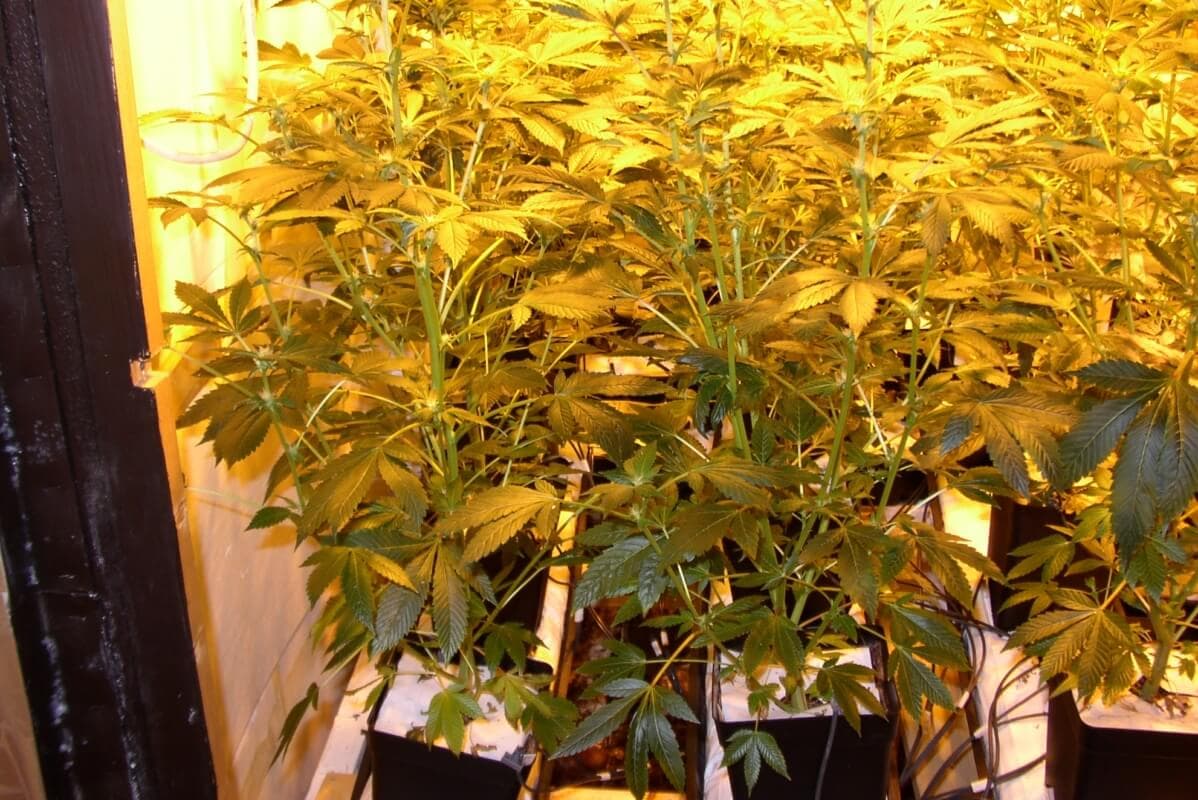
Proper fertilization also means water must reach the plants. For example, Gardena irrigation with clay cones doesn’t work with nutrient-rich water at all, as it tends to clog due to nutrient deposits at the narrow points. Even with other irrigation systems, clogging of individual water distributors cannot be 100% ruled out. Therefore, two water distributors were simply installed here (unfortunately barely visible), totaling 6 per mat, so if one clogs, the rooted plants still receive water from above and below.
Those working with rockwool will have considerable problems when a plant no longer receives water from above. Moisture will be drawn up by other plants, evaporate while salts remain behind, algae or similar organisms form, and everything starts to mold: yields from affected plants don’t even reach half their potential. Additionally, you have „mold nests“ in the system – mold can spread quickly under suitable climatic conditions. This problem can be addressed with two distributors per plant and their cleaning plus functional testing when setting up the plants.