A single sentence in the Medical Cannabis Act transfers consumption prohibition zones to patients who inhale their medication. Above this sentence stands „Child and youth protection in public spaces“. We have broken down the chain of references, and much of it doesn’t add up.
📑 Inhaltsverzeichnis
- A sentence that points to another law
- The heading refers to a paragraph that doesn’t actually apply
- What matters is the route of administration, not the active ingredient
- A prohibition that cannot be enforced with a fine
- The other side of the argument
- What those affected can take from this
- 💬 Fragen? Frag den Hanf-Buddy!
Section 5 of the Cannabis Consumption Act is widely discussed. The prohibition zones for public consumption, the line-of-sight rule, the pedestrian zones. Most recently, even the law’s evaluation has questioned parts of it, which we reported on in our article about consumption bans in cultivation associations.
Hardly discussed is that these same zones also apply to people who are prescribed cannabis as medicine. This is regulated in Section 24 of the Medical Cannabis Act. Roman Quadflieg, a cannabis patient since 2018 with legal training and, by his own account, the complainant in a constitutional complaint against the regulation that the Federal Constitutional Court declined to hear, brought this to our attention. We then read the regulations in the official legal text and came across an expert opinion from the Scientific Service of the German Bundestag that has already answered the decisive question.


A sentence that points to another law

Section 24 of the Medical Cannabis Act consists of a single sentence. It reads in full:
„Section 5, paragraph 2 of the Cannabis Consumption Act applies accordingly to the public consumption of cannabis for medical purposes by inhalation.“
§ 24 MedCanG
Above this sentence is the official heading „Child and youth protection in public spaces“. What the regulation actually does only becomes clear when you follow the reference.
Section 5, paragraph 2 of the Cannabis Consumption Act prohibits public consumption in six locations: in schools, on children’s playgrounds, in child and youth facilities, and in publicly accessible sports facilities, each also within their line of sight, furthermore in pedestrian zones between 7 and 20 o’clock, as well as within the enclosed property of cultivation associations and within their line of sight. Line of sight is legally defined: it no longer applies at a distance of more than 100 meters from the entrance area.
For patients, this applies accordingly if they inhale. The wording contains no exception for them, no hardship clause, and no weighing against medical necessity.
The heading refers to a paragraph that doesn’t actually apply
This is where it becomes remarkable, and this point only struck us upon re-reading.
Section 5 of the Cannabis Consumption Act has three paragraphs. Paragraph 1 prohibits consumption in the immediate presence of persons under 18 years of age. This is the provision that directly protects children and young people, regardless of location. Paragraph 2 contains the location list. Paragraph 3 concerns military areas of the Bundeswehr.
Section 24 of the Medical Cannabis Act refers exclusively to paragraph 2. The paragraph that regulates direct protection of minors is not referenced for patients.
A regulation thus carries the heading „Child and youth protection in public spaces“ while excluding precisely the paragraph that directly protects children. Only the location regulation is adopted. Whether this is a legislative oversight or intentional cannot be determined from the outside. What can be established is that the heading does not reflect the regulatory content. Anyone who reads it and concludes it concerns how to handle minors is wrong.
What matters is the route of administration, not the active ingredient

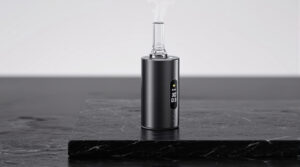
The second point concerns scope. The regulation applies explicitly only to consumption „by inhalation“, meaning vaporization and smoking.
Anyone who takes the same substance as oil, drops, or capsules is not covered by Section 24 of the Medical Cannabis Act and may take it anywhere, even on playgrounds and in pedestrian zones. Whether use is permitted thus depends not on the active ingredient and not on the condition, but on the method of administration.
This has practical consequences because both forms are not therapeutically interchangeable. Inhalation takes effect within minutes; oral administration takes considerably longer and has a different course. Especially for pain spikes and spasticity, the rapid onset of action is the reason for the prescription. Professional associations also point to this distinction in the debate over reimbursement, which we reported on in our article about cannabis therapies without follow-up solutions. Who the rule affects thus depends on which route of administration is medically indicated.
A prohibition that cannot be enforced with a fine

When looking at the legal consequences, it becomes revealing, and this finding is practically absent from public debate.
With consumption cannabis, the matter is clear: Section 36 of the Cannabis Consumption Act makes it an administrative offense if someone consumes cannabis contrary to Section 5, paragraph 2, sentence 1. For medicinal cannabis, the situation is harder to grasp.
- The penalty provision of the Medical Cannabis Act does not mention Section 24. Section 27 of the Medical Cannabis Act lists ten facts, from possession quantities to notification obligations to record-keeping. Public consumption is not among them.
- The penalty provision of the Cannabis Consumption Act refers to „cannabis“. However, Section 1, number 8, letter a of the Cannabis Consumption Act explicitly excludes cannabis for medical purposes from the cannabis definition of that act.
This exact question was examined by the Scientific Service of the German Bundestag in May 2025, in the status report WD 8-3000-032/25. The result is clear: the violation was „neither included in § 27 MedCanG, which lists the penalty provisions for the MedCanG, as an administrative offense, nor is § 36 paragraph 1 number 4 KCanG declared to be correspondingly applicable“. And further: „This means there is no penalty provision in the sense of the MedCanG.“
The expert opinion also closes off the obvious way out. The idea of closing the gap through analogous application of the Cannabis Consumption Act’s penalty provision fails already at the level of legal systematization because both laws regulate their own administrative offense provisions. In legal literature, this is classified as an unintended regulatory gap. Criminal law expert Erik Kraatz states in the Journal for Medical Criminal Law that, lacking a reference to the penalty provision, a violation is „surprisingly“ not subject to punishment.
This means the law contains a prohibition whose violation carries no monetary penalty. This is not a legal hairsplitting point but has a practical downside that Quadflieg points out to us: without a penalty notice, there is also no notice against which one could sue. The usual legal avenue through which those affected can have a regulation reviewed by courts is thus not available.
Anyone concluding from this that the prohibition has no consequences is mistaken, however. Even the Scientific Service holds that the consumption ban can be enforced through police and administrative law, with removal from the area explicitly mentioned. A prohibition remains a prohibition, and consumption can be stopped in the concrete moment. Only without a subsequent penalty notice.
The other side of the argument
For fairness, it’s worth considering why the legislature might have proceeded this way at all.
The legislature formulated its reasoning in the legislative explanation to the Cannabis Act itself. It states that to protect children and youth, consumption incentives should be avoided to the greatest extent, and this also applies to the inhalation of medicinal cannabis „since the external appearance cannot distinguish consumption of cannabis for medical purposes from consumption for non-medical purposes“. The core of the reasoning is thus a risk of confusion.
This is understandable because a patient exception would have required proof, such as a card to carry, and this construction has its own drawbacks, from disclosure of diagnosis to the question of what applies if proof is lacking. How difficult this is we described in our article about the cannabis patient ID card.
In legal literature, however, the reasoning is doubted, specifically on its empirical basis. Legal scholars Mustafa Temmuz Oğlakcıoğlu and Patrick Welke consider the risk of confusion questionable because non-medical personal consumption typically does not occur with an inhalation device. Whoever uses a vaporizer is more likely to be recognized as a patient than as a recreational user. The same authors draw a comparison that brings the debate to the point: medically indicated administration must generally be possible regardless of location, as with pain tablets or when administering an insulin injection.
That is an explanation, not a justification. Other legal areas resolve comparable conflicts through case-by-case weighing rather than blanket location bans. And the comparison with traffic law shows there are other approaches: there, the law knows a medication privilege as an explicit exception for medically prescribed administration, as we described in our article about where the medication privilege really fails. In public spaces, such a regulation is lacking.
What those affected can take from this
As long as the regulation remains in effect, there are primarily three practical points.
- The prohibition zones are limited and defined. They concern six location types, not public space in general. According to the legal wording, line of sight ends at more than 100 meters from the entrance area of the respective facility. However, how entrance area and line of sight are to be determined in individual cases is open to dispute.
- The pedestrian zone rule is time-limited. It applies between 7 and 20 o’clock; outside these times it does not.
- The route of administration is decisive. Those who regularly rely on rapid onset of effect while out and about should discuss this with their treating medical practice, also with regard to which form is prescribed.
Politically, the question remains open whether a regulation makes sense that interrupts therapy based on location without addressing the case where someone cannot leave the zone without difficulty. The ongoing evaluation of the Cannabis Consumption Act has already questioned parts of Section 5. Whether the reference in Section 24 of the Medical Cannabis Act will also be reviewed is not yet apparent. We will keep following this topic.
Note: This article reflects the status as of September 10, 2026, and is not legal or medical advice. It does not replace medical consultation. The explanations regarding the lack of penalty provisions reflect the status of the Scientific Service of the German Bundestag and the specialist literature cited there; they are not legal advice, and for individual cases legal counsel is required. Information about the constitutional complaint is based on the complainant’s account; the decision is not published. The choice of medication and route of administration is decided by the treating physician; ongoing therapies should not be changed without authorization.
Sollten Cannabispatienten überall inhalieren dürfen, wo es medizinisch nötig ist?
Sources: Scientific Services of the German Bundestag, status report „On child and youth protection in public spaces when taking medicinal cannabis“, WD 8-3000-032/25 of May 23, 2025; Draft bill for the Cannabis Act, Bundestag document 20/8704 of October 9, 2023, page 147; Erik Kraatz in the Journal for Medical Criminal Law 2024 and Mustafa Temmuz Oğlakcıoğlu and Patrick Welke in the Journal for Criminal Policy 2024, both cited according to the aforementioned status report; Medical Cannabis Act, Sections 24 and 27; Cannabis Consumption Act, Sections 1, 5 and 36, each according to the wording at gesetze-im-internet.de accessed September 10, 2026; information and supplementary details from Roman Quadflieg; own reporting.








Branchen-Update
News, Analysen und Reportagen — mehrmals im Monat direkt in dein Postfach.
Folge uns