Question 9, Hemp Daily Life
📑 Inhaltsverzeichnis
- Frequently Asked Questions
- Frequently Asked Questions
- Frequently Asked Questions
- Frequently Asked Questions
- Frequently Asked Questions
- Frequently Asked Questions
- Frequently Asked Questions
- Frequently Asked Questions
- Frequently Asked Questions
- Frequently Asked Questions
- Frequently Asked Questions
- 💬 Fragen? Frag den Hanf-Buddy!
What does your own hemp daily life look like? What regularly lands on your plate at home?
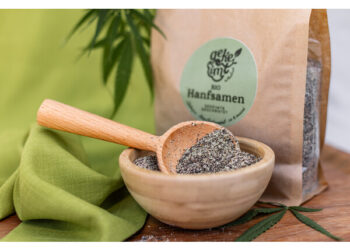
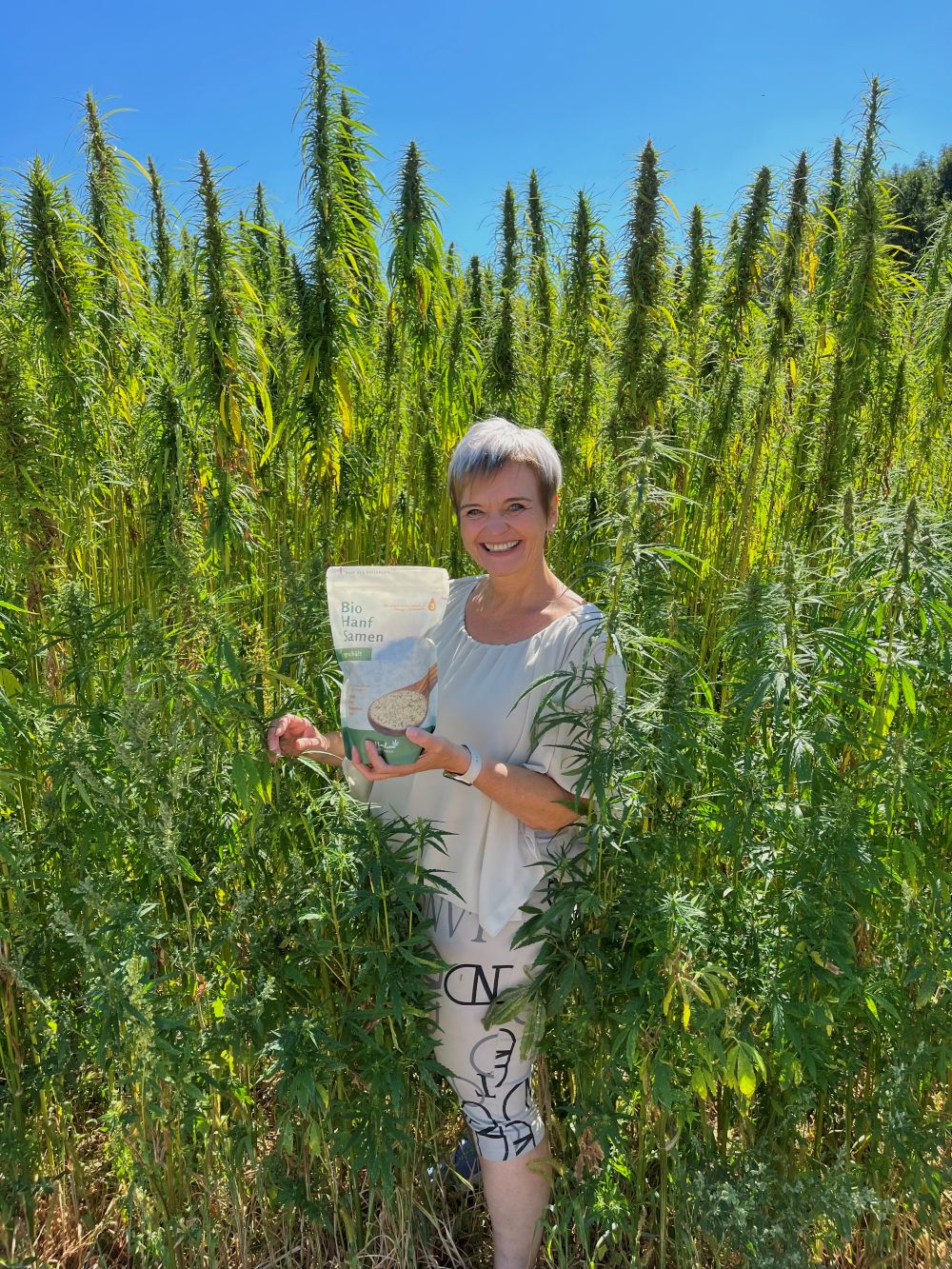
Gerda: I answer honestly, not as a marketing message. And I believe if I weren’t so convinced of the health effects of daily hemp consumption, I would have probably given up by now. What lands on my plate daily: hulled hemp seeds, over my cereal, over my salad, in my yogurt, as naturally as salt and pepper. And since we’ve started grinding sprouted hemp seeds, two to three tablespoons of hemp powder go somewhere into my food daily.
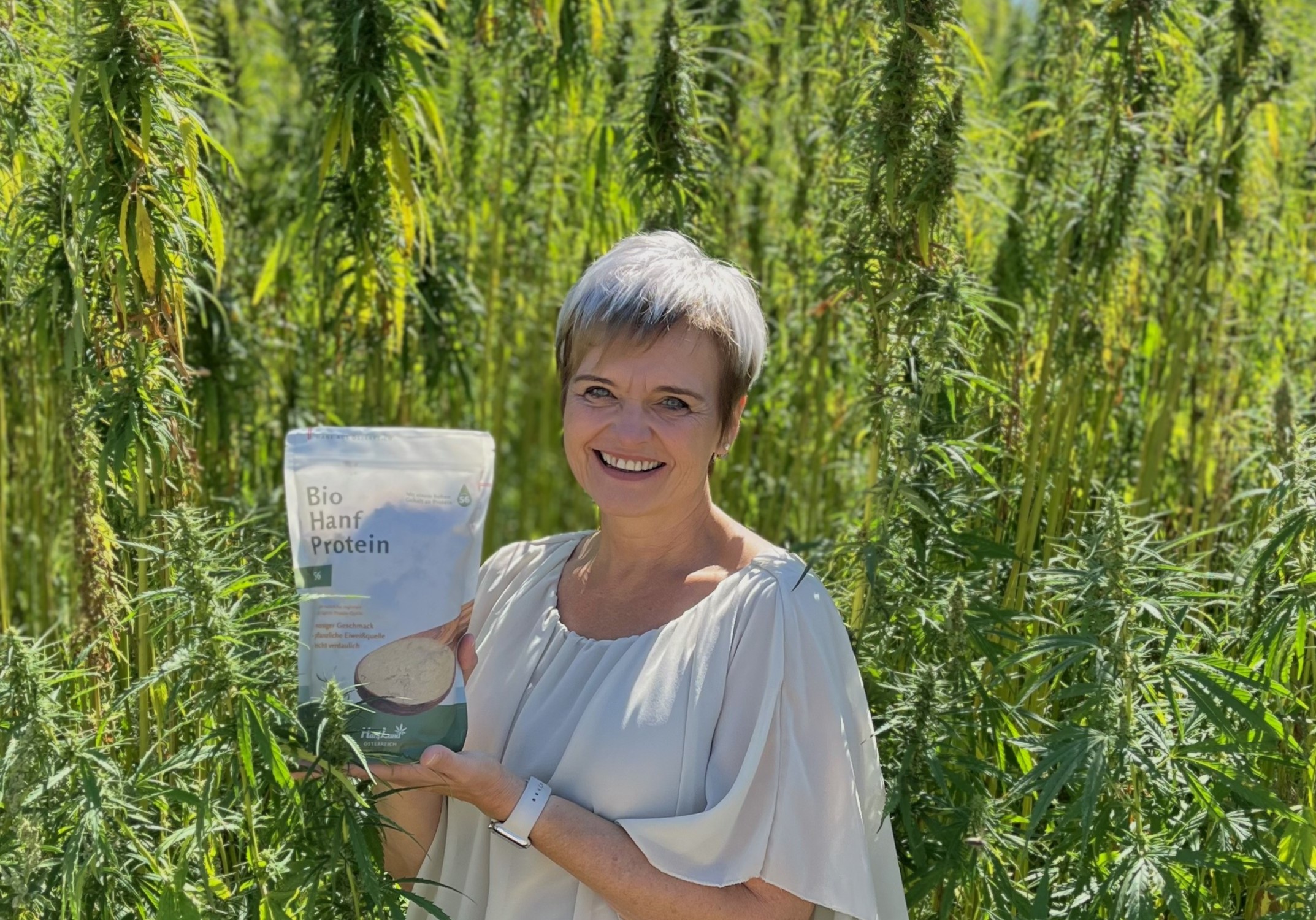
The hemp protein powder is always in the kitchen; I’ve taken CBD drops daily for at least five years. With the oil, I go by whim: sometimes a hemp spread made from low-fat cottage cheese with hemp oil and hulled hemp seeds, sometimes cold-pressed hemp oil with potatoes from the steamer. My conclusion after all these years: healthy eating only works if it’s practical for everyday life. A spoonful here, a splash there, and your body gets what it needs.


Question 10, In One Sentence
If you had to explain in one sentence to someone who only knows hemp as an intoxicant why it belongs on their plate, what would you say?
Gerda: Forget everything you think you know about hemp: just try the roasted hulled hemp seeds, integrate them into your daily life, and your cell membranes will thank you.
This interview was conducted in writing and gently edited for readability. The statements reflect Gerda Steinfellner’s perspective.
Frequently Asked Questions
Can babies and children eat food-grade hemp?
Hulled hemp seeds, hemp oil, and hemp protein are nutrient-rich, low-THC foods suitable in principle for children’s nutrition as well. What parents should pay attention to regarding quantity and quality is explained in our guide to hemp in children’s and baby nutrition.
How much Omega-3 is in food-grade hemp?
Hemp seeds and hemp oil provide Omega-3 and Omega-6 fatty acids in a favorable ratio of about 1:3 for nutrition. Why this ratio is so valuable and what to watch for when buying is shown in our article on why hemp oil is healthy through Omega-3 and Omega-6 fatty acids.
Is hemp protein better than whey protein?
Hemp protein is purely plant-based, well-tolerated, and contains all essential amino acids—whey scores with higher biological value. What hemp protein delivers is explained under What is hemp protein? The direct comparison can be found in our protein comparison hemp protein vs. whey.
How do you use hemp seeds in cooking?
Hulled hemp seeds can be sprinkled raw over cereal, salads, and bowls, incorporated into bread and smoothies, or used as a crispy crust—such as on yellowfin tuna steak in hemp seed crust with avocado edamame salad. The valuable hemp oil, however, should not be heated strongly.
Is food-grade hemp an intoxicant?
No. Food-grade hemp comes from certified utility hemp varieties with negligible THC content and does not get you high. Or as Hanfland puts it: „Nothing to smoke here, but plenty to understand.“
Question 7, Food-Grade Hemp Is Not a Drug
You write „Nothing to smoke here, but plenty to understand.“ In 2026, are you still fighting the confusion between food-grade hemp and intoxicants?
Gerda: We’re not really fighting it anymore—we laugh about it now. April 20 is a wonderful opportunity for us to explain the difference with a wink. But seriously: the confusion still happens on two levels. First, with people who’ve never thought of hemp as food; they need education, patience, and sometimes just a taste. Second, with people secretly hoping for an intoxicating effect. We have to disappoint them: food-grade hemp contains less than 0.2% THC, irrelevant for any such effect.
What’s changed: awareness is growing. Younger people know hemp seeds from supermarkets, Instagram bowls, sports nutrition blogs. The question isn’t „Am I allowed?“ anymore, but „How do I use this best?“
Question 8, Sprouted Hemp Seeds
Sprouted hemp seeds are your newest focus. What are you working on now, and what’s next on the plate?
Gerda: Sprouted seeds are the most exciting topic in nutritional science for me right now, and they fit perfectly with our philosophy: maximum nutrient density from minimal effort. When sprouting, the seed awakens, enzymes become active, and phytic acid—which binds minerals like iron and zinc—breaks down. Nutrients are then far more available to the body.
We already have sprouted hemp seeds in our online shop, and I’m especially excited about ground sprouted hemp seeds. In this form, you can simply sprinkle the hemp powder over food—bowls, yogurt, porridge—with the finely ground shell included, so fiber for your gut microbiome. The real work now is getting it out into the world.
„Don’t ask yourself what you shouldn’t eat, but what you should eat more of.“
Gerda Steinfellner · Hanfland
Question 9, Hemp Daily Life
What does your own hemp daily life look like? What regularly lands on your plate at home?
Gerda: I answer honestly, not as a marketing message. And I believe if I weren’t so convinced of the health effects of daily hemp consumption, I would have probably given up by now. What lands on my plate daily: hulled hemp seeds, over my cereal, over my salad, in my yogurt, as naturally as salt and pepper. And since we’ve started grinding sprouted hemp seeds, two to three tablespoons of hemp powder go somewhere into my food daily.
The hemp protein powder is always in the kitchen; I’ve taken CBD drops daily for at least five years. With the oil, I go by whim: sometimes a hemp spread made from low-fat cottage cheese with hemp oil and hulled hemp seeds, sometimes cold-pressed hemp oil with potatoes from the steamer. My conclusion after all these years: healthy eating only works if it’s practical for everyday life. A spoonful here, a splash there, and your body gets what it needs.
Question 10, In One Sentence
If you had to explain in one sentence to someone who only knows hemp as an intoxicant why it belongs on their plate, what would you say?
Gerda: Forget everything you think you know about hemp: just try the roasted hulled hemp seeds, integrate them into your daily life, and your cell membranes will thank you.
This interview was conducted in writing and gently edited for readability. The statements reflect Gerda Steinfellner’s perspective.
Frequently Asked Questions
Can babies and children eat food-grade hemp?
Hulled hemp seeds, hemp oil, and hemp protein are nutrient-rich, low-THC foods suitable in principle for children’s nutrition as well. What parents should pay attention to regarding quantity and quality is explained in our guide to hemp in children’s and baby nutrition.
How much Omega-3 is in food-grade hemp?
Hemp seeds and hemp oil provide Omega-3 and Omega-6 fatty acids in a favorable ratio of about 1:3 for nutrition. Why this ratio is so valuable and what to watch for when buying is shown in our article on why hemp oil is healthy through Omega-3 and Omega-6 fatty acids.
Is hemp protein better than whey protein?
Hemp protein is purely plant-based, well-tolerated, and contains all essential amino acids—whey scores with higher biological value. What hemp protein delivers is explained under What is hemp protein? The direct comparison can be found in our protein comparison hemp protein vs. whey.
How do you use hemp seeds in cooking?
Hulled hemp seeds can be sprinkled raw over cereal, salads, and bowls, incorporated into bread and smoothies, or used as a crispy crust—such as on yellowfin tuna steak in hemp seed crust with avocado edamame salad. The valuable hemp oil, however, should not be heated strongly.
Is food-grade hemp an intoxicant?
No. Food-grade hemp comes from certified utility hemp varieties with negligible THC content and does not get you high. Or as Hanfland puts it: „Nothing to smoke here, but plenty to understand.“
Question 6, Regional Organic Growing
What does regional organic hemp cultivation concretely mean for quality, supply chain, and carbon footprint?
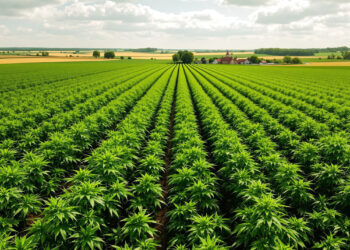
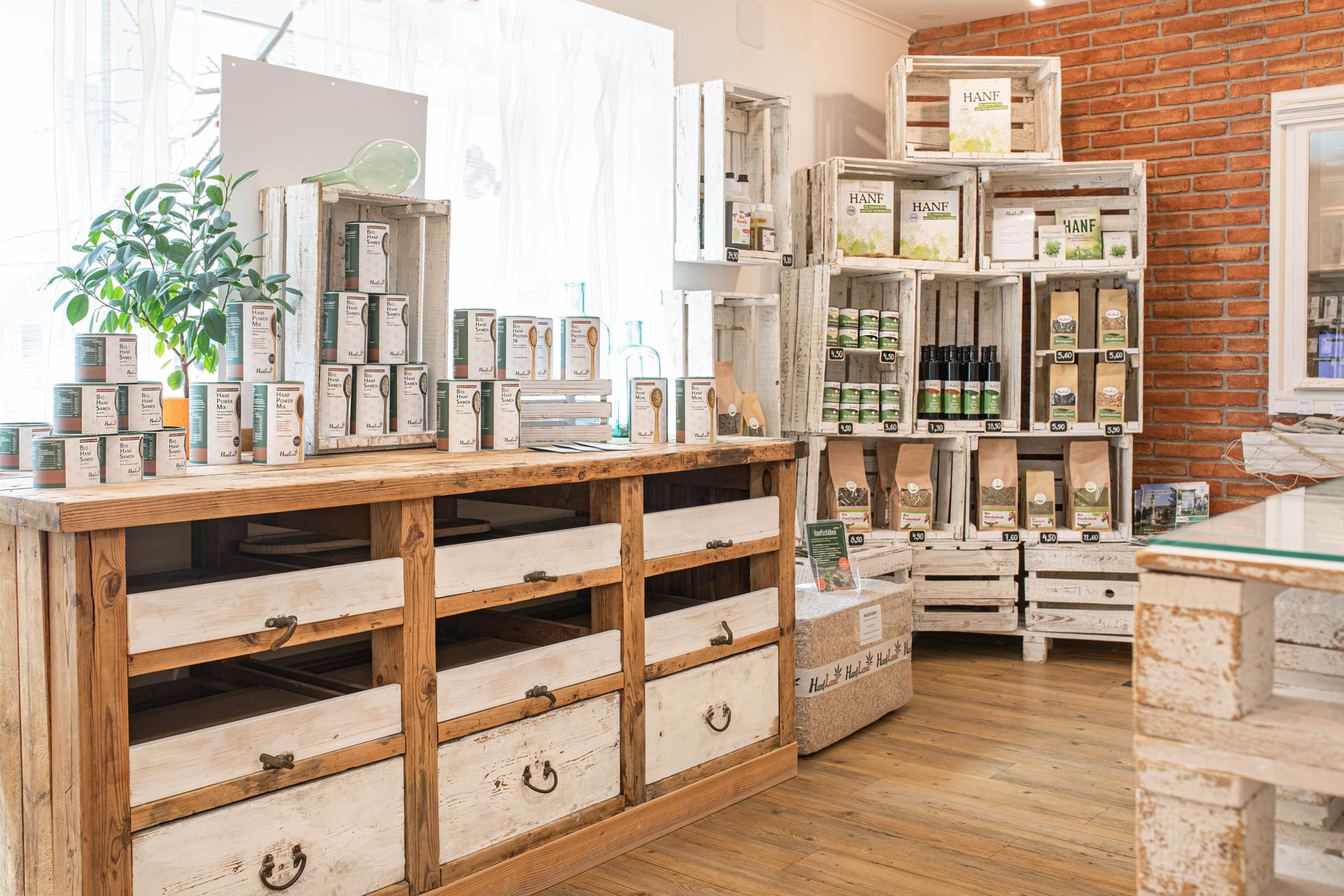
Gerda: That’s really Günther’s domain—he’s been growing hemp for 20 years. This year we’re cultivating organic hemp on 160 hectares, significantly less than years ago, in Austria, together with farmers we know. That’s what matters to me: knowing where a food has grown. If I know the face of the farmer who grew it, even better. That’s a trust that no price comparison can replace.
For quality, that means short distances, fast processing, fresh harvest. For the supply chain, transparency without anonymous middlemen. And for carbon footprint, hemp is remarkable anyway: it grows without pesticides, improves soil structure, and sequesters CO₂. Regionality isn’t a marketing promise for us—it’s why we started Hanfland in 2012.
Question 7, Food-Grade Hemp Is Not a Drug
You write „Nothing to smoke here, but plenty to understand.“ In 2026, are you still fighting the confusion between food-grade hemp and intoxicants?
Gerda: We’re not really fighting it anymore—we laugh about it now. April 20 is a wonderful opportunity for us to explain the difference with a wink. But seriously: the confusion still happens on two levels. First, with people who’ve never thought of hemp as food; they need education, patience, and sometimes just a taste. Second, with people secretly hoping for an intoxicating effect. We have to disappoint them: food-grade hemp contains less than 0.2% THC, irrelevant for any such effect.
What’s changed: awareness is growing. Younger people know hemp seeds from supermarkets, Instagram bowls, sports nutrition blogs. The question isn’t „Am I allowed?“ anymore, but „How do I use this best?“
Question 8, Sprouted Hemp Seeds
Sprouted hemp seeds are your newest focus. What are you working on now, and what’s next on the plate?
Gerda: Sprouted seeds are the most exciting topic in nutritional science for me right now, and they fit perfectly with our philosophy: maximum nutrient density from minimal effort. When sprouting, the seed awakens, enzymes become active, and phytic acid—which binds minerals like iron and zinc—breaks down. Nutrients are then far more available to the body.
We already have sprouted hemp seeds in our online shop, and I’m especially excited about ground sprouted hemp seeds. In this form, you can simply sprinkle the hemp powder over food—bowls, yogurt, porridge—with the finely ground shell included, so fiber for your gut microbiome. The real work now is getting it out into the world.
„Don’t ask yourself what you shouldn’t eat, but what you should eat more of.“
Gerda Steinfellner · Hanfland
Question 9, Hemp Daily Life
What does your own hemp daily life look like? What regularly lands on your plate at home?
Gerda: I answer honestly, not as a marketing message. And I believe if I weren’t so convinced of the health effects of daily hemp consumption, I would have probably given up by now. What lands on my plate daily: hulled hemp seeds, over my cereal, over my salad, in my yogurt, as naturally as salt and pepper. And since we’ve started grinding sprouted hemp seeds, two to three tablespoons of hemp powder go somewhere into my food daily.
The hemp protein powder is always in the kitchen; I’ve taken CBD drops daily for at least five years. With the oil, I go by whim: sometimes a hemp spread made from low-fat cottage cheese with hemp oil and hulled hemp seeds, sometimes cold-pressed hemp oil with potatoes from the steamer. My conclusion after all these years: healthy eating only works if it’s practical for everyday life. A spoonful here, a splash there, and your body gets what it needs.
Question 10, In One Sentence
If you had to explain in one sentence to someone who only knows hemp as an intoxicant why it belongs on their plate, what would you say?
Gerda: Forget everything you think you know about hemp: just try the roasted hulled hemp seeds, integrate them into your daily life, and your cell membranes will thank you.
This interview was conducted in writing and gently edited for readability. The statements reflect Gerda Steinfellner’s perspective.
Frequently Asked Questions
Can babies and children eat food-grade hemp?
Hulled hemp seeds, hemp oil, and hemp protein are nutrient-rich, low-THC foods suitable in principle for children’s nutrition as well. What parents should pay attention to regarding quantity and quality is explained in our guide to hemp in children’s and baby nutrition.
How much Omega-3 is in food-grade hemp?
Hemp seeds and hemp oil provide Omega-3 and Omega-6 fatty acids in a favorable ratio of about 1:3 for nutrition. Why this ratio is so valuable and what to watch for when buying is shown in our article on why hemp oil is healthy through Omega-3 and Omega-6 fatty acids.
Is hemp protein better than whey protein?
Hemp protein is purely plant-based, well-tolerated, and contains all essential amino acids—whey scores with higher biological value. What hemp protein delivers is explained under What is hemp protein? The direct comparison can be found in our protein comparison hemp protein vs. whey.
How do you use hemp seeds in cooking?
Hulled hemp seeds can be sprinkled raw over cereal, salads, and bowls, incorporated into bread and smoothies, or used as a crispy crust—such as on yellowfin tuna steak in hemp seed crust with avocado edamame salad. The valuable hemp oil, however, should not be heated strongly.
Is food-grade hemp an intoxicant?
No. Food-grade hemp comes from certified utility hemp varieties with negligible THC content and does not get you high. Or as Hanfland puts it: „Nothing to smoke here, but plenty to understand.“
Question 5, Hemp Protein
What sets hemp protein apart from common protein sources, and for whom is it really worthwhile?
Gerda: Protein is all the rage right now, and for good reason. From around age 40, the body loses increasing muscle mass if not adequately supplied. Still, I view the current protein hype skeptically: intake needs to match metabolism, not „the more the better.“ Hemp provides all essential amino acids, which isn’t a given for plant-based proteins. Soy can do that too, but it’s an issue for many people. Compared to whey, hemp is less concentrated but more natural, richer in fiber, and trouble-free for those with lactose intolerance. And compared to pea protein, hemp scores with its additional fatty acid profile.
It’s worthwhile for women over 40 who want to meet their protein needs from plants, for people eating plant-based, for anyone who can’t tolerate soy or whey, and for everyone who wants protein as real food with a traceable origin, not powder from a gym.
Question 6, Regional Organic Growing
What does regional organic hemp cultivation concretely mean for quality, supply chain, and carbon footprint?
Gerda: That’s really Günther’s domain—he’s been growing hemp for 20 years. This year we’re cultivating organic hemp on 160 hectares, significantly less than years ago, in Austria, together with farmers we know. That’s what matters to me: knowing where a food has grown. If I know the face of the farmer who grew it, even better. That’s a trust that no price comparison can replace.
For quality, that means short distances, fast processing, fresh harvest. For the supply chain, transparency without anonymous middlemen. And for carbon footprint, hemp is remarkable anyway: it grows without pesticides, improves soil structure, and sequesters CO₂. Regionality isn’t a marketing promise for us—it’s why we started Hanfland in 2012.
Question 7, Food-Grade Hemp Is Not a Drug
You write „Nothing to smoke here, but plenty to understand.“ In 2026, are you still fighting the confusion between food-grade hemp and intoxicants?
Gerda: We’re not really fighting it anymore—we laugh about it now. April 20 is a wonderful opportunity for us to explain the difference with a wink. But seriously: the confusion still happens on two levels. First, with people who’ve never thought of hemp as food; they need education, patience, and sometimes just a taste. Second, with people secretly hoping for an intoxicating effect. We have to disappoint them: food-grade hemp contains less than 0.2% THC, irrelevant for any such effect.
What’s changed: awareness is growing. Younger people know hemp seeds from supermarkets, Instagram bowls, sports nutrition blogs. The question isn’t „Am I allowed?“ anymore, but „How do I use this best?“
Question 8, Sprouted Hemp Seeds
Sprouted hemp seeds are your newest focus. What are you working on now, and what’s next on the plate?
Gerda: Sprouted seeds are the most exciting topic in nutritional science for me right now, and they fit perfectly with our philosophy: maximum nutrient density from minimal effort. When sprouting, the seed awakens, enzymes become active, and phytic acid—which binds minerals like iron and zinc—breaks down. Nutrients are then far more available to the body.
We already have sprouted hemp seeds in our online shop, and I’m especially excited about ground sprouted hemp seeds. In this form, you can simply sprinkle the hemp powder over food—bowls, yogurt, porridge—with the finely ground shell included, so fiber for your gut microbiome. The real work now is getting it out into the world.
„Don’t ask yourself what you shouldn’t eat, but what you should eat more of.“
Gerda Steinfellner · Hanfland
Question 9, Hemp Daily Life
What does your own hemp daily life look like? What regularly lands on your plate at home?
Gerda: I answer honestly, not as a marketing message. And I believe if I weren’t so convinced of the health effects of daily hemp consumption, I would have probably given up by now. What lands on my plate daily: hulled hemp seeds, over my cereal, over my salad, in my yogurt, as naturally as salt and pepper. And since we’ve started grinding sprouted hemp seeds, two to three tablespoons of hemp powder go somewhere into my food daily.
The hemp protein powder is always in the kitchen; I’ve taken CBD drops daily for at least five years. With the oil, I go by whim: sometimes a hemp spread made from low-fat cottage cheese with hemp oil and hulled hemp seeds, sometimes cold-pressed hemp oil with potatoes from the steamer. My conclusion after all these years: healthy eating only works if it’s practical for everyday life. A spoonful here, a splash there, and your body gets what it needs.
Question 10, In One Sentence
If you had to explain in one sentence to someone who only knows hemp as an intoxicant why it belongs on their plate, what would you say?
Gerda: Forget everything you think you know about hemp: just try the roasted hulled hemp seeds, integrate them into your daily life, and your cell membranes will thank you.
This interview was conducted in writing and gently edited for readability. The statements reflect Gerda Steinfellner’s perspective.
Frequently Asked Questions
Can babies and children eat food-grade hemp?
Hulled hemp seeds, hemp oil, and hemp protein are nutrient-rich, low-THC foods suitable in principle for children’s nutrition as well. What parents should pay attention to regarding quantity and quality is explained in our guide to hemp in children’s and baby nutrition.
How much Omega-3 is in food-grade hemp?
Hemp seeds and hemp oil provide Omega-3 and Omega-6 fatty acids in a favorable ratio of about 1:3 for nutrition. Why this ratio is so valuable and what to watch for when buying is shown in our article on why hemp oil is healthy through Omega-3 and Omega-6 fatty acids.
Is hemp protein better than whey protein?
Hemp protein is purely plant-based, well-tolerated, and contains all essential amino acids—whey scores with higher biological value. What hemp protein delivers is explained under What is hemp protein? The direct comparison can be found in our protein comparison hemp protein vs. whey.
How do you use hemp seeds in cooking?
Hulled hemp seeds can be sprinkled raw over cereal, salads, and bowls, incorporated into bread and smoothies, or used as a crispy crust—such as on yellowfin tuna steak in hemp seed crust with avocado edamame salad. The valuable hemp oil, however, should not be heated strongly.
Is food-grade hemp an intoxicant?
No. Food-grade hemp comes from certified utility hemp varieties with negligible THC content and does not get you high. Or as Hanfland puts it: „Nothing to smoke here, but plenty to understand.“
Question 4, Omega-3
Omega-3 is one of your recurring themes. Why is hemp so special here, and what should you look for when buying?
Gerda: Omega-3 is a recurring theme because Western diets are chronically undersupplied with it, and the consequences are underestimated. EPA and DHA are essential: for supple cell membranes, for the brain, for inflammation regulation. Hemp oil provides alpha-linolenic acid, the plant-based Omega-3 fatty acid that the body can convert to EPA and DHA. Hemp has an advantage over flax and chia: it also contains stearidonic acid, which is directly converted to EPA and DHA, making it more efficient than alpha-linolenic acid alone.
Plus, the Omega-6 to Omega-3 ratio is about 3:1, exactly the target range nutritionists recommend. Most people today are at 15:1 or worse. When buying, look for: cold-pressed, organic quality, regional origin, dark glass bottle, and cool storage. And pay attention to taste: if it tastes sharp or rancid, it’s oxidized—don’t use it anymore.
Question 5, Hemp Protein
What sets hemp protein apart from common protein sources, and for whom is it really worthwhile?
Gerda: Protein is all the rage right now, and for good reason. From around age 40, the body loses increasing muscle mass if not adequately supplied. Still, I view the current protein hype skeptically: intake needs to match metabolism, not „the more the better.“ Hemp provides all essential amino acids, which isn’t a given for plant-based proteins. Soy can do that too, but it’s an issue for many people. Compared to whey, hemp is less concentrated but more natural, richer in fiber, and trouble-free for those with lactose intolerance. And compared to pea protein, hemp scores with its additional fatty acid profile.
It’s worthwhile for women over 40 who want to meet their protein needs from plants, for people eating plant-based, for anyone who can’t tolerate soy or whey, and for everyone who wants protein as real food with a traceable origin, not powder from a gym.
Question 6, Regional Organic Growing
What does regional organic hemp cultivation concretely mean for quality, supply chain, and carbon footprint?
Gerda: That’s really Günther’s domain—he’s been growing hemp for 20 years. This year we’re cultivating organic hemp on 160 hectares, significantly less than years ago, in Austria, together with farmers we know. That’s what matters to me: knowing where a food has grown. If I know the face of the farmer who grew it, even better. That’s a trust that no price comparison can replace.
For quality, that means short distances, fast processing, fresh harvest. For the supply chain, transparency without anonymous middlemen. And for carbon footprint, hemp is remarkable anyway: it grows without pesticides, improves soil structure, and sequesters CO₂. Regionality isn’t a marketing promise for us—it’s why we started Hanfland in 2012.
Question 7, Food-Grade Hemp Is Not a Drug
You write „Nothing to smoke here, but plenty to understand.“ In 2026, are you still fighting the confusion between food-grade hemp and intoxicants?
Gerda: We’re not really fighting it anymore—we laugh about it now. April 20 is a wonderful opportunity for us to explain the difference with a wink. But seriously: the confusion still happens on two levels. First, with people who’ve never thought of hemp as food; they need education, patience, and sometimes just a taste. Second, with people secretly hoping for an intoxicating effect. We have to disappoint them: food-grade hemp contains less than 0.2% THC, irrelevant for any such effect.
What’s changed: awareness is growing. Younger people know hemp seeds from supermarkets, Instagram bowls, sports nutrition blogs. The question isn’t „Am I allowed?“ anymore, but „How do I use this best?“
Question 8, Sprouted Hemp Seeds
Sprouted hemp seeds are your newest focus. What are you working on now, and what’s next on the plate?
Gerda: Sprouted seeds are the most exciting topic in nutritional science for me right now, and they fit perfectly with our philosophy: maximum nutrient density from minimal effort. When sprouting, the seed awakens, enzymes become active, and phytic acid—which binds minerals like iron and zinc—breaks down. Nutrients are then far more available to the body.
We already have sprouted hemp seeds in our online shop, and I’m especially excited about ground sprouted hemp seeds. In this form, you can simply sprinkle the hemp powder over food—bowls, yogurt, porridge—with the finely ground shell included, so fiber for your gut microbiome. The real work now is getting it out into the world.
„Don’t ask yourself what you shouldn’t eat, but what you should eat more of.“
Gerda Steinfellner · Hanfland
Question 9, Hemp Daily Life
What does your own hemp daily life look like? What regularly lands on your plate at home?
Gerda: I answer honestly, not as a marketing message. And I believe if I weren’t so convinced of the health effects of daily hemp consumption, I would have probably given up by now. What lands on my plate daily: hulled hemp seeds, over my cereal, over my salad, in my yogurt, as naturally as salt and pepper. And since we’ve started grinding sprouted hemp seeds, two to three tablespoons of hemp powder go somewhere into my food daily.
The hemp protein powder is always in the kitchen; I’ve taken CBD drops daily for at least five years. With the oil, I go by whim: sometimes a hemp spread made from low-fat cottage cheese with hemp oil and hulled hemp seeds, sometimes cold-pressed hemp oil with potatoes from the steamer. My conclusion after all these years: healthy eating only works if it’s practical for everyday life. A spoonful here, a splash there, and your body gets what it needs.
Question 10, In One Sentence
If you had to explain in one sentence to someone who only knows hemp as an intoxicant why it belongs on their plate, what would you say?
Gerda: Forget everything you think you know about hemp: just try the roasted hulled hemp seeds, integrate them into your daily life, and your cell membranes will thank you.
This interview was conducted in writing and gently edited for readability. The statements reflect Gerda Steinfellner’s perspective.
Frequently Asked Questions
Can babies and children eat food-grade hemp?
Hulled hemp seeds, hemp oil, and hemp protein are nutrient-rich, low-THC foods suitable in principle for children’s nutrition as well. What parents should pay attention to regarding quantity and quality is explained in our guide to hemp in children’s and baby nutrition.
How much Omega-3 is in food-grade hemp?
Hemp seeds and hemp oil provide Omega-3 and Omega-6 fatty acids in a favorable ratio of about 1:3 for nutrition. Why this ratio is so valuable and what to watch for when buying is shown in our article on why hemp oil is healthy through Omega-3 and Omega-6 fatty acids.
Is hemp protein better than whey protein?
Hemp protein is purely plant-based, well-tolerated, and contains all essential amino acids—whey scores with higher biological value. What hemp protein delivers is explained under What is hemp protein? The direct comparison can be found in our protein comparison hemp protein vs. whey.
How do you use hemp seeds in cooking?
Hulled hemp seeds can be sprinkled raw over cereal, salads, and bowls, incorporated into bread and smoothies, or used as a crispy crust—such as on yellowfin tuna steak in hemp seed crust with avocado edamame salad. The valuable hemp oil, however, should not be heated strongly.
Is food-grade hemp an intoxicant?
No. Food-grade hemp comes from certified utility hemp varieties with negligible THC content and does not get you high. Or as Hanfland puts it: „Nothing to smoke here, but plenty to understand.“
Question 3, Food, Not a Miracle Cure
From a nutritional science perspective: what can hemp really deliver as a food, and where are promises being overstated?
Gerda: Hemp is an exceptional food, but not a miracle cure. This distinction is very important to me as a nutritionist. What hemp really delivers: a complete amino acid profile—all the essential amino acids the body cannot produce itself. Plus iron, especially important for plant-based eaters, and magnesium, which is often lacking in modern diets. And then there’s cannabisin in the hemp shell, a fiber that helps maintain balanced blood sugar levels.
What’s overstated: as soon as the word „superfood“ comes up, I become skeptical. No single seed saves your health. Hemp is a valuable building block, but it works in the context of a balanced diet overall. I also see a lot of exaggeration with CBD products.
„Honesty creates more trust than promises.“
Gerda Steinfellner · Hanfland
Question 4, Omega-3
Omega-3 is one of your recurring themes. Why is hemp so special here, and what should you look for when buying?
Gerda: Omega-3 is a recurring theme because Western diets are chronically undersupplied with it, and the consequences are underestimated. EPA and DHA are essential: for supple cell membranes, for the brain, for inflammation regulation. Hemp oil provides alpha-linolenic acid, the plant-based Omega-3 fatty acid that the body can convert to EPA and DHA. Hemp has an advantage over flax and chia: it also contains stearidonic acid, which is directly converted to EPA and DHA, making it more efficient than alpha-linolenic acid alone.
Plus, the Omega-6 to Omega-3 ratio is about 3:1, exactly the target range nutritionists recommend. Most people today are at 15:1 or worse. When buying, look for: cold-pressed, organic quality, regional origin, dark glass bottle, and cool storage. And pay attention to taste: if it tastes sharp or rancid, it’s oxidized—don’t use it anymore.
Question 5, Hemp Protein
What sets hemp protein apart from common protein sources, and for whom is it really worthwhile?
Gerda: Protein is all the rage right now, and for good reason. From around age 40, the body loses increasing muscle mass if not adequately supplied. Still, I view the current protein hype skeptically: intake needs to match metabolism, not „the more the better.“ Hemp provides all essential amino acids, which isn’t a given for plant-based proteins. Soy can do that too, but it’s an issue for many people. Compared to whey, hemp is less concentrated but more natural, richer in fiber, and trouble-free for those with lactose intolerance. And compared to pea protein, hemp scores with its additional fatty acid profile.
It’s worthwhile for women over 40 who want to meet their protein needs from plants, for people eating plant-based, for anyone who can’t tolerate soy or whey, and for everyone who wants protein as real food with a traceable origin, not powder from a gym.
Question 6, Regional Organic Growing
What does regional organic hemp cultivation concretely mean for quality, supply chain, and carbon footprint?
Gerda: That’s really Günther’s domain—he’s been growing hemp for 20 years. This year we’re cultivating organic hemp on 160 hectares, significantly less than years ago, in Austria, together with farmers we know. That’s what matters to me: knowing where a food has grown. If I know the face of the farmer who grew it, even better. That’s a trust that no price comparison can replace.
For quality, that means short distances, fast processing, fresh harvest. For the supply chain, transparency without anonymous middlemen. And for carbon footprint, hemp is remarkable anyway: it grows without pesticides, improves soil structure, and sequesters CO₂. Regionality isn’t a marketing promise for us—it’s why we started Hanfland in 2012.
Question 7, Food-Grade Hemp Is Not a Drug
You write „Nothing to smoke here, but plenty to understand.“ In 2026, are you still fighting the confusion between food-grade hemp and intoxicants?
Gerda: We’re not really fighting it anymore—we laugh about it now. April 20 is a wonderful opportunity for us to explain the difference with a wink. But seriously: the confusion still happens on two levels. First, with people who’ve never thought of hemp as food; they need education, patience, and sometimes just a taste. Second, with people secretly hoping for an intoxicating effect. We have to disappoint them: food-grade hemp contains less than 0.2% THC, irrelevant for any such effect.
What’s changed: awareness is growing. Younger people know hemp seeds from supermarkets, Instagram bowls, sports nutrition blogs. The question isn’t „Am I allowed?“ anymore, but „How do I use this best?“
Question 8, Sprouted Hemp Seeds
Sprouted hemp seeds are your newest focus. What are you working on now, and what’s next on the plate?
Gerda: Sprouted seeds are the most exciting topic in nutritional science for me right now, and they fit perfectly with our philosophy: maximum nutrient density from minimal effort. When sprouting, the seed awakens, enzymes become active, and phytic acid—which binds minerals like iron and zinc—breaks down. Nutrients are then far more available to the body.
We already have sprouted hemp seeds in our online shop, and I’m especially excited about ground sprouted hemp seeds. In this form, you can simply sprinkle the hemp powder over food—bowls, yogurt, porridge—with the finely ground shell included, so fiber for your gut microbiome. The real work now is getting it out into the world.
„Don’t ask yourself what you shouldn’t eat, but what you should eat more of.“
Gerda Steinfellner · Hanfland
Question 9, Hemp Daily Life
What does your own hemp daily life look like? What regularly lands on your plate at home?
Gerda: I answer honestly, not as a marketing message. And I believe if I weren’t so convinced of the health effects of daily hemp consumption, I would have probably given up by now. What lands on my plate daily: hulled hemp seeds, over my cereal, over my salad, in my yogurt, as naturally as salt and pepper. And since we’ve started grinding sprouted hemp seeds, two to three tablespoons of hemp powder go somewhere into my food daily.
The hemp protein powder is always in the kitchen; I’ve taken CBD drops daily for at least five years. With the oil, I go by whim: sometimes a hemp spread made from low-fat cottage cheese with hemp oil and hulled hemp seeds, sometimes cold-pressed hemp oil with potatoes from the steamer. My conclusion after all these years: healthy eating only works if it’s practical for everyday life. A spoonful here, a splash there, and your body gets what it needs.
Question 10, In One Sentence
If you had to explain in one sentence to someone who only knows hemp as an intoxicant why it belongs on their plate, what would you say?
Gerda: Forget everything you think you know about hemp: just try the roasted hulled hemp seeds, integrate them into your daily life, and your cell membranes will thank you.
This interview was conducted in writing and gently edited for readability. The statements reflect Gerda Steinfellner’s perspective.
Frequently Asked Questions
Can babies and children eat food-grade hemp?
Hulled hemp seeds, hemp oil, and hemp protein are nutrient-rich, low-THC foods suitable in principle for children’s nutrition as well. What parents should pay attention to regarding quantity and quality is explained in our guide to hemp in children’s and baby nutrition.
How much Omega-3 is in food-grade hemp?
Hemp seeds and hemp oil provide Omega-3 and Omega-6 fatty acids in a favorable ratio of about 1:3 for nutrition. Why this ratio is so valuable and what to watch for when buying is shown in our article on why hemp oil is healthy through Omega-3 and Omega-6 fatty acids.
Is hemp protein better than whey protein?
Hemp protein is purely plant-based, well-tolerated, and contains all essential amino acids—whey scores with higher biological value. What hemp protein delivers is explained under What is hemp protein? The direct comparison can be found in our protein comparison hemp protein vs. whey.
How do you use hemp seeds in cooking?
Hulled hemp seeds can be sprinkled raw over cereal, salads, and bowls, incorporated into bread and smoothies, or used as a crispy crust—such as on yellowfin tuna steak in hemp seed crust with avocado edamame salad. The valuable hemp oil, however, should not be heated strongly.
Is food-grade hemp an intoxicant?
No. Food-grade hemp comes from certified utility hemp varieties with negligible THC content and does not get you high. Or as Hanfland puts it: „Nothing to smoke here, but plenty to understand.“
Question 2, A Fight for Survival
Hanfland fought for survival for years and kept going anyway. What was the moment you knew food-grade hemp had a place in Austria?
Gerda: Hanfland’s survival was existentially threatened. When large hemp hulling facilities were built in Eastern Europe, the market fundamentally changed. Three kilos of raw hemp yield one kilo of hulled hemp seeds, and when that hemp comes from Lithuania, it’s many times cheaper than Austrian organic hemp. Many major customers switched, and 80% of our resellers closed their shops.
In 2012, we expanded our hulling facility in Heidenreichstein with credit, in good faith. We were hulling around 800 tons a year back then. That collapsed massively. We deliberated for a long time: do we continue or not? The loan has to be repaid—that’s reality.
In the end, we decided to keep going as long as we could and consistently focus on end customers. We can’t announce the big breakthrough yet; we’re still in the process of breaking through, so to speak. But we’re optimistic. We’ve deliberately positioned ourselves smaller and more refined, and we believe the future lies in direct customer contact.
Question 3, Food, Not a Miracle Cure
From a nutritional science perspective: what can hemp really deliver as a food, and where are promises being overstated?
Gerda: Hemp is an exceptional food, but not a miracle cure. This distinction is very important to me as a nutritionist. What hemp really delivers: a complete amino acid profile—all the essential amino acids the body cannot produce itself. Plus iron, especially important for plant-based eaters, and magnesium, which is often lacking in modern diets. And then there’s cannabisin in the hemp shell, a fiber that helps maintain balanced blood sugar levels.
What’s overstated: as soon as the word „superfood“ comes up, I become skeptical. No single seed saves your health. Hemp is a valuable building block, but it works in the context of a balanced diet overall. I also see a lot of exaggeration with CBD products.
„Honesty creates more trust than promises.“
Gerda Steinfellner · Hanfland
Question 4, Omega-3
Omega-3 is one of your recurring themes. Why is hemp so special here, and what should you look for when buying?
Gerda: Omega-3 is a recurring theme because Western diets are chronically undersupplied with it, and the consequences are underestimated. EPA and DHA are essential: for supple cell membranes, for the brain, for inflammation regulation. Hemp oil provides alpha-linolenic acid, the plant-based Omega-3 fatty acid that the body can convert to EPA and DHA. Hemp has an advantage over flax and chia: it also contains stearidonic acid, which is directly converted to EPA and DHA, making it more efficient than alpha-linolenic acid alone.
Plus, the Omega-6 to Omega-3 ratio is about 3:1, exactly the target range nutritionists recommend. Most people today are at 15:1 or worse. When buying, look for: cold-pressed, organic quality, regional origin, dark glass bottle, and cool storage. And pay attention to taste: if it tastes sharp or rancid, it’s oxidized—don’t use it anymore.
Question 5, Hemp Protein
What sets hemp protein apart from common protein sources, and for whom is it really worthwhile?
Gerda: Protein is all the rage right now, and for good reason. From around age 40, the body loses increasing muscle mass if not adequately supplied. Still, I view the current protein hype skeptically: intake needs to match metabolism, not „the more the better.“ Hemp provides all essential amino acids, which isn’t a given for plant-based proteins. Soy can do that too, but it’s an issue for many people. Compared to whey, hemp is less concentrated but more natural, richer in fiber, and trouble-free for those with lactose intolerance. And compared to pea protein, hemp scores with its additional fatty acid profile.
It’s worthwhile for women over 40 who want to meet their protein needs from plants, for people eating plant-based, for anyone who can’t tolerate soy or whey, and for everyone who wants protein as real food with a traceable origin, not powder from a gym.
Question 6, Regional Organic Growing
What does regional organic hemp cultivation concretely mean for quality, supply chain, and carbon footprint?
Gerda: That’s really Günther’s domain—he’s been growing hemp for 20 years. This year we’re cultivating organic hemp on 160 hectares, significantly less than years ago, in Austria, together with farmers we know. That’s what matters to me: knowing where a food has grown. If I know the face of the farmer who grew it, even better. That’s a trust that no price comparison can replace.
For quality, that means short distances, fast processing, fresh harvest. For the supply chain, transparency without anonymous middlemen. And for carbon footprint, hemp is remarkable anyway: it grows without pesticides, improves soil structure, and sequesters CO₂. Regionality isn’t a marketing promise for us—it’s why we started Hanfland in 2012.
Question 7, Food-Grade Hemp Is Not a Drug
You write „Nothing to smoke here, but plenty to understand.“ In 2026, are you still fighting the confusion between food-grade hemp and intoxicants?
Gerda: We’re not really fighting it anymore—we laugh about it now. April 20 is a wonderful opportunity for us to explain the difference with a wink. But seriously: the confusion still happens on two levels. First, with people who’ve never thought of hemp as food; they need education, patience, and sometimes just a taste. Second, with people secretly hoping for an intoxicating effect. We have to disappoint them: food-grade hemp contains less than 0.2% THC, irrelevant for any such effect.
What’s changed: awareness is growing. Younger people know hemp seeds from supermarkets, Instagram bowls, sports nutrition blogs. The question isn’t „Am I allowed?“ anymore, but „How do I use this best?“
Question 8, Sprouted Hemp Seeds
Sprouted hemp seeds are your newest focus. What are you working on now, and what’s next on the plate?
Gerda: Sprouted seeds are the most exciting topic in nutritional science for me right now, and they fit perfectly with our philosophy: maximum nutrient density from minimal effort. When sprouting, the seed awakens, enzymes become active, and phytic acid—which binds minerals like iron and zinc—breaks down. Nutrients are then far more available to the body.
We already have sprouted hemp seeds in our online shop, and I’m especially excited about ground sprouted hemp seeds. In this form, you can simply sprinkle the hemp powder over food—bowls, yogurt, porridge—with the finely ground shell included, so fiber for your gut microbiome. The real work now is getting it out into the world.
„Don’t ask yourself what you shouldn’t eat, but what you should eat more of.“
Gerda Steinfellner · Hanfland
Question 9, Hemp Daily Life
What does your own hemp daily life look like? What regularly lands on your plate at home?
Gerda: I answer honestly, not as a marketing message. And I believe if I weren’t so convinced of the health effects of daily hemp consumption, I would have probably given up by now. What lands on my plate daily: hulled hemp seeds, over my cereal, over my salad, in my yogurt, as naturally as salt and pepper. And since we’ve started grinding sprouted hemp seeds, two to three tablespoons of hemp powder go somewhere into my food daily.
The hemp protein powder is always in the kitchen; I’ve taken CBD drops daily for at least five years. With the oil, I go by whim: sometimes a hemp spread made from low-fat cottage cheese with hemp oil and hulled hemp seeds, sometimes cold-pressed hemp oil with potatoes from the steamer. My conclusion after all these years: healthy eating only works if it’s practical for everyday life. A spoonful here, a splash there, and your body gets what it needs.
Question 10, In One Sentence
If you had to explain in one sentence to someone who only knows hemp as an intoxicant why it belongs on their plate, what would you say?
Gerda: Forget everything you think you know about hemp: just try the roasted hulled hemp seeds, integrate them into your daily life, and your cell membranes will thank you.
This interview was conducted in writing and gently edited for readability. The statements reflect Gerda Steinfellner’s perspective.
Frequently Asked Questions
Can babies and children eat food-grade hemp?
Hulled hemp seeds, hemp oil, and hemp protein are nutrient-rich, low-THC foods suitable in principle for children’s nutrition as well. What parents should pay attention to regarding quantity and quality is explained in our guide to hemp in children’s and baby nutrition.
How much Omega-3 is in food-grade hemp?
Hemp seeds and hemp oil provide Omega-3 and Omega-6 fatty acids in a favorable ratio of about 1:3 for nutrition. Why this ratio is so valuable and what to watch for when buying is shown in our article on why hemp oil is healthy through Omega-3 and Omega-6 fatty acids.
Is hemp protein better than whey protein?
Hemp protein is purely plant-based, well-tolerated, and contains all essential amino acids—whey scores with higher biological value. What hemp protein delivers is explained under What is hemp protein? The direct comparison can be found in our protein comparison hemp protein vs. whey.
How do you use hemp seeds in cooking?
Hulled hemp seeds can be sprinkled raw over cereal, salads, and bowls, incorporated into bread and smoothies, or used as a crispy crust—such as on yellowfin tuna steak in hemp seed crust with avocado edamame salad. The valuable hemp oil, however, should not be heated strongly.
Is food-grade hemp an intoxicant?
No. Food-grade hemp comes from certified utility hemp varieties with negligible THC content and does not get you high. Or as Hanfland puts it: „Nothing to smoke here, but plenty to understand.“
Question 1, From Fish to Hemp
You’ve been working with food-grade hemp since 2005 and have grown it yourself. How did you, as a nutritionist, end up with hemp?
Gerda: As a nutritionist in a medical practice in Laa, I kept dealing with the same issue: Omega-3 and eating fish. My Weinviertel clients didn’t want fish, yet I knew how vital these fatty acids are for the entire metabolism. All that constant explaining and convincing eventually really frustrated me.
Then, as health manager for the Laa region, I was tasked with promoting the hemp experience trail in Hanfthal. And suddenly I was standing in the middle of this plant and understood: This is the answer. A plant that literally grows on our doorstep, with an Omega-3 profile that speaks for itself.
Since then, I’ve made it my mission to educate people about high-quality hemp seeds. My vision is to connect farmland with everyday cooking, so that Austrian organic hemp not only lands on the plate but truly takes effect. In the body. In life. In resonance.
Question 2, A Fight for Survival
Hanfland fought for survival for years and kept going anyway. What was the moment you knew food-grade hemp had a place in Austria?
Gerda: Hanfland’s survival was existentially threatened. When large hemp hulling facilities were built in Eastern Europe, the market fundamentally changed. Three kilos of raw hemp yield one kilo of hulled hemp seeds, and when that hemp comes from Lithuania, it’s many times cheaper than Austrian organic hemp. Many major customers switched, and 80% of our resellers closed their shops.
In 2012, we expanded our hulling facility in Heidenreichstein with credit, in good faith. We were hulling around 800 tons a year back then. That collapsed massively. We deliberated for a long time: do we continue or not? The loan has to be repaid—that’s reality.
In the end, we decided to keep going as long as we could and consistently focus on end customers. We can’t announce the big breakthrough yet; we’re still in the process of breaking through, so to speak. But we’re optimistic. We’ve deliberately positioned ourselves smaller and more refined, and we believe the future lies in direct customer contact.
Question 3, Food, Not a Miracle Cure
From a nutritional science perspective: what can hemp really deliver as a food, and where are promises being overstated?
Gerda: Hemp is an exceptional food, but not a miracle cure. This distinction is very important to me as a nutritionist. What hemp really delivers: a complete amino acid profile—all the essential amino acids the body cannot produce itself. Plus iron, especially important for plant-based eaters, and magnesium, which is often lacking in modern diets. And then there’s cannabisin in the hemp shell, a fiber that helps maintain balanced blood sugar levels.
What’s overstated: as soon as the word „superfood“ comes up, I become skeptical. No single seed saves your health. Hemp is a valuable building block, but it works in the context of a balanced diet overall. I also see a lot of exaggeration with CBD products.
„Honesty creates more trust than promises.“
Gerda Steinfellner · Hanfland
Question 4, Omega-3
Omega-3 is one of your recurring themes. Why is hemp so special here, and what should you look for when buying?
Gerda: Omega-3 is a recurring theme because Western diets are chronically undersupplied with it, and the consequences are underestimated. EPA and DHA are essential: for supple cell membranes, for the brain, for inflammation regulation. Hemp oil provides alpha-linolenic acid, the plant-based Omega-3 fatty acid that the body can convert to EPA and DHA. Hemp has an advantage over flax and chia: it also contains stearidonic acid, which is directly converted to EPA and DHA, making it more efficient than alpha-linolenic acid alone.
Plus, the Omega-6 to Omega-3 ratio is about 3:1, exactly the target range nutritionists recommend. Most people today are at 15:1 or worse. When buying, look for: cold-pressed, organic quality, regional origin, dark glass bottle, and cool storage. And pay attention to taste: if it tastes sharp or rancid, it’s oxidized—don’t use it anymore.
Question 5, Hemp Protein
What sets hemp protein apart from common protein sources, and for whom is it really worthwhile?
Gerda: Protein is all the rage right now, and for good reason. From around age 40, the body loses increasing muscle mass if not adequately supplied. Still, I view the current protein hype skeptically: intake needs to match metabolism, not „the more the better.“ Hemp provides all essential amino acids, which isn’t a given for plant-based proteins. Soy can do that too, but it’s an issue for many people. Compared to whey, hemp is less concentrated but more natural, richer in fiber, and trouble-free for those with lactose intolerance. And compared to pea protein, hemp scores with its additional fatty acid profile.
It’s worthwhile for women over 40 who want to meet their protein needs from plants, for people eating plant-based, for anyone who can’t tolerate soy or whey, and for everyone who wants protein as real food with a traceable origin, not powder from a gym.
Question 6, Regional Organic Growing
What does regional organic hemp cultivation concretely mean for quality, supply chain, and carbon footprint?
Gerda: That’s really Günther’s domain—he’s been growing hemp for 20 years. This year we’re cultivating organic hemp on 160 hectares, significantly less than years ago, in Austria, together with farmers we know. That’s what matters to me: knowing where a food has grown. If I know the face of the farmer who grew it, even better. That’s a trust that no price comparison can replace.
For quality, that means short distances, fast processing, fresh harvest. For the supply chain, transparency without anonymous middlemen. And for carbon footprint, hemp is remarkable anyway: it grows without pesticides, improves soil structure, and sequesters CO₂. Regionality isn’t a marketing promise for us—it’s why we started Hanfland in 2012.
Question 7, Food-Grade Hemp Is Not a Drug
You write „Nothing to smoke here, but plenty to understand.“ In 2026, are you still fighting the confusion between food-grade hemp and intoxicants?
Gerda: We’re not really fighting it anymore—we laugh about it now. April 20 is a wonderful opportunity for us to explain the difference with a wink. But seriously: the confusion still happens on two levels. First, with people who’ve never thought of hemp as food; they need education, patience, and sometimes just a taste. Second, with people secretly hoping for an intoxicating effect. We have to disappoint them: food-grade hemp contains less than 0.2% THC, irrelevant for any such effect.
What’s changed: awareness is growing. Younger people know hemp seeds from supermarkets, Instagram bowls, sports nutrition blogs. The question isn’t „Am I allowed?“ anymore, but „How do I use this best?“
Question 8, Sprouted Hemp Seeds
Sprouted hemp seeds are your newest focus. What are you working on now, and what’s next on the plate?
Gerda: Sprouted seeds are the most exciting topic in nutritional science for me right now, and they fit perfectly with our philosophy: maximum nutrient density from minimal effort. When sprouting, the seed awakens, enzymes become active, and phytic acid—which binds minerals like iron and zinc—breaks down. Nutrients are then far more available to the body.
We already have sprouted hemp seeds in our online shop, and I’m especially excited about ground sprouted hemp seeds. In this form, you can simply sprinkle the hemp powder over food—bowls, yogurt, porridge—with the finely ground shell included, so fiber for your gut microbiome. The real work now is getting it out into the world.
„Don’t ask yourself what you shouldn’t eat, but what you should eat more of.“
Gerda Steinfellner · Hanfland
Question 9, Hemp Daily Life
What does your own hemp daily life look like? What regularly lands on your plate at home?
Gerda: I answer honestly, not as a marketing message. And I believe if I weren’t so convinced of the health effects of daily hemp consumption, I would have probably given up by now. What lands on my plate daily: hulled hemp seeds, over my cereal, over my salad, in my yogurt, as naturally as salt and pepper. And since we’ve started grinding sprouted hemp seeds, two to three tablespoons of hemp powder go somewhere into my food daily.
The hemp protein powder is always in the kitchen; I’ve taken CBD drops daily for at least five years. With the oil, I go by whim: sometimes a hemp spread made from low-fat cottage cheese with hemp oil and hulled hemp seeds, sometimes cold-pressed hemp oil with potatoes from the steamer. My conclusion after all these years: healthy eating only works if it’s practical for everyday life. A spoonful here, a splash there, and your body gets what it needs.
Question 10, In One Sentence
If you had to explain in one sentence to someone who only knows hemp as an intoxicant why it belongs on their plate, what would you say?
Gerda: Forget everything you think you know about hemp: just try the roasted hulled hemp seeds, integrate them into your daily life, and your cell membranes will thank you.
This interview was conducted in writing and gently edited for readability. The statements reflect Gerda Steinfellner’s perspective.
Frequently Asked Questions
Can babies and children eat food-grade hemp?
Hulled hemp seeds, hemp oil, and hemp protein are nutrient-rich, low-THC foods suitable in principle for children’s nutrition as well. What parents should pay attention to regarding quantity and quality is explained in our guide to hemp in children’s and baby nutrition.
How much Omega-3 is in food-grade hemp?
Hemp seeds and hemp oil provide Omega-3 and Omega-6 fatty acids in a favorable ratio of about 1:3 for nutrition. Why this ratio is so valuable and what to watch for when buying is shown in our article on why hemp oil is healthy through Omega-3 and Omega-6 fatty acids.
Is hemp protein better than whey protein?
Hemp protein is purely plant-based, well-tolerated, and contains all essential amino acids—whey scores with higher biological value. What hemp protein delivers is explained under What is hemp protein? The direct comparison can be found in our protein comparison hemp protein vs. whey.
How do you use hemp seeds in cooking?
Hulled hemp seeds can be sprinkled raw over cereal, salads, and bowls, incorporated into bread and smoothies, or used as a crispy crust—such as on yellowfin tuna steak in hemp seed crust with avocado edamame salad. The valuable hemp oil, however, should not be heated strongly.
Is food-grade hemp an intoxicant?
No. Food-grade hemp comes from certified utility hemp varieties with negligible THC content and does not get you high. Or as Hanfland puts it: „Nothing to smoke here, but plenty to understand.“
💬 In Conversation
Gerda Steinfellner, Nutritionist & Co-founder of Hanfland
Gerda Steinfellner is a nutritionist and co-founder of Hanfland GmbH in Hanfthal, Lower Austria. Since 2005, she has championed Austrian organic food-grade hemp, from field to table.
Question 1, From Fish to Hemp
You’ve been working with food-grade hemp since 2005 and have grown it yourself. How did you, as a nutritionist, end up with hemp?
Gerda: As a nutritionist in a medical practice in Laa, I kept dealing with the same issue: Omega-3 and eating fish. My Weinviertel clients didn’t want fish, yet I knew how vital these fatty acids are for the entire metabolism. All that constant explaining and convincing eventually really frustrated me.
Then, as health manager for the Laa region, I was tasked with promoting the hemp experience trail in Hanfthal. And suddenly I was standing in the middle of this plant and understood: This is the answer. A plant that literally grows on our doorstep, with an Omega-3 profile that speaks for itself.
Since then, I’ve made it my mission to educate people about high-quality hemp seeds. My vision is to connect farmland with everyday cooking, so that Austrian organic hemp not only lands on the plate but truly takes effect. In the body. In life. In resonance.
Question 2, A Fight for Survival
Hanfland fought for survival for years and kept going anyway. What was the moment you knew food-grade hemp had a place in Austria?
Gerda: Hanfland’s survival was existentially threatened. When large hemp hulling facilities were built in Eastern Europe, the market fundamentally changed. Three kilos of raw hemp yield one kilo of hulled hemp seeds, and when that hemp comes from Lithuania, it’s many times cheaper than Austrian organic hemp. Many major customers switched, and 80% of our resellers closed their shops.
In 2012, we expanded our hulling facility in Heidenreichstein with credit, in good faith. We were hulling around 800 tons a year back then. That collapsed massively. We deliberated for a long time: do we continue or not? The loan has to be repaid—that’s reality.
In the end, we decided to keep going as long as we could and consistently focus on end customers. We can’t announce the big breakthrough yet; we’re still in the process of breaking through, so to speak. But we’re optimistic. We’ve deliberately positioned ourselves smaller and more refined, and we believe the future lies in direct customer contact.
Question 3, Food, Not a Miracle Cure
From a nutritional science perspective: what can hemp really deliver as a food, and where are promises being overstated?
Gerda: Hemp is an exceptional food, but not a miracle cure. This distinction is very important to me as a nutritionist. What hemp really delivers: a complete amino acid profile—all the essential amino acids the body cannot produce itself. Plus iron, especially important for plant-based eaters, and magnesium, which is often lacking in modern diets. And then there’s cannabisin in the hemp shell, a fiber that helps maintain balanced blood sugar levels.
What’s overstated: as soon as the word „superfood“ comes up, I become skeptical. No single seed saves your health. Hemp is a valuable building block, but it works in the context of a balanced diet overall. I also see a lot of exaggeration with CBD products.
„Honesty creates more trust than promises.“
Gerda Steinfellner · Hanfland
Question 4, Omega-3
Omega-3 is one of your recurring themes. Why is hemp so special here, and what should you look for when buying?
Gerda: Omega-3 is a recurring theme because Western diets are chronically undersupplied with it, and the consequences are underestimated. EPA and DHA are essential: for supple cell membranes, for the brain, for inflammation regulation. Hemp oil provides alpha-linolenic acid, the plant-based Omega-3 fatty acid that the body can convert to EPA and DHA. Hemp has an advantage over flax and chia: it also contains stearidonic acid, which is directly converted to EPA and DHA, making it more efficient than alpha-linolenic acid alone.
Plus, the Omega-6 to Omega-3 ratio is about 3:1, exactly the target range nutritionists recommend. Most people today are at 15:1 or worse. When buying, look for: cold-pressed, organic quality, regional origin, dark glass bottle, and cool storage. And pay attention to taste: if it tastes sharp or rancid, it’s oxidized—don’t use it anymore.
Question 5, Hemp Protein
What sets hemp protein apart from common protein sources, and for whom is it really worthwhile?
Gerda: Protein is all the rage right now, and for good reason. From around age 40, the body loses increasing muscle mass if not adequately supplied. Still, I view the current protein hype skeptically: intake needs to match metabolism, not „the more the better.“ Hemp provides all essential amino acids, which isn’t a given for plant-based proteins. Soy can do that too, but it’s an issue for many people. Compared to whey, hemp is less concentrated but more natural, richer in fiber, and trouble-free for those with lactose intolerance. And compared to pea protein, hemp scores with its additional fatty acid profile.
It’s worthwhile for women over 40 who want to meet their protein needs from plants, for people eating plant-based, for anyone who can’t tolerate soy or whey, and for everyone who wants protein as real food with a traceable origin, not powder from a gym.
Question 6, Regional Organic Growing
What does regional organic hemp cultivation concretely mean for quality, supply chain, and carbon footprint?
Gerda: That’s really Günther’s domain—he’s been growing hemp for 20 years. This year we’re cultivating organic hemp on 160 hectares, significantly less than years ago, in Austria, together with farmers we know. That’s what matters to me: knowing where a food has grown. If I know the face of the farmer who grew it, even better. That’s a trust that no price comparison can replace.
For quality, that means short distances, fast processing, fresh harvest. For the supply chain, transparency without anonymous middlemen. And for carbon footprint, hemp is remarkable anyway: it grows without pesticides, improves soil structure, and sequesters CO₂. Regionality isn’t a marketing promise for us—it’s why we started Hanfland in 2012.
Question 7, Food-Grade Hemp Is Not a Drug
You write „Nothing to smoke here, but plenty to understand.“ In 2026, are you still fighting the confusion between food-grade hemp and intoxicants?
Gerda: We’re not really fighting it anymore—we laugh about it now. April 20 is a wonderful opportunity for us to explain the difference with a wink. But seriously: the confusion still happens on two levels. First, with people who’ve never thought of hemp as food; they need education, patience, and sometimes just a taste. Second, with people secretly hoping for an intoxicating effect. We have to disappoint them: food-grade hemp contains less than 0.2% THC, irrelevant for any such effect.
What’s changed: awareness is growing. Younger people know hemp seeds from supermarkets, Instagram bowls, sports nutrition blogs. The question isn’t „Am I allowed?“ anymore, but „How do I use this best?“
Question 8, Sprouted Hemp Seeds
Sprouted hemp seeds are your newest focus. What are you working on now, and what’s next on the plate?
Gerda: Sprouted seeds are the most exciting topic in nutritional science for me right now, and they fit perfectly with our philosophy: maximum nutrient density from minimal effort. When sprouting, the seed awakens, enzymes become active, and phytic acid—which binds minerals like iron and zinc—breaks down. Nutrients are then far more available to the body.
We already have sprouted hemp seeds in our online shop, and I’m especially excited about ground sprouted hemp seeds. In this form, you can simply sprinkle the hemp powder over food—bowls, yogurt, porridge—with the finely ground shell included, so fiber for your gut microbiome. The real work now is getting it out into the world.
„Don’t ask yourself what you shouldn’t eat, but what you should eat more of.“
Gerda Steinfellner · Hanfland
Question 9, Hemp Daily Life
What does your own hemp daily life look like? What regularly lands on your plate at home?
Gerda: I answer honestly, not as a marketing message. And I believe if I weren’t so convinced of the health effects of daily hemp consumption, I would have probably given up by now. What lands on my plate daily: hulled hemp seeds, over my cereal, over my salad, in my yogurt, as naturally as salt and pepper. And since we’ve started grinding sprouted hemp seeds, two to three tablespoons of hemp powder go somewhere into my food daily.
The hemp protein powder is always in the kitchen; I’ve taken CBD drops daily for at least five years. With the oil, I go by whim: sometimes a hemp spread made from low-fat cottage cheese with hemp oil and hulled hemp seeds, sometimes cold-pressed hemp oil with potatoes from the steamer. My conclusion after all these years: healthy eating only works if it’s practical for everyday life. A spoonful here, a splash there, and your body gets what it needs.
Question 10, In One Sentence
If you had to explain in one sentence to someone who only knows hemp as an intoxicant why it belongs on their plate, what would you say?
Gerda: Forget everything you think you know about hemp: just try the roasted hulled hemp seeds, integrate them into your daily life, and your cell membranes will thank you.
This interview was conducted in writing and gently edited for readability. The statements reflect Gerda Steinfellner’s perspective.
Frequently Asked Questions
Can babies and children eat food-grade hemp?
Hulled hemp seeds, hemp oil, and hemp protein are nutrient-rich, low-THC foods suitable in principle for children’s nutrition as well. What parents should pay attention to regarding quantity and quality is explained in our guide to hemp in children’s and baby nutrition.
How much Omega-3 is in food-grade hemp?
Hemp seeds and hemp oil provide Omega-3 and Omega-6 fatty acids in a favorable ratio of about 1:3 for nutrition. Why this ratio is so valuable and what to watch for when buying is shown in our article on why hemp oil is healthy through Omega-3 and Omega-6 fatty acids.
Is hemp protein better than whey protein?
Hemp protein is purely plant-based, well-tolerated, and contains all essential amino acids—whey scores with higher biological value. What hemp protein delivers is explained under What is hemp protein? The direct comparison can be found in our protein comparison hemp protein vs. whey.
How do you use hemp seeds in cooking?
Hulled hemp seeds can be sprinkled raw over cereal, salads, and bowls, incorporated into bread and smoothies, or used as a crispy crust—such as on yellowfin tuna steak in hemp seed crust with avocado edamame salad. The valuable hemp oil, however, should not be heated strongly.
Is food-grade hemp an intoxicant?
No. Food-grade hemp comes from certified utility hemp varieties with negligible THC content and does not get you high. Or as Hanfland puts it: „Nothing to smoke here, but plenty to understand.“
Since our 2019 report „Welcome to Hemp Country,“ much has happened in Lower Austria’s Hanfthal. Gerda Steinfellner, nutritionist and co-founder of Hanfland, has experienced how a market collapsed over the past few years—and how to keep going anyway.
Hanfland stands for Austrian organic food-grade hemp from its own fields: hulled hemp seeds, hemp oil, hemp protein, and most recently, sprouted seeds. Behind these products is a woman who brings together nutritional science and agriculture while speaking remarkably plainly about what hemp can and cannot do.
In conversation with Hemp Magazine, she shares how she came to hemp as a nutritionist, what food-grade hemp really delivers nutritionally, and why the word „superfood“ makes her perk up.
💬 In Conversation
Gerda Steinfellner, Nutritionist & Co-founder of Hanfland
Gerda Steinfellner is a nutritionist and co-founder of Hanfland GmbH in Hanfthal, Lower Austria. Since 2005, she has championed Austrian organic food-grade hemp, from field to table.
Question 1, From Fish to Hemp
You’ve been working with food-grade hemp since 2005 and have grown it yourself. How did you, as a nutritionist, end up with hemp?
Gerda: As a nutritionist in a medical practice in Laa, I kept dealing with the same issue: Omega-3 and eating fish. My Weinviertel clients didn’t want fish, yet I knew how vital these fatty acids are for the entire metabolism. All that constant explaining and convincing eventually really frustrated me.
Then, as health manager for the Laa region, I was tasked with promoting the hemp experience trail in Hanfthal. And suddenly I was standing in the middle of this plant and understood: This is the answer. A plant that literally grows on our doorstep, with an Omega-3 profile that speaks for itself.
Since then, I’ve made it my mission to educate people about high-quality hemp seeds. My vision is to connect farmland with everyday cooking, so that Austrian organic hemp not only lands on the plate but truly takes effect. In the body. In life. In resonance.
Question 2, A Fight for Survival
Hanfland fought for survival for years and kept going anyway. What was the moment you knew food-grade hemp had a place in Austria?
Gerda: Hanfland’s survival was existentially threatened. When large hemp hulling facilities were built in Eastern Europe, the market fundamentally changed. Three kilos of raw hemp yield one kilo of hulled hemp seeds, and when that hemp comes from Lithuania, it’s many times cheaper than Austrian organic hemp. Many major customers switched, and 80% of our resellers closed their shops.
In 2012, we expanded our hulling facility in Heidenreichstein with credit, in good faith. We were hulling around 800 tons a year back then. That collapsed massively. We deliberated for a long time: do we continue or not? The loan has to be repaid—that’s reality.
In the end, we decided to keep going as long as we could and consistently focus on end customers. We can’t announce the big breakthrough yet; we’re still in the process of breaking through, so to speak. But we’re optimistic. We’ve deliberately positioned ourselves smaller and more refined, and we believe the future lies in direct customer contact.
Question 3, Food, Not a Miracle Cure
From a nutritional science perspective: what can hemp really deliver as a food, and where are promises being overstated?
Gerda: Hemp is an exceptional food, but not a miracle cure. This distinction is very important to me as a nutritionist. What hemp really delivers: a complete amino acid profile—all the essential amino acids the body cannot produce itself. Plus iron, especially important for plant-based eaters, and magnesium, which is often lacking in modern diets. And then there’s cannabisin in the hemp shell, a fiber that helps maintain balanced blood sugar levels.
What’s overstated: as soon as the word „superfood“ comes up, I become skeptical. No single seed saves your health. Hemp is a valuable building block, but it works in the context of a balanced diet overall. I also see a lot of exaggeration with CBD products.
„Honesty creates more trust than promises.“
Gerda Steinfellner · Hanfland
Question 4, Omega-3
Omega-3 is one of your recurring themes. Why is hemp so special here, and what should you look for when buying?
Gerda: Omega-3 is a recurring theme because Western diets are chronically undersupplied with it, and the consequences are underestimated. EPA and DHA are essential: for supple cell membranes, for the brain, for inflammation regulation. Hemp oil provides alpha-linolenic acid, the plant-based Omega-3 fatty acid that the body can convert to EPA and DHA. Hemp has an advantage over flax and chia: it also contains stearidonic acid, which is directly converted to EPA and DHA, making it more efficient than alpha-linolenic acid alone.
Plus, the Omega-6 to Omega-3 ratio is about 3:1, exactly the target range nutritionists recommend. Most people today are at 15:1 or worse. When buying, look for: cold-pressed, organic quality, regional origin, dark glass bottle, and cool storage. And pay attention to taste: if it tastes sharp or rancid, it’s oxidized—don’t use it anymore.
Question 5, Hemp Protein
What sets hemp protein apart from common protein sources, and for whom is it really worthwhile?
Gerda: Protein is all the rage right now, and for good reason. From around age 40, the body loses increasing muscle mass if not adequately supplied. Still, I view the current protein hype skeptically: intake needs to match metabolism, not „the more the better.“ Hemp provides all essential amino acids, which isn’t a given for plant-based proteins. Soy can do that too, but it’s an issue for many people. Compared to whey, hemp is less concentrated but more natural, richer in fiber, and trouble-free for those with lactose intolerance. And compared to pea protein, hemp scores with its additional fatty acid profile.
It’s worthwhile for women over 40 who want to meet their protein needs from plants, for people eating plant-based, for anyone who can’t tolerate soy or whey, and for everyone who wants protein as real food with a traceable origin, not powder from a gym.
Question 6, Regional Organic Growing
What does regional organic hemp cultivation concretely mean for quality, supply chain, and carbon footprint?
Gerda: That’s really Günther’s domain—he’s been growing hemp for 20 years. This year we’re cultivating organic hemp on 160 hectares, significantly less than years ago, in Austria, together with farmers we know. That’s what matters to me: knowing where a food has grown. If I know the face of the farmer who grew it, even better. That’s a trust that no price comparison can replace.
For quality, that means short distances, fast processing, fresh harvest. For the supply chain, transparency without anonymous middlemen. And for carbon footprint, hemp is remarkable anyway: it grows without pesticides, improves soil structure, and sequesters CO₂. Regionality isn’t a marketing promise for us—it’s why we started Hanfland in 2012.
Question 7, Food-Grade Hemp Is Not a Drug
You write „Nothing to smoke here, but plenty to understand.“ In 2026, are you still fighting the confusion between food-grade hemp and intoxicants?
Gerda: We’re not really fighting it anymore—we laugh about it now. April 20 is a wonderful opportunity for us to explain the difference with a wink. But seriously: the confusion still happens on two levels. First, with people who’ve never thought of hemp as food; they need education, patience, and sometimes just a taste. Second, with people secretly hoping for an intoxicating effect. We have to disappoint them: food-grade hemp contains less than 0.2% THC, irrelevant for any such effect.
What’s changed: awareness is growing. Younger people know hemp seeds from supermarkets, Instagram bowls, sports nutrition blogs. The question isn’t „Am I allowed?“ anymore, but „How do I use this best?“
Question 8, Sprouted Hemp Seeds
Sprouted hemp seeds are your newest focus. What are you working on now, and what’s next on the plate?
Gerda: Sprouted seeds are the most exciting topic in nutritional science for me right now, and they fit perfectly with our philosophy: maximum nutrient density from minimal effort. When sprouting, the seed awakens, enzymes become active, and phytic acid—which binds minerals like iron and zinc—breaks down. Nutrients are then far more available to the body.
We already have sprouted hemp seeds in our online shop, and I’m especially excited about ground sprouted hemp seeds. In this form, you can simply sprinkle the hemp powder over food—bowls, yogurt, porridge—with the finely ground shell included, so fiber for your gut microbiome. The real work now is getting it out into the world.
„Don’t ask yourself what you shouldn’t eat, but what you should eat more of.“
Gerda Steinfellner · Hanfland
Question 9, Hemp Daily Life
What does your own hemp daily life look like? What regularly lands on your plate at home?
Gerda: I answer honestly, not as a marketing message. And I believe if I weren’t so convinced of the health effects of daily hemp consumption, I would have probably given up by now. What lands on my plate daily: hulled hemp seeds, over my cereal, over my salad, in my yogurt, as naturally as salt and pepper. And since we’ve started grinding sprouted hemp seeds, two to three tablespoons of hemp powder go somewhere into my food daily.
The hemp protein powder is always in the kitchen; I’ve taken CBD drops daily for at least five years. With the oil, I go by whim: sometimes a hemp spread made from low-fat cottage cheese with hemp oil and hulled hemp seeds, sometimes cold-pressed hemp oil with potatoes from the steamer. My conclusion after all these years: healthy eating only works if it’s practical for everyday life. A spoonful here, a splash there, and your body gets what it needs.
Question 10, In One Sentence
If you had to explain in one sentence to someone who only knows hemp as an intoxicant why it belongs on their plate, what would you say?
Gerda: Forget everything you think you know about hemp: just try the roasted hulled hemp seeds, integrate them into your daily life, and your cell membranes will thank you.
This interview was conducted in writing and gently edited for readability. The statements reflect Gerda Steinfellner’s perspective.
Frequently Asked Questions
Can babies and children eat food-grade hemp?
Hulled hemp seeds, hemp oil, and hemp protein are nutrient-rich, low-THC foods suitable in principle for children’s nutrition as well. What parents should pay attention to regarding quantity and quality is explained in our guide to hemp in children’s and baby nutrition.
How much Omega-3 is in food-grade hemp?
Hemp seeds and hemp oil provide Omega-3 and Omega-6 fatty acids in a favorable ratio of about 1:3 for nutrition. Why this ratio is so valuable and what to watch for when buying is shown in our article on why hemp oil is healthy through Omega-3 and Omega-6 fatty acids.
Is hemp protein better than whey protein?
Hemp protein is purely plant-based, well-tolerated, and contains all essential amino acids—whey scores with higher biological value. What hemp protein delivers is explained under What is hemp protein? The direct comparison can be found in our protein comparison hemp protein vs. whey.
How do you use hemp seeds in cooking?
Hulled hemp seeds can be sprinkled raw over cereal, salads, and bowls, incorporated into bread and smoothies, or used as a crispy crust—such as on yellowfin tuna steak in hemp seed crust with avocado edamame salad. The valuable hemp oil, however, should not be heated strongly.
Is food-grade hemp an intoxicant?
No. Food-grade hemp comes from certified utility hemp varieties with negligible THC content and does not get you high. Or as Hanfland puts it: „Nothing to smoke here, but plenty to understand.“
Since our 2019 report „Welcome to Hemp Country,“ much has happened in Lower Austria’s Hanfthal. Gerda Steinfellner, nutritionist and co-founder of Hanfland, has experienced how a market collapsed over the past few years—and how to keep going anyway.
Hanfland stands for Austrian organic food-grade hemp from its own fields: hulled hemp seeds, hemp oil, hemp protein, and most recently, sprouted seeds. Behind these products is a woman who brings together nutritional science and agriculture while speaking remarkably plainly about what hemp can and cannot do.
In conversation with Hemp Magazine, she shares how she came to hemp as a nutritionist, what food-grade hemp really delivers nutritionally, and why the word „superfood“ makes her perk up.
💬 In Conversation
Gerda Steinfellner, Nutritionist & Co-founder of Hanfland
Gerda Steinfellner is a nutritionist and co-founder of Hanfland GmbH in Hanfthal, Lower Austria. Since 2005, she has championed Austrian organic food-grade hemp, from field to table.
Question 1, From Fish to Hemp
You’ve been working with food-grade hemp since 2005 and have grown it yourself. How did you, as a nutritionist, end up with hemp?
Gerda: As a nutritionist in a medical practice in Laa, I kept dealing with the same issue: Omega-3 and eating fish. My Weinviertel clients didn’t want fish, yet I knew how vital these fatty acids are for the entire metabolism. All that constant explaining and convincing eventually really frustrated me.
Then, as health manager for the Laa region, I was tasked with promoting the hemp experience trail in Hanfthal. And suddenly I was standing in the middle of this plant and understood: This is the answer. A plant that literally grows on our doorstep, with an Omega-3 profile that speaks for itself.
Since then, I’ve made it my mission to educate people about high-quality hemp seeds. My vision is to connect farmland with everyday cooking, so that Austrian organic hemp not only lands on the plate but truly takes effect. In the body. In life. In resonance.
Question 2, A Fight for Survival
Hanfland fought for survival for years and kept going anyway. What was the moment you knew food-grade hemp had a place in Austria?
Gerda: Hanfland’s survival was existentially threatened. When large hemp hulling facilities were built in Eastern Europe, the market fundamentally changed. Three kilos of raw hemp yield one kilo of hulled hemp seeds, and when that hemp comes from Lithuania, it’s many times cheaper than Austrian organic hemp. Many major customers switched, and 80% of our resellers closed their shops.
In 2012, we expanded our hulling facility in Heidenreichstein with credit, in good faith. We were hulling around 800 tons a year back then. That collapsed massively. We deliberated for a long time: do we continue or not? The loan has to be repaid—that’s reality.
In the end, we decided to keep going as long as we could and consistently focus on end customers. We can’t announce the big breakthrough yet; we’re still in the process of breaking through, so to speak. But we’re optimistic. We’ve deliberately positioned ourselves smaller and more refined, and we believe the future lies in direct customer contact.
Question 3, Food, Not a Miracle Cure
From a nutritional science perspective: what can hemp really deliver as a food, and where are promises being overstated?
Gerda: Hemp is an exceptional food, but not a miracle cure. This distinction is very important to me as a nutritionist. What hemp really delivers: a complete amino acid profile—all the essential amino acids the body cannot produce itself. Plus iron, especially important for plant-based eaters, and magnesium, which is often lacking in modern diets. And then there’s cannabisin in the hemp shell, a fiber that helps maintain balanced blood sugar levels.
What’s overstated: as soon as the word „superfood“ comes up, I become skeptical. No single seed saves your health. Hemp is a valuable building block, but it works in the context of a balanced diet overall. I also see a lot of exaggeration with CBD products.
„Honesty creates more trust than promises.“
Gerda Steinfellner · Hanfland
Question 4, Omega-3
Omega-3 is one of your recurring themes. Why is hemp so special here, and what should you look for when buying?
Gerda: Omega-3 is a recurring theme because Western diets are chronically undersupplied with it, and the consequences are underestimated. EPA and DHA are essential: for supple cell membranes, for the brain, for inflammation regulation. Hemp oil provides alpha-linolenic acid, the plant-based Omega-3 fatty acid that the body can convert to EPA and DHA. Hemp has an advantage over flax and chia: it also contains stearidonic acid, which is directly converted to EPA and DHA, making it more efficient than alpha-linolenic acid alone.
Plus, the Omega-6 to Omega-3 ratio is about 3:1, exactly the target range nutritionists recommend. Most people today are at 15:1 or worse. When buying, look for: cold-pressed, organic quality, regional origin, dark glass bottle, and cool storage. And pay attention to taste: if it tastes sharp or rancid, it’s oxidized—don’t use it anymore.
Question 5, Hemp Protein
What sets hemp protein apart from common protein sources, and for whom is it really worthwhile?
Gerda: Protein is all the rage right now, and for good reason. From around age 40, the body loses increasing muscle mass if not adequately supplied. Still, I view the current protein hype skeptically: intake needs to match metabolism, not „the more the better.“ Hemp provides all essential amino acids, which isn’t a given for plant-based proteins. Soy can do that too, but it’s an issue for many people. Compared to whey, hemp is less concentrated but more natural, richer in fiber, and trouble-free for those with lactose intolerance. And compared to pea protein, hemp scores with its additional fatty acid profile.
It’s worthwhile for women over 40 who want to meet their protein needs from plants, for people eating plant-based, for anyone who can’t tolerate soy or whey, and for everyone who wants protein as real food with a traceable origin, not powder from a gym.
Question 6, Regional Organic Growing
What does regional organic hemp cultivation concretely mean for quality, supply chain, and carbon footprint?
Gerda: That’s really Günther’s domain—he’s been growing hemp for 20 years. This year we’re cultivating organic hemp on 160 hectares, significantly less than years ago, in Austria, together with farmers we know. That’s what matters to me: knowing where a food has grown. If I know the face of the farmer who grew it, even better. That’s a trust that no price comparison can replace.
For quality, that means short distances, fast processing, fresh harvest. For the supply chain, transparency without anonymous middlemen. And for carbon footprint, hemp is remarkable anyway: it grows without pesticides, improves soil structure, and sequesters CO₂. Regionality isn’t a marketing promise for us—it’s why we started Hanfland in 2012.
Question 7, Food-Grade Hemp Is Not a Drug
You write „Nothing to smoke here, but plenty to understand.“ In 2026, are you still fighting the confusion between food-grade hemp and intoxicants?
Gerda: We’re not really fighting it anymore—we laugh about it now. April 20 is a wonderful opportunity for us to explain the difference with a wink. But seriously: the confusion still happens on two levels. First, with people who’ve never thought of hemp as food; they need education, patience, and sometimes just a taste. Second, with people secretly hoping for an intoxicating effect. We have to disappoint them: food-grade hemp contains less than 0.2% THC, irrelevant for any such effect.
What’s changed: awareness is growing. Younger people know hemp seeds from supermarkets, Instagram bowls, sports nutrition blogs. The question isn’t „Am I allowed?“ anymore, but „How do I use this best?“
Question 8, Sprouted Hemp Seeds
Sprouted hemp seeds are your newest focus. What are you working on now, and what’s next on the plate?
Gerda: Sprouted seeds are the most exciting topic in nutritional science for me right now, and they fit perfectly with our philosophy: maximum nutrient density from minimal effort. When sprouting, the seed awakens, enzymes become active, and phytic acid—which binds minerals like iron and zinc—breaks down. Nutrients are then far more available to the body.
We already have sprouted hemp seeds in our online shop, and I’m especially excited about ground sprouted hemp seeds. In this form, you can simply sprinkle the hemp powder over food—bowls, yogurt, porridge—with the finely ground shell included, so fiber for your gut microbiome. The real work now is getting it out into the world.
„Don’t ask yourself what you shouldn’t eat, but what you should eat more of.“
Gerda Steinfellner · Hanfland
Question 9, Hemp Daily Life
What does your own hemp daily life look like? What regularly lands on your plate at home?
Gerda: I answer honestly, not as a marketing message. And I believe if I weren’t so convinced of the health effects of daily hemp consumption, I would have probably given up by now. What lands on my plate daily: hulled hemp seeds, over my cereal, over my salad, in my yogurt, as naturally as salt and pepper. And since we’ve started grinding sprouted hemp seeds, two to three tablespoons of hemp powder go somewhere into my food daily.
The hemp protein powder is always in the kitchen; I’ve taken CBD drops daily for at least five years. With the oil, I go by whim: sometimes a hemp spread made from low-fat cottage cheese with hemp oil and hulled hemp seeds, sometimes cold-pressed hemp oil with potatoes from the steamer. My conclusion after all these years: healthy eating only works if it’s practical for everyday life. A spoonful here, a splash there, and your body gets what it needs.
Question 10, In One Sentence
If you had to explain in one sentence to someone who only knows hemp as an intoxicant why it belongs on their plate, what would you say?
Gerda: Forget everything you think you know about hemp: just try the roasted hulled hemp seeds, integrate them into your daily life, and your cell membranes will thank you.
This interview was conducted in writing and gently edited for readability. The statements reflect Gerda Steinfellner’s perspective.
Frequently Asked Questions
Can babies and children eat food-grade hemp?
Hulled hemp seeds, hemp oil, and hemp protein are nutrient-rich, low-THC foods suitable in principle for children’s nutrition as well. What parents should pay attention to regarding quantity and quality is explained in our guide to hemp in children’s and baby nutrition.
How much Omega-3 is in food-grade hemp?
Hemp seeds and hemp oil provide Omega-3 and Omega-6 fatty acids in a favorable ratio of about 1:3 for nutrition. Why this ratio is so valuable and what to watch for when buying is shown in our article on why hemp oil is healthy through Omega-3 and Omega-6 fatty acids.
Is hemp protein better than whey protein?
Hemp protein is purely plant-based, well-tolerated, and contains all essential amino acids—whey scores with higher biological value. What hemp protein delivers is explained under What is hemp protein? The direct comparison can be found in our protein comparison hemp protein vs. whey.
How do you use hemp seeds in cooking?
Hulled hemp seeds can be sprinkled raw over cereal, salads, and bowls, incorporated into bread and smoothies, or used as a crispy crust—such as on yellowfin tuna steak in hemp seed crust with avocado edamame salad. The valuable hemp oil, however, should not be heated strongly.
Is food-grade hemp an intoxicant?
Wie oft verwendest du Hanfsamen in deiner Küche?
No. Food-grade hemp comes from certified utility hemp varieties with negligible THC content and does not get you high. Or as Hanfland puts it: „Nothing to smoke here, but plenty to understand.“


Branchen-Update
News, Analysen und Reportagen — mehrmals im Monat direkt in dein Postfach.
Folge uns