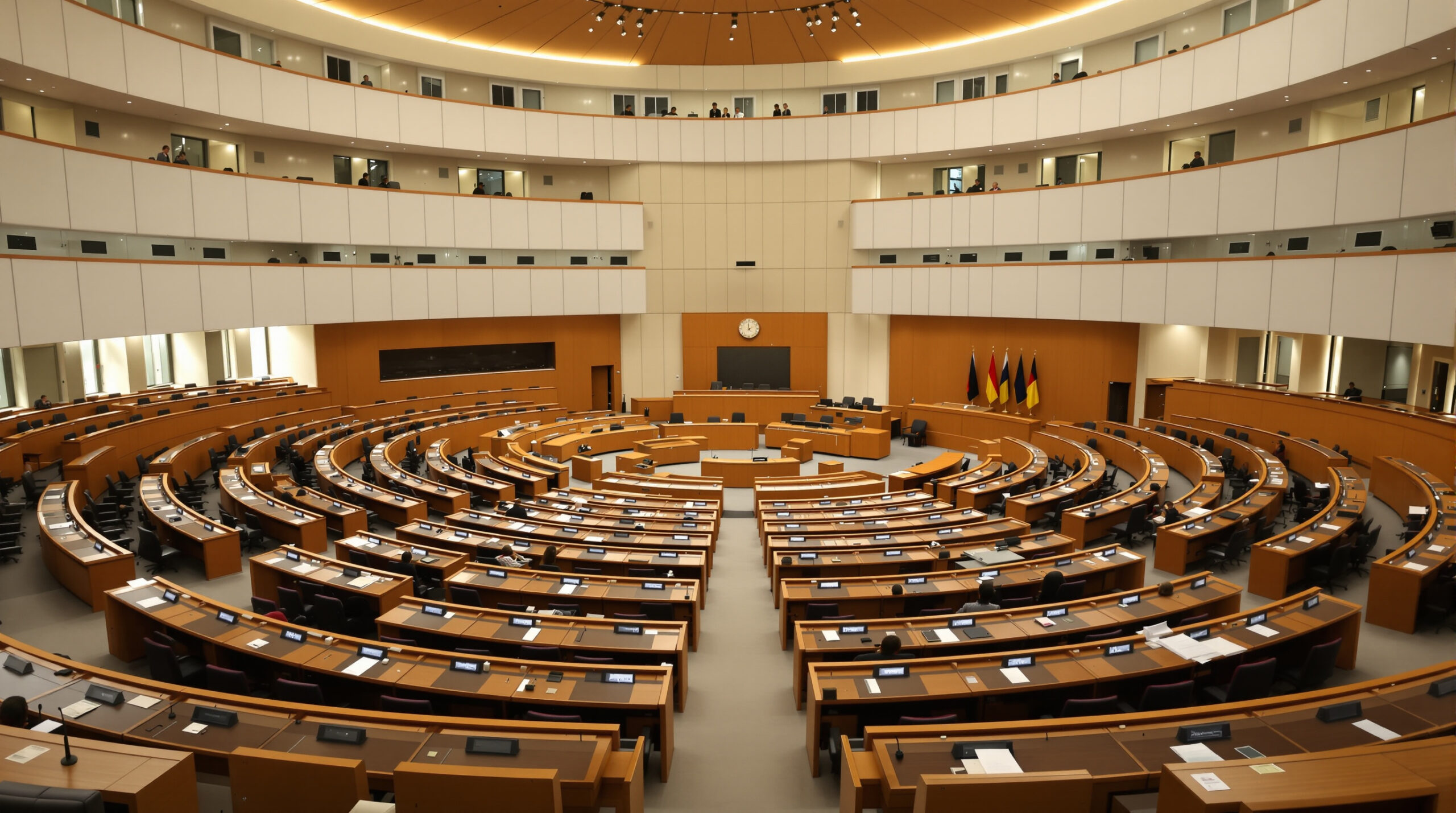
Berlin: A Coalition That Aligns on Cannabis
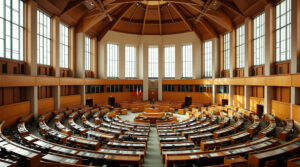
The preliminary results from Berlin’s September 20 state parliament election have reshuffled the capital. The Left party achieved 25.65 percent and 47 of 158 seats, a gain of 25 mandates. The CDU of outgoing Mayor Kai Wegner fell to 18.77 percent and 34 seats. The AfD reached 16.26 percent with 29 seats, the Greens 14.29 percent with 26 seats, and the SPD 12.11 percent with 22 seats. BSW and FDP failed to clear the five-percent threshold. Voter turnout stood at 74.22 percent, more than eleven points above 2023 levels.
📑 Inhaltsverzeichnis
A majority requires 80 seats. The Left, Greens, and SPD together command 95 seats—a comfortable lead. Whether this coalition actually forms remains uncertain, as coalition exploratory talks have not yet begun. Mathematically, however, it is the only configuration that excludes both the CDU and AfD. On cannabis policy, this would represent a break with the previous approach: the German Hemp Association had explicitly endorsed the Greens and Left, while the SPD never responded to its questionnaires.
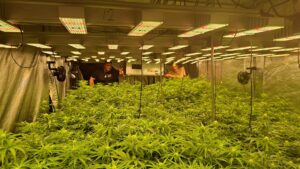
Berlin currently faces three major cannabis-related challenges. Eleven cultivation societies have been approved, overseen by the State Office for Health and Social Affairs. Drug-checking operates as a pioneering project, a legacy of the previous red-green-red administration. Additionally, the districts of Neukölln, Friedrichshain-Kreuzberg, and Pankow have submitted applications for pilot projects on controlled distribution. District assembly elections held the same day will have direct implications for these applications.


Mecklenburg-Vorpommern: Red-Red No Longer Sufficient
The picture in Schwerin looks very different. The AfD emerges as the strongest force with 38.22 percent and 32 seats, while SPD Minister-President Manuela Schwesig’s party follows with 35.50 percent and 29 seats. The Left achieved 6.54 percent and five seats, the Greens 5.67 percent and also five seats. The CDU failed to enter the state parliament with 4.89 percent, as did the BSW with 4.83 percent. For the CDU, this represents a historic collapse. Voter turnout reached 78.1 percent.
The state parliament has 71 seats, with a majority requiring 36. The previous coalition of SPD and Left now commands only 34 mandates combined. Mathematically, they would need the Greens to reach 39 seats. From a drug policy perspective, this is not unwelcome news: the Hemp Association had given at least qualified endorsements to the Left and Greens, while the SPD did not respond. The CDU, which wanted to repeal the cannabis consumption law, will no longer sit in parliament. Six cultivation societies have been approved in the state, and the drug-checking project of the University of Rostock operates under a 2024 state ordinance.
What State Governments Actually Decide on Cannabis
No state parliament can enact legalization—the Cannabis Consumption Act is federal law. The states‘ scope for action lies in administration, and this is where virtually everything currently gets decided. How long approvals for cultivation societies take, how strictly building codes and distance regulations are applied, whether drug-checking expands—these are state-level decisions. The Green Party’s parliamentary inquiry on bottlenecks in cultivation society approvals illustrates how slowly this process moves. The Bavarian Higher Regional Court’s decision on distinguishing personal consumption from commercial quantities shows how far courts must now go to clarify details.
Boundaries become particularly clear with pilot projects. The Federal Office for Agriculture and Food rejected applications from Hannover and Frankfurt, finding that the research clause in Section 2(4) of the Cannabis Consumption Act did not apply. A new Berlin state government can politically support and accompany its districts‘ applications but cannot approve them—that power rests with federal authorities, and no such project has been approved to date. That municipalities have been pushing ahead on this issue for years is not a new phenomenon. Münster already attempted legalization at the municipal level in 2016.
The Federal Council as a Second Arena
Both elections reverberate beyond state borders. Berlin controls four of 69 federal council votes; Mecklenburg-Vorpommern controls three. How a state votes depends on its coalition agreement. When coalition partners disagree, the state abstains—and an abstention functions as a rejection in the federal council. Berlin abstained on the cannabis law vote due to SPD opposition; Mecklenburg-Vorpommern allowed the law to pass.
This will matter again soon. Amendments to the Medicinal Cannabis Act are pending in the Bundestag’s health committee, and Health Minister Carsten Linnemann is pushing for stricter medicinal cannabis regulations. In preliminary rounds, the states even demanded additional tightening. Whether new state governments will shift positions on this front remains to be seen. What is certain is that the federal council’s composition changes with every state election. Our analysis of the Saxony-Anhalt state election continues to hold: cannabis has largely disappeared from party platforms, but certainly not from state-level politics.
Frequently Asked Questions
Can a new Berlin state government simply approve cannabis pilot projects?
No. Pilot projects under the research clause of the Cannabis Consumption Act are submitted to and decided by the Federal Office for Agriculture and Food. A state can politically support and accompany its districts‘ applications, but the approval itself rests with federal authorities. To date, no such project has been approved.
How many cultivation societies exist in these two states?
Berlin has approved eleven cultivation societies, overseen by the State Office for Health and Social Affairs. Mecklenburg-Vorpommern has six, reviewed by the State Office for Agriculture, Food Safety and Fisheries. Approval does not guarantee that a society will actually cultivate or distribute cannabis.
What changes in the federal council due to these elections?
Together, both states control seven of 69 federal council votes. Each state votes as a bloc, and coalition disagreements result in abstention. Since abstention functions as rejection in the federal council, what matters is not individual parties but what drug policy provisions appear in future coalition agreements.
Did drug policy decide these elections?
No, and that was not expected. Cannabis played virtually no role in either campaign, as the Hemp Association’s questionnaire demonstrated. The election results nonetheless shift majorities in bodies that decide on approval procedures, drug-checking, and pilot projects.
When will it be clear who governs in Berlin and Schwerin?
That remains open. After state elections come coalition exploratory talks, followed by formal coalition negotiations. Until a new government is elected, previous cabinets remain in caretaker mode. Only the coalition agreement will reveal whether drug policy receives its own section.
Sollten die Bundesländer mehr Einfluss auf die Cannabispolitik haben?
Sources: Preliminary official final results of the Berlin state parliament election and Mecklenburg-Vorpommern state election from September 20, 2026 (wahlrecht.de), questionnaires and candidate assessments by the German Hemp Association, press releases from Hannover and Frankfurt on rejected pilot projects, Bundestag document 21/3061 on amendments to the Medicinal Cannabis Act.



Branchen-Update
News, Analysen und Reportagen — mehrmals im Monat direkt in dein Postfach.
Folge uns