Hardly any cooking oil is misused as often as hemp seed oil. It ends up in the frying pan, gets hot, turns bitter, and afterwards there is an oil on the shelf that nobody touches any more. In the second instalment of our column with Gerda Steinfellner, we look at why that is and what to do with it instead.
📑 Inhaltsverzeichnis
This column is produced in collaboration with Gerda Steinfellner, a nutrition scientist and co-founder of the Austrian culinary hemp business Hanfland. We state this dual role in every instalment. Hanf Magazin is editorially responsible for the articles; they are not paid for.
The fatty acid profile is the whole point
Hemp seed oil consists predominantly of polyunsaturated fatty acids. This very structure makes the oil interesting from a nutritional perspective and, at the same time, sensitive in the frying pan. Polyunsaturated means that the fatty acids carry several double bonds, and each of these is a point at which the molecule can react to heat, light and oxygen.


Two things happen at the same time during heating. The desirable fatty acids are altered, and compounds are formed that were not there before. What you taste is usually the second part: the oil becomes bitter or rancid. The smoke point, which many people use as the only benchmark, is only the visible limit. The change begins considerably earlier, without anything smoking.
What hemp seed oil is suited for instead
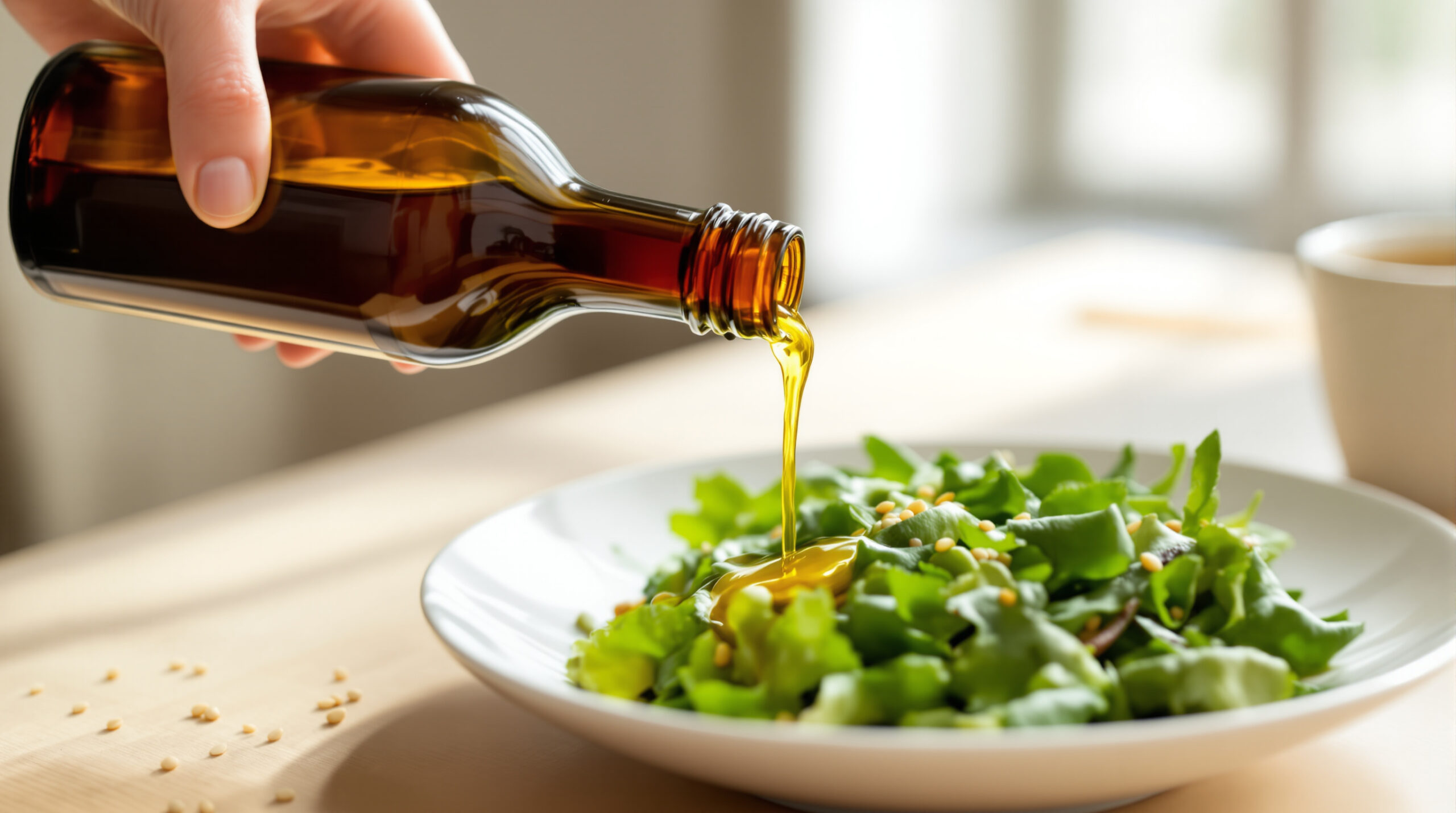
The rule is simple: use it cold, add it late. In dressings, over the finished dish, in dips and spreads, in the smoothie. If you want to eat something warm, add the oil after cooking, not before. It goes well over boiled potatoes or into a soup that is no longer on the stove, because the residual heat carries the flavour without putting stress on the oil.
In terms of flavour, hemp seed oil brings a distinct, slightly nutty and grassy note. It is not a neutral oil that can be used indiscriminately, but one with its own signature. If you are using it for the first time, it is better to dose sparingly.
How to recognise good quality
Because the oil is sensitive, the handling after pressing matters almost as much as the raw material. Three things can be recognised in the shop:
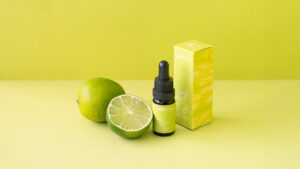
- The bottle. Dark glass is not a design detail but protection from light. Clear bottles are a bad sign for such a sensitive oil.
- The pressing method. Cold-pressed means that no heat was applied during pressing. For hemp seed oil, this is the prerequisite for the fatty acid profile being preserved at all.
- The date. Hemp seed oil is not a product for stockpiling. The fresher, the better, and after opening it belongs in the refrigerator.
How hemp seeds are composed as a raw material is explained in our article on the nutrient profile of hemp seeds. The first instalment of this column dealt with sprouted hemp seeds.
Note: This article is for information purposes and does not constitute a health claim or a statement of effects. Information on foods does not replace nutritional advice.







Wie verwendest du Hanföl in der Küche?
Branchen-Update
News, Analysen und Reportagen — mehrmals im Monat direkt in dein Postfach.
Folge uns