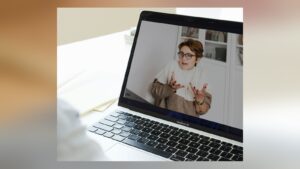

Can Ansay is one of the loudest voices advocating for telemedicine cannabis provision in Germany, and one of the most controversial. We asked him for an interview about access, regulation, and the question of where technology may replace a physician’s decision. He did not answer one question.
The telemedicine prescription of medical cannabis is under political pressure. The draft law to amend the Medicinal Cannabis Act would make in-person physician contact mandatory for initial prescriptions, as we described in Cannabis Telemedicine Under Pressure. Those advocating for the digital side in this debate must field uncomfortable questions, and that’s exactly what we asked.
On the procedure: The questions come from the editorial team and were coordinated with the agency. Two questions initially removed were reinstated at our request. Answers are provided in writing and reproduced here verbatim, edited only for typos. The interview is unpaid and involves no reciprocal obligations.


In Conversation
Dr. jur. Can Ansay, Founder and CEO of DrAnsay
On telemedicine in rural areas, the charge of prescription formalism, artificial intelligence in treatment, and the limits of regulation.
Question 1
Your thesis is that medicine becomes better not through more bureaucracy, but through technology. What concrete evidence do you point to in the case of medical cannabis provision, and what does the medicinal cannabis example tell us about the state of our healthcare system overall?
Can Ansay: Technology alone makes cannabis provision possible for many people, for example in rural areas. It also makes cannabis products far more accessible and affordable for almost everyone, with significantly greater selection. Thanks to telemedicine and AI-assisted systems, physicians are reachable everywhere and work very efficiently. Bureaucratic tasks can be automated.
The medicinal cannabis example is emblematic of our healthcare system. Just recently, insurance companies unjustifiably stopped reimbursing cannabis flower for patients. Moreover, primary care physicians are not fulfilling their care mandate, as they don’t educate patients about cannabis even though it helps many better than conventional medicines. Our current survey shows exactly this: 76 percent accept medical cannabis in principle as a regular treatment option when prescribed and supervised by a physician. At the same time, only 37 percent feel well informed.
Question 2
For many patients, remote treatment was the first practical access to cannabis therapy because there are few practices in their region with relevant experience. Does this align with your experience, and what has fundamentally changed in access to medical care as a result?
Can Ansay: Yes. Telemedicine solves a simple problem: medical expertise and patients are not always in the same location. Digital treatment can significantly reduce this geographic barrier. If a medical examination is digitally possible, a patient shouldn’t have to drive for hours just so doctor and patient sit in the same room. What matters must be the quality of treatment, not the postal code. For me, that’s the strength of telemedicine: it makes medical expertise accessible.
Question 3
Politicians are calling for an in-person requirement for initial contact. What would that mean for telemedicine cannabis provision, and where do you see meaningful medical safeguarding versus an unnecessary access barrier?
Can Ansay: For medicinal cannabis via telemedicine, it would mean that many patients wouldn’t receive treatment at all. There simply aren’t enough primary care physicians in Germany—an expert commission confirmed this in the Bundestag this spring. It would be nice if all primary care physicians in Germany fulfilled their care mandate and educated patients about cannabis as a therapy option.
Particularly for new patients, our service—speaking with a specialist via video chat—is valuable. Moreover, we fulfill these due diligence obligations better than an average medical practice because patients receive comprehensive written education and unsuitable patients are filtered out. Unique in the world: patients can complete an online questionnaire for evidence-based assessment of their addiction risk. For patients who have been self-treating with cannabis for years and often know more about it than their family doctor, mandatory initial contact is an unnecessary access barrier.
Question 4
The most common criticism of telemedicine cannabis prescription is that it turns a medical indication into a formality: fill out a questionnaire, get a prescription. How do you counter that, and how do you ensure that an indication is actually examined?
Can Ansay: I see it as a compliment that our service is so simple yet fulfills medical duties of care very well. We’ve never had a complaint about malpractice—this with over a million patients. Which family doctor can say that, even with just 1,000 patients?
Our physicians on DrAnsay.com trust the patient’s statements about symptoms like sleep disorders or pain, just as family doctors must trust their patients, as the Professional Code for Physicians provides. Anyone wanting to fake a prescription can just as legally get their cannabis from a cannabis cultivation club. This therefore aligns with the legislator’s intent that everyone in Germany should have access to cannabis even without a doctor.
Question 5
Critics point out that platforms like yours economically depend on prescription volume, creating an incentive to prescribe rather than refuse. How do you manage this conflict of interest, and what is your refusal rate?
Can Ansay: Every physician has these conflicting interests, whether practicing in a clinic or online. What matters is that they fulfill their physician duties as best as possible, which ours certainly do. Our 4.8-star rating is the best proof of that.
Question 6
Have there been cases where you changed your procedures following criticism or regulatory notices? And what have you learned from such disputes about the limits of innovation in healthcare?
Can Ansay: Testing limits doesn’t mean refusing responsibility for me. Quite the opposite. If you want to change something, you must understand precisely why a boundary exists and how to achieve the underlying protective goal with a new model. We modify our service particularly after court rulings. But if we adapted our business model to every unfounded criticism, our service wouldn’t exist anymore, to patients‘ detriment. I love criticism, but only when it’s constructive or evidence-based.
Question 7
You warn that health could become a privilege. If patients increasingly have to self-fund cannabis therapies, doesn’t that sharpen this exact development? And what needs to change so technological progress actually leads to greater access?
Can Ansay: Yes, it does sharpen this development. For this progress to truly benefit everyone, insurance companies would finally need to cover the costs of this type of treatment as well as cannabis product prescriptions. That’s long overdue!
Question 8
Where do you draw the line between meaningful regulation and overregulation? Put differently: which requirement in cannabis telemedicine do you consider absolutely justified, even if it makes a digital business model slower or more complicated?
Can Ansay: If a physician can make a safe and well-founded decision via video consultation, I see no medical added value in prescribing an in-person appointment simply on principle. Within standards, physicians should have the freedom to choose the medically appropriate form of treatment.
Question 9
You view AI in treatment as a meaningful solution to many healthcare system problems. At what point can technology meaningfully support or even automate a medical decision, and where must a physician necessarily decide?
Can Ansay: For me, the interesting question isn’t human or AI. The better combination is human with AI. When technology takes over routine work, physicians gain time for exactly what we need them for: complex decisions, personal conversations, and medical responsibility.
Question 10
Cannabis exemplifies the contested terrain between new legislation, medical provision, and public debate. Looking ahead one year: what needs to change in cannabis provision, and what role do you see yourself playing?
Can Ansay: I wish we could conduct this discussion less ideologically in a year. Medicinal cannabis is first and foremost a medicine. Therefore, the central question should be how patients can safely, responsibly, and as simply as possible access a medically sensible therapy.
I see my role as continuing to demonstrate that even a highly regulated healthcare system can be simplified. I don’t want to shift boundaries because rules bother me. I want to question them where they prevent people from getting better care.
What Remains Unresolved in This Interview
We note three points because they are more important for assessment than agreement with the remaining answers.
The question about the refusal rate remains unanswered. We asked how many inquiries are refused because precisely this figure would prove the difference between medical examination and formality. The answer refers to a star rating. A customer review measures satisfaction, not the care taken in determining indication—and in this market, those satisfied are primarily those who got what they came for. The figure is still not available, and without it, the central criticism remains unchallenged.
We could not verify the claims about patient numbers and complaint-free status. Over one million patients and not a single complaint about malpractice are company statements. We have no way to verify them, so we note them as what they are. The cited survey values are now documented. The survey is titled „Cannabis Compass“ and was commissioned by DrAnsay; online, 1,000 German-speaking persons aged 18 to 65 were surveyed; the field period was August 21-24, 2026; nine questions were asked. The exact values are 76.6 percent for basic acceptance and 37.1 percent for self-assessed information level. Not disclosed are the exact wording of questions, the surveying institute, and whether the sample was quota-based or representative. For a commissioned survey, the methodology section is nonetheless more transparent than usual.
The reference to cultivation clubs doesn’t hold up. The statement that whoever wants to fake a prescription could just as easily get their cannabis legally from a cultivation club ignores the barriers: According to Section 16 of the Cannabis Consumption Act, one needs a residence or habitual residence in Germany, must be at least 18 years old, requires membership for at least three months, and may belong to only one club. Add to that limited dispensing quantities and in many regions simply no accessible club. The route through a cultivation club is thus not a readily available alternative. That it corresponds to the legislator’s intent for everyone to have access to cannabis without a doctor is moreover an interpretation, not legal reality.
The core of his argument remains valid, and it’s strong: if there are too few practices regionally that prescribe at all, an in-person requirement for initial contact shifts the problem instead of solving it. The legislator will need to resolve this tension, and so far has presented no compelling proposal.
About the Person and Company
Dr. jur. Can Ansay is a lawyer, founder and CEO of DrAnsay. The health-tech company was founded in 2018 and uses its platform to mediate physician consultation and digital prescription services, including medicinal cannabis, weight reduction, and follow-up prescriptions. According to company information, DrAnsay works with more than 350 local and digital pharmacies and plans to increasingly use artificial intelligence for structured symptom recording and routing into appropriate care pathways.
Note: This interview reflects the interviewee’s positions and not those of the editorial team. It contains no health claims, therapeutic claims, or treatment recommendations. Medicinal cannabis is a prescription medicine; the decision regarding selection, initiation, and continuation of therapy rests exclusively with the treating physician. Company statements are identified as such and were not independently verified by us. As of: October 5, 2026.
Sollte die Cannabis-Erstverordnung auch per Telemedizin möglich sein?
Sources: Written interview with Dr. jur. Can Ansay, conducted via Borgmeier Public Relations, August through October 2026; DrAnsay, „Cannabis Compass,“ results of a nationwide online survey (PDF, 21 MB), field period August 21-24, 2026, n = 1,000, provided by the client and filed here with their permission; Section 16 Cannabis Consumption Act; Draft of the First Law to Amend the Medicinal Cannabis Act, Bundestag paper 21/3061; DrAnsay company information; own reporting.






Branchen-Update
News, Analysen und Reportagen — mehrmals im Monat direkt in dein Postfach.