Since April 2025, the Netherlands has been running the actual experimental phase of its closed coffeeshop supply chain model. On September 9, 2026, the first follow-up measurement was submitted to the Second Chamber in The Hague. At first glance, the result appears unspectacular—and therein lies its political significance: neither those hoping for a consumption surge from regulated cultivation nor those warning of an explosion in use will find confirmation in the data.
📑 Inhaltsverzeichnis
Ten Intervention Communities Against Ten Control Communities
The research is being conducted jointly by the Trimbos Institute, the research firm Breuer&Intraval, and RAND Europe, commissioned by the WODC research center for the Ministries of Justice and Health. The study compares ten communities participating in the experiment with ten communities continuing under the old toleration model. Data for this first measurement were collected primarily between September 2025 and March 2026. This is the first of four annual follow-up measurements scheduled through 2028. For a detailed account of how the supply chain restructuring began, see our report on the model project with 80 coffeeshops.
Broader Selection, Cheaper Flower, Pricier Hash
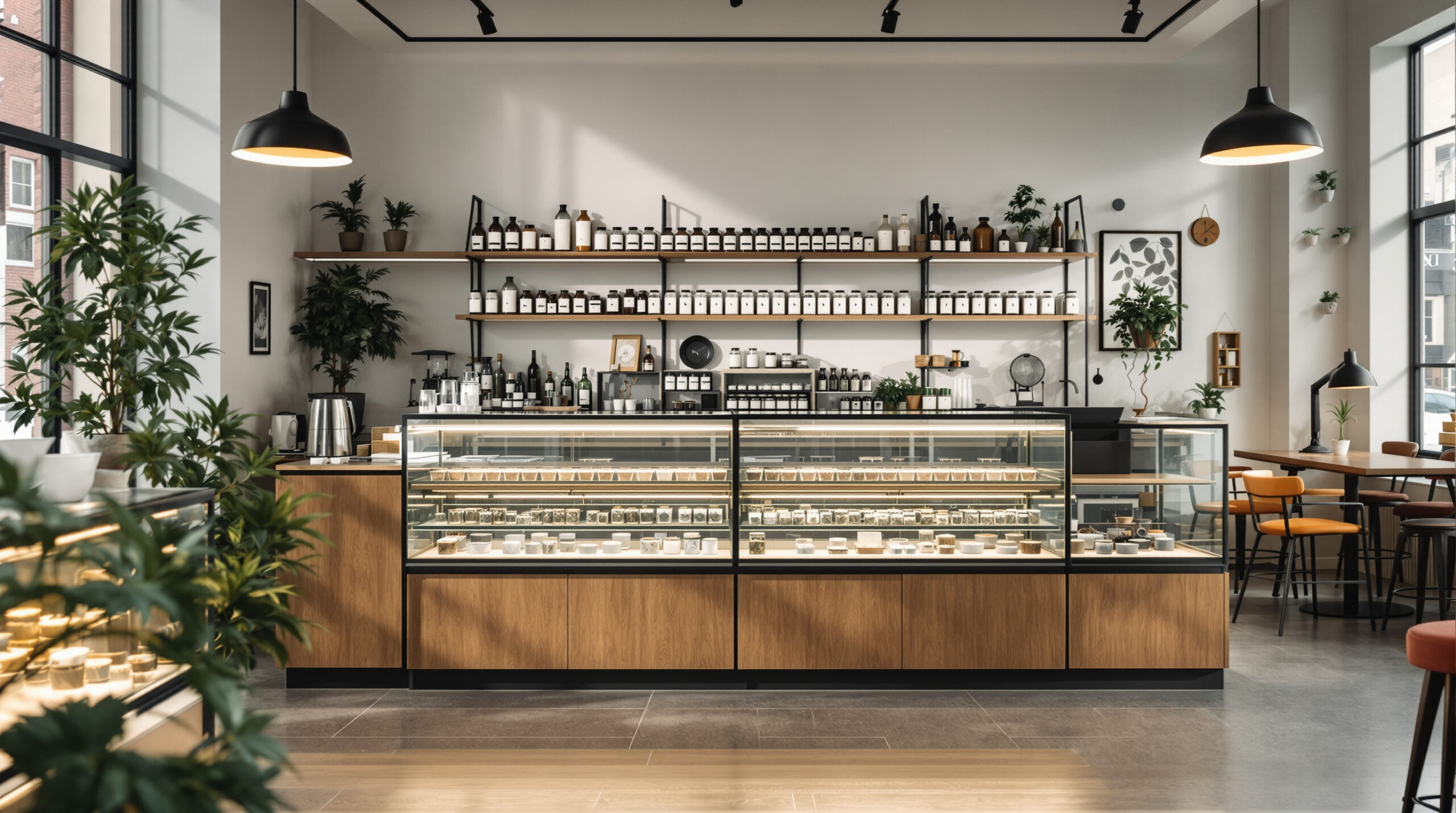
The most striking change concerns the product range itself. In participating communities, the selection has noticeably expanded, more so than in control communities. The menus now include products that played little role in the tolerated market: edibles, vapes, and concentrates, some with very high THC levels. Pricing trends are diverging. Cannabis flower became cheaper, particularly domestically grown varieties. Hash, by contrast, became more expensive in the intervention communities. Customers nonetheless rate the price-to-quality ratio as better than before the experiment began.


Consumption Remains Unchanged
Precisely where the political debate has been loudest, researchers report a null result. No differences in consumption frequency were found between intervention and control communities. Coffeeshop visit numbers remained stable as well. Quality of life ratings in affected neighborhoods range between 7.6 and 7.8 on a scale of ten, and the research team found no convincing evidence of experiment-related effects. This applies in both directions—neither measurable deterioration in public safety nor significant improvement.
The Illegal Market Doesn’t Disappear on Its Own
The black market persists, and consumers cite two straightforward reasons: lower prices and larger purchase quantities. This is the sore point of any regulated model, because a legal channel with purchase limits and tax burden can hardly offset this advantage. On the supply side, participants report closer collaboration between municipalities, coffeeshop operators, producers, and regulators. That this supply chain attracts new players became apparent when an international tobacco corporation entered the market, forcing The Hague to acknowledge it has no legal basis to prevent it.
What Germany Can Learn from This
For the German debate on regional pilot projects, the Dutch experiment is the most relevant European reference point, even though the second pillar of Germany’s cannabis law currently sits on the political shelf. The preliminary finding is this: regulation initially changes the product and supply chain, not consumer behavior. Anyone expecting short-term effects on consumption figures from a pilot project is setting the bar in the wrong place. A look at Switzerland supports this: Zurich extended its Züri Can pilot project through 2028 rather than drawing conclusions after two years. Switzerland’s early move into this territory is documented in our earlier piece on Switzerland’s path toward pilot projects, while in Germany a cannabis sales pilot project long struggled with approval authorities.
Equally noteworthy is the researchers‘ own caution. They explicitly state that the timeframe is too short to draw reliable conclusions. This stands in tension with the speed at which such interim results are leveraged politically. Which metrics are actually suitable for measuring legalization effects remains disputed, as our analysis of the EU Cannabis Toolkit demonstrated. Follow-up measurements will continue annually, with the cabinet deciding on continuation of the experiment in 2029.
Frequently Asked Questions
What exactly is the Dutch cannabis experiment?
It is a state-controlled attempt to close the coffeeshop supply chain. Licensed producers legally supply coffeeshops in ten participating communities, while sales elsewhere remain merely tolerated, with supply coming from the illegal market. The experimental phase has been running since April 2025.
Has cannabis consumption increased because of the experiment?
Not according to the first follow-up measurement. Researchers found no differences in consumption frequency between participating communities and control communities. Coffeeshop visit numbers also remained stable.
Did regulation make cannabis more expensive in the Netherlands?
It depends on the product. Cannabis flower became cheaper, especially domestically grown varieties. Hash, however, became more expensive in participating communities. Overall, customers rate the price-to-quality ratio as better than before the experiment started.
Does legal sales displace the black market?
Not yet. Illegal commerce persists, and consumers justify this with lower prices and larger purchase amounts. This is precisely where the limitations of a model with capped legal purchase quantities become apparent.
When will final results be available?
Follow-up measurements will continue annually through 2028. A comprehensive assessment will only be possible afterward. The Dutch cabinet will decide on continuation or termination of the experiment in 2029.
Sources: Trimbos Institute, initial findings from the Closed Coffeeshop Chain Experiment, published September 9, 2026; WODC, Experiment Closed Coffeeshop Chain Research, first follow-up measurement, submitted to the Second Chamber on September 9, 2026.







Sollte Deutschland das niederländische Coffeeshop-Modell übernehmen?
Branchen-Update
News, Analysen und Reportagen — mehrmals im Monat direkt in dein Postfach.