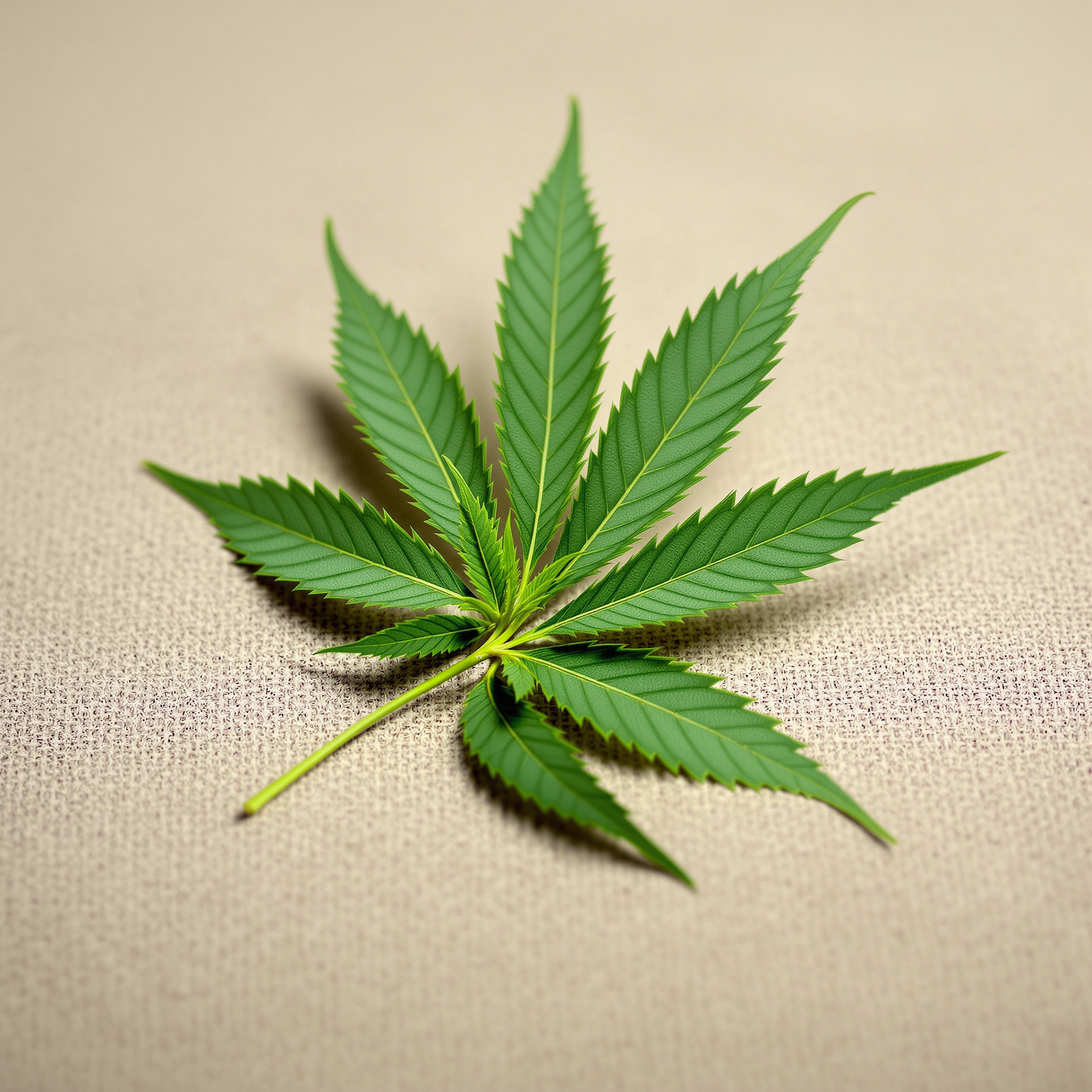
Nepal’s Supreme Court has ordered the government to establish regulations within three months for controlled cannabis cultivation for medical, scientific, agricultural, and industrial purposes. The decision was handed down in May 2025, but the full judgment text only became publicly available in early November 2026. For the country’s hemp industry, this marks the first concrete prospect in half a century.
📑 Inhaltsverzeichnis
What the Court Ordered
The ruling was made by a joint chamber of the Supreme Court with judges Dr. Nahakul Subedi and Til Prasad Shrestha. The government is required to create a regulatory framework covering licensing, cultivation, production, processing, storage, use, sale, distribution, and import-export. The scope includes medical, scientific, agricultural, horticultural, and industrial purposes. The regulations must be compatible with the United Nations‘ 1961 Single Convention on Narcotic Drugs and Nepal’s Narcotic Drugs (Control) Act of 1976.
The legal reasoning is remarkably straightforward and precisely because of that, highly effective: the court did not create new law. It determined that the government has possessed the authority to issue such regulations since Section 4 of the 1976 Act, but simply failed to exercise it for decades. According to the court, such inaction constitutes a refusal or neglect of statutory duties.


The case was brought by attorneys Saroj Adhikari and Rigeendra Giri of the Nepal Pharmaceutical Entrepreneurs Association, naming the Prime Minister and the Office of the Council of Ministers as respondents.
What Explicitly Remains Prohibited
Reading this as legalization would be a misinterpretation. The court explicitly did not order full decriminalization or permit recreational use, deferring such questions to the legislature. Current law does not explicitly allow either, and the court noted the far-reaching economic and social consequences. Unlicensed cultivation, trade, and distribution remain criminal offenses, and existing penalties remain in force.
This concerns regulated access for businesses and research, not a consumer market for adults. Nevertheless, it represents a significant shift for Nepal, where cannabis has been prohibited since 1976, despite being part of agriculture and religious practice for centuries beforehand.
The Clock Ticks—But Nobody Knows When It Started
This is where practical concerns emerge. The decision was issued on 4 Jestha 2082 in the Nepali calendar, corresponding to May 18, 2025. However, the full judgment text was not made public until early November 2026—roughly eighteen months later. Neither the court nor available reporting provides an explanation for this delay.
The critical issue is the exact wording of the order: the three-month deadline begins when the government is served with the directive. This service date has not been made public. This means no outside observer can determine whether the deadline has already expired, is currently running, or only began with the recent publication. Those following Nepal’s situation from abroad should acknowledge this uncertainty rather than cite a date that cannot be verified.
Why This Matters for Industrial Hemp
For the European hemp industry, the industrial provisions of this order are most relevant. Nepal possesses high-altitude regions where hemp grows wild and maintains a textile tradition rooted in hemp processing. Should a regulatory framework actually provide licenses for cultivation, processing, and export, a new raw material supplier could emerge in a market where fiber and hurd are scarce and supply chains fragile.
However, considerable distance remains to be covered. Between a court order and a functioning licensing system lie years in any country, and Nepal must additionally adapt its regulations to the 1961 Single Convention—the very treaty that introduced these prohibitions into national law.
Our Assessment
The real news is not the content of the order, but its age. A decision that has existed since May 2025 yet whose text only became readable now tells more about the state of the proceedings than about Nepal’s hemp policy. For companies awaiting planning certainty for the past eighteen months, a judgment that cannot be read is practically no judgment at all.
What matters now is a single verifiable fact: whether the government submits a draft regulation. Everything else—including the three-month deadline—depends on a service date that has not been made public. We continue to monitor this situation and will report as soon as a draft emerges from Kathmandu or the deadline demonstrably expires.










Sollte Nepal den industriellen Hanfanbau vollständig freigeben?
Branchen-Update
News, Analysen und Reportagen — mehrmals im Monat direkt in dein Postfach.
Folge uns