What Gets Reimbursed After the Flower Ban
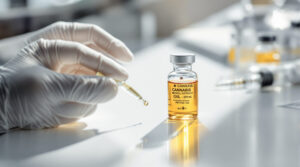
Since the legislative change, the benefit under § 31 Section 6 SGB V now covers only cannabis extracts in standardized quality, as well as medications containing the active ingredients dronabinol and nabilon. Dried flowers have been removed from coverage. We described in detail how this Bundestag decision prioritizing finished pharmaceuticals came about and who benefits from it. It was foreseeable that this wouldn’t be the end of the matter. Already in July, reimbursement of extracts themselves came under debate.
📑 Inhaltsverzeichnis
- What Gets Reimbursed After the Flower Ban
- The Objection from Physician Associations
- The Counter-Position from the DPhG Expert Group
- The Dividing Line Runs Differently Than Both Sides Suggest
- Why Pharmacopoeia-Compliant Doesn’t Always Mean Inhalable
- Frequently Asked Questions
- 💬 Fragen? Frag den Hanf-Buddy!
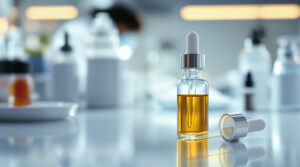
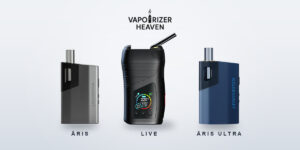
For people who need to vaporize, inhalable raw extracts are the obvious answer. They carry the full cannabinoid and terpene profile of the flower. Several regional physician associations see it differently.
The Objection from Physician Associations
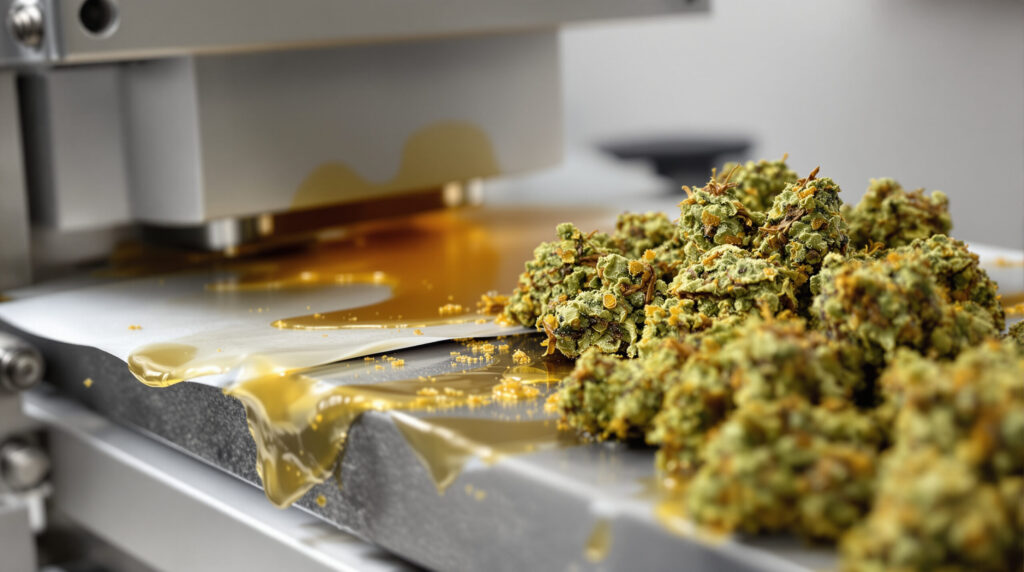
The Berlin Regional Physician Association stated in its prescribing guidelines that it does not consider these raw extracts eligible for reimbursement. It offers two reasons. First, production occurs without solvents and therefore does not conform to extract manufacturing as described in the European Pharmacopoeia. Second, THC contents regularly ranging from 70 to 90 percent fall well outside the range specified by the German Pharmacopoeia for standardized cannabis extracts, which defines a range of 1 to 25 percent.


The pattern is familiar. Lawmakers establish a rule, the self-governing healthcare system interprets it differently, and patients bear the risk. The National Association of Statutory Health Insurance Physicians demonstrated just how quickly this can happen when it revoked its own clarification on first-time prescriptions in August.
The Counter-Position from the DPhG Expert Group
The Medical Cannabis Expert Group of the German Pharmaceutical Society released a white paper on this issue, published in the Deutsche Apotheker Zeitung (German Pharmacist Journal) Issue 35 of 2026. Four specialists developed it, and the group unanimously adopted the document.
Reimbursement eligibility under § 31 Section 6 SGB V is not tied to conformity with a pharmacopoeia monograph. Historically, it cannot be. The „Cannabis as Medicine“ law took effect in March 2017, while the „Standardized Cannabis Extract“ monograph wasn’t added until 2020. According to the white paper, what matters alone is whether a product is standardized to a defined THC content and meets general pharmacopoeia requirements for herbal medicines. The authors explicitly affirm both criteria for highly concentrated extracts.
The Dividing Line Runs Differently Than Both Sides Suggest
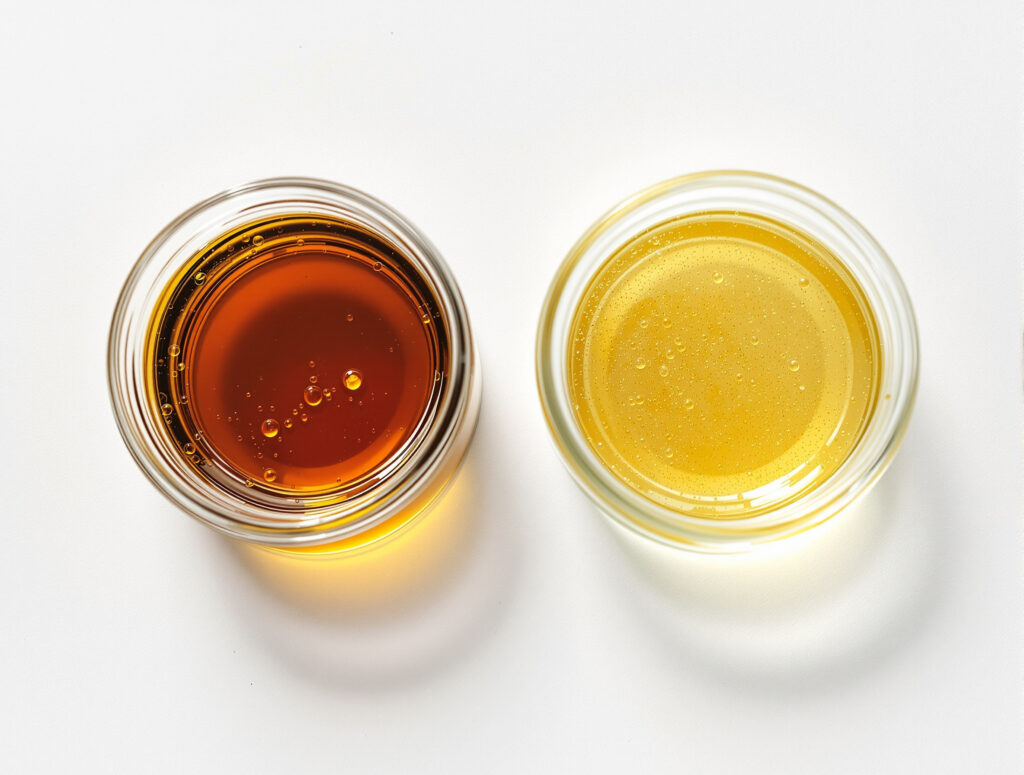
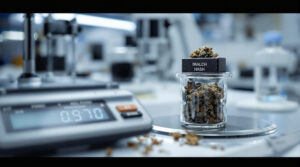
It’s worth looking more closely here, because the white paper actually agrees with the physician association on one point. Products that don’t conform to the pharmacopoeia definition for extracts—such as fresh extracts or rosin—may indeed be excluded from reimbursement. Rosin is produced purely mechanically under pressure and heat, entirely without solvents.
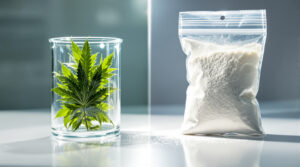
So the solvent argument applies to exactly one product category, but not to all raw extracts. Those produced through classic extraction and concentration, or through supercritical CO₂ processing, create an extract under regulatory definitions, even at 70 percent THC. The European Medicines Agency’s Reflection Paper draws the line toward isolated active substances only at 95 percent THC—above that, the product qualifies as dronabinol. This means reimbursement is determined not by cannabinoid content, but by manufacturing method.
Why Pharmacopoeia-Compliant Doesn’t Always Mean Inhalable
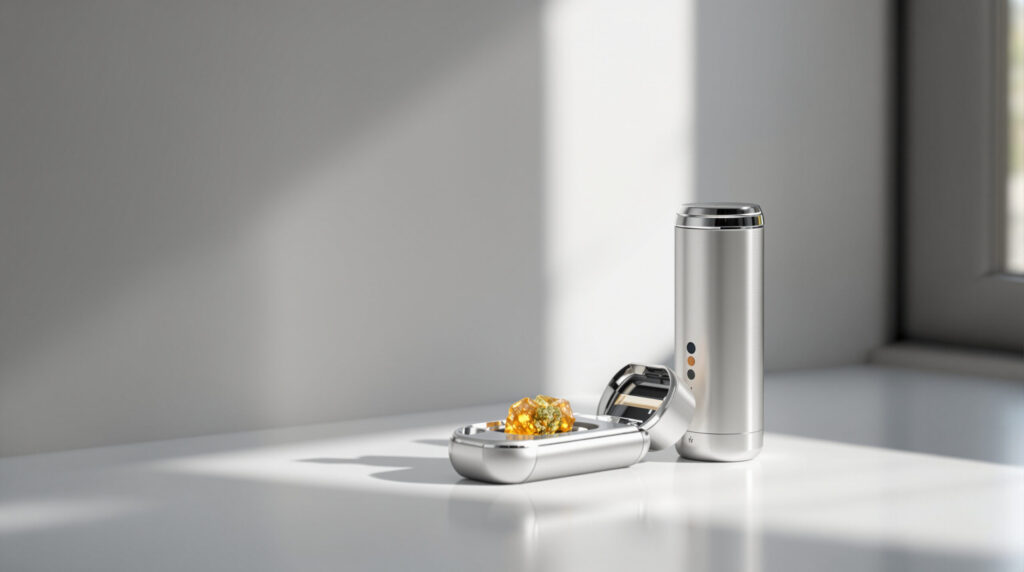
For clinical practice, another point from the white paper is even more important. Extracts conforming to the German Pharmacopoeia monograph contain at least 75 percent excipients, usually medium-chain triglycerides. These preparations are barely suitable for vaporization. Ethanol would be practically the only viable excipient, yet inhaling ethanol itself carries risks. The products that formally fit best into the monograph are precisely those least suited for inhalation.
Then there’s the price question. The authors‘ research in the Lauer-Taxe database on August 15, 2026 found an average price of €8.19 per gram or milliliter among 181 pharmacopoeia-compliant extracts. Dronabinol cost an average of €174.81 per gram among 96 products on the same day. If the standard auxiliary taxation rules were rigidly applied, the pharmacy markup would jump more than 3,200 percent between 94.99 and 95.00 percent THC. The expert group considers this clearly unintended and recommends taxation under the drug price ordinance. For pharmacies, a retaxation risk remains pending clarification.
This will be clarified either by the Federal Ministry of Health or before social courts. The Bundestag is already addressing the topic, as the ACM petition against the flower ban currently sits with the Petitions Committee. And that authorities are now scrutinizing production methods for cannabis medications is demonstrated by the case from Hesse, where the import model for cannabis flowers is being questioned.
Frequently Asked Questions
Are cannabis extracts still covered by insurance since July 30, 2026?
Yes. The benefit under § 31 Section 6 SGB V continues to include cannabis extracts in standardized quality, as well as dronabinol and nabilon. Only dried flowers were removed from coverage. What’s currently disputed is which extracts exactly fall under this definition.
What is a highly concentrated raw extract?
This refers to a cannabis extract with THC content significantly above the 25 percent specified by the German Pharmacopoeia, frequently between 70 and 90 percent. Such products result from concentration of a classically produced extract or directly from modern methods like supercritical CO₂ extraction. They’re designed for use in a vaporizer.
Is rosin the same as a raw extract?
No—and this distinction is precisely what matters. Rosin is produced exclusively through mechanical means using pressure and heat, without any solvents. According to the DPhG expert group’s assessment, it therefore doesn’t meet the pharmacopoeia definition of an extract and can be excluded from reimbursement. This doesn’t apply to solvent-based highly concentrated extracts.
What can affected patients do if insurance denies reimbursement?
They can file an appeal against the denial, and then proceed to social court if necessary. The expert group’s white paper provides a professionally sound argument base for this. If patients don’t want to interrupt therapy in the meantime, they can obtain a private prescription and cover costs themselves.
Who decides this dispute in the end?
In the short term, the Federal Ministry of Health could issue guidance on interpretation, as the National Association of Statutory Health Insurance Physicians has already requested for first-prescription questions. Otherwise, social courts will clarify the matter case-by-case. A uniform national regulation isn’t currently in sight.
Nutzt du aktuell Cannabis auf Rezept oder hast du es vor?
Sources: Deutscher Hanfverband, „Änderungen bei der GKV-Versorgung mit medizinischem Cannabis“, 01.09.2026; Ziegler, Heimann, Stracke und Veit for the Medical Cannabis Expert Group of the DPhG, „White Paper zur Taxation von hochkonzentrierten Cannabisextrakten“, Deutsche Apotheker Zeitung 2026, Nr. 35; Kassenärztliche Vereinigung Berlin, Verordnungs-News; GKV-Beitragssatzstabilisierungsgesetz, Bundesgesetzblatt vom 30.07.2026; EMA, Reflection Paper on the Level of Purification of Extracts to be Considered as Herbal Preparations.
Branchen-Update
News, Analysen und Reportagen — mehrmals im Monat direkt in dein Postfach.
Folge uns