
The planned amendment to the Medical Cannabis Act is generating increasing criticism across the healthcare sector. While legislators want to introduce stricter regulations to curb misuse, pharmacies, industry representatives, and pharmaceutical companies are warning against blanket interventions in established supply structures. At the center of the debate are a potential shipping ban for flowers and a de facto requirement for in-person doctor consultations.
📑 Inhaltsverzeichnis
- Shrinking pharmacy landscape as the starting point
- Why courier service cannot replace shipping
- Missing alternatives in the overall system
- Telemedicine between quality and blanket suspicion
- Who would be particularly affected
- Targeted regulation instead of blanket bans
- Reform with an open outcome
- 💬 Fragen? Frag den Hanf-Buddy!
Shrinking pharmacy landscape as the starting point
From the perspective of pharmacy practice, the reform is hitting an already strained supply situation. Dr. Christiane Neubaur, managing director of the Association of Cannabis-Supplying Pharmacies e. V. (VCA), points out that the number of pharmacies in Germany has declined from 18,753 to 16,601 between 2020 and 2025. Particularly in rural areas, the supply situation has deteriorated significantly as a result.
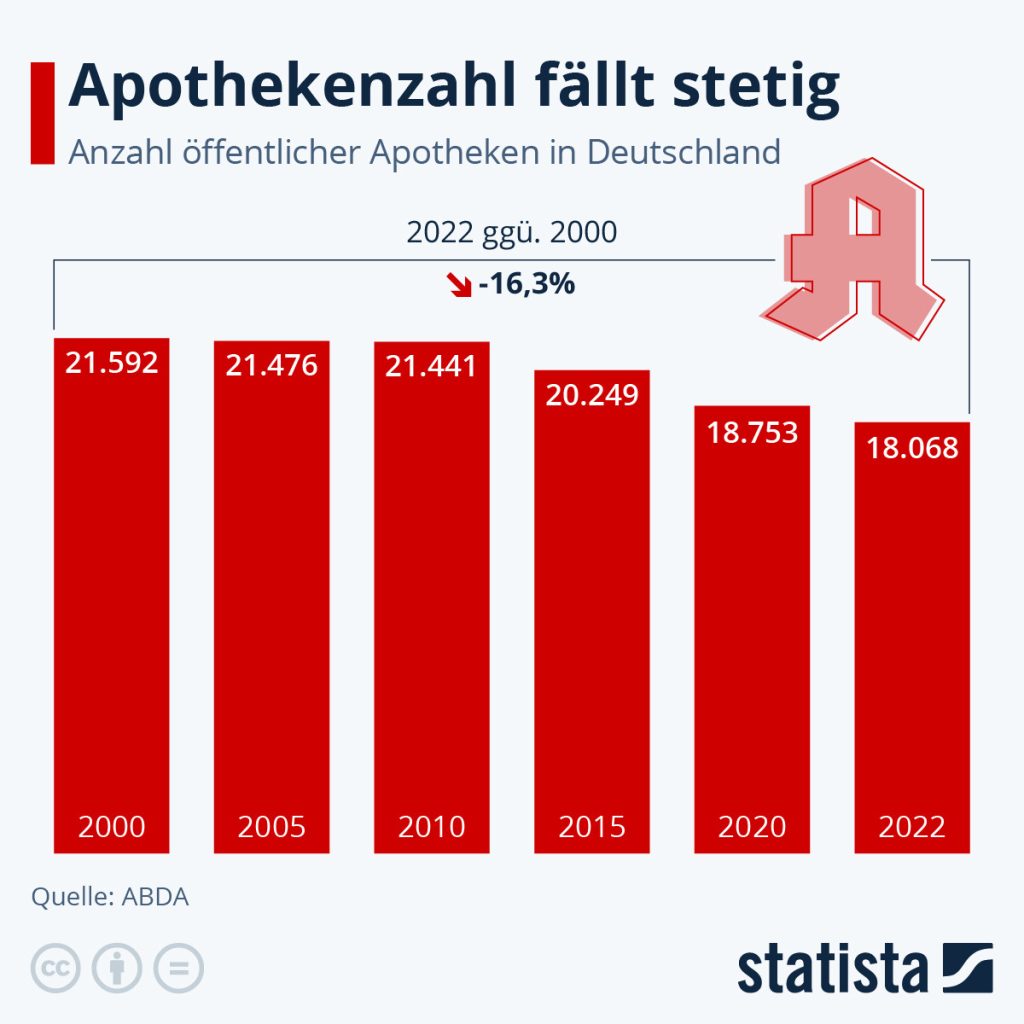
At the same time, demand for specialized pharmaceutical care is rising. Approximately 18 percent of pharmacies, around 3,000 businesses, dispense medical cannabis. How many of these have mail-order authorization is not statistically recorded. However, it is known that both large and smaller pharmacies use mail-order solutions to reach patients outside metropolitan areas. A blanket shipping ban would therefore primarily affect those who already have limited access to care, from the pharmacies‘ perspective.


Why courier service cannot replace shipping
In political discussions, the pharmacy courier service is frequently cited as an alternative to mail-order. Neubaur considers this argument technically untenable. The courier service is legally clearly regulated and part of in-person care under the Pharmacy Operations Ordinance. It presupposes that the courier is part of the pharmacy staff and is subject to instructions.
Economically, the courier service is designed for short distances. Regular deliveries over longer distances no longer fall under this category and effectively correspond to mail-order. Expanding the courier service would mean rising personnel, vehicle, and operational costs for pharmacies. For patients, in turn, this would result in long travel distances or – in the case of immobile persons – complete exclusion from care.
Missing alternatives in the overall system
From the industry’s perspective as well, structural misalignments threaten. Dirk Heitepriem, president of the Cannabis Industry Association e. V. (BvCW), sees the discussion around misuse as a symptom of an unresolved systemic issue. In addition to home cultivation and cultivation associations, a controlled, commercial structure for non-medical use still remains absent. The second pillar of the legislation originally announced was never politically implemented.
Numerous applications for scientifically supervised model projects with the Federal Agency for Agriculture and Food (Bundesanstalt für Landwirtschaft und Ernährung) demonstrate the high interest of municipalities, academia, and industry. However, approvals have been lacking so far. Instead of creating new legal access points, medical care is now being further restricted.
Telemedicine between quality and blanket suspicion
A central point of the reform is the future role of telemedicine. Antonia Menzel, chairwoman of the Federal Association of Pharmaceutical Cannabinoid Companies e. V. (BPC), criticizes the fact that the current bill does not distinguish between reputable and problematic providers.
Misuse arises where medical consultations are reduced to anonymous questionnaires and automated processes. By contrast, reputable telemedical offerings are based on medical history-taking, structured findings assessment, and personal consultation, also via video consultation. These standards are professionally recognized and part of standard medical care.

Who would be particularly affected
According to the BPC’s assessment, people with limited mobility, chronically ill patients, and those in rural or underserved regions particularly benefit from telemedical services. If prescriptions become de facto tied to regular in-person appointments, new care gaps threaten for vulnerable groups. At the same time, additional burdens would arise for medical practices and the healthcare system.
From a medical perspective, there is no reliable evidence that telemedical consultations are qualitatively inferior to in-person appointments when the indication is appropriate. Rather, telemedicine is considered a politically supported component of modern, patient-centered healthcare.
Targeted regulation instead of blanket bans
Instead of general bans, the associations advocate for differentiated measures. These include binding quality requirements, preservation of physician therapeutic authority, controlled shipping through German pharmacies with mail-order authorization, and more consistent enforcement of existing laws. Additionally, transparency tools such as standardized information on physician location or positive lists of licensed providers could be introduced.
The legal framework already exists. The deficit lies less in new bans than in the lack of enforcement of existing law.
Reform with an open outcome
The statements from pharmacy practice, industry, and pharmaceutical companies paint a consistent picture. No one questions the need for clear quality standards. Rather, the criticism is that blanket measures could weaken functioning supply channels without specifically combating misuse.
Whether the legislature will take these distinctions into account in further deliberations will be shown by the upcoming hearing in the German parliament. For many affected parties, it is not about regulatory details, but about real access to medical care.
Further articles on this topic
- Milestone for CBD: EFSA Sets Safety Value for Novel Food
- 100-Ton Earthquake: North Macedonia Hunts the Cannabis Cartel
- Hemp and Christmas: A Plant Between Tradition, Light, and New Beginnings
- Germany in Retreat: Further Tightening of the CanG Demanded
- Ban, Consumption, Control: What Europe’s Youth Really Uses
- Act Now! The Parliamentary Petition Against MedCanG Tightening
- Astrasana Launches Premium Flower Line in Switzerland
- EU Wants to Recognize Hemp Flowers as Agricultural Product
- The DoktorABC Initiative Against Planned CanG Restrictions
- Görke Baller Liquid – Dangerous Consequence of Prohibition Policy
- Portugal: Crackdown on Illegal Medical Cannabis Network
- Bavaria: Cannabis Social Club with Mini Playground Prevented
- Happy 420 – One Year of Cannabis Decriminalization with DoktorABC
- RQS Study: Many Parents Support Decriminalization
- The Difficult Situation Surrounding Dronabinol in Austria
- Canadian Cannabis Survey 2024 – Legalization Works
- USA: Cannabis Harder to Obtain After Legalization
- Authority Error Bavaria: 60,000 Euro Damage for Hemp Retailer
- „Germany, Let’s Grow!“ The Royal Queen Seeds Campaign for Home Cultivation
- Buying Cannabis in 2025: What’s Possible? All Answers
- What Impact Does Parents‘ Cannabis Use Have on Children?
- BMEL on the Move – Finally Cannabis Model Projects








Branchen-Update
News, Analysen und Reportagen — mehrmals im Monat direkt in dein Postfach.
Folge uns