
The link leads to the Working Group Cannabis as Medicine website, where the wording, signature list, and submission address are available.
📑 Inhaltsverzeichnis
- What the petition demands
- What a petition can and cannot accomplish
- The cost argument at the center
- How many people are affected
- The second path: constitutional complaint
- What those affected should know
- What the petition demands
- What a petition can and cannot accomplish
- The cost argument at the center
- How many people are affected
- The second path: constitutional complaint
- What those affected should know
- 💬 Fragen? Frag den Hanf-Buddy!
What the petition demands
The wording that signatories endorse is brief. It reads:
„The Bundestag should resolve that the law from July 2026, which deprives many patients of the option of therapy with medical cannabis flowers, be repealed. Health insurance funds may thereafter no longer cover the costs of these medications. Many patients are desperate because they cannot afford the treatment privately for financial reasons and therefore currently receive no effective therapy for their condition. For many patients, switching to cannabis extracts is not an equivalent alternative.“
ACM petition text
The second sentence describes the effect of the current law, not the goal of the petition. What is being demanded is repeal of the regulation so that insurers can resume coverage. We cite the text as it appears on the signature list.


What a petition can and cannot accomplish
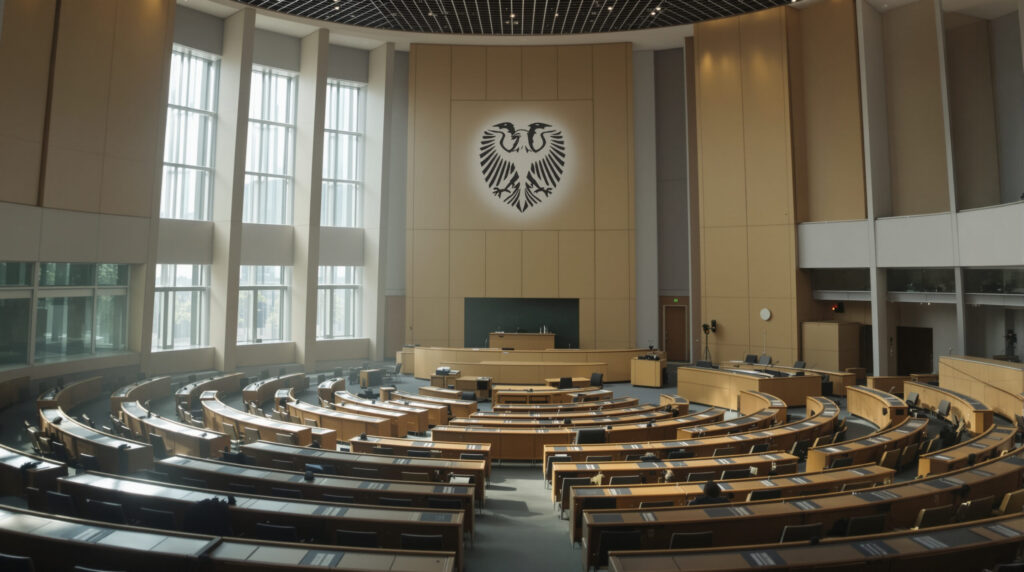
A sober assessment is worth making here, because expectations of petitions often rest on an automatism that doesn’t actually exist.
Every admissible petition is examined and decided upon by the petitions committee, as follows from the right of petition in Article 17 of the Basic Law. The committee can obtain statements from the federal government and direct a resolution recommendation to the plenum. What it cannot do: repeal a law. That decision rests with the Bundestag as the legislative body.
Beyond this, there is the more well-known route through the public petition on the Bundestag’s portal. If such a petition receives sufficient support within the signature period, it is debated in a public committee session and the petitioners are heard. The thresholds were lowered on July 1, 2024: instead of 50,000 signatures, 30,000 are now required, and the period was extended from four to six weeks.
The ACM petition, however, has not taken this route. The association collects signatures on paper: the signature list is available as a PDF for printing, and completed forms are sent by mail to the office in Steinheim. The field for the petition ID is left blank on the form, and online signing via the Bundestag portal is currently not possible.
In practice, this means: the collected signatures increase the political weight of the submission and document the number of those affected, but they do not trigger the quorum mechanism that leads to a public hearing. Those who understand this distinction can assess the prospects more realistically without thereby undervaluing the initiative.
The cost argument at the center

The ACM’s strongest argument is economic in nature and directed against the law’s rationale. The association expects that eliminating flowers will not reduce spending but will increase it, because the remaining alternatives are more expensive. Named are the finished pharmaceuticals Sativex and Canemes, as well as the extract Exilby expected in September.
This objection aligns with the current price debate. We have addressed the dispute over Exilby therapy costs in a separate article, explaining why the price there hasn’t even been set yet: for newly approved medications, a freely set manufacturer price applies for the first six months, only then is a reimbursement amount negotiated. Whether the legislator’s calculation works out will only be decided in the coming year.
The opposing position should not be overlooked. The law’s preamble cites two substantive arguments alongside the savings goal: a greater addiction risk from inhalation of flowers, particularly in long-term therapy, and the active ingredient fluctuations of the natural product compared to standardized preparations. Medical societies counter that the route of administration alone reveals little about addiction risk and that potency is checked in the pharmacy. How sharp the medical criticism is becomes clear from the initiative of pain medicine specialty associations.
How many people are affected
The ACM speaks of around 65,000 patients. Pain medicine specialty associations most recently cited a range of 60,000 to 80,000. Both figures are estimates from prescribing data; official statistics on those affected do not exist. However, the order of magnitude is undisputed, and it explains why the issue does not die down politically.
Additionally, many private insurers have also discontinued reimbursement, which the ACM explicitly points out. For those affected, this means that switching to private insurance is not a way out.
The second path: constitutional complaint

In parallel with the petition, the ACM is examining legal steps according to its own statements, working with attorney Professor Oliver Tolmein, including a constitutional complaint. This path is more legally robust, but also more time-consuming.
How difficult it will be has already become apparent. The Social Court Frankfurt rejected in August the first known emergency motion of a continuing patient and deemed the elimination constitutionally sound; as documented in our article on the rejected emergency motion without transition provisions. The federal government has also made clear that there is no grandfathering protection for ongoing therapies. A constitutional complaint would have to overcome this assessment.
What those affected should know
Those wishing to support the petition can find the wording, signature list, and submission address on the ACM petition page. Participation requires name, address, and signature on paper; according to the association, incomplete entries will not be counted.
Regardless, what remains crucial for ongoing treatment is what is discussed with the treating physician. The exclusion of benefits affects reimbursement, not prescribability: flowers may continue to be prescribed, with patients bearing the costs themselves. Therapy changes should never be made unilaterally.
Note: This article reports on an ongoing petition and does not constitute medical or legal advice. Hemp Magazine does not collect signatures and is not involved in this initiative. Information on affected numbers and cost comparisons comes from the organizations mentioned. Decisions on therapy in individual cases are made by the treating physician; ongoing treatments should not be changed unilaterally.
Sources: ACM press release from August 28, 2026 via presseportal.de; petition page and signature list of the Working Group Cannabis as Medicine e. V.; information from the German Bundestag on the petition procedure and quorum reduction effective July 1, 2024; own reporting.
The Working Group Cannabis as Medicine is collecting signatures against the end of flower reimbursement. What the petition demands, what it can actually achieve in the Bundestag, and why the path through the petitions committee is less automatic than it sounds.
Since July 30, 2026, statutory health insurance funds no longer cover dried cannabis flowers. A petition against this regulation has now been submitted to the German Bundestag by Dr. med. Franjo Grotenhermers, chairman of the Working Group Cannabis as Medicine (ACM). The association has been collecting signatures since the end of August, with the submission deadline set for October 30, 2026.
The link leads to the Working Group Cannabis as Medicine website, where the wording, signature list, and submission address are available.
What the petition demands
The wording that signatories endorse is brief. It reads:
„The Bundestag should resolve that the law from July 2026, which deprives many patients of the option of therapy with medical cannabis flowers, be repealed. Health insurance funds may thereafter no longer cover the costs of these medications. Many patients are desperate because they cannot afford the treatment privately for financial reasons and therefore currently receive no effective therapy for their condition. For many patients, switching to cannabis extracts is not an equivalent alternative.“
ACM petition text
The second sentence describes the effect of the current law, not the goal of the petition. What is being demanded is repeal of the regulation so that insurers can resume coverage. We cite the text as it appears on the signature list.
What a petition can and cannot accomplish
A sober assessment is worth making here, because expectations of petitions often rest on an automatism that doesn’t actually exist.
Every admissible petition is examined and decided upon by the petitions committee, as follows from the right of petition in Article 17 of the Basic Law. The committee can obtain statements from the federal government and direct a resolution recommendation to the plenum. What it cannot do: repeal a law. That decision rests with the Bundestag as the legislative body.
Beyond this, there is the more well-known route through the public petition on the Bundestag’s portal. If such a petition receives sufficient support within the signature period, it is debated in a public committee session and the petitioners are heard. The thresholds were lowered on July 1, 2024: instead of 50,000 signatures, 30,000 are now required, and the period was extended from four to six weeks.
The ACM petition, however, has not taken this route. The association collects signatures on paper: the signature list is available as a PDF for printing, and completed forms are sent by mail to the office in Steinheim. The field for the petition ID is left blank on the form, and online signing via the Bundestag portal is currently not possible.
In practice, this means: the collected signatures increase the political weight of the submission and document the number of those affected, but they do not trigger the quorum mechanism that leads to a public hearing. Those who understand this distinction can assess the prospects more realistically without thereby undervaluing the initiative.
The cost argument at the center
The ACM’s strongest argument is economic in nature and directed against the law’s rationale. The association expects that eliminating flowers will not reduce spending but will increase it, because the remaining alternatives are more expensive. Named are the finished pharmaceuticals Sativex and Canemes, as well as the extract Exilby expected in September.
This objection aligns with the current price debate. We have addressed the dispute over Exilby therapy costs in a separate article, explaining why the price there hasn’t even been set yet: for newly approved medications, a freely set manufacturer price applies for the first six months, only then is a reimbursement amount negotiated. Whether the legislator’s calculation works out will only be decided in the coming year.
The opposing position should not be overlooked. The law’s preamble cites two substantive arguments alongside the savings goal: a greater addiction risk from inhalation of flowers, particularly in long-term therapy, and the active ingredient fluctuations of the natural product compared to standardized preparations. Medical societies counter that the route of administration alone reveals little about addiction risk and that potency is checked in the pharmacy. How sharp the medical criticism is becomes clear from the initiative of pain medicine specialty associations.
How many people are affected
The ACM speaks of around 65,000 patients. Pain medicine specialty associations most recently cited a range of 60,000 to 80,000. Both figures are estimates from prescribing data; official statistics on those affected do not exist. However, the order of magnitude is undisputed, and it explains why the issue does not die down politically.
Additionally, many private insurers have also discontinued reimbursement, which the ACM explicitly points out. For those affected, this means that switching to private insurance is not a way out.
The second path: constitutional complaint
In parallel with the petition, the ACM is examining legal steps according to its own statements, working with attorney Professor Oliver Tolmein, including a constitutional complaint. This path is more legally robust, but also more time-consuming.
How difficult it will be has already become apparent. The Social Court Frankfurt rejected in August the first known emergency motion of a continuing patient and deemed the elimination constitutionally sound; as documented in our article on the rejected emergency motion without transition provisions. The federal government has also made clear that there is no grandfathering protection for ongoing therapies. A constitutional complaint would have to overcome this assessment.
What those affected should know
Those wishing to support the petition can find the wording, signature list, and submission address on the ACM petition page. Participation requires name, address, and signature on paper; according to the association, incomplete entries will not be counted.
Regardless, what remains crucial for ongoing treatment is what is discussed with the treating physician. The exclusion of benefits affects reimbursement, not prescribability: flowers may continue to be prescribed, with patients bearing the costs themselves. Therapy changes should never be made unilaterally.
Note: This article reports on an ongoing petition and does not constitute medical or legal advice. Hemp Magazine does not collect signatures and is not involved in this initiative. Information on affected numbers and cost comparisons comes from the organizations mentioned. Decisions on therapy in individual cases are made by the treating physician; ongoing treatments should not be changed unilaterally.
Sollten die Kassen Cannabisblüten wieder erstatten?
Sources: ACM press release from August 28, 2026 via presseportal.de; petition page and signature list of the Working Group Cannabis as Medicine e. V.; information from the German Bundestag on the petition procedure and quorum reduction effective July 1, 2024; own reporting.







Branchen-Update
News, Analysen und Reportagen — mehrmals im Monat direkt in dein Postfach.
Folge uns