For years, the so-called intoxication clause has stood between legal hemp cultivation and criminal law. The industry association Cannabis Economy has calculated in its updated ELEMENTE Volume 21 how much industrial hemp would actually be needed to produce a high. We’ve verified the figures, reviewed the case law, and examined whether the federal government’s argument holds—that Europe’s threshold debate must first be resolved.
📑 Inhaltsverzeichnis
Sixteen Joints in Sixty Minutes
The intoxication clause in Section 2, Paragraph 3 of the Cannabis Consumption Act permits handling of industrial hemp only insofar as abuse for intoxication purposes is excluded. The law doesn’t specify when such abuse becomes possible. Investigations exploit precisely this gap, since theoretically any amount of plant material can be used to calculate a THC value.
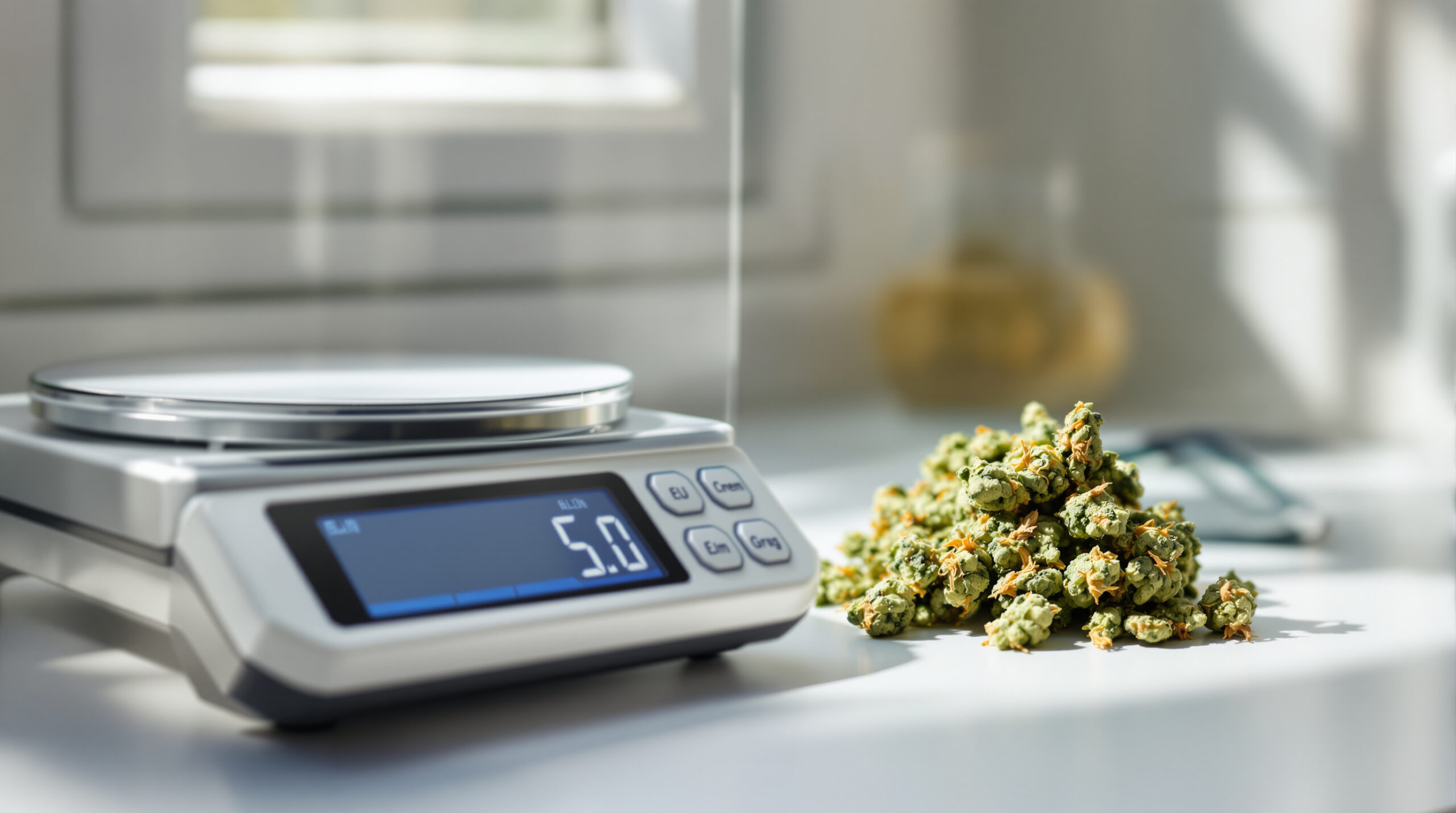
The Cannabis Economy industry association, however, has performed a practical calculation. Case law assumes an intoxicating effect starting at approximately 15 milligrams of THC. With EU-certified industrial hemp containing at most 0.3 percent THC, this corresponds to five grams of plant material. Divided into cigarettes of 0.32 grams each, that’s sixteen pieces that would need to be smoked within one hour for the active substance to accumulate.


We’ve verified these figures rather than simply accepting them. Fifteen milligrams of THC at a concentration of 0.3 percent yields exactly five grams of material, and five grams at 0.32 grams per cigarette equals 15.6 pieces, thus the stated sixteen. The math checks out.
Two and a Half Kilos for the Criminal Threshold
The picture becomes even clearer at the criminally decisive threshold. A non-negligible quantity is defined as 7.5 grams of pure THC. From black market material with roughly 14.8 percent potency, approximately 51 grams are required. From industrial hemp with 0.3 percent, this becomes 2,500 grams; at 0.1 percent, even 7,500 grams.
We’ve checked these values too—they’re accurate to the gram. What matters is the range: compared to black market material, at 0.3 percent you need roughly 49 times the raw material; at 0.1 percent, 148 times as much. Anyone wanting to extract intoxicants from certified industrial hemp would need to process between half a ton and one and a half tons of plant material, depending on the variety, requiring corresponding solvent use and complex separation procedures just to separate CBD from THC. The association considers this economically senseless as long as higher-potency material is available.
The Comparison in Numbers
The association has presented the decisive parameters in a table. It compares what an end consumer would need to expend to obtain the same active substance amount via black market cannabis or industrial hemp.
| Parameter for 15 mg THC | THC from Black Market | THC from Industrial Hemp |
|---|---|---|
| Probability of Intoxication | high | low |
| Time Required for Consumption Preparation | approx. 1 to 3 minutes (rolling a joint) | approx. 75 minutes (preparing baked goods) |
| Cost | 1.01 euros | 0.91 euros to 78.13 euros, depending on product quality |
| Quantity of Raw Material | 0.10 grams | at least 7.5 grams |
One figure in the table deserves explanation because it appears to differ from our calculation above. There it was five grams of material for 15 milligrams of THC; here it’s at least 7.5 grams. The difference lies in the assumed active substance content: five grams apply to the permissible upper limit of 0.3 percent, 7.5 grams to the 0.2 percent frequently encountered in practice. The association points out that the permissible maximum is often not achieved. At an actual content of 0.05 percent, it would already be 30 grams that would need to be processed in a single baked good.
The assumptions behind the figures are also revealing. The 75 minutes comprise 40 minutes baking time, 20 minutes preparation, and 15 minutes for cooling and cleanup; baking must occur at low temperature because THC evaporates above 155 degrees. The 15 milligrams correspond to the minimum dose for an intoxicating effect as case law assumes. An average joint, by contrast, contains roughly 47 milligrams—more than triple. And the price range for industrial hemp is based on hemp tea costing on average around 18 euros per 100 grams, while CBD flower costs many times that.
Courts Are Increasingly Rejecting Abstract Calculations
This argument is increasingly finding traction in court. The Amberg District Court, in a ruling of December 3, 2025, acquitted an industrial hemp retailer, explicitly basing its decision on the new Cannabis Consumption Act (Az. 5 Cs 176 Js 10732/24). The prosecution withdrew its appeal, making the judgment final. We’ve analyzed this decision in our article Intoxication Clause on Its Way Out.
Two additional rulings point in the same direction, though they concern different legal areas. The Recklinghausen District Court, in a ruling of July 28, 2024, rejected opening main proceedings against a kiosk operator who had sold industrial hemp products, on factual grounds. The state treasury bears the costs. The ruling has not been published but is available to the editorial team.
The Düsseldorf Finance Court ruled on November 27, 2024 in favor of a manufacturer of herbal cigarettes (Az. 4 K 584/24 VTa, ECLI:DE:FGD:2024:1127.4K584.24VTA.00). The main customs office had refused tax stamps because abuse for intoxication purposes could not be excluded. The court found this unlawful. It should be noted, however, that this was a tobacco tax case and the goods had previously been decarboxylated, meaning THC had been removed. The ruling thus doesn’t directly support the association’s position, but it shows that blanket abuse presumptions don’t hold up elsewhere either. The court referenced the Kanavape decision of the European Court of Justice from November 19, 2020 (C-663/18).
The association sees a trend reversal here: the restrictive line from the Narcotic Drugs Act era cannot be simply carried over to the Cannabis Consumption Act. Add to this the European level. Two preliminary ruling proceedings on industrial hemp are pending before the European Court of Justice, one from Italy and one from the Netherlands. Particularly in Italy, the handling of hemp flowers has been under pressure since the 2025 ban, where most recently the Court of Cassation limited the seizure of hemp flowers.
The Italian proceeding is being conducted before the Court under case number C-716/25, with notification in the EU Official Journal. A further preliminary ruling request exists from the Netherlands. This information comes from the written response of the industry association; the actual preliminary questions themselves had not yet been fully available as of our deadline. Additionally, the Italian Council of State in summer 2026 submitted questions to the Court in three proceedings concerning the classification of natural CBD (Ordinances 6198, 6200, and 6202/2026); case numbers have not yet been assigned.
What This Means for Businesses
For companies, the clause remains an operational risk. The association cites raids, seized inventories, product spoilage during ongoing proceedings, liquidity bottlenecks, and existentially threatening legal costs. Add to this the reputational damage when a company operating in compliance is associated with drug crime.
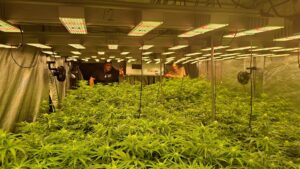
How far this can extend was demonstrated in Schleswig-Holstein. There the prosecutor not only seized products but an entire hemp field ready for harvest that had been properly registered. We reported on this in 2022—it was the first case of its kind nationwide.
The case illustrates the fundamental problem: between seizure and judicial clarification lie months during which goods spoil and the business must continue operating. Even acquittal doesn’t restore a destroyed harvest.
Why the Reference to Brussels Doesn’t Hold Up
According to the association, the federal government argues it wants to first await the European discussion on raising the THC threshold. This argument warrants closer examination, because something is indeed moving at the European level—just in a different direction.
Delegated Regulation (EU) 2026/177 simplified controls in hemp cultivation at the beginning of the year and gave member states greater flexibility on timeframes and inspection density. It changed nothing regarding the 0.3 percent threshold or the requirement for certified seed. Parallel to this, the EU is negotiating a reform of the common agricultural policy intended to classify hemp flowers and hemp leaves as regular agricultural products. Both affect the question of what constitutes industrial hemp and how it is controlled.
However, none of these regulations address the German intoxication clause. It is a national special rule that exists in this form in no other member state. Even if the European threshold were raised, the clause would remain in German law, along with the possibility of calculating a theoretical high from any amount of certified hemp. A previous increase from 0.2 to 0.3 percent already occurred—the problem persisted. The association’s position that the national legislator must act here aligns with the European legal situation.
October Committee Hearing
A concrete date exists: the Greens have introduced a bill to be debated in October in the Bundestag’s agricultural committee. The association acknowledges that opposition amendments are typically rejected. For the industry, however, the debate would still serve as a barometer for whether the governing parties will continue invoking Brussels or address the special rule.
Until then, the situation remains as the association summarizes it: a calculation that nobody makes in practice continues to determine whether a farmer can harvest his field.
Sources: ELEMENTE Volume 21 of the Cannabis Economy industry association (updated version, Chapters 3 and 4), written information provided by the association to Hanf Magazin on August 14 and 19, 2026, District Court Amberg (5 Cs 176 Js 10732/24), District Court Recklinghausen (ruling of 28.07.2024, unpublished), Finance Court Düsseldorf (4 K 584/24 VTa), Delegated Regulation (EU) 2026/177, our own calculations.
Sollte die Rauschklausel für Industriehanf abgeschafft werden?
Note: This article reflects the status as of August 2026 and does not constitute legal advice. The legal assessment of handling industrial hemp is applied inconsistently by courts and authorities and is the subject of ongoing proceedings.




Branchen-Update
News, Analysen und Reportagen — mehrmals im Monat direkt in dein Postfach.
Folge uns