When someone holds a package of hemp flour for the first time, their first thought is usually to make a simple swap: just replace the wheat flour in your favorite recipe and suddenly the cake becomes a nutritional wonder. But the greenish-brown nutty fiber doesn’t quite make it that easy. Hemp flour is indeed an excellent food, but it behaves fundamentally differently in dough than classic refined flour. If you want to use hemp flour, you should first understand what’s in the bag and why the quantity question determines success or failure.
📑 Inhaltsverzeichnis
- What hemp flour actually is
- Why hemp flour doesn’t replace wheat flour
- How much hemp flour to use when baking
- Taste, color, and nutritional values in practice
- Recipe ideas: where hemp flour shines
- Hemp flour compared to other gluten-free flours
- Buying, storing, and dosing hemp flour correctly
- Frequently asked questions
- 💬 Fragen? Frag den Hanf-Buddy!
The short answer upfront: No, hemp flour cannot be used one-to-one like regular flour. It’s not a substitute, but an ingredient you add to dough. We’ll clarify step by step why that’s the case and how much hemp flour a recipe can handle.
What hemp flour actually is
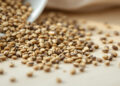
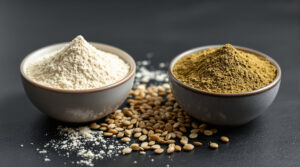
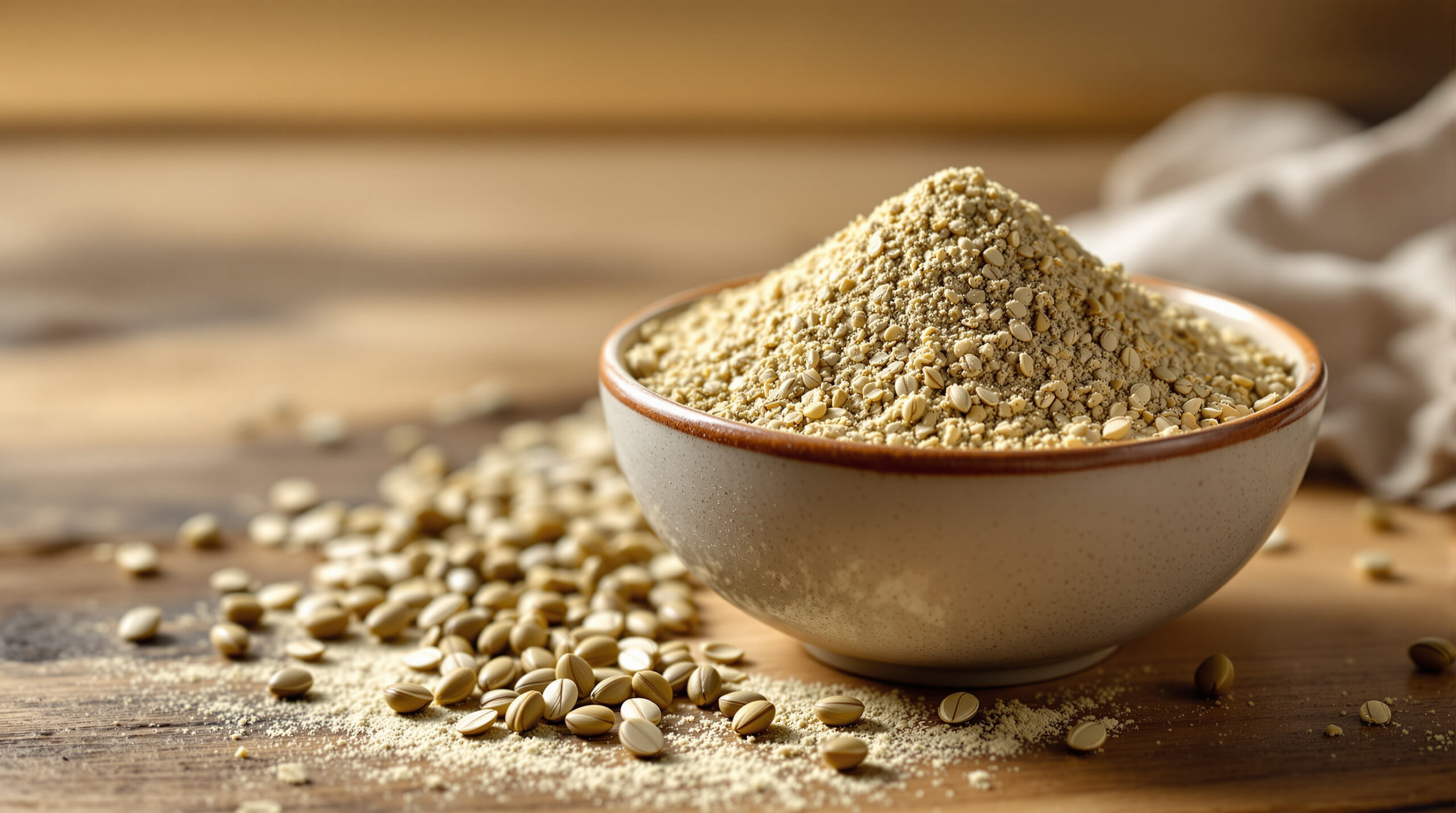
Strictly speaking, hemp flour is a byproduct of hemp oil production. When hulled hemp seeds are cold-pressed to extract the valuable oil, a solid residue remains: the press cake, also called hemp meal. This de-oiled cake is gently dried and then finely ground. The result is a fine, greenish-brown powder with a characteristically nutty, earthy aroma.


This origin explains its special properties. Because most of the fat is already in the oil, the flour is left with concentrated protein and fiber. Commercial hemp flour typically provides around 30 percent protein and about 40 percent fiber. A residual fat content of eight to twelve percent remains depending on the pressing method and is responsible for the nutty flavor. Read more about how this former niche product emerged in our background article on hemp flour.
Why hemp flour doesn’t replace wheat flour
The key word is gluten. Wheat, spelt, and rye contain this binding protein that forms an elastic network when kneaded. This network traps the fermentation gases in the dough and gives bread and cakes their airy, cohesive structure. Hemp flour is naturally completely gluten-free. It therefore lacks exactly the building material that allows dough to rise and hold its shape.
A dough made exclusively from hemp flour would neither bind nor rise. After baking, it would crumble into a crumbly, dense mass. Additionally, hemp flour absorbs an enormous amount of liquid. If you simply use the same amount of water as you would with wheat flour, you get a dry, compact lump. For this reason, there’s an iron rule: hemp flour doesn’t replace flour, it complements it.
How much hemp flour to use when baking
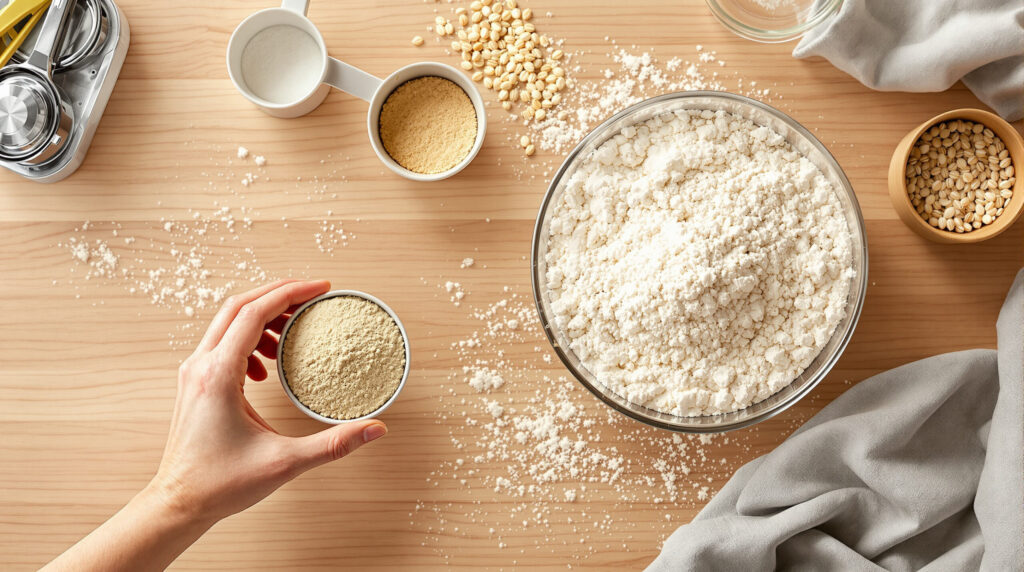
In practice, a proportion of ten to maximum twenty percent has proven successful. This means: only this small portion of the total flour amount in a recipe is replaced with hemp flour, while the large remainder stays wheat, spelt, or another gluten-free flour. A concrete example makes this clear. If a recipe calls for 300 grams of wheat flour, swap 30 to 60 grams of it for hemp flour and keep 240 to 270 grams of the original flour.
Those who exceed this range and set the hemp proportion too high quickly face the consequences. The baked goods become crumbly, barely rise, and taste offensively grassy. If you stay within the recommended range, however, hemp flour barely perceptibly changes the dough’s structure while significantly boosting its nutritional value. Because the flour is so absorbent, it’s also worth slightly increasing the liquid amount or letting the dough rest for a few minutes before it goes into the oven.
Taste, color, and nutritional values in practice
Visually, hemp flour makes itself known immediately. It colors doughs greenish to earthy brown, which looks appealing in a rustic wholegrain bread but can surprise in a light sponge cake. Taste-wise, it brings a nutty, slightly herbal note that works particularly well with savory baked goods. Bread, rolls, crackers, and savory waffles benefit most from this aroma.
The real gain lies in the nutritional profile. Hemp flour provides all essential amino acids and thus a complete plant-based protein. Added to this are omega-3 and omega-6 fatty acids in a favorable ratio plus minerals such as iron, zinc, and magnesium. Because the flour contains hardly any carbohydrates, it’s also interesting for low-carb and keto cooking. It belongs to the same family as whole seeds, whose values we break down in our article on the nutritional profile of hemp seeds.
Recipe ideas: where hemp flour shines
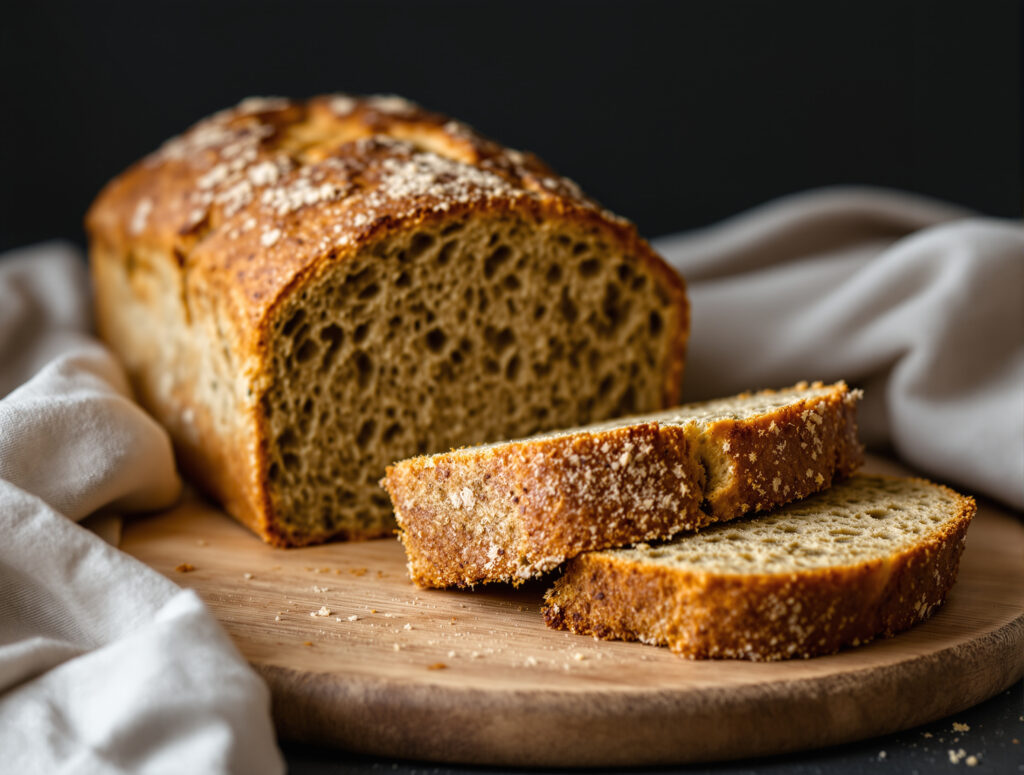
The most straightforward use is in bread dough. If you replace ten to fifteen percent of the flour with hemp flour, you get a juicy, savory bread with noticeably more protein and a beautiful crust. Hearty pancakes, wraps, and flatbreads also handle the nutty fiber well. For sweet baked goods like muffins or banana bread, a small amount of hemp flour also works, but you should dose it more sparingly so the earthy note doesn’t overpower the sweetness.
Beyond baking, hemp flour is a practical everyday helper. A tablespoon in a smoothie, muesli, or yogurt is barely noticeable in taste but boosts protein and fiber content. In soups and sauces, it serves as a gentle thickener. Those who want to delve deeper into creative hemp cooking will find numerous additional ideas in our complete guide to cooking with hemp superfoods. One thing you should never forget: culinary hemp contains virtually no THC, so there’s no intoxicating effect when baking with hemp flour.
Hemp flour compared to other gluten-free flours
Hemp flour isn’t alone in the gluten-free baking world, but it differs significantly from its shelf neighbors. Almond and coconut flour also bring plenty of protein and few carbohydrates, but taste mild to sweet and are better suited to cakes. Rice, millet, and buckwheat flour, on the other hand, deliver more starch and thus structure, but hardly stand out for protein content. Hemp flour bridges the gap, so to speak: it brings the savory-nutty character and nutritional boost, but needs a starch-rich partner by its side.
That’s exactly where the practical trick for foolproof results lies. Those who want to bake purely gluten-free should best combine the ten to twenty percent hemp flour with a starch-rich base like rice or buckwheat flour and a binder like psyllium husk or locust bean gum. This way, one ingredient provides the structure while hemp flour contributes the flavor and nutrients. In classic wheat dough, this extra effort isn’t necessary because the existing gluten already provides the binding.
Buying, storing, and dosing hemp flour correctly
When shopping, it’s worth checking the information on protein and residual fat content, as both values vary depending on the manufacturer and pressing method. A higher fat content means more flavor but also makes the flour more sensitive. Because of the oils it contains, hemp flour becomes rancid over time if stored incorrectly. Store your opened package in a cool, dry, and light-protected place, ideally sealed airtight in the refrigerator, and use the contents within a few months.
To start, it’s recommended to begin with a low proportion of around ten percent and gradually work your way up. This way you learn how your favorite recipe reacts to the nutty fiber without risking an entire batch of dough. Those who note the amount and evaluate the result quickly find their personal ideal dosage. This way, hemp flour transforms from an exotic experiment into a permanent pantry staple.
Frequently asked questions
Can you use hemp flour one-to-one like wheat flour?
No, a complete substitution doesn’t work. Hemp flour is gluten-free and lacks the binding proteins that allow dough to rise and hold together. It’s therefore only added proportionally to a flour mixture, while the majority remains gluten-containing or another baking flour.
How much hemp flour percentage makes sense when baking?
As a rule of thumb, ten to twenty percent of the total flour amount is appropriate. For 300 grams of flour in a recipe, that corresponds to about 30 to 60 grams of hemp flour. Higher proportions make the baked goods crumbly and allow the earthy flavor to come through too strongly.
Is hemp flour really gluten-free?
Yes, pure hemp flour made from ground press cake naturally contains no gluten and is thus fundamentally suitable for people with celiac disease. Those who react very sensitively should look for products certified as gluten-free to exclude contamination from processing.
Why does my dough become so dry with hemp flour?
Hemp flour binds a lot of liquid. If you use your usual amount of water, the flour literally dries out the dough. Increase the liquid slightly or let the dough rest for a few minutes, then the result will be noticeably juicier.
Does hemp flour get you high when eating it?
Hast du schon einmal mit Hanfmehl gebacken?
No. Hemp flour is made from culinary hemp seeds, which contain virtually no THC. The intoxicating compounds are found in the plant’s flowers, not the seeds. Baking and cooking with hemp flour is therefore completely safe and suitable for all ages.







Branchen-Update
News, Analysen und Reportagen — mehrmals im Monat direkt in dein Postfach.
Folge uns