For thousands of years, humans have not only smoked cannabis but also incorporated it into food and drinks. From Indian bhang lassi to Moroccan majoun cookies to the famous Amsterdam space cake – cooking with cannabis has a rich cultural history that predates modern legalization debates.
📑 Inhaltsverzeichnis
- Why raw cannabis flowers don’t work: The principle of decarboxylation
- The foundation: Making cannabutter and cannabis oil yourself
- Dosage and effects when cooking with cannabis – what you absolutely need to know
- From bhang to space cake: The best-known cannabis edibles and their history
- Advanced techniques: Lecithin, tinctures, and precision dosing
- Frequently asked questions about cooking with cannabis
- 💬 Fragen? Frag den Hanf-Buddy!
With the Cannabis Act (CanG), which came into force in Germany in April 2024, private consumption and home cultivation have become legal for adults. This has sparked a completely new interest in cannabis cuisine. However, those who cook unprepared quickly experience unexpected surprises – too little effect here, an overwhelming experience there. This guide takes you step by step through everything you need to know to cook safely, enjoyably, and purposefully with cannabis.
Why raw cannabis flowers don’t work: The principle of decarboxylation
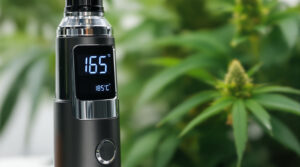
The most important principle when cooking with cannabis is this: Raw cannabis flowers contain no psychoactive THC, but rather its precursor THCA – an acidic form that can barely affect cannabinoid receptors in the brain. It is only through heat that THCA becomes effective THC: In this process, known as decarboxylation, a carbon dioxide molecule is split off, the acidic group is removed, and the cannabinoid is converted into its active form. Without this step, the potential of the flowers literally vanishes into thin air.


The decisive parameters are temperature and time. Scientific research and practical experience consistently show that an oven at 110 to 115 degrees Celsius for 30 to 40 minutes offers the best compromise between complete activation and preservation of the delicate terpenes. If you set the temperature too high – above 120 degrees Celsius – you risk not only volatile terpenes evaporating, but also cannabinoids being thermally degraded. The result is a substance with lower potency and without the complex aroma profile that makes good cannabis special.
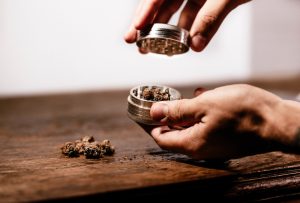
The method is straightforward: The flowers are roughly chopped – not ground too fine, as otherwise too much plant material ends up in the later infusion – and spread evenly on a baking sheet lined with parchment paper. The sheet goes on the middle rack of a preheated oven. After 30 to 40 minutes, when the cannabis smells slightly golden-brown and develops a nutty-earthy aroma, decarboxylation is complete. Alternatively, the water bath method in a sealed mason jar works: At 90 to 95 degrees Celsius water temperature for 60 to 90 minutes, the reaction proceeds more gently but takes correspondingly longer.
One aspect that is often underestimated: CBD-rich cannabis undergoes the same process. CBDA is decarboxylated into CBD. Those cooking with CBD flowers from hemp specialty retailers – which is legal in Germany – follow exactly the same steps but achieve no psychoactive effect, instead benefiting from the relaxing and potentially anti-inflammatory properties of CBD. The ratio of THC to CBD also significantly influences the overall effect: Products with a balanced THC-CBD ratio are considered gentler and less anxiety-inducing than high-percentage THC cannabis without CBD content.
Even distribution on the sheet is no trivial detail: If cannabis is piled too thickly, the outer layer decarboxylates more than the inner layer, leading to uneven activation. Those who spread the flowers in a thin, even layer achieve more consistent results. Some experienced cooks also use a meat thermometer to check the actual oven temperature – as many ovens heat up 10 to 20 degrees less accurately than their displays indicate.
The foundation: Making cannabutter and cannabis oil yourself
The heart of almost every cannabis kitchen is the fat infusion. THC and other cannabinoids are fat-soluble – they barely dissolve in water. This is why infusion in butter, oil, or other fats works so well: the fat serves as a carrier and makes the cannabinoids available to the body. The classic foundation products for cannabis cuisine are cannabutter and cannabis oil, both made on the same basic principle, but each showing its strengths in different applications.
For cannabutter, take 250 grams of unsalted butter and about one liter of water. Both go together in a pot where the butter melts over low heat. Then the previously decarboxylated cannabis is added. The mixture now simmers on the lowest flame for at least three hours – it should never really boil, as high temperatures damage cannabinoids. The water serves an important function here: it prevents the butter from burning and binds water-soluble chlorophylls that would otherwise give the finished product an unpleasantly grassy taste. In the end, the mixture is strained through a fine sieve or cheesecloth into a bowl. When the liquid has cooled, butter and water separate. The solidified butter layer on top is the finished cannabutter – greenish-yellow in color and intensely aromatic.
Cannabis oil is made similarly but is especially suitable for vegan cooking or applications where butter doesn’t fit. Coconut oil is particularly efficient for extracting cannabinoids due to its high saturated fat content. Olive oil, sunflower oil, or MCT oil also work. A water bath is recommended here: The cannabis-oil mixture goes into a mason jar and infuses for two to three hours at a maximum of 90 degrees in a water bath. Then it is strained and the oil is filled into a dark bottle that protects it from light and heat. Cannabis oil is excellent for cold salad dressings, for finishing soups just before serving, or as a dipping oil – anywhere it won’t be reheated.
How much cannabis for what amount of butter or oil? This is the most frequently asked question – and its answer depends on several factors, first and foremost the THC content of the cannabis used. With flowers at 20 percent THC, one gram theoretically contains 200 milligrams of THC. After decarboxylation and extraction, losses of around 20 to 30 percent occur. As a rough guide: for beginners, five grams of flower per 250 grams of butter is enough to make a medium-strength cannabutter, from which about 50 portions with 5 to 10 milligrams of THC each can be obtained. This can then be further diluted or adjusted depending on the recipe.
Dosage and effects when cooking with cannabis – what you absolutely need to know
The effects of edibles differ fundamentally from smoking or vaping. Those who don’t understand this often make the classic beginner mistake: eating too much because nothing is felt after an hour – and then being overwhelmed when everything kicks in at once. The reason lies in the pharmacology of the gastrointestinal tract and a peculiarity of the liver.
When you eat cannabis, THC is absorbed through the intestinal wall and reaches the liver before entering the bloodstream. There it is converted to 11-Hydroxy-THC – a metabolite that is two to three times more potent than the original THC and also passes the blood-brain barrier more easily. This so-called first-pass effect explains why edibles produce noticeably stronger and longer-lasting effects at the same amount of cannabis than smoking. Effects begin 30 minutes to two hours after consumption, peak after two to four hours, and can last up to eight or even twelve hours – significantly longer than inhalation.
The golden rule is: dose low and wait. For absolute beginners, experts recommend a starting dose of 2.5 to 5 milligrams of THC per serving. Occasional users can start with 5 to 10 milligrams. Regular users with built-up tolerance often move in the range of 10 to 20 milligrams. Only after at least two hours should you assess whether another serving would be appropriate. Those who ignore this advice and take more after an hour risk an intense, long-lasting experience that can result in heart palpitations, anxiety, and disorientation in sensitive individuals.
Another important factor is stomach contents. An empty stomach accelerates absorption but also leads to a more intense and unpredictable effect. A meal before edibles slows absorption and makes the effect more even. This should also be factored into your personal dosing strategy, along with individual factors: body weight, liver metabolism, tolerance, and genetically determined differences in liver enzyme activity all influence how a particular dose affects you. Two people eating exactly the same amount of cannabutter can have very different experiences.
From bhang to space cake: The best-known cannabis edibles and their history
Cannabis edibles are not a modern phenomenon. The oldest documented cannabis food is probably bhang, a drink from Indian culture that has been consumed for over 3,000 years at the Hindu festival of Holi and is considered an offering to Shiva. Bhang is made from the leaves and flowers of the hemp plant, milk, spices, and sometimes nuts – without any prior decarboxylation, since the long heating in the cooking pot handles the activation. In India, bhang remains legal in many states today and is even sold by government-licensed vendors.
In Morocco and other North African countries, majoun has been known for centuries: a sweet confection made from dried fruits, nuts, spices, and cannabis extract, traditionally used as both medicine and recreational substance. In Europe, cannabis butter became popular in the romantic bohemia of the 19th century – the Club des Haschischins in Paris, to which writers like Théophile Gautier and Charles Baudelaire belonged, often consumed hashish in the form of majoun or mixed into butter and jams.
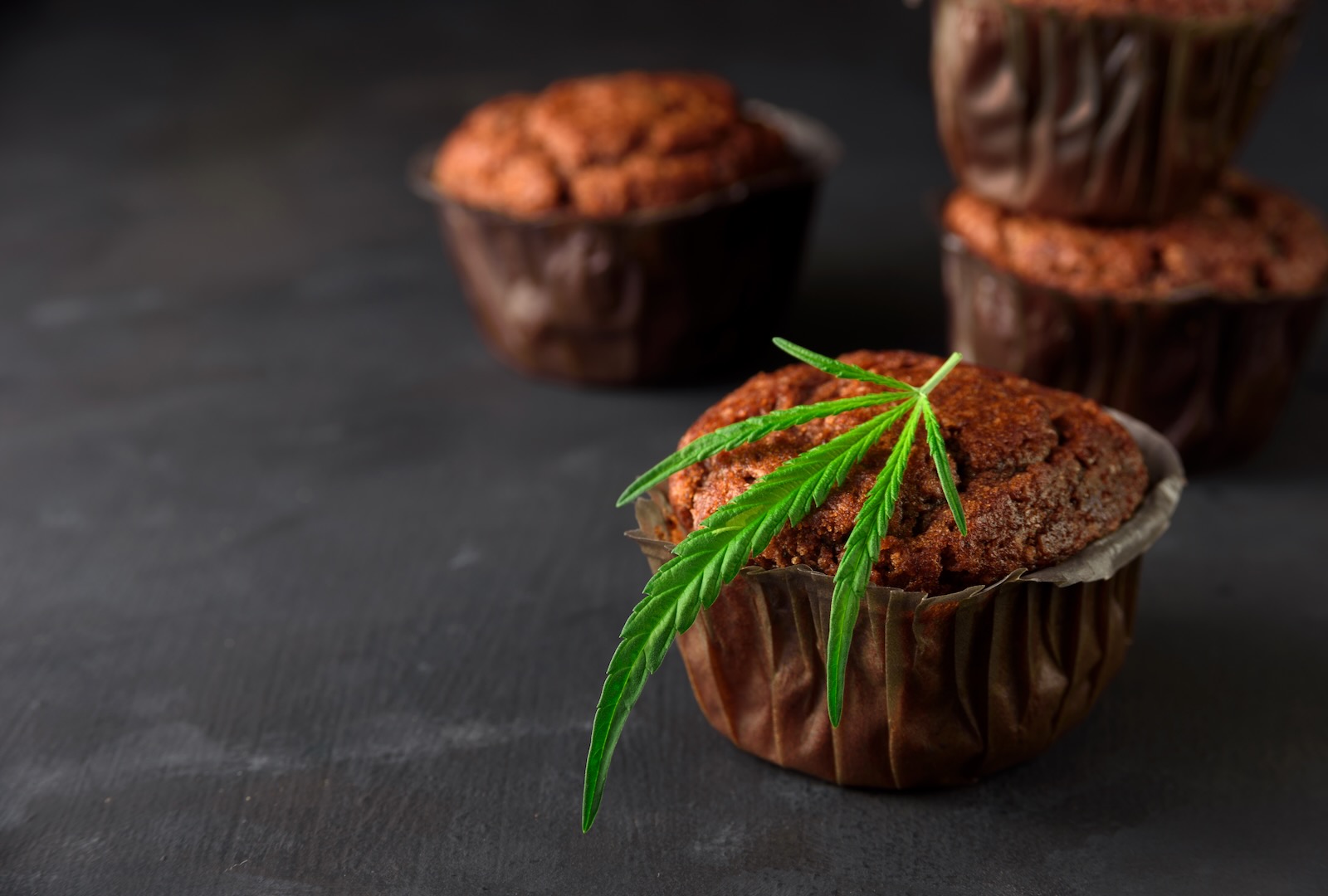
The modern space cake emerged in the 1970s in Amsterdam when cannabis cafés began processing hashish into brownies and cakes. These products quickly became tourist attractions and symbols of an entire subculture. Today, cannabis edibles are experiencing a renaissance: professional kitchens in legalized markets like Canada and the US produce precisely dosed gummies, chocolates, beverages, and even gourmet items. Cannabis-infused olive oil, honey, mustard, and chili sauces have established themselves as niche products in gourmet shops.
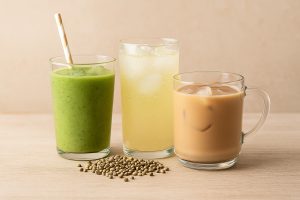
For home cooks, the classic brownie or cake remains unbeatable – easy to make and simple to portion. But cannabis tea, cannabis-infused olive oil for salads, or aromatic cannabis butter for meat and fish also open up exciting culinary possibilities. Those who want to eat cannabis raw reach for fresh hemp leaves in salads or smoothies – here THCA is not activated and produces no psychoactive effects, but does contain interesting antioxidant and anti-inflammatory properties.
Advanced techniques: Lecithin, tinctures, and precision dosing
Anyone diving into cannabis cooking inevitably encounters the topic of bioavailability. THC is fat-soluble, but not every fat-soluble substance is equally well absorbed in the gastrointestinal tract. Lecithin – a natural emulsifier found in sunflower or soy – demonstrably improves the bioavailability of cannabis infusions. It allows better emulsification of fat-soluble THC with the aqueous environment of the digestive tract, resulting in more consistent and sometimes stronger effects. The typical amount is one teaspoon of sunflower lecithin per 250 grams of butter or oil – simply stir in toward the end of the infusion before straining.
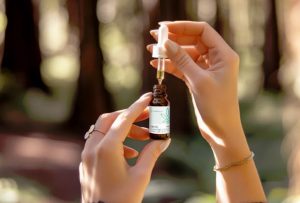
Alcohol-based tinctures are another proven method of cannabis extraction. Decarboxylated cannabis is extracted in high-proof alcohol (ethanol, at least 40 percent, preferably 60 percent) for several weeks or using a quick method for several hours. The result is a concentrated cannabis tincture that can be dropped under the tongue or integrated into recipes. It offers the advantage of particularly consistent dosing, since cannabinoids are homogeneously distributed in the alcohol and can be precisely measured with a pipette. Those using food-grade alcohol (Everclear or similar) can heat the tincture after extraction to evaporate the alcohol and produce a highly concentrated cannabis extract.
For maximum precision, there’s no way around a calculator. The simple formula is: Grams of cannabis × THC percentage (as a decimal) × 1,000 = Milligrams of THC in the raw material. From this value, 20 to 30 percent is subtracted for losses during decarboxylization and extraction. The remaining amount, divided by the number of servings, gives the THC amount per serving. This calculation may seem cumbersome at first but is the only reliable way to achieve reproducible dosing.
In the US and Canada, specialized cannabis infusion devices like the Ardent FX or MagicalButter have become established – electrical devices that automate decarboxylization and infusion in a controlled process and sometimes come with integrated temperature sensors for maximum precision. In Germany, these devices are still not widely used, but they show the direction: the more precisely temperature and time are controlled, the more reproducible the result. Those who cook regularly with cannabis and value consistency should keep such tools in mind.
Regardless of the technique, one important basic principle applies: consistency is key. A brownie where the cannabis butter isn’t evenly mixed can contain three times more THC in one piece than the next. Those who work cannabutter thoroughly and evenly into their batter and cut or weigh portions consistently ensure reliable dosing. This is especially important when edibles are shared with others – each person should know what they’re consuming.
Frequently asked questions about cooking with cannabis
Can I add cannabis directly to a soup or sauce without decarboxylizing it first?
In principle, yes – if the soup or sauce simmers long enough at a high enough temperature, partial decarboxylization occurs. However, this process is difficult to control and often incomplete, leading to fluctuating and unpredictable results. For reliable dosing, prior decarboxylization in the oven is always the better choice. An alternative is using already-decarboxylized cannabis or pre-made cannabis oils, which are stirred in cold just before serving.
How long does homemade cannabutter keep?
In the refrigerator, cannabutter keeps about two to four weeks, frozen up to six months. Airtight storage is important to slow oxidation and THC degradation. Darkness and cold are your best allies when storing. Those who make large quantities should portion the cannabutter in an ice cube tray: each cube then corresponds to a defined amount and can be taken from the freezer individually.
Why doesn’t my homemade cannabutter work?
The most common causes are incomplete decarboxylization (too low temperature or too short time), too low extraction temperature when simmering the butter, or simply too little cannabis for the amount of butter used. The quality and THC content of the raw material also play a central role. Those who carefully perform decarboxylization at 110 to 115 degrees for at least 35 minutes and then let the butter infuse on the lowest flame for at least three hours achieve more consistent results.
Is it legal to cook with self-grown cannabis in Germany?
Since the Cannabis Act (CanG) came into force in April 2024, private consumption and home processing of legally grown or purchased cannabis is basically permitted for persons 18 years and older. This includes making edibles for personal use – as long as the cannabis comes from legal home cultivation (up to three plants) or through a licensed cultivation association. Sharing or selling homemade cannabis edibles is not permitted.
What to do if you’ve eaten too much cannabis?
An overdose of edibles is uncomfortable but not life-threatening. In such a case, rest helps most: find a safe, quiet place, drink plenty of water, and trust that the effects will wear off after a few hours. Black pepper, which contains the terpene beta-caryophyllene, is said according to anecdotal reports to help mitigate an overly intense cannabis effect. CBD can also reduce THC effects. If persistent physical symptoms like heart palpitations or shortness of breath occur, don’t hesitate to seek medical help.
Which foods work best for cooking with cannabis?
Hast du schon einmal mit Cannabis gekocht oder gebacken?
High-fat foods and preparations are ideal partners for cannabis cuisine: brownies, cookies, and other baked goods, creamy sauces, pasta dishes with butter, rich soups, or wok dishes. THC dissolves in fat and is thus optimally absorbed. For salads and cold dishes, cannabis oil works wonderfully since it’s not heated and cannabinoids are preserved. Beverages are less suitable due to their low fat content – unless you use full-fat milk or rely on a lecithin emulsion to increase bioavailability.






Branchen-Update
News, Analysen und Reportagen — mehrmals im Monat direkt in dein Postfach.
Folge uns