What Is Hemp Flour and How Is It Made?
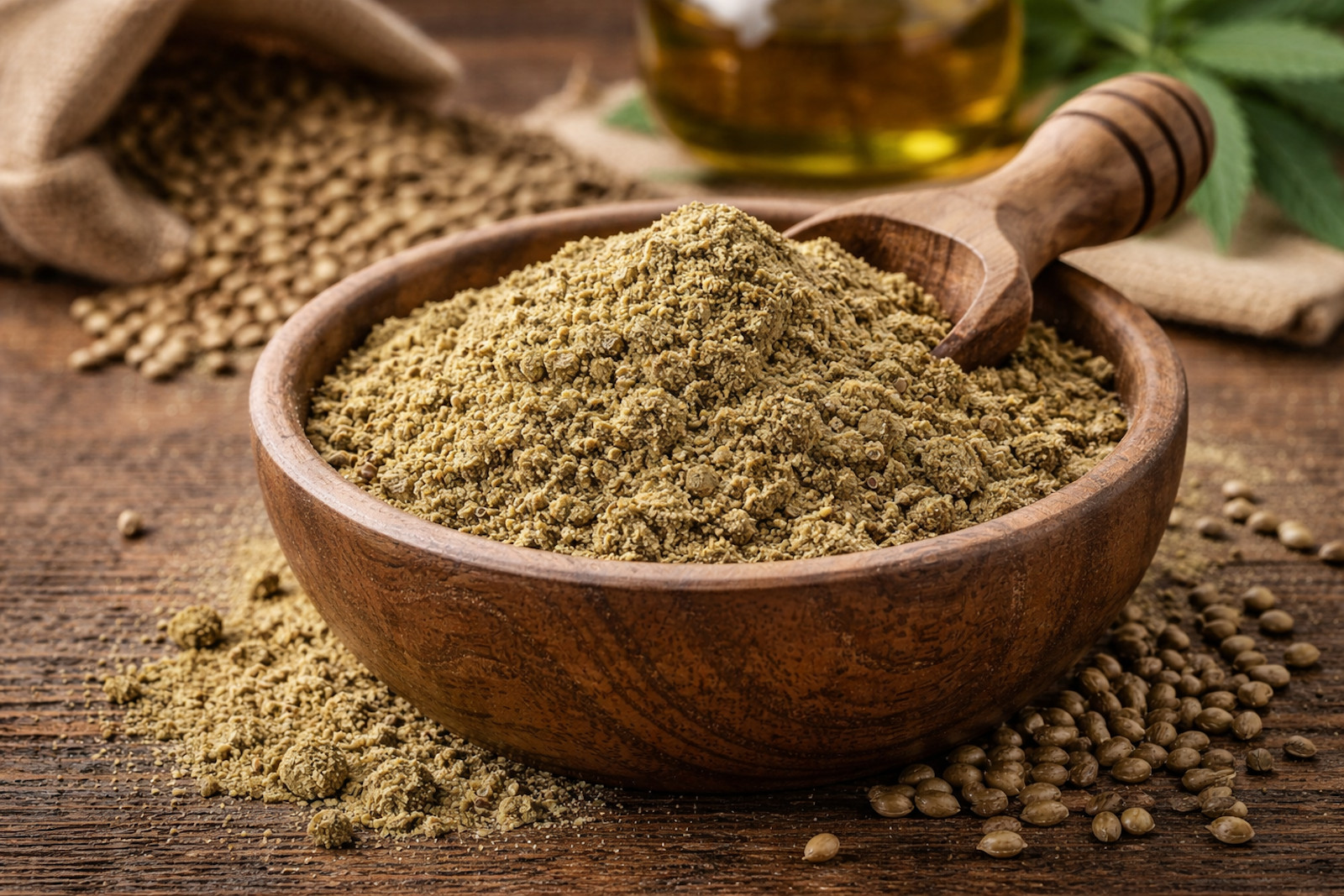
Hemp flour is produced from the seeds of industrial hemp. The starting material typically consists of hulled or unhulled hemp seeds, from which hemp oil is first pressed. The resulting press cake is then finely ground into flour. The result is a protein-rich, fiber-containing flour with a subtly nutty flavor.
📑 Inhaltsverzeichnis
- What Is Hemp Flour and How Is It Made?
- Nutritional Profile: Why Hemp Flour Impresses Nutritionally
- Baking and Cooking with Hemp Flour: Possibilities and Limitations
- Sustainability as a Growth Driver
- Market Trends and Economic Perspectives
- Challenges in Processing and Consumer Acceptance
- From Niche Product to Staple of Modern Nutrition
- 💬 Fragen? Frag den Hanf-Buddy!
Depending on the production process, a distinction is made between partially defatted and nearly completely defatted hemp flour. The fat content influences both taste and baking properties. While more heavily defatted hemp flour is particularly protein-rich, a higher residual fat content brings more aroma and moisture to doughs.
Nutritional Profile: Why Hemp Flour Impresses Nutritionally
A central reason for growing interest in hemp flour lies in its impressive nutrient density. Hemp flour contains a high proportion of plant-based protein, often between 30 and 50 percent. Particularly relevant is the balanced amino acid profile, which encompasses all essential amino acids.


Beyond protein, hemp flour is rich in fiber, which plays an important role in digestion. Minerals such as magnesium, iron, zinc, and potassium are also present in relevant quantities. Vitamins, particularly from the B-complex, round out the nutritional profile.
Compared to conventional wheat flour, hemp flour also stands out because it is gluten-free. For people with gluten intolerance or those who want to consciously reduce their gluten intake, it represents an interesting alternative.
Baking and Cooking with Hemp Flour: Possibilities and Limitations
In the kitchen, hemp flour proves to be versatile, though with certain particularities. Due to the absence of gluten, it cannot completely replace wheat flour, particularly in classic baked goods like bread or rolls. In practice, substituting approximately 10 to 30 percent of conventional flour has yielded good results.
Hemp flour is excellent for savory breads, crackers, pancakes, pasta, and protein-rich smoothies and muesli blends. Its subtly nutty flavor harmonizes well with seeds, nuts, and spices, but can also be used in sweet recipes, such as cookies or bars.
For the food industry, hemp flour opens exciting perspectives. It can be employed as a functional ingredient to increase the protein content of products or to strategically enhance their nutritional profile.
Sustainability as a Growth Driver
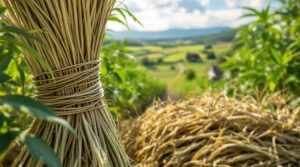
A decisive factor in hemp flour’s rise is the ecological profile of industrial hemp. The plant grows quickly, requires comparatively little water, and typically requires no pesticide use. Moreover, hemp improves soil structure and is well-suited for crop rotation in agriculture.
Compared to other protein-rich crops such as soy, industrial hemp performs better in many sustainability analyses. It can be grown regionally, which shortens transport routes and reduces import dependence. For manufacturers committed to sustainable raw materials, hemp flour is particularly attractive.
Market Trends and Economic Perspectives
The market for foods made from industrial hemp is growing continuously. While hemp oil and hemp seeds are already relatively established, hemp flour is still in the early stages of market development. Therein lies its potential. With rising demand for plant-based proteins, functional foods, and sustainable ingredients, hemp flour is increasingly attracting the attention of product developers.
Regulatory clarity also contributes to market development. Industrial hemp with low THC content is clearly defined in the EU and legally distinguished from intoxicating varieties. This creates planning security for farmers and manufacturers.
Today, not only small artisanal producers but also larger food companies are experimenting with hemp flour in baked goods, snacks, and meat alternatives. This transition from specialty product to the mass market is a decisive indicator that hemp flour could have lasting market presence.
Challenges in Processing and Consumer Acceptance
Despite all its advantages, there are challenges. Processing hemp flour requires technical expertise, particularly in industrial baking processes. Consistency, color, and flavor differ significantly from conventional flours and must be considered in product development.
Additionally, some consumer skepticism toward hemp products persists. Although industrial hemp has no intoxicating effects, education and transparent communication remain important to overcome prejudices.
From Niche Product to Staple of Modern Nutrition
Hemp flour exemplifies a larger shift in the food sector. It combines nutritional advantages, ecological sustainability, and versatile applications. While today still perceived as a specialty ingredient, many factors suggest that hemp flour will gain significantly in importance in the coming years.
With increasing experience in processing and product development, along with growing consumer acceptance, hemp flour is likely to find its place in bakeries, supermarkets, and industrial formulations. Thus, a time-honored raw material is experiencing a renaissance, proving that industrial hemp has far more to offer than merely a niche role.







Hast du schon einmal mit Hanfmehl gebacken oder gekocht?
Branchen-Update
News, Analysen und Reportagen — mehrmals im Monat direkt in dein Postfach.
Folge uns