Article 41 Bans Retail Sale of Hemp Flowers
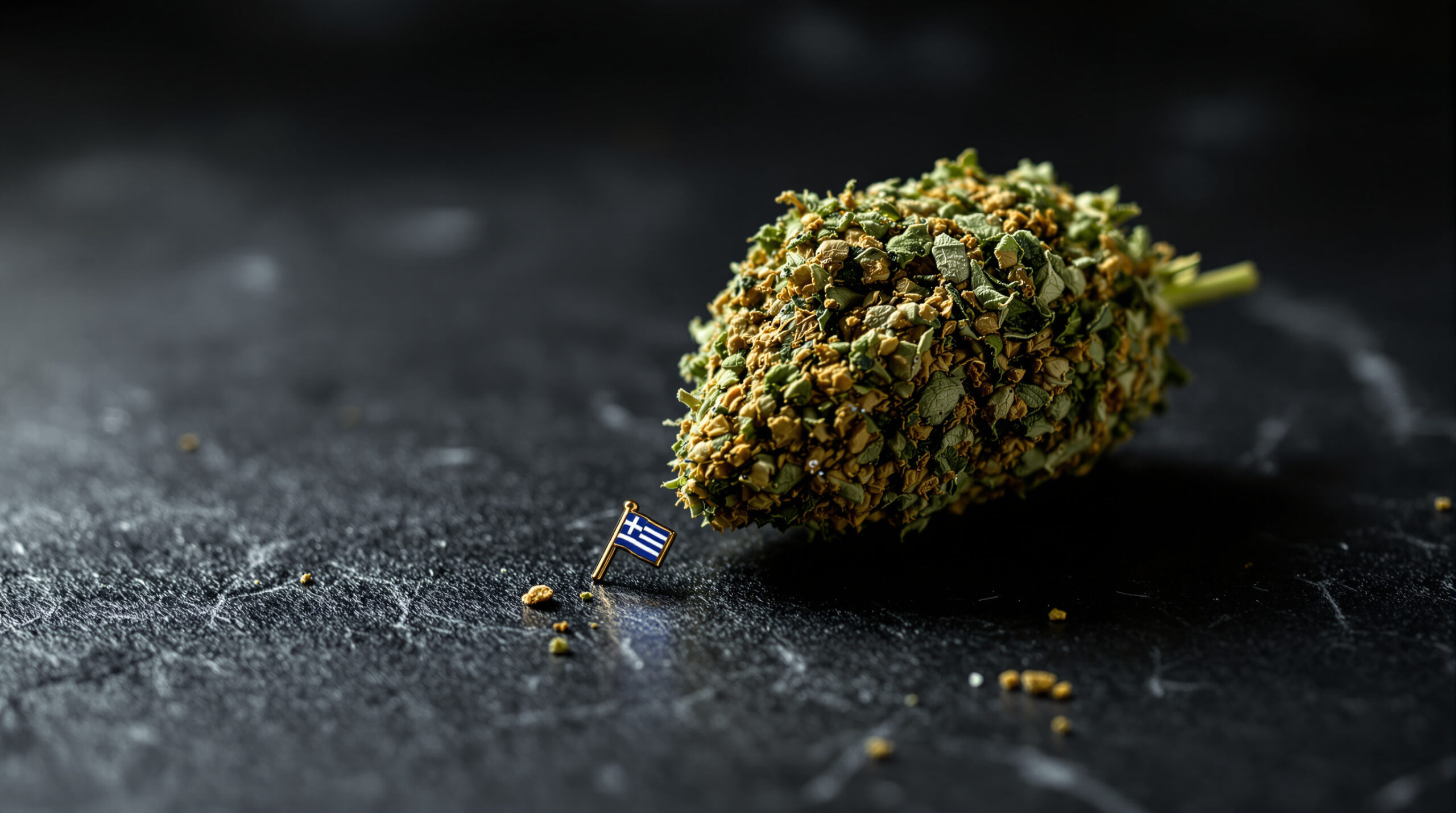
At the center of the dispute stands Article 41 of a new legislative package that the Athens government formally submitted to parliament on May 5, 2026. The consultation phase had ended on April 27, 2026. The proposal includes a complete sales ban on dried hemp flowers to end consumers, regardless of the plant’s THC content. Imports and wholesale processing for industry are expected to remain permitted.
📑 Inhaltsverzeichnis
The threatened penalties are severe. Violations of the planned ban are to be punished with fines of up to 100,000 euros and prison sentences of up to five years. This would make Greece one of Europe’s harshest CBD regulators, despite the fact that pure CBD consumption is not classified as drug use under EU law and products are manufactured within the hemp regulations‘ THC limits.
Advisory Board OKE Warns of EU Conflict
The unusual severity of the proposal has prompted Greece’s OKE to take action. The Economic and Social Committee serves as the government’s statutory advisory body on social and economic policy matters and has taken a clear position in its statement. The planned regulation contradicts the European trend permitting CBD flowers under certain conditions and restricts economic activity in a disproportionate manner.


The statement explicitly references the Kanavape decision of the European Court of Justice from 2020. In it, the ECJ established that CBD is not to be classified as an addictive substance and that national blanket bans restricting the free movement of goods in the EU are only permissible under strict conditions. Italy had already successfully invoked similar arguments against its own ban on CBD flowers. Only in recent months have courts softened Italy’s regulation in parts.
Hundreds of Retailers in Greece Affected
The Greek CBD retail sector has grown substantially in recent years. Industry estimates suggest several hundred shops and several thousand dependent jobs, plus online retailers and tourism-related offerings. A sales ban on dried flowers would remove a significant portion of this business, because flower products are practically the strongest CBD market segment. Oils, capsules, and cosmetics could continue to be offered but generate considerably lower revenues.
There is also the impact on other EU producers. Manufacturers legally producing hemp flowers in another member state and distributing them according to EU-GMP or EU hemp variety standards would abruptly lose market access in Greece. From the perspective of industry associations, this is a direct interference in the internal market. We have previously reported on comparable stress tests, such as when Austria introduced a transition solution for CBD flowers until 2028 or when Italy restructured its cannabis law in the shadow of EU case law.
Synthetic Cannabinoids Remain the Real Problem
It is striking that the Greek draft does not distinguish between natural, EU-law-compliant CBD flowers and synthetically produced cannabinoids such as HHC, HHCPO, or THCP. It is precisely these semi-synthetic products that have flooded the market without approval in several EU states in recent years and present the actual regulatory challenge. We have extensively described how the individual HHC derivatives differ and what risks manufacturers are externalizing.
A blanket ban on hemp flowers shifts the problem without solving it. Synthetic cannabinoids are typically not sold as dried flowers but as liquids, edibles, or plant material sprayed with cannabinoids. Anyone wanting to regulate the gray market must address these product categories directly, for instance through approval procedures, purity standards, and advertising restrictions. We also documented the arguments on this front in our coverage of Austria’s HHC ban.
What the Ban Means for the German CBD Market
In absolute terms, the Greek market does not weigh heavily for German manufacturers. Indirectly, however, the proposal sends a signal that investors and compliance departments are registering. If an EU member state introduces a national blanket ban despite a negative opinion from its own advisory body, uncertainties grow for supply chains relying on the internal market. For manufacturers in the DACH region, the question increasingly arises as to which product portfolios they should deploy in response to dynamic regulation in Southern Europe.
On the other hand, this case demonstrates how important the EU legal framework is for the hemp market. Should the Greek ban prove untenable in Brussels or before European courts, market participants would benefit in the medium term because the contours of harmonized CBD law would sharpen. Until then, the situation remains tense for Greek retailers and their EU-wide suppliers.
Frequently Asked Questions
What exactly does the Greek draft law propose?
Article 41 of the draft bans retail sales of dried hemp flowers, even below the 0.3 percent THC threshold. Fines of up to 100,000 euros and prison sentences of up to five years are provided for. Import and wholesale for industrial processing remain permitted.
Why is the OKE warning of an EU conflict?
Greece’s government advisory board OKE considers the blanket ban disproportionate and incompatible with the European trend. It references ECJ case law that does not classify CBD as an addictive substance and permits national bans only under strict conditions.
What role does the Kanavape ruling play?
In the Kanavape case, the European Court of Justice decided in 2020 that CBD should not be treated as an addictive substance and that trade in CBD products falls under the protection of free movement of goods. Industry associations in Greece rely on this line of argument when they argue that the planned ban violates union law.
Are synthetic cannabinoids covered by the ban?
The draft addresses primarily natural hemp flowers and does not clearly differentiate from synthetic cannabinoids such as HHC or HHCPO. These semi-synthetic products are typically not traded as dried flowers, so the blanket ban only indirectly addresses the actual regulatory problem.
What are the consequences of this dispute for the German CBD market?
Greece is not a major sales market for German CBD manufacturers in absolute terms. Indirectly, however, the proposal increases uncertainty about the reliability of the EU internal market for hemp products. For manufacturers, importers, and investors, this development is another argument for thinking compliance strategies EU-wide rather than nationally.
Sollte Griechenland den Verkauf von CBD-Blüten verbieten dürfen?
Sources: Business of Cannabis, May 8, 2026; Statement from the Greek OKE on Article 41; Background: ECJ ruling C-663/18 (Kanavape).
Further Articles on This Topic
- Portugal Bans HHC: Semi-Synthetic Cannabinoid Placed in Schedule II-A
- USA Classifies Cannabis in Schedule III for First Time: What the Historic Step Means for Europe

Branchen-Update
News, Analysen und Reportagen — mehrmals im Monat direkt in dein Postfach.