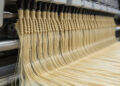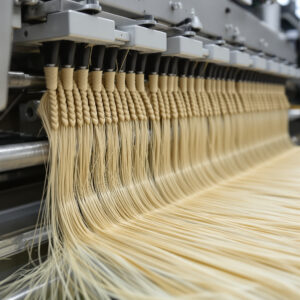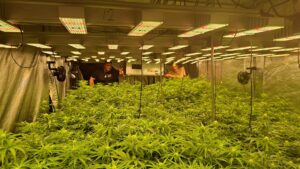
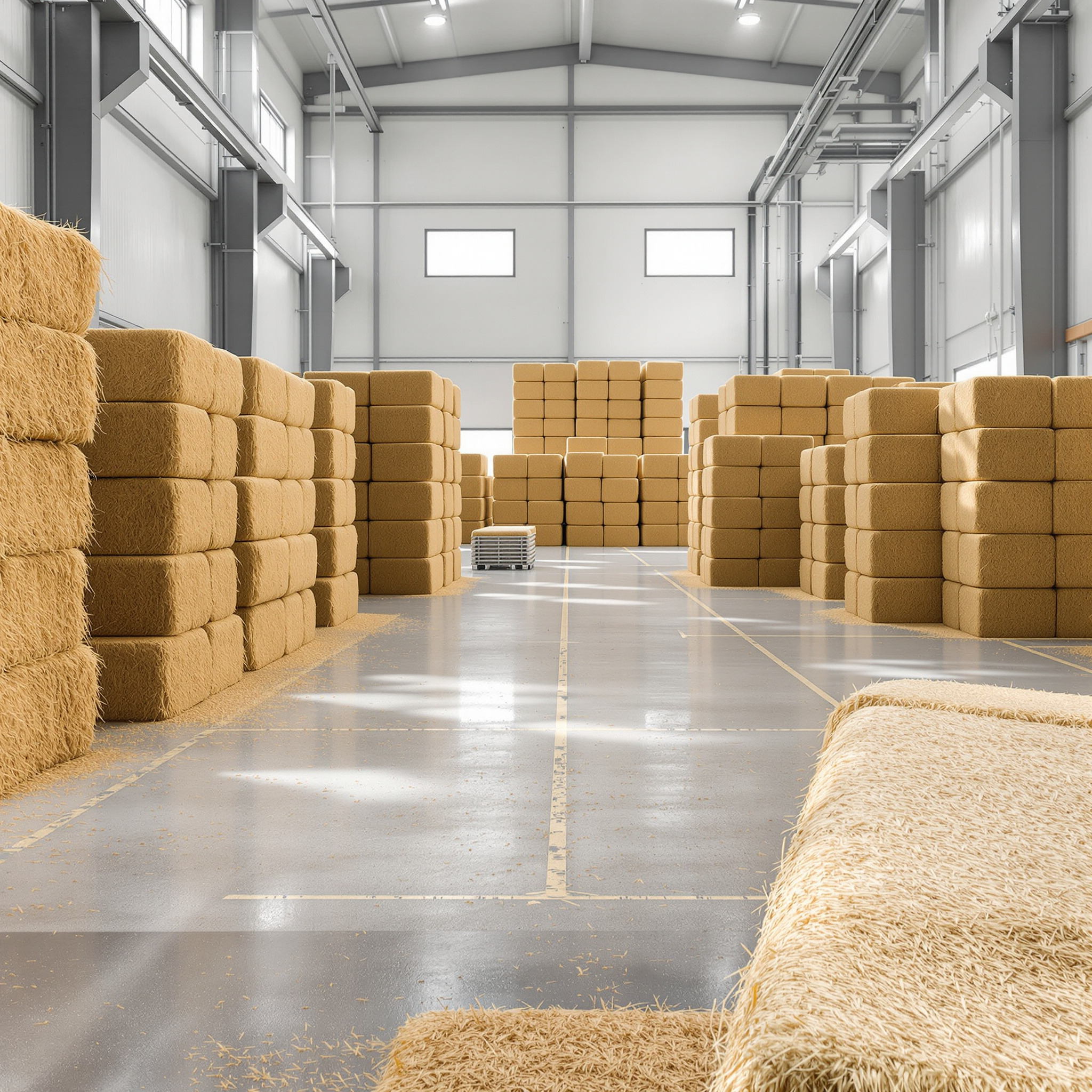
France is currently building several hemp fiber processing plants, and they’re being built where the fiber actually grows. In Brittany, the cooperative Terrachanvre is constructing a decortication facility for around five million euros. In Saint-Julien-de-l’Escap in Charente-Maritime, a facility worth €7.6 million is coming online, designed for approximately 2,000 tons of straw per year—equivalent to the yield from roughly 400 hectares. Meanwhile, the flax spinner Safilin and the producer cooperative La Chanvrière are working with EU funding to develop a complete textile chain from fiber to yarn.
📑 Inhaltsverzeichnis
Individually, these are regional news items. But taken together with what we’ve reported from Portugal, Poland, and India over recent months, a pattern emerges—and in that pattern, Germany occupies an unexpected position.
Processing Capacity is Growing Everywhere, Not Acreage
In Santo Tirso, Nau Verde is building a wet spinning mill for hemp and flax under the Nafilux brand. Reports mention an investment volume of approximately €30 million and around 250 jobs, though public statements don’t clearly separate how much goes to the spinning mill itself versus the broader program in which it’s embedded. We’ve broken down the details in our report on the Portuguese wet spinning mill.


Poland is approaching it from the other direction. Its cultivation area grew by 89 percent in a single year—from 1,146 to approximately 2,171 hectares—as we documented in our report on Polish hemp cultivation. And India has opened up cultivation in several states for the first time, bringing a producer into the market with structurally lower labor costs and climate advantages compared to any European country—see our report on India’s opening.
The common denominator isn’t acreage. It’s the stage that follows. Hemp straw is bulky and cheap—it’s simply not economical to transport it far. If you have no decortication or spinning capacity within reach, you can plant as much as you want and still end up with a raw material for which there’s no buyer nearby. That’s precisely why the French are investing in processing plants, not cultivation subsidies.
Germany: Acreage Isn’t the Problem
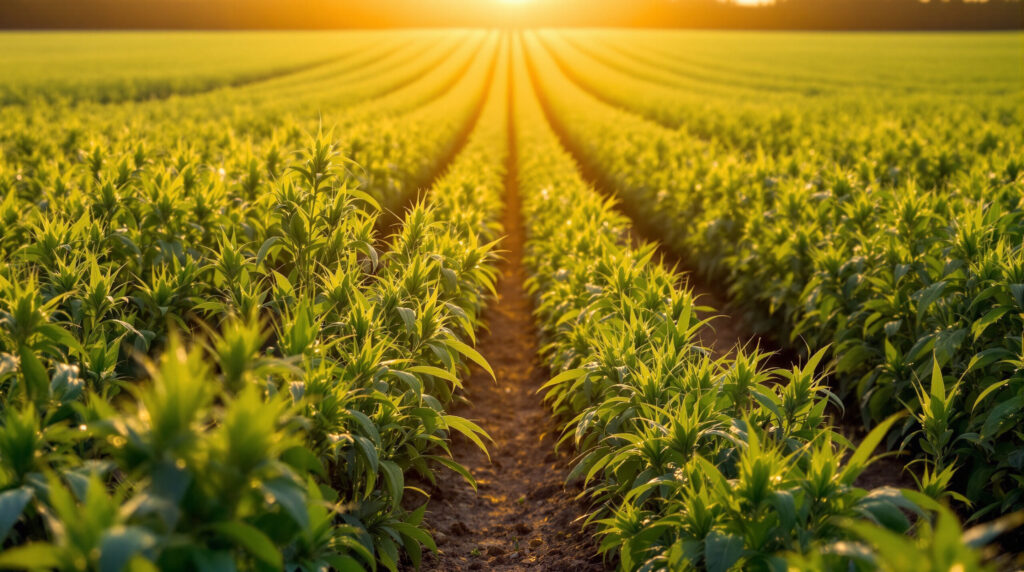
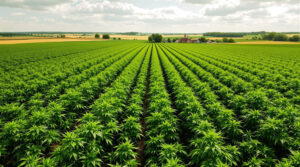
This is where it gets interesting. The widely circulated narrative of land loss no longer applies to Germany this year. According to the Federal Institute for Agriculture and Food, 438 farms cultivated hemp on 5,785 hectares in 2026. Compared to 2025’s 5,274 hectares, acreage actually grew by roughly 500 hectares.
Yet the number of farms continued to decline in the same period, falling from 496 to 438. In 2022, there were still 889 farms. Over four years, the number of German hemp growers has roughly halved, even as acreage recently increased. The record year of 2024 with 7,116 hectares remains a distant goal, but last year’s direction was upward.
Together, these figures tell a clear story: the remaining farms are cultivating more on average. In 2022, each farm managed roughly six hectares; in 2026, it’s over thirteen. This isn’t a cultivation crisis—it’s consolidation. Hemp is migrating from many small experimental plots to fewer farms that take it seriously, and these are typically the ones with a buyer lined up.
This shifts the question. Instead of „how do we get more hectares,“ it becomes „for what purpose.“ Growers rarely quit because hemp won’t grow. They quit because the harvest won’t sell or because the effort required for permits and documentation bears no relation to the profit.
What Policymakers Are Actually Discussing
In October, Germany’s parliament held a hearing on this issue where the farmers‘ association and scientific experts largely advocated for raising the THC limit for industrial hemp from 0.3 to one percent. The Federal Institute for Risk Assessment took the critical counterposition. We’ve detailed the arguments and participants in our report on the industrial hemp hearing.
A higher limit would expand variety access and ease some bureaucratic burdens. But it won’t build a processing plant. The French and Portuguese projects show that the real bottleneck lies in processing—and Germany has little comparable investment announced so far.
What to Watch in the Coming Years
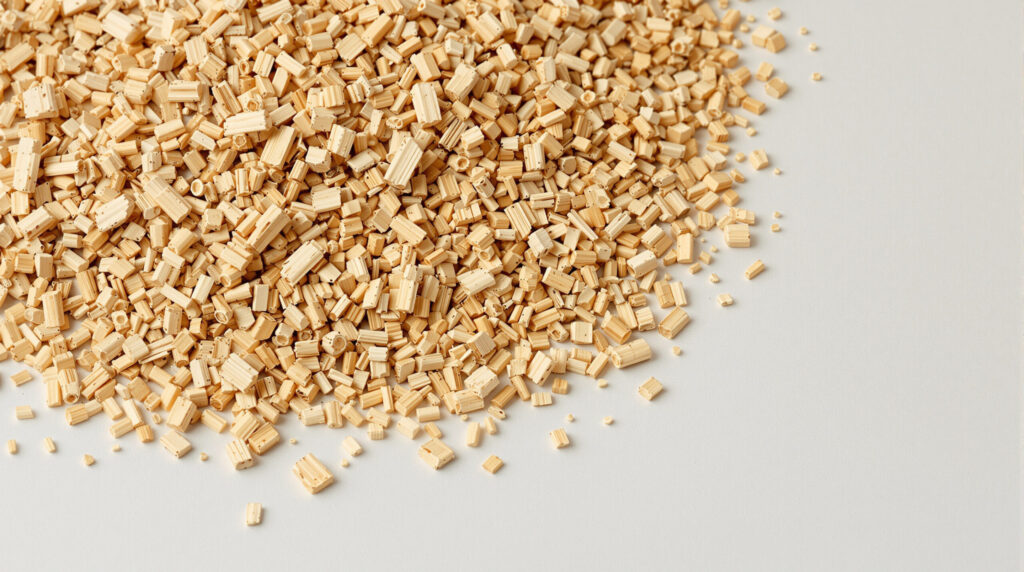
The honest reading of German figures is more uncomfortable than a simple land-loss narrative—it points less to policy failure and more to a missing market. If processing facilities in France, Portugal, and Poland actually ramp up over the coming years, they’ll create demand for straw, and then proximity to those plants determines who supplies it.
Three metrics matter more than hectare counts: whether announced facilities actually start operating and at what capacity, whether comparable investment is announced in Germany, and whether the number of farms stabilizes. If it rises again, someone has found a buyer. If it continues falling while acreage holds steady, consolidation simply carries on.
Sollte Deutschland mehr in die Hanfverarbeitung statt in Anbauflächen investieren?
For a comprehensive overview of the entire hemp value chain from fiber to finished product, see our complete guide to industrial hemp and industry.




Branchen-Update
News, Analysen und Reportagen — mehrmals im Monat direkt in dein Postfach.