Poland’s Hemp Boom: Official Registry Numbers
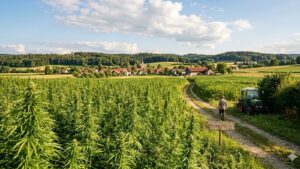
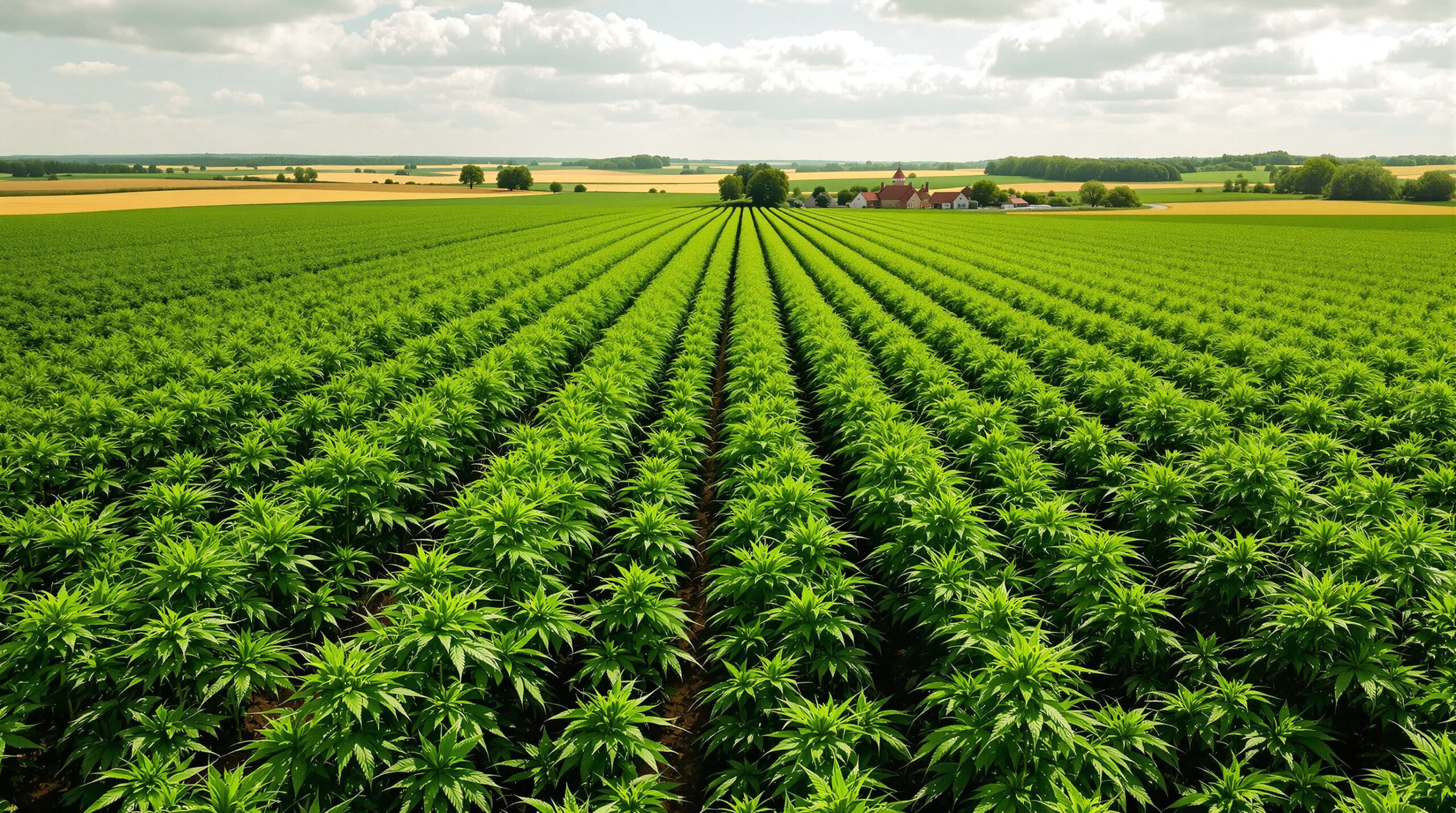
Polish farmers have nearly doubled their industrial hemp cultivation area this year. By late July, approximately 2,171 hectares were registered—89% more than at the end of 2025. In Germany, official statistics point in the opposite direction. This neighbor-to-neighbor comparison is illuminating because it reveals what actually drives hemp cultivation in Europe.
📑 Inhaltsverzeichnis
The data comes from Poland’s National Centre for Agricultural Support (KOWR), which has maintained the country’s industrial hemp registry since 2022. At the end of 2025, 1,146 hectares were registered; by July 31, 2026, that figure had risen to approximately 2,171 hectares—the highest value since the registry system was introduced.
The number of registered cultivators is also growing. On the reporting date, there were 1,681 registered growers, up from 1,592 at the end of 2025 and just 425 in the transition year 2022. The buyer side shows the opposite trend. The number of companies authorized to purchase hemp from farmers declined from 87 in 2024 to 76 in 2026. More land means fewer registered buyers.


This is not Poland’s first boom. Back in 2020, Polish hemp cultivation expanded to approximately 3,500 hectares, driven largely by speculators chasing the tail end of the CBD boom. Those fields collapsed when the CBD biomass market crashed, compounded by problems with the grain variety FINOLA that temporarily blocked EU subsidies.
Grain Hemp and Feed Instead of CBD Biomass
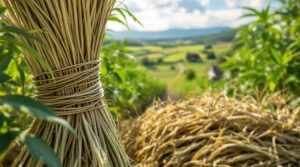
This time, industry experts say genuine demand is behind the growth. So says Maciej Kowalski, active in Poland’s hemp sector for many years. Witold Czeszak, head of the hemp program at the state Institute for Natural Fibres and Medicinal Plants (IWNiRZ), sees the sector returning to its industrial roots. Grain and fiber varieties are again dominating Polish fields.
The most important variety is Henola, a Polish grain cultivar developed by IWNiRZ, planted on approximately 833 hectares—more than one-third of total acreage. We reported early on the economic potential of this Polish hemp variety. Other common varieties include FINOLA and the fiber types Białobrzeskie and Futura 75. The largest growing regions are in the Lublin region near the Ukrainian border and in northern Poland, including Warmian-Masurian and Kuyavia-Pomerania.
Grain demand is driven primarily by the animal feed sector. Individual farmers report that hemp now generates higher returns than conventional cereals. The industry hopes to build on this by developing protein powders and similar products for human consumption. Our article on sprouted hemp seeds and what happens during germination shows just how much nutritional value hemp contains.
Poland’s 2022 Game-Changing Reform
With its 2022 reform, Poland abolished annual cultivation permits and regional restrictions. Since then, registration with KOWR is sufficient. The permitted THC content nationwide is 0.3%, matching the EU field standard. How contentious this threshold has been is evident from our 2020 report on Poland’s new THC limit for hemp plants. The hemp sector is not the only area where Poland has liberalized its cannabis rules. Medical cannabis has been legal there since 2017, as we described in „Finally, Cannabis Can Help in Poland Too“.
Germany: More Area, Fewer Farms
A look across the border puts Poland’s success into perspective. According to Germany’s Federal Agency for Agriculture and Food (BLE), 496 farms reported industrial hemp cultivation on 5,274 hectares in 2025. German hemp area remains more than twice as large as Poland’s. However, compared to the record year 2024 with 7,116 hectares, Germany lost roughly one-quarter of its land, and the number of farms has declined for the third consecutive year. We covered the background in our article India Opens Hemp Cultivation While Germany’s Industrial Hemp Area Shrinks.
A striking difference emerges in farm structure. The average German hemp farm operates nearly eleven hectares. In Poland, the calculation yields only about 1.3 hectares per registered cultivator. There, hemp is often a supplementary crop for small farms; here, it tends to be a specialized operation with contract production. Both models share the same vulnerability: without reliable local buyers at accessible distances, cultivation doesn’t grow sustainably. In Poland, the number of buyers is already shrinking.
Direct comparison has limitations. Poland’s figure represents mid-year status, while Germany’s is from 2025. The BLE publishes its data in late September or early October each year; 2026 figures are still pending. For details on Germany’s cultivation regulations, see our overview Industrial Hemp in Germany: Cultivation, Permits, and Use.
Frequently Asked Questions
How much industrial hemp is grown in Poland?
According to Poland’s National Centre for Agricultural Support (KOWR), approximately 2,171 hectares of industrial hemp were registered by late July 2026. At the end of 2025, the figure was 1,146 hectares. This represents a 89% increase and the highest value since the registry was introduced in 2022.
Why is hemp cultivation growing in Poland?
The primary driver is demand for hemp grain for animal feed. Unlike the 2020 surge, which was fueled by CBD biomass speculation, today’s growth is grounded in genuine market demand. The 2022 reform also simplified market entry by replacing annual permits with simple registration.
What THC limit applies to industrial hemp in Poland?
Poland permits a THC limit of 0.3% for industrial hemp, matching the European Union’s field standard for hemp plants. Germany applies the same field threshold.
Is More Industrial Hemp Grown in Germany Than in Poland?
Yes, measured by acreage. The BLE recorded 5,274 hectares across 496 farms in Germany for 2025. However, the trend is diverging: Germany lost approximately one-quarter of its area compared to 2024, while Poland is expanding rapidly.
What hemp varieties are grown in Poland?
The most widely cultivated is Henola, a Polish grain variety, on approximately 833 hectares. Other common varieties include FINOLA (a Finnish grain type) and the fiber varieties Białobrzeskie and Futura 75. Overall, grain and fiber varieties dominate, not flower-focused cultivars.
Sources: Registry data from Poland’s National Centre for Agricultural Support (KOWR), as of July 31, 2026, via HempToday (September 17, 2026); Press release from the German Federal Agency for Agriculture and Food „2025 Industrial Hemp Cultivation: Fewer Farms Growing Less“ (September 29, 2025).




Sollte Deutschland den Nutzhanfanbau stärker fördern?
Branchen-Update
News, Analysen und Reportagen — mehrmals im Monat direkt in dein Postfach.