What Himachal Pradesh Has Decided
The Department of State Taxes and Excise rolled out the framework in July 2026 and refined the regulations at the end of August. The permitted THC content sits at 0.3 percent, matching the field threshold in the European Union. A cultivation license costs 2,000 rupees per bigha annually—approximately 23 US dollars. Processors pay 11,500 dollars yearly, laboratories 1,150 dollars, and storage facilities 115 dollars.
📑 Inhaltsverzeichnis
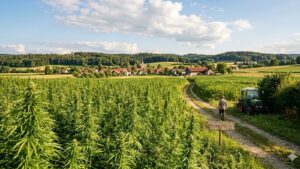
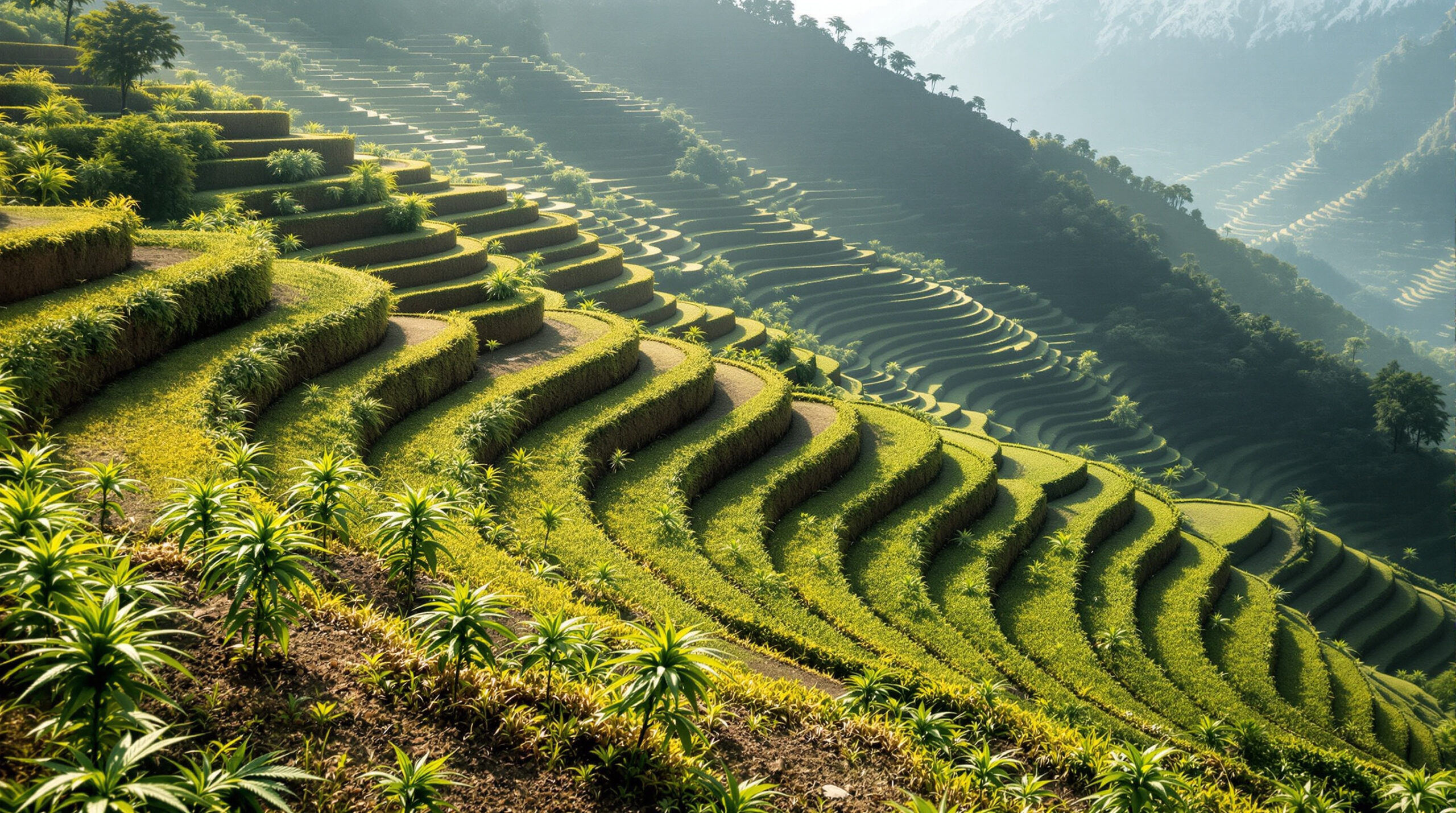
The requirements are stringent. Before sowing, growers must have a purchase contract with a licensed processor. Seeds must be certified and sourced from authorized distributors. A THC test occurs pre-harvest, and plots are registered via GPS. The state pursues a dual political objective: legal cultivation for textiles, construction materials, and paper is meant to suppress illegal charas production in mountain regions.
The Game-Changing Correction Came After Four Weeks
The truly remarkable development lies not in the initial version but in its revision. Originally, a minimum of three acres was mandatory, and anyone building processing infrastructure needed to invest 11.5 million dollars. Both thresholds were scrapped at the end of August. Instead of three acres, five bighas now suffice—roughly one acre in Himachal Pradesh. The processor investment threshold dropped to around 575,000 dollars.


For individual farmers, this means entry costs of about 215 dollars. Under the first version, the market would have effectively gone to a handful of large investors. Smallholder farmers, who dominate mountain regions, could neither afford the land nor the capital. Anyone monitoring emerging hemp markets should focus less on THC limits and more on minimum acreage and investment thresholds. These determine who can participate at all.
Germany Loses Acreage Despite an Open Regulatory Framework
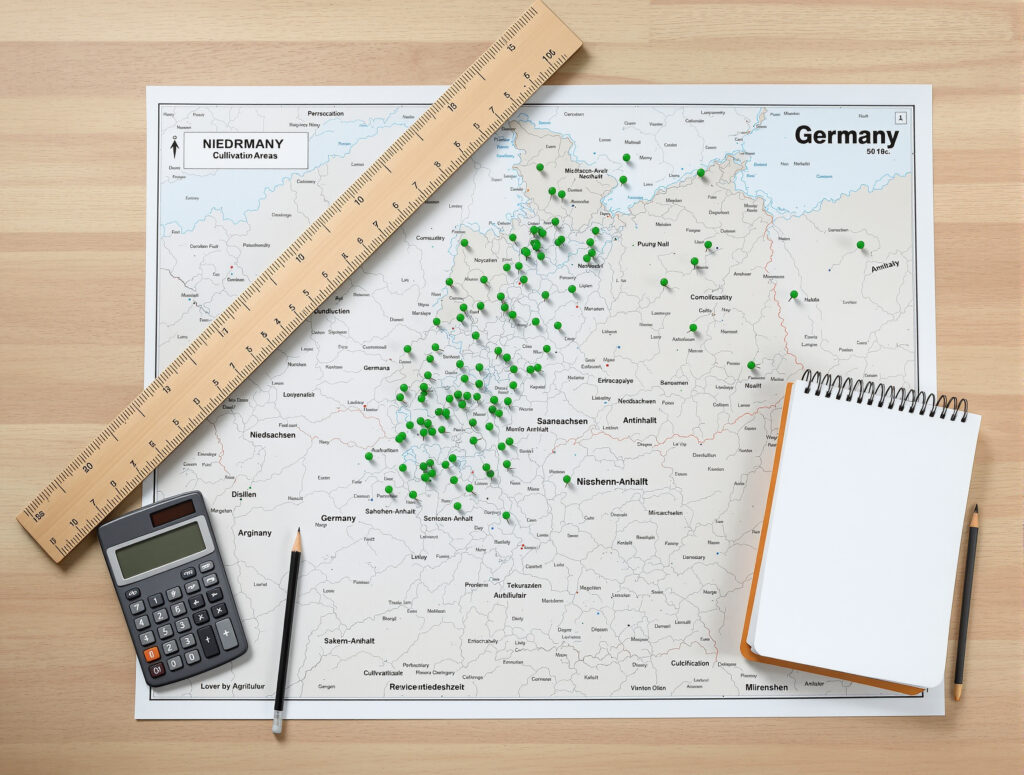
Official statistics paint the opposite picture for Germany. According to the Federal Office of Agriculture and Food, 496 farms reported industrial hemp cultivation on 5,274 hectares in 2025. Compared to the record year 2024 with 7,116 hectares, that represents a loss of 1,842 hectares. The number of farms declined for the third consecutive year. Lower Saxony leads by total acreage with 1,478 hectares, while Saxony-Anhalt shows the largest average farm size at 37 hectares.
The legal framework is not the constraint. We’ve summarized which varieties are permitted, how the notification process works, and what obligations apply in our overview of industrial hemp cultivation in Germany. The real bottleneck is the lack of reliable buyers and processing capacity within reasonable distance. Himachal Pradesh addresses this exact point through its purchase contract requirement, though primarily for control purposes rather than economic policy.
The Fight Over 0.3 Percent Enters the Next Round
The 0.3 percent field limit in the EU is itself the product of years of dispute. Until the current funding period, 0.2 percent applied. We’ve explored in detail why this threshold remains too restrictive for many operations in our article on the THC limit controversy.
The European Industrial Hemp Association now calls for 1 percent and is pushing this demand into the Common Agricultural Policy reform for 2028–2032. Their argument: modern fiber and seed varieties can hardly be bred further under such tight constraints. We’ve already reported on what signals Brussels will send regarding the future of EU industrial hemp.
International comparison puts Europe’s position in perspective. India is entering directly at 0.3 percent—the threshold European associations fought for over years. Ecuador has already set its limit at 1 percent. Europe’s standard is no longer a benchmark but rather middle ground.
What This Means for European Processors
Himachal Pradesh explicitly targets fibers, construction materials, and paper—precisely those segments where European processors already face price pressure. An additional supplier with double-digit dollar licensing costs will likely intensify that pressure. This is an assessment, not a forecast, since the state has neither announced area targets nor export volumes.
Near-term effects should remain modest. Transportation costs, certification, and the EU’s own food-quality requirements act as brakes. Over the medium term, the situation changes. When a region with low labor costs, year-round growing conditions, and a functioning licensing system enters the fiber market, it shifts supply. For European farms, this argues more for specialization in quality and local markets than for competing on price.
Frequently Asked Questions
What is the THC limit for industrial hemp in India and the EU?
Himachal Pradesh sets a maximum of 0.3 percent THC for industrial hemp. The European Union also permits 0.3 percent in the field, raised from the previous 0.2 percent. Both values refer to the growing plant, not the finished product.
How much does a hemp cultivation license cost in Himachal Pradesh?
A cultivation license costs 2,000 rupees per bigha annually, approximately 23 US dollars. With the minimum acreage now set at five bighas, farmers face entry costs of roughly 215 dollars. Processors, by contrast, pay 11,500 dollars per year.
Why has Germany’s industrial hemp acreage declined?
The Federal Office of Agriculture and Food reports 496 farms on 5,274 hectares in 2025, down from 7,116 hectares in the record year 2024. Primary causes include lack of buyer certainty and sparse processing infrastructure. The decline in farm numbers has now persisted for three consecutive years.
Is Europe’s hemp industry calling for a higher THC limit?
Yes. The European Industrial Hemp Association advocates for an increase to 1 percent and is advancing this demand in the Common Agricultural Policy reform for 2028–2032. The justification centers on breeding more productive fiber and seed varieties. A decision is still pending.
Will Indian cultivation affect European prices?
Short-term impact should be minimal, as transport, certification, and EU food-quality standards remain effective barriers. Medium-term, an additional supplier in the fiber segment could exert downward price pressure. Reliable data doesn’t yet exist since Himachal Pradesh has published neither acreage nor export targets.
Sollte Deutschland Mindestflächen für Nutzhanfanbau einführen?
Sources: HempToday on the licensing order from Himachal Pradesh’s Department of State Taxes and Excise and end-of-August 2026 revisions; press release from the Federal Office of Agriculture and Food on 2025 industrial hemp cultivation (September 29, 2025); position papers from the European Industrial Hemp Association on Common Agricultural Policy reform.






Branchen-Update
News, Analysen und Reportagen — mehrmals im Monat direkt in dein Postfach.
Folge uns