Both cannabis and tobacco smoking are the most harmful consumption methods available. While vaporizers with optimized heating methods have gained significant importance in recent years, smoking remains a very common consumption method today.
📑 Inhaltsverzeichnis
Mixing tobacco and cannabis in joints is also common practice. It has long been known that tobacco is actually the greater poison in a joint. Yet for many, cannabis remains the „evil devil’s weed.“ Now a new study has once again demonstrated that tobacco smoke causes significantly greater damage to the lungs and coronary arteries.
Analysis of Thoracic CT Images
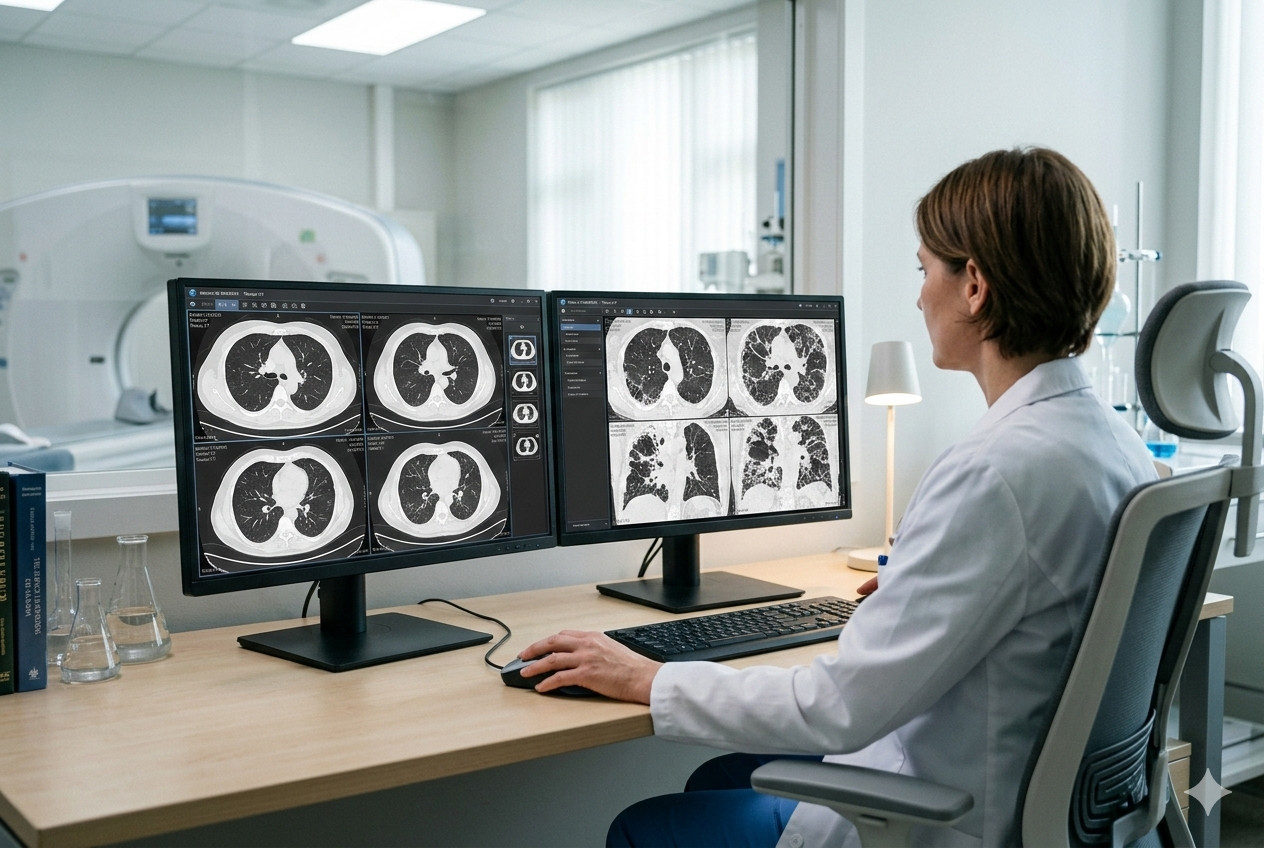
A recently published retrospective study examined patient images from a database in which thoracic CT scans were performed. The goal of this analysis was to determine whether reported tobacco or cannabis consumption causes different structural changes in the respiratory organs. In total, CT images from 285 patients were analyzed. 89 were non-smokers, 97 smoked tobacco, and 99 were known to consume cannabis.


The study did not make an explicit distinction between pure cannabis consumers and those who mix tobacco with cannabis. Most participants were between 50 and 60 years old—an age at which valid conclusions about long-term effects can be drawn after years of consumption. The distribution between male and female participants was roughly equal across all groups.
Significantly Fewer Adverse Effects from Cannabis Than Tobacco
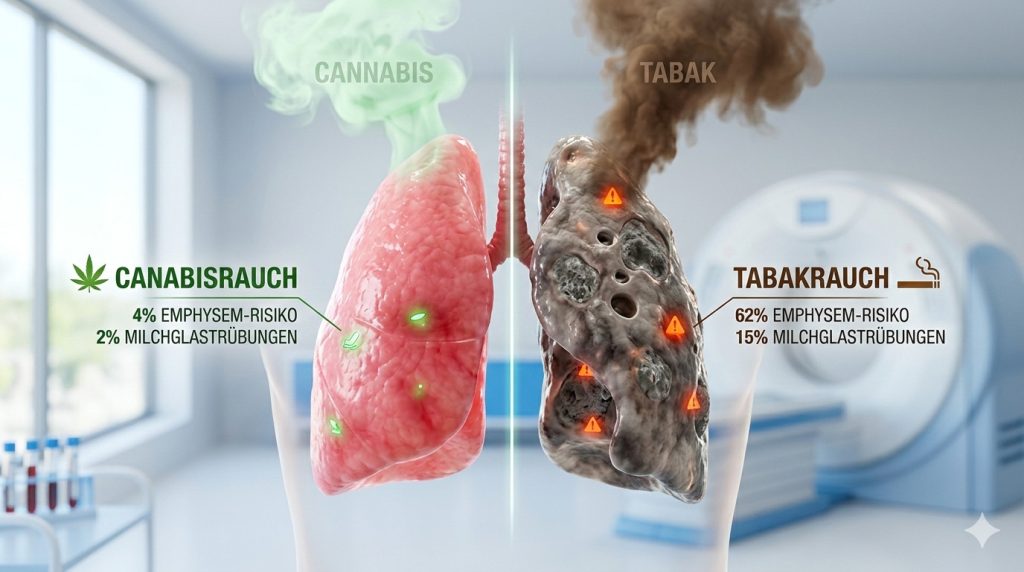
The health impacts differentiating long-term tobacco consumption from cannabis consumption were enormous. While 62% of tobacco smokers showed pulmonary emphysema, only 4% of cannabis consumers did. Pulmonary emphysema is a progressive destruction of the lung alveoli, where multiple air sacs fuse into a single larger sac, significantly reducing oxygen uptake.
Study Check: Lung Damage
| Diagnosis | Tobacco Smoke | Cannabis Smoke |
| Pulmonary Emphysema | 62% | 4% |
| Ground Glass Opacity | 15% | 2% |
| Arterial Calcification | 43% | 25% |
| Method | Retrospective Analysis (Thoracic CT) | |
Pulmonary emphysema often occurs as a late consequence of COPD—an inflammatory lung disease that is also a typical long-term consequence of tobacco smoking. Numerous studies have shown that cannabis contains strong anti-inflammatory components. Apparently, this effect can largely neutralize the otherwise pro-inflammatory and fundamentally harmful effects of smoking. As a side note, there are also studies proving that cannabis can significantly reduce the damage caused by alcohol abuse.
A similarly clear difference was also seen in the occurrence of ground glass opacities, also known as centrilobular ground glass infiltrates. These are nonspecific—as the name suggests—milky, structural defects in lung tissue, often resulting from inflammatory processes. While 15% of tobacco smokers were affected, only 2% of cannabis consumers showed these findings.
Calcifications of the coronary arteries also occurred significantly less frequently in cannabis consumers. 43% of tobacco smokers showed these calcifications, while only 25% of cannabis consumers displayed these changes. Coronary artery calcifications impair heart function and are considered one of the most important risk factors for heart attacks and angina pectoris. There was no difference in the occurrence of so-called mosaic attenuation—a mosaic-like variation in lung density with nonspecific causes.
The Study Closes Knowledge Gaps
The publishers of this study emphasize that they had already anticipated such clear results. While there have been several previous studies showing that cannabis smoke is less harmful than tobacco smoke, the analytical methods of most earlier studies were far more rudimentary.
While most previous studies focused on individual clinical parameters such as inflammation markers or lung volume, imaging procedures were rare exceptions. By analyzing thoracic scans of long-term consumers, this knowledge gap has now been closed.





Wie konsumierst du Cannabis am häufigsten?
Branchen-Update
News, Analysen und Reportagen — mehrmals im Monat direkt in dein Postfach.
Folge uns