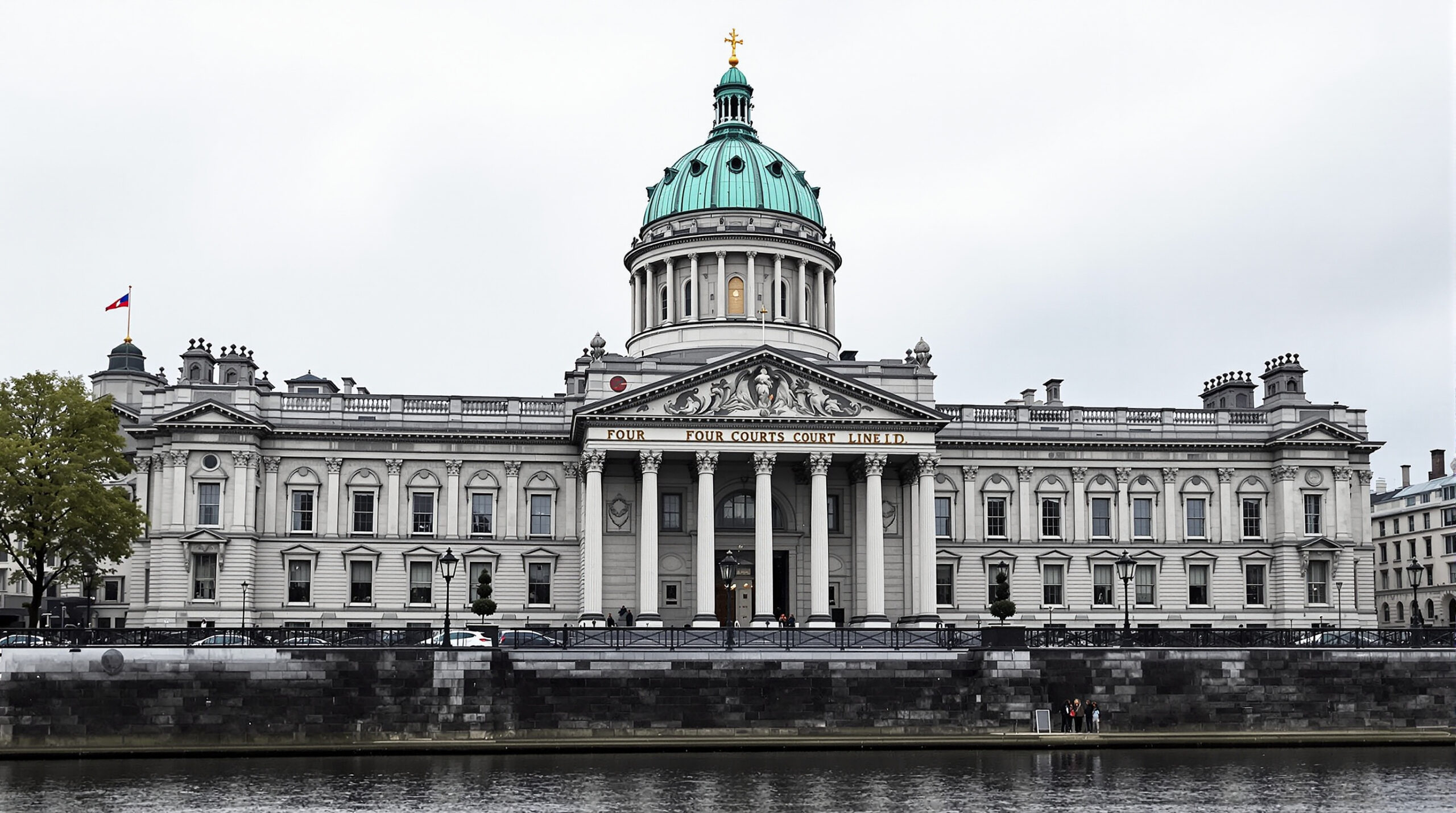
A criminal case in Ireland’s County Clare has become a test of principle. Dublin’s High Court must clarify whether hemp containing no more than 0.3% THC should continue to be treated as a controlled drug in Ireland. The answer extends beyond the island, as it touches on the exact legal question currently pending before the European Court of Justice.
📑 Inhaltsverzeichnis
A Criminal Case Becomes a Constitutional Question
At the center of the case is Brendan O’Mara, 63, a member of Hemp Federation Ireland and former commercial pilot. Following a seizure at his residence in May 2025, he was charged under Section 15(a) of the Misuse of Drugs Act 1977—possession of cannabis with intent to supply. He pleaded not guilty. The proceedings at Ennis District Court have been suspended by Judge Adrian Harris pending the High Court’s decision.
The High Court application targets three findings. First, that including hemp with no more than 0.3% THC in Schedule 1 of the Misuse of Drugs Act violates EU law. Second, that such hemp should be classified as an agricultural product. Third, that Ireland’s entire drug control framework conflicts with EU law. The defense is not attacking a single case but the entire system.


The valuation dispute is noteworthy. The charge requires a market value of at least €13,000, yet prosecutors valued the material at approximately €10 million in media reports. Hemp Federation Ireland counters that assigning black market prices to industrial hemp presupposes the very legal classification the court must determine.
Why the Case Also Matters for the German Market
O’Mara’s attorney Ted McCarthy referenced two European Court of Justice cases—one from Italy and one from the Netherlands—both addressing whether national drug laws can restrict hemp compliant with EU agricultural regulations. Italy’s State Council referred its flower ban to Luxembourg in November 2025; no decision has been issued. If that ruling favors the industry, it becomes binding across all 27 member states. Traders in Ireland, Greece, and Germany would then have grounds to challenge national restrictions. The trajectory has been set since the 2020 Kanavape decision, which established that lawfully produced low-THC hemp is not a narcotic under UN conventions. Italy’s persistence shows how slowly national practice changes: its Court of Cassation limited seizures of hemp flowers. Germany pursued the same debate through the intoxication clause until a Bavarian court acquitted an industrial hemp dealer.
Ireland’s Hemp Sector Has Collapsed
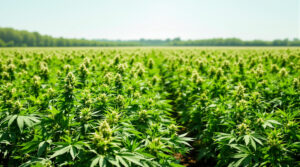
The numbers explain why the federation litigates rather than negotiates. For 2026, approximately eleven hectares of hemp are registered for cultivation in Ireland. In its peak year of 2019, that figure was around 314 hectares. Experts cited these figures during summer hearings before the Oireachtas Joint Committee on Agriculture and Food. They identified the lack of processing infrastructure and the drug control framework—which deters investment—as barriers.
The contradiction lies in jurisdictional split. The Health Products Regulatory Authority, a health ministry agency rather than agricultural administration, issues cultivation licenses annually. Since 2018, leaves and flowers are treated as controlled material in practice and must be destroyed. Farmers retain only stems, fiber, and seed. Simultaneously, the EU raised the THC threshold for grant-eligible hemp under the Common Agricultural Policy from 0.2% to 0.3% as of 2023.
The divergence of outcomes across member states under identical EU rules is striking. In Poland, cultivation areas grew 89%, while Germany lost acreage, and Switzerland is reorganizing its industry around fiber hemp at the second hemp conference in Zollikofen. That Irish hemp can be commercially viable is proven by earlier ventures like Greenheart CBD sourcing cannabis from Ireland. We have explored the broader THC threshold question in our analysis of flowers, THC limits, and the future of industrial hemp.
A Second Challenge on Notification Requirements
Parallel to the main case, Hemp Federation Ireland members pursue a Judicial Review based on a different EU law lever. Their claim: Ireland failed to notify the European Commission of national measures that effectively prohibit commercial use of an EU agricultural crop. Directive (EU) 2015/1535 requires notification of certain technical rules before implementation. Failure to notify can render a rule unenforceable against private parties—a formal attack, but often effective.
A 2022 precedent counsels caution. The High Court then dismissed a challenge to Ireland’s ban on THC-containing products, upholding the regulation even though identical goods were lawfully sold in other member states. This new challenge is differently structured: it centers on hemp’s agricultural character and can rely on the pending Luxembourg cases.
Frequently Asked Questions
What exactly is the Irish case about?
The High Court must determine whether hemp containing no more than 0.3% THC properly belongs in Schedule 1 of the Misuse of Drugs Act 1977. The defense argues this classification violates EU law and that the material is an agricultural product. The underlying criminal case is suspended pending the court’s ruling.
Could an Irish decision change the law in Germany?
An Irish High Court judgment initially affects only Ireland. What matters for Germany is the European Court of Justice case referred by Italy’s State Council in November 2025. That court’s interpretation of EU law binds all member states, including German authorities and courts.
Why is Irish hemp cultivation so small—just eleven hectares?
Two reasons emerged in Oireachtas hearings. Processing infrastructure is lacking, and cultivation depends on annual licensing by the health ministry. Because leaves and flowers are treated as controlled material and must be destroyed, farmers can only derive value from stems, fiber, and seed.
What is the significance of the Kanavape decision?
In 2020, the European Court of Justice ruled that CBD lawfully produced in one member state is not a narcotic under UN conventions. That judgment addressed a French distribution ban. The current cases extend this logic further, addressing the entire plant rather than isolated compounds.
Sollte Nutzhanf unter 0,3% THC in der EU legal sein?
Sources: HempToday (September 25, 2026), Hemp Federation Ireland, Oireachtas Joint Committee on Agriculture and Food hearings, reporting by The Journal, Clare Echo, and Limerick Post on Ennis District Court proceedings, European Court of Justice (Kanavape case, 2020).



Branchen-Update
News, Analysen und Reportagen — mehrmals im Monat direkt in dein Postfach.
Folge uns