
Question 5, state of legalization
📑 Inhaltsverzeichnis
What does this dispute say about the state of cannabis legalization two years after implementation?
Georg: That the CSU deserves to be voted out of office. It’s not like this in all federal states.
Note: The background information in this article is based on a press release from the German Hemp Association dated June 3, 2026. The statements from Florian Degenhart and Georg Wurth come from a written inquiry by Hanf Magazin.


Question 3, nationwide significance
What would success in this proceeding mean nationwide for cultivation associations?
Georg: The nationwide impact would be limited because hardly any other federal state insists that cultivation associations may only cultivate in special-purpose areas that don’t actually exist in reality. But for CSCs in Bavaria, it would be a major breakthrough. So far, because of this regulation, not a single association in Bavaria is permitted to cultivate. Apart from the „special-purpose area,“ there are also building law problems in other federal states. Perhaps our case could also have some signaling effect for those.
Question 4, where the Free State stands
The DHV supports further lawsuits against Bavaria. Where does the Free State stand in your view after these disputes?
Georg: It’s hard to say how the other trials will turn out. But our victory on the park ordinance was already a major success. Now consumption is permitted again in the English Garden, a huge park in Munich, provided of course that there are no young people or playgrounds nearby. If we manage to ensure that CSCs in Bavaria can finally offer a legal alternative to the black market, that would be significant progress in Bavarian cannabis policy. But as usual, we should expect that the process could take a long time.
Question 5, state of legalization
What does this dispute say about the state of cannabis legalization two years after implementation?
Georg: That the CSU deserves to be voted out of office. It’s not like this in all federal states.
Note: The background information in this article is based on a press release from the German Hemp Association dated June 3, 2026. The statements from Florian Degenhart and Georg Wurth come from a written inquiry by Hanf Magazin.
Question 2, Bavaria’s blockade in context
Bavaria pursues multiple restrictions against the Cannabis Act. How do you categorize the building law blockade within this broader picture?
Georg: Bavaria blocks wherever it can. From the start, the state government wanted to abolish the Cannabis Act and until then interpret it extremely restrictively. We see this not only in CSCs and building law, but also in the treatment of CSCs overall, consumption bans in public places, and so on. Bavaria is also the only federal state to respond to the Cannabis Act with a „Cannabis Consequences Limitation Act,“ for example by fundamentally prohibiting restaurateurs from allowing cannabis consumption in smoking areas. We’re also challenging that.
Question 3, nationwide significance
What would success in this proceeding mean nationwide for cultivation associations?
Georg: The nationwide impact would be limited because hardly any other federal state insists that cultivation associations may only cultivate in special-purpose areas that don’t actually exist in reality. But for CSCs in Bavaria, it would be a major breakthrough. So far, because of this regulation, not a single association in Bavaria is permitted to cultivate. Apart from the „special-purpose area,“ there are also building law problems in other federal states. Perhaps our case could also have some signaling effect for those.
Question 4, where the Free State stands
The DHV supports further lawsuits against Bavaria. Where does the Free State stand in your view after these disputes?
Georg: It’s hard to say how the other trials will turn out. But our victory on the park ordinance was already a major success. Now consumption is permitted again in the English Garden, a huge park in Munich, provided of course that there are no young people or playgrounds nearby. If we manage to ensure that CSCs in Bavaria can finally offer a legal alternative to the black market, that would be significant progress in Bavarian cannabis policy. But as usual, we should expect that the process could take a long time.
Question 5, state of legalization
What does this dispute say about the state of cannabis legalization two years after implementation?
Georg: That the CSU deserves to be voted out of office. It’s not like this in all federal states.
Note: The background information in this article is based on a press release from the German Hemp Association dated June 3, 2026. The statements from Florian Degenhart and Georg Wurth come from a written inquiry by Hanf Magazin.
Question 1, why this test case
Why is the DHV financing precisely this proceeding as a test case?
Georg: In many proceedings, authorities cite multiple grounds for denials. We were looking for a case focused exclusively on the building law trick with the „special-purpose area“ for cannabis cultivation, so we don’t get sidetracked during trial. With CSC Inntal, there are no other denial grounds, so we have a clean case to clarify this fundamental question.
Question 2, Bavaria’s blockade in context
Bavaria pursues multiple restrictions against the Cannabis Act. How do you categorize the building law blockade within this broader picture?
Georg: Bavaria blocks wherever it can. From the start, the state government wanted to abolish the Cannabis Act and until then interpret it extremely restrictively. We see this not only in CSCs and building law, but also in the treatment of CSCs overall, consumption bans in public places, and so on. Bavaria is also the only federal state to respond to the Cannabis Act with a „Cannabis Consequences Limitation Act,“ for example by fundamentally prohibiting restaurateurs from allowing cannabis consumption in smoking areas. We’re also challenging that.
Question 3, nationwide significance
What would success in this proceeding mean nationwide for cultivation associations?
Georg: The nationwide impact would be limited because hardly any other federal state insists that cultivation associations may only cultivate in special-purpose areas that don’t actually exist in reality. But for CSCs in Bavaria, it would be a major breakthrough. So far, because of this regulation, not a single association in Bavaria is permitted to cultivate. Apart from the „special-purpose area,“ there are also building law problems in other federal states. Perhaps our case could also have some signaling effect for those.
Question 4, where the Free State stands
The DHV supports further lawsuits against Bavaria. Where does the Free State stand in your view after these disputes?
Georg: It’s hard to say how the other trials will turn out. But our victory on the park ordinance was already a major success. Now consumption is permitted again in the English Garden, a huge park in Munich, provided of course that there are no young people or playgrounds nearby. If we manage to ensure that CSCs in Bavaria can finally offer a legal alternative to the black market, that would be significant progress in Bavarian cannabis policy. But as usual, we should expect that the process could take a long time.
Question 5, state of legalization
What does this dispute say about the state of cannabis legalization two years after implementation?
Georg: That the CSU deserves to be voted out of office. It’s not like this in all federal states.
Note: The background information in this article is based on a press release from the German Hemp Association dated June 3, 2026. The statements from Florian Degenhart and Georg Wurth come from a written inquiry by Hanf Magazin.
💬 In conversation
Georg Wurth, German Hemp Association
Georg Wurth is founder and managing director of the German Hemp Association (DHV), which is financing the proceedings against Bavaria as a test case.
Question 1, why this test case
Why is the DHV financing precisely this proceeding as a test case?
Georg: In many proceedings, authorities cite multiple grounds for denials. We were looking for a case focused exclusively on the building law trick with the „special-purpose area“ for cannabis cultivation, so we don’t get sidetracked during trial. With CSC Inntal, there are no other denial grounds, so we have a clean case to clarify this fundamental question.
Question 2, Bavaria’s blockade in context
Bavaria pursues multiple restrictions against the Cannabis Act. How do you categorize the building law blockade within this broader picture?
Georg: Bavaria blocks wherever it can. From the start, the state government wanted to abolish the Cannabis Act and until then interpret it extremely restrictively. We see this not only in CSCs and building law, but also in the treatment of CSCs overall, consumption bans in public places, and so on. Bavaria is also the only federal state to respond to the Cannabis Act with a „Cannabis Consequences Limitation Act,“ for example by fundamentally prohibiting restaurateurs from allowing cannabis consumption in smoking areas. We’re also challenging that.
Question 3, nationwide significance
What would success in this proceeding mean nationwide for cultivation associations?
Georg: The nationwide impact would be limited because hardly any other federal state insists that cultivation associations may only cultivate in special-purpose areas that don’t actually exist in reality. But for CSCs in Bavaria, it would be a major breakthrough. So far, because of this regulation, not a single association in Bavaria is permitted to cultivate. Apart from the „special-purpose area,“ there are also building law problems in other federal states. Perhaps our case could also have some signaling effect for those.
Question 4, where the Free State stands
The DHV supports further lawsuits against Bavaria. Where does the Free State stand in your view after these disputes?
Georg: It’s hard to say how the other trials will turn out. But our victory on the park ordinance was already a major success. Now consumption is permitted again in the English Garden, a huge park in Munich, provided of course that there are no young people or playgrounds nearby. If we manage to ensure that CSCs in Bavaria can finally offer a legal alternative to the black market, that would be significant progress in Bavarian cannabis policy. But as usual, we should expect that the process could take a long time.
Question 5, state of legalization
What does this dispute say about the state of cannabis legalization two years after implementation?
Georg: That the CSU deserves to be voted out of office. It’s not like this in all federal states.
Note: The background information in this article is based on a press release from the German Hemp Association dated June 3, 2026. The statements from Florian Degenhart and Georg Wurth come from a written inquiry by Hanf Magazin.
Question 5, the special-purpose area argument
How do you counter the argument that cultivation is only permissible in a special-purpose area?
Florian: According to the Federal Ministry for Housing, Urban Development and Building, classifying cultivation associations into a special-purpose area runs counter to the will of the parliamentary legislator. Bavaria’s position that such use is permissible exclusively in a special-purpose area is not legally defensible. Nevertheless, this line continues to be applied in Bavaria as the basis for administrative practice. The result is a factual standstill: approvals are in place, legal requirements are met, yet operational startup is impossible.
Bavaria’s approach is clearly recognizable. Through consistently restrictive administrative practice, procedures are delayed to such an extent that substantial time losses occur and many associations fail in implementation or withdraw their applications. This effect is already clearly visible: half of all cultivation associations that originally applied have abandoned their proceedings because the practical hurdles are deemed too high. The administrative burden alone on the supervisory authority LGL is enormous.
Our conclusion: Minister President Söder knows precisely that he has created building law hurdles that will not withstand court scrutiny. But he also knows that through this politically motivated prevention of cannabis cultivation, he forces many associations to give up. The consequences are borne not by those responsible, but by the affected associations, while taxpayers bear the costs.
💬 In conversation
Georg Wurth, German Hemp Association
Georg Wurth is founder and managing director of the German Hemp Association (DHV), which is financing the proceedings against Bavaria as a test case.
Question 1, why this test case
Why is the DHV financing precisely this proceeding as a test case?
Georg: In many proceedings, authorities cite multiple grounds for denials. We were looking for a case focused exclusively on the building law trick with the „special-purpose area“ for cannabis cultivation, so we don’t get sidetracked during trial. With CSC Inntal, there are no other denial grounds, so we have a clean case to clarify this fundamental question.
Question 2, Bavaria’s blockade in context
Bavaria pursues multiple restrictions against the Cannabis Act. How do you categorize the building law blockade within this broader picture?
Georg: Bavaria blocks wherever it can. From the start, the state government wanted to abolish the Cannabis Act and until then interpret it extremely restrictively. We see this not only in CSCs and building law, but also in the treatment of CSCs overall, consumption bans in public places, and so on. Bavaria is also the only federal state to respond to the Cannabis Act with a „Cannabis Consequences Limitation Act,“ for example by fundamentally prohibiting restaurateurs from allowing cannabis consumption in smoking areas. We’re also challenging that.
Question 3, nationwide significance
What would success in this proceeding mean nationwide for cultivation associations?
Georg: The nationwide impact would be limited because hardly any other federal state insists that cultivation associations may only cultivate in special-purpose areas that don’t actually exist in reality. But for CSCs in Bavaria, it would be a major breakthrough. So far, because of this regulation, not a single association in Bavaria is permitted to cultivate. Apart from the „special-purpose area,“ there are also building law problems in other federal states. Perhaps our case could also have some signaling effect for those.
Question 4, where the Free State stands
The DHV supports further lawsuits against Bavaria. Where does the Free State stand in your view after these disputes?
Georg: It’s hard to say how the other trials will turn out. But our victory on the park ordinance was already a major success. Now consumption is permitted again in the English Garden, a huge park in Munich, provided of course that there are no young people or playgrounds nearby. If we manage to ensure that CSCs in Bavaria can finally offer a legal alternative to the black market, that would be significant progress in Bavarian cannabis policy. But as usual, we should expect that the process could take a long time.
Question 5, state of legalization
What does this dispute say about the state of cannabis legalization two years after implementation?
Georg: That the CSU deserves to be voted out of office. It’s not like this in all federal states.
Note: The background information in this article is based on a press release from the German Hemp Association dated June 3, 2026. The statements from Florian Degenhart and Georg Wurth come from a written inquiry by Hanf Magazin.
Question 4, timeline upon success
If the court rules in your favor, how quickly could you begin cultivation?
Florian: A favorable court decision would initially only clear the way for us to initiate the next steps at all. Contrary to common perception, we could not immediately begin cultivation. First, we would need to implement extensive renovation measures for security in accordance with requirements set by the responsible supervisory authority, the LGL, and install and commission the necessary technical equipment.
Particularly problematic is that the security requirements demanded in Bavaria are, in our view, completely excessive and confront cultivation associations with standards that bear no reasonable relation to their statutory mandate. Although the federal legislator explicitly wanted to create non-commercial associations, Bavaria demands security standards requiring substantial investments and lengthy preparations. Even with a timely favorable ruling, it would take several more months before renovations are complete, technology is installed, cultivation begins, and initial distribution to members becomes possible. Every additional month of blockade pushes back the operational start date accordingly.
Question 5, the special-purpose area argument
How do you counter the argument that cultivation is only permissible in a special-purpose area?
Florian: According to the Federal Ministry for Housing, Urban Development and Building, classifying cultivation associations into a special-purpose area runs counter to the will of the parliamentary legislator. Bavaria’s position that such use is permissible exclusively in a special-purpose area is not legally defensible. Nevertheless, this line continues to be applied in Bavaria as the basis for administrative practice. The result is a factual standstill: approvals are in place, legal requirements are met, yet operational startup is impossible.
Bavaria’s approach is clearly recognizable. Through consistently restrictive administrative practice, procedures are delayed to such an extent that substantial time losses occur and many associations fail in implementation or withdraw their applications. This effect is already clearly visible: half of all cultivation associations that originally applied have abandoned their proceedings because the practical hurdles are deemed too high. The administrative burden alone on the supervisory authority LGL is enormous.
Our conclusion: Minister President Söder knows precisely that he has created building law hurdles that will not withstand court scrutiny. But he also knows that through this politically motivated prevention of cannabis cultivation, he forces many associations to give up. The consequences are borne not by those responsible, but by the affected associations, while taxpayers bear the costs.
💬 In conversation
Georg Wurth, German Hemp Association
Georg Wurth is founder and managing director of the German Hemp Association (DHV), which is financing the proceedings against Bavaria as a test case.
Question 1, why this test case
Why is the DHV financing precisely this proceeding as a test case?
Georg: In many proceedings, authorities cite multiple grounds for denials. We were looking for a case focused exclusively on the building law trick with the „special-purpose area“ for cannabis cultivation, so we don’t get sidetracked during trial. With CSC Inntal, there are no other denial grounds, so we have a clean case to clarify this fundamental question.
Question 2, Bavaria’s blockade in context
Bavaria pursues multiple restrictions against the Cannabis Act. How do you categorize the building law blockade within this broader picture?
Georg: Bavaria blocks wherever it can. From the start, the state government wanted to abolish the Cannabis Act and until then interpret it extremely restrictively. We see this not only in CSCs and building law, but also in the treatment of CSCs overall, consumption bans in public places, and so on. Bavaria is also the only federal state to respond to the Cannabis Act with a „Cannabis Consequences Limitation Act,“ for example by fundamentally prohibiting restaurateurs from allowing cannabis consumption in smoking areas. We’re also challenging that.
Question 3, nationwide significance
What would success in this proceeding mean nationwide for cultivation associations?
Georg: The nationwide impact would be limited because hardly any other federal state insists that cultivation associations may only cultivate in special-purpose areas that don’t actually exist in reality. But for CSCs in Bavaria, it would be a major breakthrough. So far, because of this regulation, not a single association in Bavaria is permitted to cultivate. Apart from the „special-purpose area,“ there are also building law problems in other federal states. Perhaps our case could also have some signaling effect for those.
Question 4, where the Free State stands
The DHV supports further lawsuits against Bavaria. Where does the Free State stand in your view after these disputes?
Georg: It’s hard to say how the other trials will turn out. But our victory on the park ordinance was already a major success. Now consumption is permitted again in the English Garden, a huge park in Munich, provided of course that there are no young people or playgrounds nearby. If we manage to ensure that CSCs in Bavaria can finally offer a legal alternative to the black market, that would be significant progress in Bavarian cannabis policy. But as usual, we should expect that the process could take a long time.
Question 5, state of legalization
What does this dispute say about the state of cannabis legalization two years after implementation?
Georg: That the CSU deserves to be voted out of office. It’s not like this in all federal states.
Note: The background information in this article is based on a press release from the German Hemp Association dated June 3, 2026. The statements from Florian Degenhart and Georg Wurth come from a written inquiry by Hanf Magazin.
Question 3, costs of the stalemate
What costs and expenses have you incurred so far due to this stalemate?
Florian: Since summer 2024, we have borne ongoing costs for rent, operations, insurance, association administration, planning, and legal consultation. Total project costs have reached a high five-figure amount. In addition, there are substantial volunteer personnel resources. Overall, the association has already suffered considerable financial damage without being able to begin our approved operations.
Question 4, timeline upon success
If the court rules in your favor, how quickly could you begin cultivation?
Florian: A favorable court decision would initially only clear the way for us to initiate the next steps at all. Contrary to common perception, we could not immediately begin cultivation. First, we would need to implement extensive renovation measures for security in accordance with requirements set by the responsible supervisory authority, the LGL, and install and commission the necessary technical equipment.
Particularly problematic is that the security requirements demanded in Bavaria are, in our view, completely excessive and confront cultivation associations with standards that bear no reasonable relation to their statutory mandate. Although the federal legislator explicitly wanted to create non-commercial associations, Bavaria demands security standards requiring substantial investments and lengthy preparations. Even with a timely favorable ruling, it would take several more months before renovations are complete, technology is installed, cultivation begins, and initial distribution to members becomes possible. Every additional month of blockade pushes back the operational start date accordingly.
Question 5, the special-purpose area argument
How do you counter the argument that cultivation is only permissible in a special-purpose area?
Florian: According to the Federal Ministry for Housing, Urban Development and Building, classifying cultivation associations into a special-purpose area runs counter to the will of the parliamentary legislator. Bavaria’s position that such use is permissible exclusively in a special-purpose area is not legally defensible. Nevertheless, this line continues to be applied in Bavaria as the basis for administrative practice. The result is a factual standstill: approvals are in place, legal requirements are met, yet operational startup is impossible.
Bavaria’s approach is clearly recognizable. Through consistently restrictive administrative practice, procedures are delayed to such an extent that substantial time losses occur and many associations fail in implementation or withdraw their applications. This effect is already clearly visible: half of all cultivation associations that originally applied have abandoned their proceedings because the practical hurdles are deemed too high. The administrative burden alone on the supervisory authority LGL is enormous.
Our conclusion: Minister President Söder knows precisely that he has created building law hurdles that will not withstand court scrutiny. But he also knows that through this politically motivated prevention of cannabis cultivation, he forces many associations to give up. The consequences are borne not by those responsible, but by the affected associations, while taxpayers bear the costs.
💬 In conversation
Georg Wurth, German Hemp Association
Georg Wurth is founder and managing director of the German Hemp Association (DHV), which is financing the proceedings against Bavaria as a test case.
Question 1, why this test case
Why is the DHV financing precisely this proceeding as a test case?
Georg: In many proceedings, authorities cite multiple grounds for denials. We were looking for a case focused exclusively on the building law trick with the „special-purpose area“ for cannabis cultivation, so we don’t get sidetracked during trial. With CSC Inntal, there are no other denial grounds, so we have a clean case to clarify this fundamental question.
Question 2, Bavaria’s blockade in context
Bavaria pursues multiple restrictions against the Cannabis Act. How do you categorize the building law blockade within this broader picture?
Georg: Bavaria blocks wherever it can. From the start, the state government wanted to abolish the Cannabis Act and until then interpret it extremely restrictively. We see this not only in CSCs and building law, but also in the treatment of CSCs overall, consumption bans in public places, and so on. Bavaria is also the only federal state to respond to the Cannabis Act with a „Cannabis Consequences Limitation Act,“ for example by fundamentally prohibiting restaurateurs from allowing cannabis consumption in smoking areas. We’re also challenging that.
Question 3, nationwide significance
What would success in this proceeding mean nationwide for cultivation associations?
Georg: The nationwide impact would be limited because hardly any other federal state insists that cultivation associations may only cultivate in special-purpose areas that don’t actually exist in reality. But for CSCs in Bavaria, it would be a major breakthrough. So far, because of this regulation, not a single association in Bavaria is permitted to cultivate. Apart from the „special-purpose area,“ there are also building law problems in other federal states. Perhaps our case could also have some signaling effect for those.
Question 4, where the Free State stands
The DHV supports further lawsuits against Bavaria. Where does the Free State stand in your view after these disputes?
Georg: It’s hard to say how the other trials will turn out. But our victory on the park ordinance was already a major success. Now consumption is permitted again in the English Garden, a huge park in Munich, provided of course that there are no young people or playgrounds nearby. If we manage to ensure that CSCs in Bavaria can finally offer a legal alternative to the black market, that would be significant progress in Bavarian cannabis policy. But as usual, we should expect that the process could take a long time.
Question 5, state of legalization
What does this dispute say about the state of cannabis legalization two years after implementation?
Georg: That the CSU deserves to be voted out of office. It’s not like this in all federal states.
Note: The background information in this article is based on a press release from the German Hemp Association dated June 3, 2026. The statements from Florian Degenhart and Georg Wurth come from a written inquiry by Hanf Magazin.
Question 2, consequences for members
What does the blockade concretely mean for your members, who must continue to resort to the black market?
Florian: Legalization aimed to reduce the black market and bring consumers into legal, controlled structures. Our members want to use exactly this legal path. As long as we are not permitted to cultivate, however, many affected individuals have only the black market or home cultivation as options. This effectively prevents the law’s central objective in Bavaria.
Question 3, costs of the stalemate
What costs and expenses have you incurred so far due to this stalemate?
Florian: Since summer 2024, we have borne ongoing costs for rent, operations, insurance, association administration, planning, and legal consultation. Total project costs have reached a high five-figure amount. In addition, there are substantial volunteer personnel resources. Overall, the association has already suffered considerable financial damage without being able to begin our approved operations.
Question 4, timeline upon success
If the court rules in your favor, how quickly could you begin cultivation?
Florian: A favorable court decision would initially only clear the way for us to initiate the next steps at all. Contrary to common perception, we could not immediately begin cultivation. First, we would need to implement extensive renovation measures for security in accordance with requirements set by the responsible supervisory authority, the LGL, and install and commission the necessary technical equipment.
Particularly problematic is that the security requirements demanded in Bavaria are, in our view, completely excessive and confront cultivation associations with standards that bear no reasonable relation to their statutory mandate. Although the federal legislator explicitly wanted to create non-commercial associations, Bavaria demands security standards requiring substantial investments and lengthy preparations. Even with a timely favorable ruling, it would take several more months before renovations are complete, technology is installed, cultivation begins, and initial distribution to members becomes possible. Every additional month of blockade pushes back the operational start date accordingly.
Question 5, the special-purpose area argument
How do you counter the argument that cultivation is only permissible in a special-purpose area?
Florian: According to the Federal Ministry for Housing, Urban Development and Building, classifying cultivation associations into a special-purpose area runs counter to the will of the parliamentary legislator. Bavaria’s position that such use is permissible exclusively in a special-purpose area is not legally defensible. Nevertheless, this line continues to be applied in Bavaria as the basis for administrative practice. The result is a factual standstill: approvals are in place, legal requirements are met, yet operational startup is impossible.
Bavaria’s approach is clearly recognizable. Through consistently restrictive administrative practice, procedures are delayed to such an extent that substantial time losses occur and many associations fail in implementation or withdraw their applications. This effect is already clearly visible: half of all cultivation associations that originally applied have abandoned their proceedings because the practical hurdles are deemed too high. The administrative burden alone on the supervisory authority LGL is enormous.
Our conclusion: Minister President Söder knows precisely that he has created building law hurdles that will not withstand court scrutiny. But he also knows that through this politically motivated prevention of cannabis cultivation, he forces many associations to give up. The consequences are borne not by those responsible, but by the affected associations, while taxpayers bear the costs.
💬 In conversation
Georg Wurth, German Hemp Association
Georg Wurth is founder and managing director of the German Hemp Association (DHV), which is financing the proceedings against Bavaria as a test case.
Question 1, why this test case
Why is the DHV financing precisely this proceeding as a test case?
Georg: In many proceedings, authorities cite multiple grounds for denials. We were looking for a case focused exclusively on the building law trick with the „special-purpose area“ for cannabis cultivation, so we don’t get sidetracked during trial. With CSC Inntal, there are no other denial grounds, so we have a clean case to clarify this fundamental question.
Question 2, Bavaria’s blockade in context
Bavaria pursues multiple restrictions against the Cannabis Act. How do you categorize the building law blockade within this broader picture?
Georg: Bavaria blocks wherever it can. From the start, the state government wanted to abolish the Cannabis Act and until then interpret it extremely restrictively. We see this not only in CSCs and building law, but also in the treatment of CSCs overall, consumption bans in public places, and so on. Bavaria is also the only federal state to respond to the Cannabis Act with a „Cannabis Consequences Limitation Act,“ for example by fundamentally prohibiting restaurateurs from allowing cannabis consumption in smoking areas. We’re also challenging that.
Question 3, nationwide significance
What would success in this proceeding mean nationwide for cultivation associations?
Georg: The nationwide impact would be limited because hardly any other federal state insists that cultivation associations may only cultivate in special-purpose areas that don’t actually exist in reality. But for CSCs in Bavaria, it would be a major breakthrough. So far, because of this regulation, not a single association in Bavaria is permitted to cultivate. Apart from the „special-purpose area,“ there are also building law problems in other federal states. Perhaps our case could also have some signaling effect for those.
Question 4, where the Free State stands
The DHV supports further lawsuits against Bavaria. Where does the Free State stand in your view after these disputes?
Georg: It’s hard to say how the other trials will turn out. But our victory on the park ordinance was already a major success. Now consumption is permitted again in the English Garden, a huge park in Munich, provided of course that there are no young people or playgrounds nearby. If we manage to ensure that CSCs in Bavaria can finally offer a legal alternative to the black market, that would be significant progress in Bavarian cannabis policy. But as usual, we should expect that the process could take a long time.
Question 5, state of legalization
What does this dispute say about the state of cannabis legalization two years after implementation?
Georg: That the CSU deserves to be voted out of office. It’s not like this in all federal states.
Note: The background information in this article is based on a press release from the German Hemp Association dated June 3, 2026. The statements from Florian Degenhart and Georg Wurth come from a written inquiry by Hanf Magazin.
Question 1, association operations despite approval
You’ve met all requirements and have had approval for over a year. What does association life look like when you’re approved but can’t legally cultivate due to building law?
Florian: It’s an extremely frustrating situation. We have met all requirements of the Cannabis Consumption Act and possess the required cultivation permit. Nevertheless, we cannot implement our actual association purpose because we are blocked by building law requirements. Association life currently consists mainly of administrative work, member support, and attempts to overcome legal hurdles.
At the same time, we try to actively shape our community. We are particularly proud of our strong and supportive community. Our members help each other with questions, and our board team is always available as a point of contact. However, none of this replaces our association’s actual purpose: legal collective cultivation and distribution of cannabis to our members.
Question 2, consequences for members
What does the blockade concretely mean for your members, who must continue to resort to the black market?
Florian: Legalization aimed to reduce the black market and bring consumers into legal, controlled structures. Our members want to use exactly this legal path. As long as we are not permitted to cultivate, however, many affected individuals have only the black market or home cultivation as options. This effectively prevents the law’s central objective in Bavaria.
Question 3, costs of the stalemate
What costs and expenses have you incurred so far due to this stalemate?
Florian: Since summer 2024, we have borne ongoing costs for rent, operations, insurance, association administration, planning, and legal consultation. Total project costs have reached a high five-figure amount. In addition, there are substantial volunteer personnel resources. Overall, the association has already suffered considerable financial damage without being able to begin our approved operations.
Question 4, timeline upon success
If the court rules in your favor, how quickly could you begin cultivation?
Florian: A favorable court decision would initially only clear the way for us to initiate the next steps at all. Contrary to common perception, we could not immediately begin cultivation. First, we would need to implement extensive renovation measures for security in accordance with requirements set by the responsible supervisory authority, the LGL, and install and commission the necessary technical equipment.
Particularly problematic is that the security requirements demanded in Bavaria are, in our view, completely excessive and confront cultivation associations with standards that bear no reasonable relation to their statutory mandate. Although the federal legislator explicitly wanted to create non-commercial associations, Bavaria demands security standards requiring substantial investments and lengthy preparations. Even with a timely favorable ruling, it would take several more months before renovations are complete, technology is installed, cultivation begins, and initial distribution to members becomes possible. Every additional month of blockade pushes back the operational start date accordingly.
Question 5, the special-purpose area argument
How do you counter the argument that cultivation is only permissible in a special-purpose area?
Florian: According to the Federal Ministry for Housing, Urban Development and Building, classifying cultivation associations into a special-purpose area runs counter to the will of the parliamentary legislator. Bavaria’s position that such use is permissible exclusively in a special-purpose area is not legally defensible. Nevertheless, this line continues to be applied in Bavaria as the basis for administrative practice. The result is a factual standstill: approvals are in place, legal requirements are met, yet operational startup is impossible.
Bavaria’s approach is clearly recognizable. Through consistently restrictive administrative practice, procedures are delayed to such an extent that substantial time losses occur and many associations fail in implementation or withdraw their applications. This effect is already clearly visible: half of all cultivation associations that originally applied have abandoned their proceedings because the practical hurdles are deemed too high. The administrative burden alone on the supervisory authority LGL is enormous.
Our conclusion: Minister President Söder knows precisely that he has created building law hurdles that will not withstand court scrutiny. But he also knows that through this politically motivated prevention of cannabis cultivation, he forces many associations to give up. The consequences are borne not by those responsible, but by the affected associations, while taxpayers bear the costs.
💬 In conversation
Georg Wurth, German Hemp Association
Georg Wurth is founder and managing director of the German Hemp Association (DHV), which is financing the proceedings against Bavaria as a test case.
Question 1, why this test case
Why is the DHV financing precisely this proceeding as a test case?
Georg: In many proceedings, authorities cite multiple grounds for denials. We were looking for a case focused exclusively on the building law trick with the „special-purpose area“ for cannabis cultivation, so we don’t get sidetracked during trial. With CSC Inntal, there are no other denial grounds, so we have a clean case to clarify this fundamental question.
Question 2, Bavaria’s blockade in context
Bavaria pursues multiple restrictions against the Cannabis Act. How do you categorize the building law blockade within this broader picture?
Georg: Bavaria blocks wherever it can. From the start, the state government wanted to abolish the Cannabis Act and until then interpret it extremely restrictively. We see this not only in CSCs and building law, but also in the treatment of CSCs overall, consumption bans in public places, and so on. Bavaria is also the only federal state to respond to the Cannabis Act with a „Cannabis Consequences Limitation Act,“ for example by fundamentally prohibiting restaurateurs from allowing cannabis consumption in smoking areas. We’re also challenging that.
Question 3, nationwide significance
What would success in this proceeding mean nationwide for cultivation associations?
Georg: The nationwide impact would be limited because hardly any other federal state insists that cultivation associations may only cultivate in special-purpose areas that don’t actually exist in reality. But for CSCs in Bavaria, it would be a major breakthrough. So far, because of this regulation, not a single association in Bavaria is permitted to cultivate. Apart from the „special-purpose area,“ there are also building law problems in other federal states. Perhaps our case could also have some signaling effect for those.
Question 4, where the Free State stands
The DHV supports further lawsuits against Bavaria. Where does the Free State stand in your view after these disputes?
Georg: It’s hard to say how the other trials will turn out. But our victory on the park ordinance was already a major success. Now consumption is permitted again in the English Garden, a huge park in Munich, provided of course that there are no young people or playgrounds nearby. If we manage to ensure that CSCs in Bavaria can finally offer a legal alternative to the black market, that would be significant progress in Bavarian cannabis policy. But as usual, we should expect that the process could take a long time.
Question 5, state of legalization
What does this dispute say about the state of cannabis legalization two years after implementation?
Georg: That the CSU deserves to be voted out of office. It’s not like this in all federal states.
Note: The background information in this article is based on a press release from the German Hemp Association dated June 3, 2026. The statements from Florian Degenhart and Georg Wurth come from a written inquiry by Hanf Magazin.
💬 In conversation
Florian Degenhart, board member CSC Inntal Raubling e.V.
Florian Degenhart is board member of the cultivation association CSC Inntal Raubling e.V. The association is among Bavaria’s first approved cultivation associations and is suing, with DHV support, against the building law blockade.
Question 1, association operations despite approval
You’ve met all requirements and have had approval for over a year. What does association life look like when you’re approved but can’t legally cultivate due to building law?
Florian: It’s an extremely frustrating situation. We have met all requirements of the Cannabis Consumption Act and possess the required cultivation permit. Nevertheless, we cannot implement our actual association purpose because we are blocked by building law requirements. Association life currently consists mainly of administrative work, member support, and attempts to overcome legal hurdles.
At the same time, we try to actively shape our community. We are particularly proud of our strong and supportive community. Our members help each other with questions, and our board team is always available as a point of contact. However, none of this replaces our association’s actual purpose: legal collective cultivation and distribution of cannabis to our members.
Question 2, consequences for members
What does the blockade concretely mean for your members, who must continue to resort to the black market?
Florian: Legalization aimed to reduce the black market and bring consumers into legal, controlled structures. Our members want to use exactly this legal path. As long as we are not permitted to cultivate, however, many affected individuals have only the black market or home cultivation as options. This effectively prevents the law’s central objective in Bavaria.
Question 3, costs of the stalemate
What costs and expenses have you incurred so far due to this stalemate?
Florian: Since summer 2024, we have borne ongoing costs for rent, operations, insurance, association administration, planning, and legal consultation. Total project costs have reached a high five-figure amount. In addition, there are substantial volunteer personnel resources. Overall, the association has already suffered considerable financial damage without being able to begin our approved operations.
Question 4, timeline upon success
If the court rules in your favor, how quickly could you begin cultivation?
Florian: A favorable court decision would initially only clear the way for us to initiate the next steps at all. Contrary to common perception, we could not immediately begin cultivation. First, we would need to implement extensive renovation measures for security in accordance with requirements set by the responsible supervisory authority, the LGL, and install and commission the necessary technical equipment.
Particularly problematic is that the security requirements demanded in Bavaria are, in our view, completely excessive and confront cultivation associations with standards that bear no reasonable relation to their statutory mandate. Although the federal legislator explicitly wanted to create non-commercial associations, Bavaria demands security standards requiring substantial investments and lengthy preparations. Even with a timely favorable ruling, it would take several more months before renovations are complete, technology is installed, cultivation begins, and initial distribution to members becomes possible. Every additional month of blockade pushes back the operational start date accordingly.
Question 5, the special-purpose area argument
How do you counter the argument that cultivation is only permissible in a special-purpose area?
Florian: According to the Federal Ministry for Housing, Urban Development and Building, classifying cultivation associations into a special-purpose area runs counter to the will of the parliamentary legislator. Bavaria’s position that such use is permissible exclusively in a special-purpose area is not legally defensible. Nevertheless, this line continues to be applied in Bavaria as the basis for administrative practice. The result is a factual standstill: approvals are in place, legal requirements are met, yet operational startup is impossible.
Bavaria’s approach is clearly recognizable. Through consistently restrictive administrative practice, procedures are delayed to such an extent that substantial time losses occur and many associations fail in implementation or withdraw their applications. This effect is already clearly visible: half of all cultivation associations that originally applied have abandoned their proceedings because the practical hurdles are deemed too high. The administrative burden alone on the supervisory authority LGL is enormous.
Our conclusion: Minister President Söder knows precisely that he has created building law hurdles that will not withstand court scrutiny. But he also knows that through this politically motivated prevention of cannabis cultivation, he forces many associations to give up. The consequences are borne not by those responsible, but by the affected associations, while taxpayers bear the costs.
💬 In conversation
Georg Wurth, German Hemp Association
Georg Wurth is founder and managing director of the German Hemp Association (DHV), which is financing the proceedings against Bavaria as a test case.
Question 1, why this test case
Why is the DHV financing precisely this proceeding as a test case?
Georg: In many proceedings, authorities cite multiple grounds for denials. We were looking for a case focused exclusively on the building law trick with the „special-purpose area“ for cannabis cultivation, so we don’t get sidetracked during trial. With CSC Inntal, there are no other denial grounds, so we have a clean case to clarify this fundamental question.
Question 2, Bavaria’s blockade in context
Bavaria pursues multiple restrictions against the Cannabis Act. How do you categorize the building law blockade within this broader picture?
Georg: Bavaria blocks wherever it can. From the start, the state government wanted to abolish the Cannabis Act and until then interpret it extremely restrictively. We see this not only in CSCs and building law, but also in the treatment of CSCs overall, consumption bans in public places, and so on. Bavaria is also the only federal state to respond to the Cannabis Act with a „Cannabis Consequences Limitation Act,“ for example by fundamentally prohibiting restaurateurs from allowing cannabis consumption in smoking areas. We’re also challenging that.
Question 3, nationwide significance
What would success in this proceeding mean nationwide for cultivation associations?
Georg: The nationwide impact would be limited because hardly any other federal state insists that cultivation associations may only cultivate in special-purpose areas that don’t actually exist in reality. But for CSCs in Bavaria, it would be a major breakthrough. So far, because of this regulation, not a single association in Bavaria is permitted to cultivate. Apart from the „special-purpose area,“ there are also building law problems in other federal states. Perhaps our case could also have some signaling effect for those.
Question 4, where the Free State stands
The DHV supports further lawsuits against Bavaria. Where does the Free State stand in your view after these disputes?
Georg: It’s hard to say how the other trials will turn out. But our victory on the park ordinance was already a major success. Now consumption is permitted again in the English Garden, a huge park in Munich, provided of course that there are no young people or playgrounds nearby. If we manage to ensure that CSCs in Bavaria can finally offer a legal alternative to the black market, that would be significant progress in Bavarian cannabis policy. But as usual, we should expect that the process could take a long time.
Question 5, state of legalization
What does this dispute say about the state of cannabis legalization two years after implementation?
Georg: That the CSU deserves to be voted out of office. It’s not like this in all federal states.
Note: The background information in this article is based on a press release from the German Hemp Association dated June 3, 2026. The statements from Florian Degenhart and Georg Wurth come from a written inquiry by Hanf Magazin.
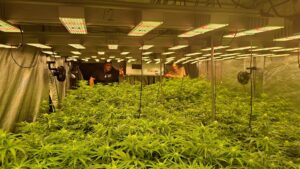
The German Hemp Association (DHV) and the CSC Inntal Raubling e.V. are taking the Free State of Bavaria to court. The association filed suit on June 3, 2026, against the denial of building permit approval for its cultivation facilities. The DHV is financing the proceedings as a test case to establish a fundamental legal principle: Can Bavaria de facto prevent cultivation associations across the board through building regulations, even though the Cannabis Consumption Act explicitly permits them?
Approved, but blocked: Bavaria’s building law leverage
The situation is paradoxical. The responsible authority approved the first three cultivation associations in Bavaria in April 2025, citing „unavoidable legal constraints“ of its own formulation, including the CSC Inntal. The approval has been in place for over a year now. Yet to this day, not a single gram has been cultivated in Bavaria. The reason is building law.
According to Bavaria’s authorities, operating a cultivation association is permissible under building and land use law exclusively in a special-purpose area as defined in Section 11 of the Building Use Ordinance. Such special-purpose areas don’t exist anywhere in Bavaria for this purpose, nor are they planned anywhere. Other federal states treat Cannabis Social Clubs pragmatically from a building law perspective, for example as horticultural operations. From the Hemp Association’s perspective, it’s clear that Bavaria is using this classification to circumvent federal law.
The Bavarian state government had announced even before the Cannabis Act took effect that it would interpret it as restrictively as possible. Health Minister Judith Gerlach (CSU) declared that the Free State would pursue all possible legal avenues against the law. According to its own account, the CSC Inntal has overcome all hurdles, met all requirements, and has its approval in hand. The building law classification is, from the plaintiffs‘ perspective, the last lever being used to prevent state-controlled cultivation.
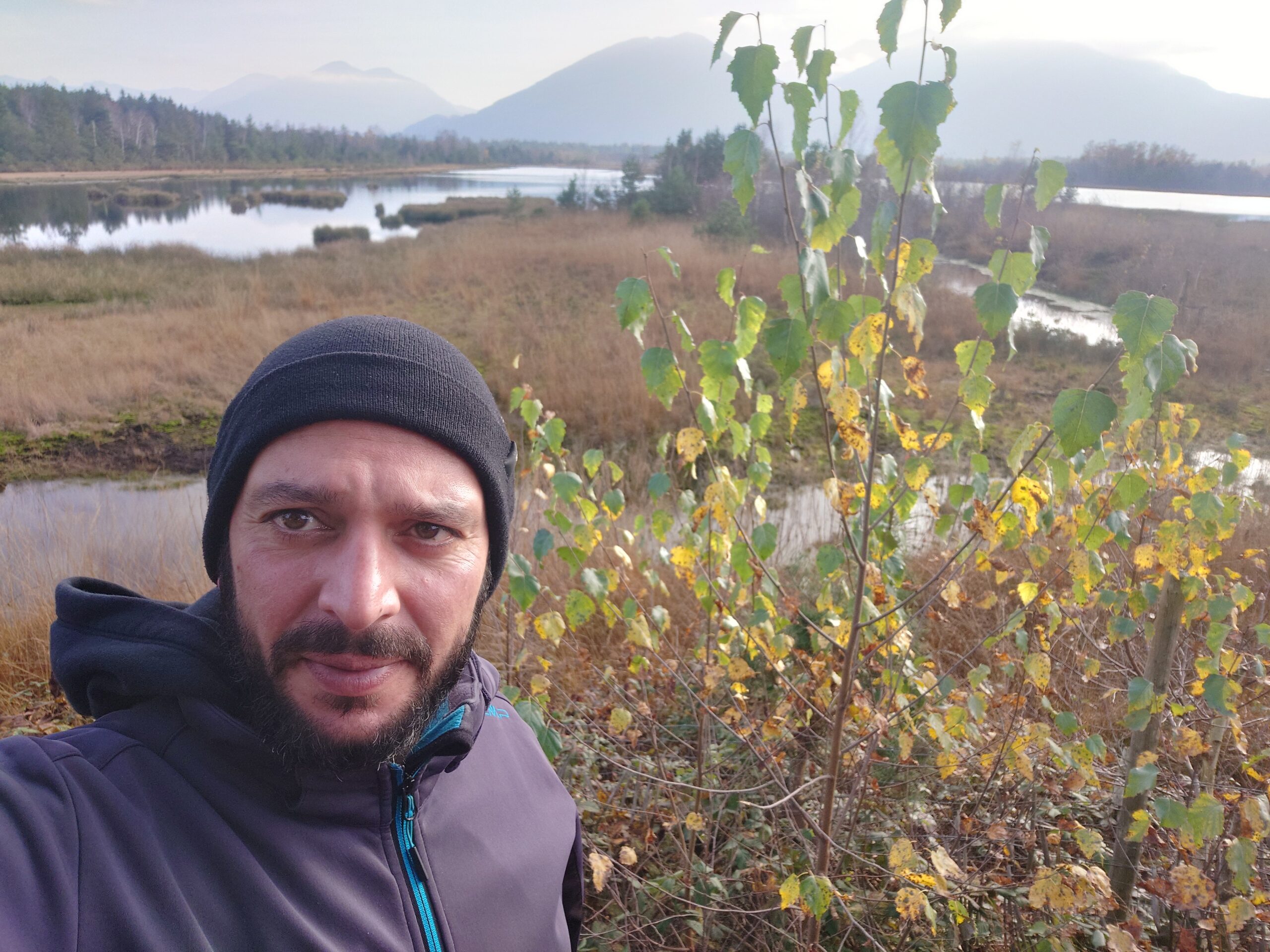
„We are blocked by building law hurdles despite having approval, which effectively means a cultivation ban for all of Bavaria. We are now fighting this in court.“
Florian Degenhart, board member CSC Inntal Raubling e.V.
Test case: Why the DHV is financing the suit
The CSC Inntal is represented by attorney Dominik Kraft, who filed the complaint. The DHV is covering costs because it considers the proceedings to be groundbreaking beyond this individual case. The question is whether a federal state may use building permit approval as a tool to render a federally mandated structure void.
„It’s quite remarkable how much energy Söder and company invest in preventing a state-controlled alternative to the black market.“
Georg Wurth, German Hemp Association
This case is not isolated. The DHV supports multiple lawsuits against Bavaria’s restrictive interpretation of the Cannabis Act. One suit has already been successfully concluded: the challenge to the consumption ban in the English Garden, Finance Garden, and Court Garden in Munich. Other proceedings are ongoing against Bavaria’s „Cannabis Consequences Limitation Act,“ which mandates consumption bans at all folk festivals and in outdoor areas of all restaurants, including a constitutional lawsuit before the Bavarian Constitutional Court.
Voices on the proceedings
We posed questions to the parties involved. CSC board member Florian Degenhart and DHV managing director Georg Wurth answered us in writing.
💬 In conversation
Florian Degenhart, board member CSC Inntal Raubling e.V.
Florian Degenhart is board member of the cultivation association CSC Inntal Raubling e.V. The association is among Bavaria’s first approved cultivation associations and is suing, with DHV support, against the building law blockade.
Question 1, association operations despite approval
You’ve met all requirements and have had approval for over a year. What does association life look like when you’re approved but can’t legally cultivate due to building law?
Florian: It’s an extremely frustrating situation. We have met all requirements of the Cannabis Consumption Act and possess the required cultivation permit. Nevertheless, we cannot implement our actual association purpose because we are blocked by building law requirements. Association life currently consists mainly of administrative work, member support, and attempts to overcome legal hurdles.
At the same time, we try to actively shape our community. We are particularly proud of our strong and supportive community. Our members help each other with questions, and our board team is always available as a point of contact. However, none of this replaces our association’s actual purpose: legal collective cultivation and distribution of cannabis to our members.
Question 2, consequences for members
What does the blockade concretely mean for your members, who must continue to resort to the black market?
Florian: Legalization aimed to reduce the black market and bring consumers into legal, controlled structures. Our members want to use exactly this legal path. As long as we are not permitted to cultivate, however, many affected individuals have only the black market or home cultivation as options. This effectively prevents the law’s central objective in Bavaria.
Question 3, costs of the stalemate
What costs and expenses have you incurred so far due to this stalemate?
Florian: Since summer 2024, we have borne ongoing costs for rent, operations, insurance, association administration, planning, and legal consultation. Total project costs have reached a high five-figure amount. In addition, there are substantial volunteer personnel resources. Overall, the association has already suffered considerable financial damage without being able to begin our approved operations.
Question 4, timeline upon success
If the court rules in your favor, how quickly could you begin cultivation?
Florian: A favorable court decision would initially only clear the way for us to initiate the next steps at all. Contrary to common perception, we could not immediately begin cultivation. First, we would need to implement extensive renovation measures for security in accordance with requirements set by the responsible supervisory authority, the LGL, and install and commission the necessary technical equipment.
Particularly problematic is that the security requirements demanded in Bavaria are, in our view, completely excessive and confront cultivation associations with standards that bear no reasonable relation to their statutory mandate. Although the federal legislator explicitly wanted to create non-commercial associations, Bavaria demands security standards requiring substantial investments and lengthy preparations. Even with a timely favorable ruling, it would take several more months before renovations are complete, technology is installed, cultivation begins, and initial distribution to members becomes possible. Every additional month of blockade pushes back the operational start date accordingly.
Question 5, the special-purpose area argument
How do you counter the argument that cultivation is only permissible in a special-purpose area?
Florian: According to the Federal Ministry for Housing, Urban Development and Building, classifying cultivation associations into a special-purpose area runs counter to the will of the parliamentary legislator. Bavaria’s position that such use is permissible exclusively in a special-purpose area is not legally defensible. Nevertheless, this line continues to be applied in Bavaria as the basis for administrative practice. The result is a factual standstill: approvals are in place, legal requirements are met, yet operational startup is impossible.
Bavaria’s approach is clearly recognizable. Through consistently restrictive administrative practice, procedures are delayed to such an extent that substantial time losses occur and many associations fail in implementation or withdraw their applications. This effect is already clearly visible: half of all cultivation associations that originally applied have abandoned their proceedings because the practical hurdles are deemed too high. The administrative burden alone on the supervisory authority LGL is enormous.
Our conclusion: Minister President Söder knows precisely that he has created building law hurdles that will not withstand court scrutiny. But he also knows that through this politically motivated prevention of cannabis cultivation, he forces many associations to give up. The consequences are borne not by those responsible, but by the affected associations, while taxpayers bear the costs.
💬 In conversation
Georg Wurth, German Hemp Association
Georg Wurth is founder and managing director of the German Hemp Association (DHV), which is financing the proceedings against Bavaria as a test case.
Question 1, why this test case
Why is the DHV financing precisely this proceeding as a test case?
Georg: In many proceedings, authorities cite multiple grounds for denials. We were looking for a case focused exclusively on the building law trick with the „special-purpose area“ for cannabis cultivation, so we don’t get sidetracked during trial. With CSC Inntal, there are no other denial grounds, so we have a clean case to clarify this fundamental question.
Question 2, Bavaria’s blockade in context
Bavaria pursues multiple restrictions against the Cannabis Act. How do you categorize the building law blockade within this broader picture?
Georg: Bavaria blocks wherever it can. From the start, the state government wanted to abolish the Cannabis Act and until then interpret it extremely restrictively. We see this not only in CSCs and building law, but also in the treatment of CSCs overall, consumption bans in public places, and so on. Bavaria is also the only federal state to respond to the Cannabis Act with a „Cannabis Consequences Limitation Act,“ for example by fundamentally prohibiting restaurateurs from allowing cannabis consumption in smoking areas. We’re also challenging that.
Question 3, nationwide significance
What would success in this proceeding mean nationwide for cultivation associations?
Georg: The nationwide impact would be limited because hardly any other federal state insists that cultivation associations may only cultivate in special-purpose areas that don’t actually exist in reality. But for CSCs in Bavaria, it would be a major breakthrough. So far, because of this regulation, not a single association in Bavaria is permitted to cultivate. Apart from the „special-purpose area,“ there are also building law problems in other federal states. Perhaps our case could also have some signaling effect for those.
Question 4, where the Free State stands
The DHV supports further lawsuits against Bavaria. Where does the Free State stand in your view after these disputes?
Georg: It’s hard to say how the other trials will turn out. But our victory on the park ordinance was already a major success. Now consumption is permitted again in the English Garden, a huge park in Munich, provided of course that there are no young people or playgrounds nearby. If we manage to ensure that CSCs in Bavaria can finally offer a legal alternative to the black market, that would be significant progress in Bavarian cannabis policy. But as usual, we should expect that the process could take a long time.
Question 5, state of legalization
What does this dispute say about the state of cannabis legalization two years after implementation?
Georg: That the CSU deserves to be voted out of office. It’s not like this in all federal states.
Note: The background information in this article is based on a press release from the German Hemp Association dated June 3, 2026. The statements from Florian Degenhart and Georg Wurth come from a written inquiry by Hanf Magazin.
The German Hemp Association (DHV) and the CSC Inntal Raubling e.V. are taking the Free State of Bavaria to court. The association filed suit on June 3, 2026, against the denial of building permit approval for its cultivation facilities. The DHV is financing the proceedings as a test case to establish a fundamental legal principle: Can Bavaria de facto prevent cultivation associations across the board through building regulations, even though the Cannabis Consumption Act explicitly permits them?
Approved, but blocked: Bavaria’s building law leverage
The situation is paradoxical. The responsible authority approved the first three cultivation associations in Bavaria in April 2025, citing „unavoidable legal constraints“ of its own formulation, including the CSC Inntal. The approval has been in place for over a year now. Yet to this day, not a single gram has been cultivated in Bavaria. The reason is building law.
According to Bavaria’s authorities, operating a cultivation association is permissible under building and land use law exclusively in a special-purpose area as defined in Section 11 of the Building Use Ordinance. Such special-purpose areas don’t exist anywhere in Bavaria for this purpose, nor are they planned anywhere. Other federal states treat Cannabis Social Clubs pragmatically from a building law perspective, for example as horticultural operations. From the Hemp Association’s perspective, it’s clear that Bavaria is using this classification to circumvent federal law.
The Bavarian state government had announced even before the Cannabis Act took effect that it would interpret it as restrictively as possible. Health Minister Judith Gerlach (CSU) declared that the Free State would pursue all possible legal avenues against the law. According to its own account, the CSC Inntal has overcome all hurdles, met all requirements, and has its approval in hand. The building law classification is, from the plaintiffs‘ perspective, the last lever being used to prevent state-controlled cultivation.
„We are blocked by building law hurdles despite having approval, which effectively means a cultivation ban for all of Bavaria. We are now fighting this in court.“
Florian Degenhart, board member CSC Inntal Raubling e.V.
Test case: Why the DHV is financing the suit
The CSC Inntal is represented by attorney Dominik Kraft, who filed the complaint. The DHV is covering costs because it considers the proceedings to be groundbreaking beyond this individual case. The question is whether a federal state may use building permit approval as a tool to render a federally mandated structure void.
„It’s quite remarkable how much energy Söder and company invest in preventing a state-controlled alternative to the black market.“
Georg Wurth, German Hemp Association
This case is not isolated. The DHV supports multiple lawsuits against Bavaria’s restrictive interpretation of the Cannabis Act. One suit has already been successfully concluded: the challenge to the consumption ban in the English Garden, Finance Garden, and Court Garden in Munich. Other proceedings are ongoing against Bavaria’s „Cannabis Consequences Limitation Act,“ which mandates consumption bans at all folk festivals and in outdoor areas of all restaurants, including a constitutional lawsuit before the Bavarian Constitutional Court.
Voices on the proceedings
We posed questions to the parties involved. CSC board member Florian Degenhart and DHV managing director Georg Wurth answered us in writing.
💬 In conversation
Florian Degenhart, board member CSC Inntal Raubling e.V.
Florian Degenhart is board member of the cultivation association CSC Inntal Raubling e.V. The association is among Bavaria’s first approved cultivation associations and is suing, with DHV support, against the building law blockade.
Question 1, association operations despite approval
You’ve met all requirements and have had approval for over a year. What does association life look like when you’re approved but can’t legally cultivate due to building law?
Florian: It’s an extremely frustrating situation. We have met all requirements of the Cannabis Consumption Act and possess the required cultivation permit. Nevertheless, we cannot implement our actual association purpose because we are blocked by building law requirements. Association life currently consists mainly of administrative work, member support, and attempts to overcome legal hurdles.
At the same time, we try to actively shape our community. We are particularly proud of our strong and supportive community. Our members help each other with questions, and our board team is always available as a point of contact. However, none of this replaces our association’s actual purpose: legal collective cultivation and distribution of cannabis to our members.
Question 2, consequences for members
What does the blockade concretely mean for your members, who must continue to resort to the black market?
Florian: Legalization aimed to reduce the black market and bring consumers into legal, controlled structures. Our members want to use exactly this legal path. As long as we are not permitted to cultivate, however, many affected individuals have only the black market or home cultivation as options. This effectively prevents the law’s central objective in Bavaria.
Question 3, costs of the stalemate
What costs and expenses have you incurred so far due to this stalemate?
Florian: Since summer 2024, we have borne ongoing costs for rent, operations, insurance, association administration, planning, and legal consultation. Total project costs have reached a high five-figure amount. In addition, there are substantial volunteer personnel resources. Overall, the association has already suffered considerable financial damage without being able to begin our approved operations.
Question 4, timeline upon success
If the court rules in your favor, how quickly could you begin cultivation?
Florian: A favorable court decision would initially only clear the way for us to initiate the next steps at all. Contrary to common perception, we could not immediately begin cultivation. First, we would need to implement extensive renovation measures for security in accordance with requirements set by the responsible supervisory authority, the LGL, and install and commission the necessary technical equipment.
Particularly problematic is that the security requirements demanded in Bavaria are, in our view, completely excessive and confront cultivation associations with standards that bear no reasonable relation to their statutory mandate. Although the federal legislator explicitly wanted to create non-commercial associations, Bavaria demands security standards requiring substantial investments and lengthy preparations. Even with a timely favorable ruling, it would take several more months before renovations are complete, technology is installed, cultivation begins, and initial distribution to members becomes possible. Every additional month of blockade pushes back the operational start date accordingly.
Question 5, the special-purpose area argument
How do you counter the argument that cultivation is only permissible in a special-purpose area?
Florian: According to the Federal Ministry for Housing, Urban Development and Building, classifying cultivation associations into a special-purpose area runs counter to the will of the parliamentary legislator. Bavaria’s position that such use is permissible exclusively in a special-purpose area is not legally defensible. Nevertheless, this line continues to be applied in Bavaria as the basis for administrative practice. The result is a factual standstill: approvals are in place, legal requirements are met, yet operational startup is impossible.
Bavaria’s approach is clearly recognizable. Through consistently restrictive administrative practice, procedures are delayed to such an extent that substantial time losses occur and many associations fail in implementation or withdraw their applications. This effect is already clearly visible: half of all cultivation associations that originally applied have abandoned their proceedings because the practical hurdles are deemed too high. The administrative burden alone on the supervisory authority LGL is enormous.
Our conclusion: Minister President Söder knows precisely that he has created building law hurdles that will not withstand court scrutiny. But he also knows that through this politically motivated prevention of cannabis cultivation, he forces many associations to give up. The consequences are borne not by those responsible, but by the affected associations, while taxpayers bear the costs.
💬 In conversation
Georg Wurth, German Hemp Association
Georg Wurth is founder and managing director of the German Hemp Association (DHV), which is financing the proceedings against Bavaria as a test case.
Question 1, why this test case
Why is the DHV financing precisely this proceeding as a test case?
Georg: In many proceedings, authorities cite multiple grounds for denials. We were looking for a case focused exclusively on the building law trick with the „special-purpose area“ for cannabis cultivation, so we don’t get sidetracked during trial. With CSC Inntal, there are no other denial grounds, so we have a clean case to clarify this fundamental question.
Question 2, Bavaria’s blockade in context
Bavaria pursues multiple restrictions against the Cannabis Act. How do you categorize the building law blockade within this broader picture?
Georg: Bavaria blocks wherever it can. From the start, the state government wanted to abolish the Cannabis Act and until then interpret it extremely restrictively. We see this not only in CSCs and building law, but also in the treatment of CSCs overall, consumption bans in public places, and so on. Bavaria is also the only federal state to respond to the Cannabis Act with a „Cannabis Consequences Limitation Act,“ for example by fundamentally prohibiting restaurateurs from allowing cannabis consumption in smoking areas. We’re also challenging that.
Question 3, nationwide significance
What would success in this proceeding mean nationwide for cultivation associations?
Georg: The nationwide impact would be limited because hardly any other federal state insists that cultivation associations may only cultivate in special-purpose areas that don’t actually exist in reality. But for CSCs in Bavaria, it would be a major breakthrough. So far, because of this regulation, not a single association in Bavaria is permitted to cultivate. Apart from the „special-purpose area,“ there are also building law problems in other federal states. Perhaps our case could also have some signaling effect for those.
Question 4, where the Free State stands
The DHV supports further lawsuits against Bavaria. Where does the Free State stand in your view after these disputes?
Georg: It’s hard to say how the other trials will turn out. But our victory on the park ordinance was already a major success. Now consumption is permitted again in the English Garden, a huge park in Munich, provided of course that there are no young people or playgrounds nearby. If we manage to ensure that CSCs in Bavaria can finally offer a legal alternative to the black market, that would be significant progress in Bavarian cannabis policy. But as usual, we should expect that the process could take a long time.
Question 5, state of legalization
What does this dispute say about the state of cannabis legalization two years after implementation?
Georg: That the CSU deserves to be voted out of office. It’s not like this in all federal states.
Sollte Bayern Cannabis Social Clubs über das Baurecht blockieren dürfen?
Note: The background information in this article is based on a press release from the German Hemp Association dated June 3, 2026. The statements from Florian Degenhart and Georg Wurth come from a written inquiry by Hanf Magazin.







Branchen-Update
News, Analysen und Reportagen — mehrmals im Monat direkt in dein Postfach.
Folge uns