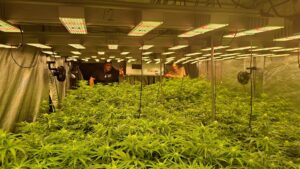
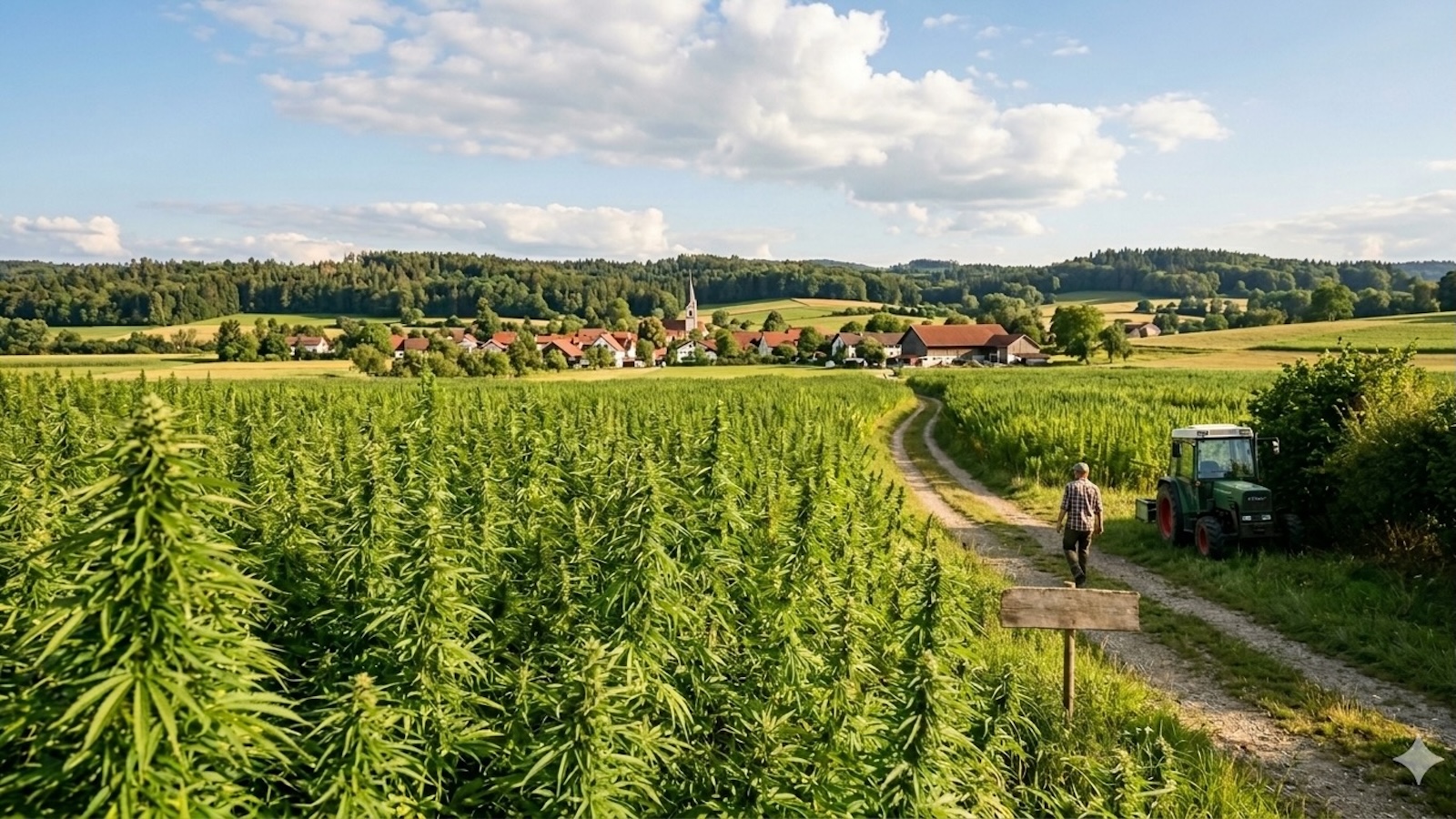
Industrial hemp is experiencing a period of transformation in Germany. On one hand, there are new legal frameworks and growing interest in sustainable raw materials, but on the other, there has been a noticeable decline in cultivation areas in recent years. When people hear the term „industrial hemp,“ they rarely think of the classic image of cannabis, and for good reason: industrial hemp is a strictly regulated crop that is officially permitted to be grown in Germany and Europe when certain conditions are met.
📑 Inhaltsverzeichnis
- What is industrial hemp and what makes it special?
- Legal foundations for industrial hemp in Germany
- Approval procedures and reporting obligations for farmers
- Applications: What is industrial hemp used for?
- Cultivation areas and market development in Germany
- Frequently asked questions
- 💬 Fragen? Frag den Hanf-Buddy!
This article explains what industrial hemp actually is, which legal regulations apply, how the approval process works, and which industries use the plant today.
What is industrial hemp and what makes it special?
Industrial hemp refers to varieties of the Cannabis sativa L. plant whose THC content is limited to a maximum of 0.3 percent. This threshold was most recently set at this level through an EU-wide regulation. This fundamentally distinguishes industrial hemp from cannabis varieties used for recreational purposes or medical therapy, which have significantly higher THC levels.


The plant itself is one of the oldest cultivated plants in the world. Thousands of years ago, people grew hemp for clothing, rope, food, and building materials. This versatile usability remains the strongest argument for widespread use in modern industry today. Every part of the hemp plant can be utilized: fibers, seeds, hurds (the woody core material), flowers, and oil have different buyers in the textile, construction, food, and pharmaceutical industries.
Legal foundations for industrial hemp in Germany
The cultivation of industrial hemp in Germany is tied to clear legal requirements. In principle, any recognized agricultural operation may grow industrial hemp without needing to apply for special permission. This distinguishes industrial hemp significantly from medical cannabis, which requires a license from the Federal Institute for Drugs and Medical Devices.
The decisive prerequisite is that only varieties from the common EU variety catalog may be grown. For the 2026 growing season, this catalog includes 122 approved varieties that reliably comply with the 0.3 percent THC threshold. Not every variety listed in the EU variety catalog is automatically permitted in Germany, as the Federal Office for Agriculture and Food (BLE) maintains its own national list of approved varieties.
Another important aspect concerns the circle of persons eligible to grow: The regulations for industrial hemp approval currently only include agricultural operations. Museums, schools, universities, and other educational institutions cannot easily grow industrial hemp under the same regulations, which is regarded in practice as a problematic legal gap. A detailed analysis of how legalization affects the industrial hemp industry can be found in our article Hemp cultivation: How does legalization affect the industrial hemp industry?
Approval procedures and reporting obligations for farmers
Although special permission is not necessary, farmers must follow several formal steps. Industrial hemp cultivation must be registered in the so-called „Joint Application,“ through which farmers apply annually for EU direct payments. In addition, a cultivation notice must be submitted to the BLE, together with a declaration of sowing areas for industrial hemp.
Once the plants enter the flowering stage, a further notification of flowering commencement must be made to the BLE. On this basis, the authority conducts spot-check THC controls on the reported fields. Failure to comply with these reporting obligations or growing unapproved varieties risks loss of subsidies and criminal consequences.
The cultivation notice itself must be received by the BLE no later than July 1 of the respective growing year. Anyone who sows in spring and misses the deadline loses their claim to support. More background information on THC regulation is provided in our article on the THC threshold for industrial hemp, increased to 0.3 percent. The EU perspective on this topic is also relevant: EU facing decision: Flowering, THC threshold, and the future of industrial hemp.
Applications: What is industrial hemp used for?
The potential uses for industrial hemp are as broad as for few other cultivated plants. Depending on the variety and cultivation method, different product groups can be obtained from the hemp plant.
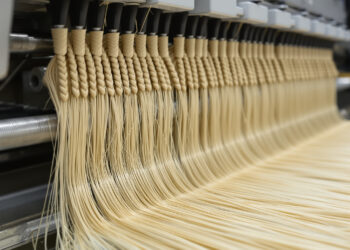
Hemp fibers for textiles and technical products: The bast fibers from the hemp stalk are extremely tear-resistant and moisture-absorbent. In the textile industry, they are used to manufacture clothing and home textiles, which are considered particularly durable and environmentally friendly. Additionally, hemp fibers are used in paper production, natural fiber-reinforced plastics, and the automotive industry.
Hemp hurds for building materials: The woody hurds that result as a byproduct of fiber extraction are the raw material for hempcrete, a mixture of hemp hurds and lime binder. The material is used as ecological insulation and wall building material and is regarded as a flagship project of sustainable architecture because of its CO₂-binding properties. Our overview on this topic: Hemp as a raw material for the production of building materials.
Hemp seeds and hemp oil as food: The oil-rich seeds of industrial hemp are marketed as hemp seeds, hemp seed oil, and hemp protein. They provide essential fatty acids (omega-3 and omega-6 in a favorable ratio) and high-quality plant proteins. This makes them particularly interesting for the growing vegan and vegetarian dietary community.
Raw materials for industry and cosmetics: Hemp oil is also found in cosmetic products, where it is valued as a nourishing ingredient. Hemp-based packaging materials are gaining attention as an alternative to conventional plastics. The breadth of these application fields makes industrial hemp one of the most versatile renewable raw materials available in German agriculture today.
Cultivation areas and market development in Germany
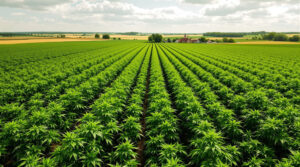
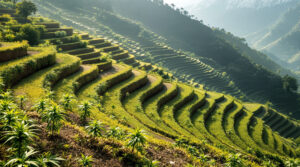
The BLE figures paint a mixed picture for 2025: A total of 496 operations reported industrial hemp on an area of 5,274 hectares, a decline of around 26 percent compared to the record year of 2024. This was the third consecutive decline in the number of operations. On average, each operation managed just over eleven hectares of industrial hemp, with the largest cultivation areas per operation found in Saxony-Anhalt (37 hectares), Brandenburg (28 hectares), and Thuringia (25 hectares).
Structural factors play a role in the decline: uncertain sales markets, lack of processing capacity in Germany, and competitive pressure from Eastern European countries with more favorable production conditions. At the same time, demand for sustainable raw materials remains high at national and European levels. Hemp is regarded as a crop with a future in climate protection strategies because the plant grows quickly, consumes little water, and can enrich soil through phytoremediation (contaminant degradation).
Whether these long-term arguments will outweigh the short-term economic challenges remains to be seen. An important signal could come from the debate over a modernized industrial hemp law in Germany, which is intended to simplify the legal framework for industrial hemp cultivation. The Bundestag has referred corresponding initiatives to committees, with a final decision still pending. A realistic assessment is provided in our report Industrial hemp in practice: Opportunities and risks from the perspective of German farmers.
Frequently asked questions
Do I need special permission to grow industrial hemp?
No, recognized agricultural operations do not require special permission. However, cultivation must be registered in the Joint Application and reported to the BLE. Additionally, only approved varieties from the EU variety catalog may be used.
What is the permitted THC content in industrial hemp?
In Germany, following the EU-wide increase, a THC threshold of a maximum of 0.3 percent applies. Plants that exceed this value are no longer considered industrial hemp and fall under narcotics legislation.
How many hemp varieties are approved in Germany for 2026?
As of March 2026, the EU variety catalog comprises a total of 122 approved industrial hemp varieties. Not all of these are automatically permitted in Germany; the national list of the BLE is decisive.
What products can be made from industrial hemp?
Industrial hemp is used to produce textile fibers, hempcrete, hemp seed oil, hemp protein, cosmetic ingredients, paper, and technical fibers for the automotive industry, among other things. Nearly every part of the hemp plant finds industrial use.
Is industrial hemp cultivation economically profitable in Germany?
Sollte der Nutzhanfanbau für Privatpersonen erlaubt werden?
Profitability depends heavily on the buyer and the processing chain. In 2025, cultivation areas declined by around 26 percent, which indicates structural problems in the market. In the long term, increasing demand for sustainable materials and a modernized legal framework could improve conditions.


Branchen-Update
News, Analysen und Reportagen — mehrmals im Monat direkt in dein Postfach.