Mexico’s Supreme Court has expanded personal cannabis use rules in a decision that contradicts years of regulatory interpretation by the health authorities. Those holding official permission for personal cannabis use can now legally prepare cannabis-infused foods. However, selling, gifting, or distributing such products remains prohibited.
📑 Inhaltsverzeichnis
The Plenum of the Suprema Corte de Justicia de la Nación (SCJN) ruled on September 10, 2026, on the Recurso de inconformidad 13/2025. The decision passed by a clear majority of seven to two votes, according to consistent reports. For those following Mexico’s cannabis debate, this marks another chapter in a legal transformation that has unfolded almost exclusively in courts rather than in parliament.
What Mexico’s Supreme Court Decided
The case originated from a private individual’s application to Cofepris, Mexico’s health regulatory agency. The person sought permission to use cannabis and THC for personal recreational consumption. While Cofepris granted permission, it excluded numerous applications, including finished and semi-finished food products, medications, herbal remedies, medical devices, dietary supplements, cosmetics, and vaporizers.


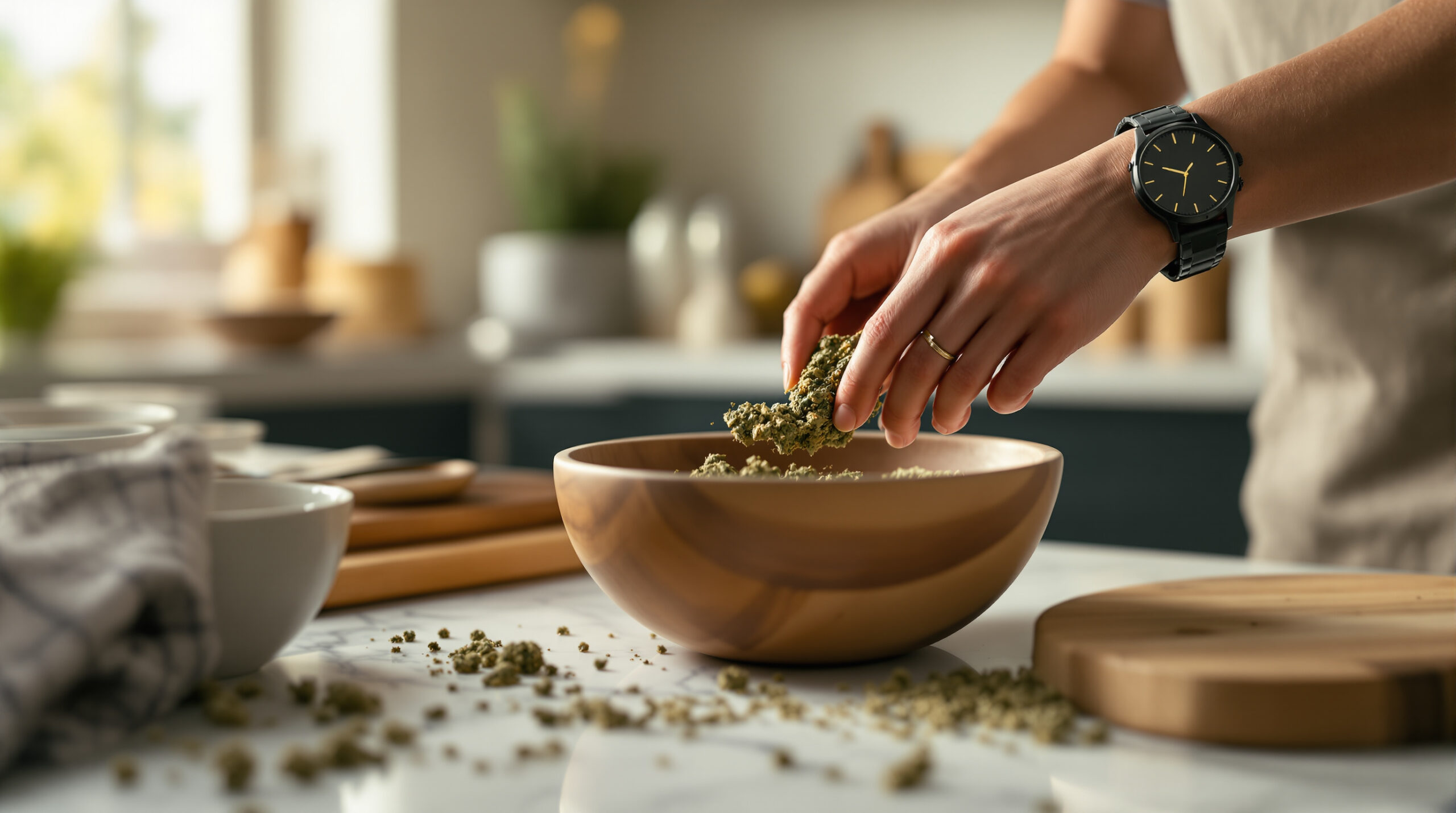
The applicant challenged these restrictions in court, arguing that the agency failed to fully implement an earlier landmark court ruling. The Plenum sided with the applicant regarding food products. Processing cannabis into meals for personal use, the court found, constitutes ordinary kitchen activity with no connection to products requiring special health oversight. Cofepris must therefore issue permits that explicitly allow the preparation of cannabis-infused foods for the permit holder.
The remaining restrictions stood. The agency may continue to impose limits on medications, dietary supplements, cosmetics, and vaporizers. The court also made explicitly clear that the ruling creates no commercial framework. Neither sales nor distribution to third parties is permitted under this decision.
Mexico’s Path to Legalization Runs Through the Courts
Understanding the significance requires looking back. In 2018, the Supreme Court issued multiple identical rulings declaring the absolute prohibition on recreational use unconstitutional. We reported extensively on how the Supreme Court of Mexico struck down the cannabis ban. Congress received a mandate to draft new legislation.
That mandate was never fulfilled. Over the years, draft bills were debated, deadlines extended, and votes postponed. The progression can be traced through our earlier reports, such as when Mexico attempted to establish legalization rules or when a vote on legalization legislation was scheduled. No regulated market has materialized.
In 2021, the court took matters into its own hands. Through General Unconstitutionality Declaration 1/2018, it invalidated the norms preventing authorities from granting personal use permits. Since then, Mexico has operated an individual licensing model. Anyone wishing to legally use cannabis must obtain authorization from Cofepris. The new ruling specifically addresses the scope of these permits.
What the Ruling Means and Its Limits
Practically speaking, the ruling closes a gap few considered sensible. If someone could smoke cannabis, they should be permitted to bake it into a cake. Health-wise, this distinction is difficult to justify, as eating eliminates exposure to combustion byproducts. However, edibles introduce their own risks. Effects take significantly longer to onset and last considerably longer, leading many users to redose prematurely. Our guide on cannabis edibles dosing explains how to avoid overconsumption.
Simultaneously, the ruling’s reach remains limited. It affects permit holders exclusively and does not establish broader legal rights for the general population. It explicitly creates no commercial market for cannabis products. Whether the decision influences Cofepris’s permitting practices beyond this case will only become apparent with future applications.
Comparison with Germany
From a German perspective, Mexico’s legal dispute seems almost bizarre. In Germany, adults can legally cultivate cannabis privately under the Cannabis Consumption Act and process it in their own kitchens without requiring regulatory approval. The crucial step in cooking is actually decarboxylation, without which most THC remains inactive.
One parallel does exist. In Germany too, personal freedom ends where distribution begins. Cultivation associations may only distribute flower and hashish; finished edibles from clubs are not permitted. Both legal systems thus maintain a clear boundary between what individuals do with their cannabis privately and what goes to others.
Frequently Asked Questions
Is cannabis now legal in Mexico?
Not in the sense of a regulated market. Personal consumption has been possible since the court decisions, but requires authorization from Cofepris. Legal commercial sales of cannabis remain prohibited.
What exactly did the court decide on September 10, 2026?
The Plenum ruled in Case 13/2025 that personal use permits may include the preparation of cannabis-infused foods. Cofepris must issue permits that explicitly allow this. Such foods must be intended exclusively for the permit holder’s own use.
Are edibles now legal to sell in Mexico?
No. The court explicitly stated that neither sales nor distribution or transfer to third parties is permitted. For medications, cosmetics, dietary supplements, and vaporizers, the agency may continue imposing restrictions.
Can you cook with cannabis in Germany?
Yes, in a private context. Adults may legally process cannabis they possess into foods at home. Distributing such foods to others is not permitted, and cultivation associations may only distribute flower and hashish.
Sources: Suprema Corte de Justicia de la Nación, Plenum decision on Recurso de inconformidad 13/2025 from 09.10.2026, reported by La Crónica de Hoy, Infobae, and Amexi; High Times (09.11.2026)






Sollten Gerichte die Legalisierung vorantreiben, wenn die Politik versagt?
Branchen-Update
News, Analysen und Reportagen — mehrmals im Monat direkt in dein Postfach.