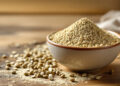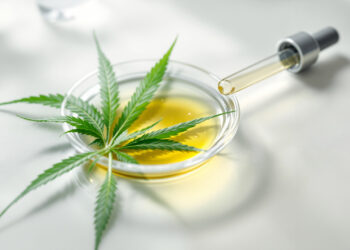
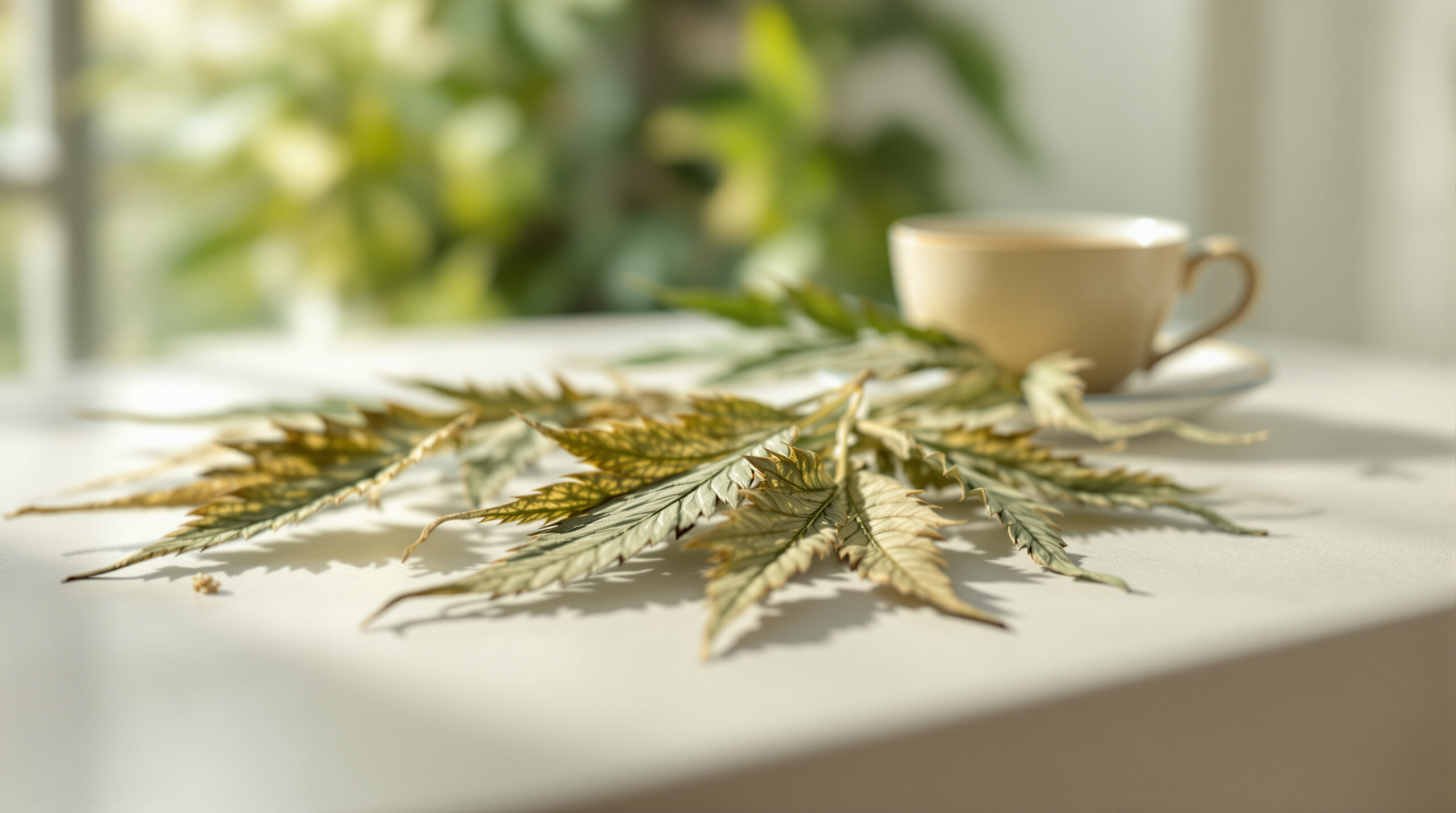
The European Union has established binding THC maximum levels for hemp leaf tea for the first time. Regulation (EU) 2026/1828 supplements the contaminants regulation (EU) 2023/915 and takes effect on January 1, 2027. For the European industrial hemp industry, the outcome is mixed, as the final recognition of the infusion as a traditional food comes with threshold values that a large portion of currently marketed products do not meet.
📑 Inhaltsverzeichnis
- What the new EU regulation stipulates for hemp leaf tea
- The threshold targets the leaf, not the cup
- The industrial hemp association EIHA calls it a missed opportunity
- Labeling requirements and national exceptions
- What this means for the German-speaking market
- Frequently asked questions
- 💬 Fragen? Frag den Hanf-Buddy!
What the new EU regulation stipulates for hemp leaf tea
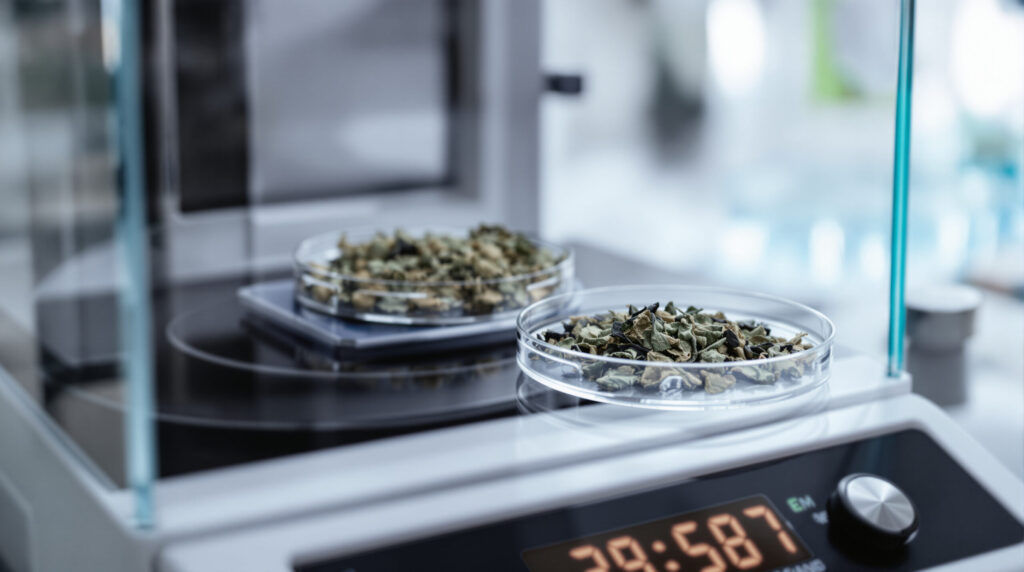
The regulation makes a clear distinction between raw material and finished beverage. Dried hemp leaves intended for water infusion may henceforth contain a maximum of 40 milligrams of delta-9-THC equivalents per kilogram. For the ready-to-drink infusion, the limit is 0.02 milligrams per kilogram. In a 250-milliliter cup, this corresponds mathematically to approximately 0.005 milligrams of THC equivalents, a quantity far below any perceptible effect.
With this, hemp leaf infusions are directly regulated under European contaminants law for the first time. Previously, the EU only regulated seeds in this area, with limits of 3 milligrams per kilogram for seeds, flour, and protein, and 7.5 milligrams per kilogram for oil. Leaves remained a gap for years because the Commission first wanted to evaluate data on actual occurrence.


The threshold targets the leaf, not the cup
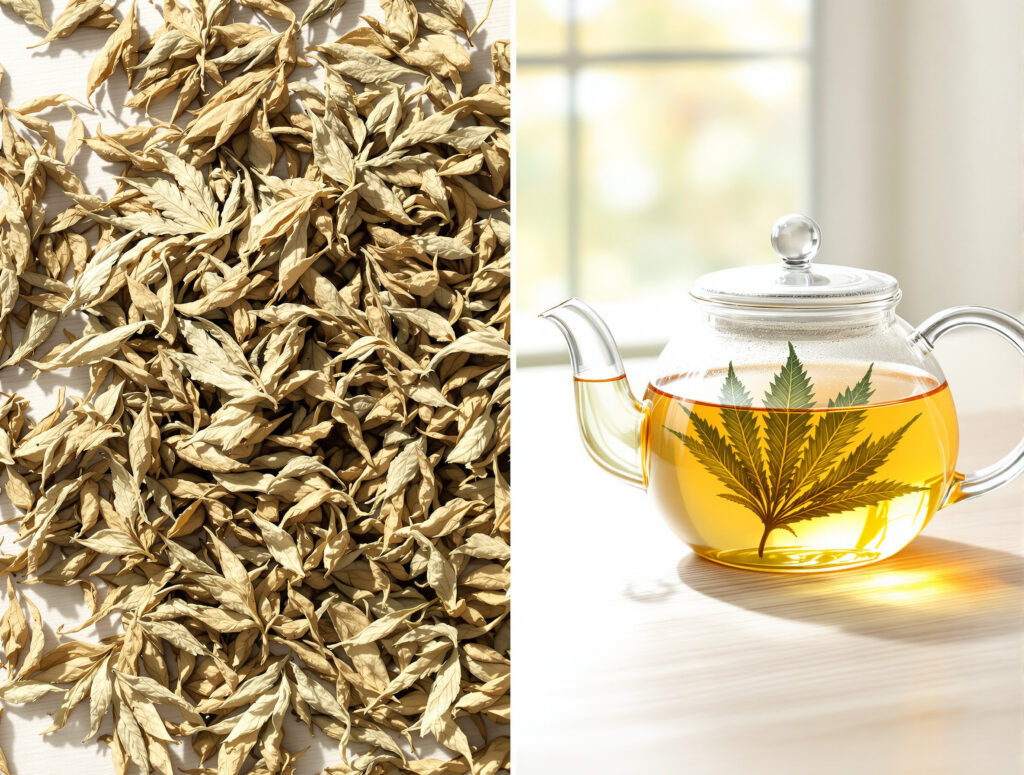
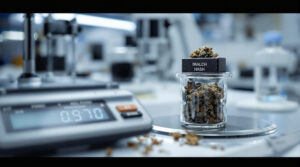
The real bottleneck lies in dried leaf material. A German study from 2023 analyzed 23 commercially available hemp teas and found THC contents ranging from 16 to 935 milligrams per kilogram. The average was 221 milligrams per kilogram, more than five times the new limit. Anyone currently filling hemp tea must therefore source and analyze raw materials far more strictly than before.
The same study revealed something else. Only a small portion of the THC bound in the leaf passes into the water during brewing, because THC is fat-soluble and dissolves poorly in hot water. This is exactly where industry criticism targets. A strict value for the leaf provides little additional consumer safety benefit if the beverage already has its own threshold. How dramatically such limits can shift entire product categories is currently evident in the United States, where a new hemp definition with a container limit has disrupted a multibillion-dollar market and Tennessee has completely banned smokable hemp products.
The industrial hemp association EIHA calls it a missed opportunity
The European industrial hemp association EIHA had proposed a value of 0.08 milligrams per kilogram for heated non-alcoholic beverages. The stricter variant, four times as strict, prevailed. While EIHA CEO Francesco Mirizzi welcomes the EU’s recognition of hemp leaf infusion as a traditional food, the association warns that many products from legally cultivated industrial hemp will be difficult to market under these thresholds.
For dried leaf, EIHA demands an increase from 40 to at least 400 milligrams per kilogram. The association has also announced that it will explore all avenues to defend the sector against disproportionate restrictions. EIHA does not rule out legal action.
Labeling requirements and national exceptions
The package includes specific packaging specifications. Hemp leaves for water infusion must carry a notice that they are intended exclusively for preparing herbal infusions. This includes a warning for infants and small children, as well as a requirement not to add fatty ingredients such as cream or milk when steeping. The last point follows the same logic as the low value in the beverage, since fat dissolves THC much better than water.
A second restriction is important for manufacturers. The regulation does not override stricter national rules. A unified internal market for hemp leaves thus does not automatically emerge, and individual member states may continue to impose tougher requirements. How differently supervision operates across Europe is shown by the case of Portugal, where nine parliamentarians questioned seizures of CBD products in parliament.
What this means for the German-speaking market
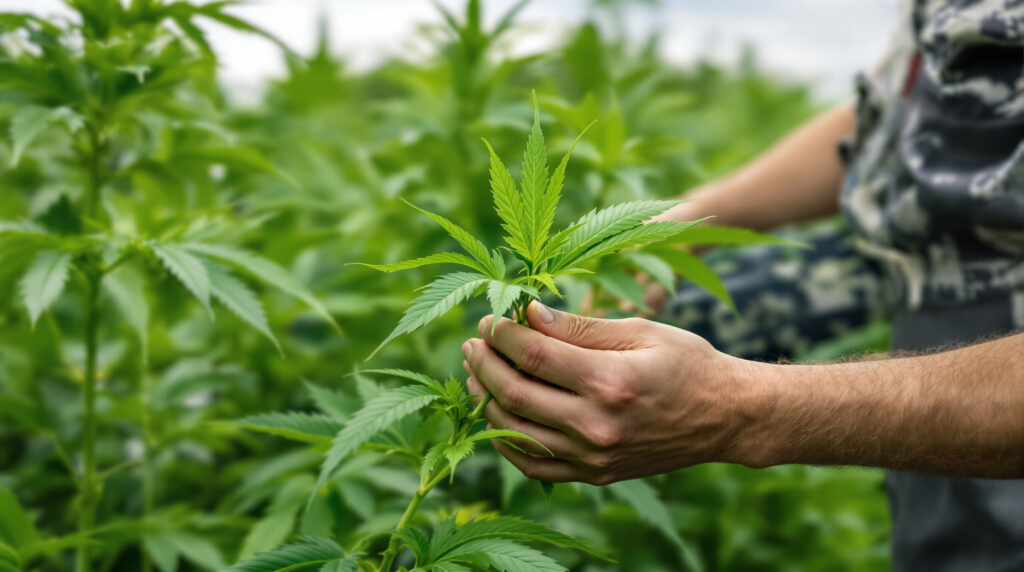
Hemp tea is an established shelf product in Germany, Austria, and Switzerland, and at the same time one of the oldest hemp products ever, as seen in the tradition of hemp infusion as gentle traditional medicine. The regulation creates legal certainty for this product for the first time, but in return demands tighter quality control. Variety selection, harvest timing, and clean separation of the leaf from flowering tops will determine whether a batch can be marketed in the future. Those who begin measuring only in December 2026 will end up with a harvest no one will accept.
The timing affects an industry already under pressure. In Germany, the sector has struggled for months with the interpretation of the intoxication clause, and the figures on alleged misuse of industrial hemp are more sobering than the political debate. The fundamentals of cultivation are covered in our overview of industrial hemp in Germany. Legally, the regulation builds on a key decision from 2023, when the EU Commission confirmed that hemp leaves are not novel food. What began then as a clarification without figures now has its thresholds.
Frequently asked questions
When do the new THC thresholds for hemp leaf tea take effect?
The values of Regulation (EU) 2026/1828 take effect on January 1, 2027. Transition provisions apply for products lawfully placed on the market beforehand. Manufacturers should use the remaining time to adjust their raw material sourcing.
How much THC can a finished cup of hemp tea contain?
The ready-to-drink infusion may contain a maximum of 0.02 milligrams of delta-9-THC equivalents per kilogram. In a 250-milliliter cup, this corresponds mathematically to approximately 0.005 milligrams. An intoxicating effect is excluded at this order of magnitude.
Why is the threshold for dried leaves the bigger problem?
Commercially available hemp teas averaged 221 milligrams per kilogram in a 2023 German study. The new value of 40 milligrams per kilogram is significantly lower. Many batches would therefore need to come from different varieties or be processed differently.
Does the new regulation also apply in Switzerland?
Switzerland is not an EU member and does not automatically adopt the regulation. For Swiss manufacturers, it is still relevant once they supply to the EU. Exports must then meet European maximum levels and labeling requirements.
Does hemp leaf tea still need novel food approval?
No. Water infusions of hemp leaves without flowering and fruiting tops are explicitly not considered novel food. They therefore do not require approval under the novel foods regulation. For other plant parts and isolated cannabinoids, the legal situation remains unaffected.
Sources: Regulation (EU) 2026/1828 amending Regulation (EU) 2023/915, Statement by the European Industrial Hemp Association (EIHA) from August 2026, HempToday from August 24, 2026.
Trinkst du aktuell Hanfblättertee oder hast du ihn schon probiert?
Note: This article reflects the status as of August 2026 and does not constitute legal advice. It contains no health or efficacy claims. The marketability of individual products is governed by additional requirements beyond maximum levels, including food law and the novel foods regulation.
Branchen-Update
News, Analysen und Reportagen — mehrmals im Monat direkt in dein Postfach.
Folge uns