Section 781: How a Spending Bill Redefines Hemp
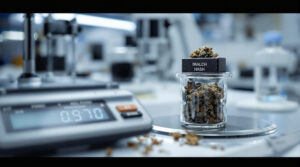
The mechanism for this regulatory overhaul was the FY2026 Agriculture Appropriations Act, a budget measure that ended a government shutdown. Buried in the fine print under Section 781, Congress rewrote the central definition from the 2018 Farm Bill. Hemp will no longer be defined solely by Delta-9-THC content of 0.3 percent, but rather by what regulators call Total THC. This metric fully incorporates the non-psychoactive precursor tetrahydrocannabinolic acid (THCA) and Delta-8-THC into the overall cannabinoid profile. Consequently, products that have driven US hemp industry growth over the past four years will lose legal status.
📑 Inhaltsverzeichnis
The second mechanism is quantity-based. Per packaged container, no more than 0.4 milligrams of Total THC may be present. A standard ten-piece gummy package with 25-milligram edibles—currently sold legally at US gas stations—would exceed the threshold by a factor of more than 600. Tinctures, vapes, and THCA-rich flower also lose legal standing under this framework. Sales, transport, and importation remain technically permitted until November 13, 2026; thereafter, federal criminal liability applies.
$28.4 Billion and 300,000 Jobs at Risk
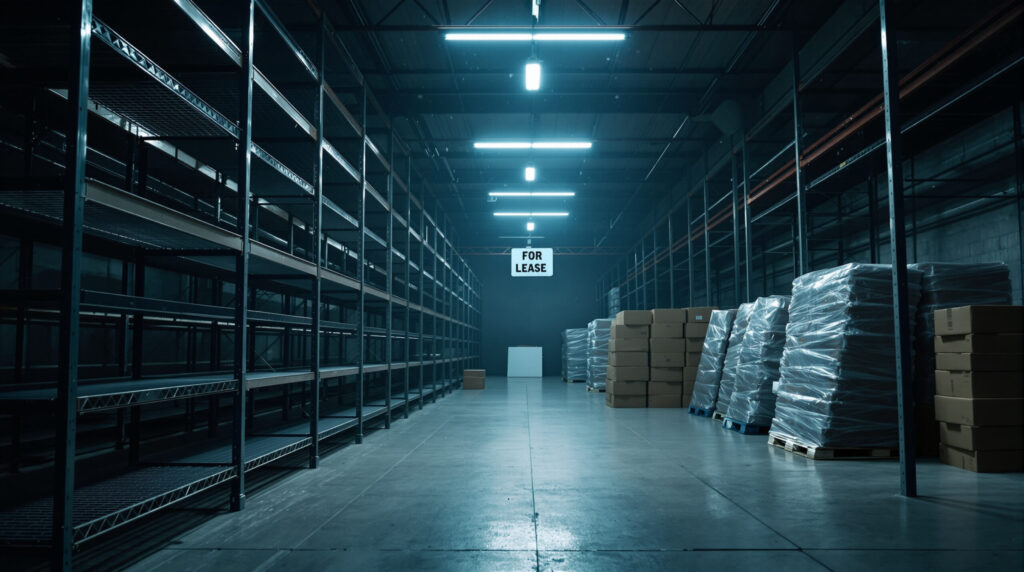
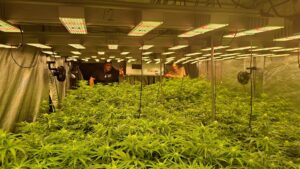
Industry associations now estimate annual revenue from intoxicating hemp products in the US at approximately $28.4 billion. Estimates suggest roughly 300,000 jobs across cultivation, extraction, logistics, and retail, plus approximately $1.5 billion in state tax revenue. These figures emerged because the 2018 Farm Bill opened a regulatory gap that manufacturers systematically exploited with semi-synthetic cannabinoids and THCA-rich flower. Federal lawmakers apparently did not anticipate that a fiber hemp regulation would generate a multi-billion dollar market for intoxicating alternatives.


Notably, Trump’s response after signing was unusual. He publicly urged Congress to revisit the legislation, particularly to carve out exemptions for veterans and small manufacturers. A US president requesting modifications to his own signature is extraordinary and underscores how politically negotiated this package truly was. The spending bill was primarily designed to end the shutdown; the hemp definition was appended as collateral.
Ripple Effects for Europe: Not a Trial Run, But a Blueprint
For German and European market participants, this decision carries relevance in two directions. First, global market share shifts. US manufacturers who have produced Delta-8-gummies and THCA-flower will seek sales markets outside the US. Experience with black market smuggling of California flower into France demonstrates how quickly supply and demand respond to such shifts. Second, Section 781 functions as a blueprint for regulation through redefinition rather than prohibition. Control the definition and you control the market without drafting new criminal statutes.
This exact pattern already appears in multiple European variants. Portugal reclassified the semi-synthetic cannabinoid HHC into its controlled substance schedule II-A, instantly removing it from commerce; detailed analysis appears in our analysis of Portugal’s HHC ban. Greece is pursuing a similar path, working to prohibit CBD flower as a consumer product, as documented in our background reporting on Greece’s proposed CBD flower ban. In France, a restrictive interpretation of the Novel Food Regulation has applied since May 15, 2026, removing CBD edibles from the market.
Total THC, EU Law, and Germany’s Exposed Flank
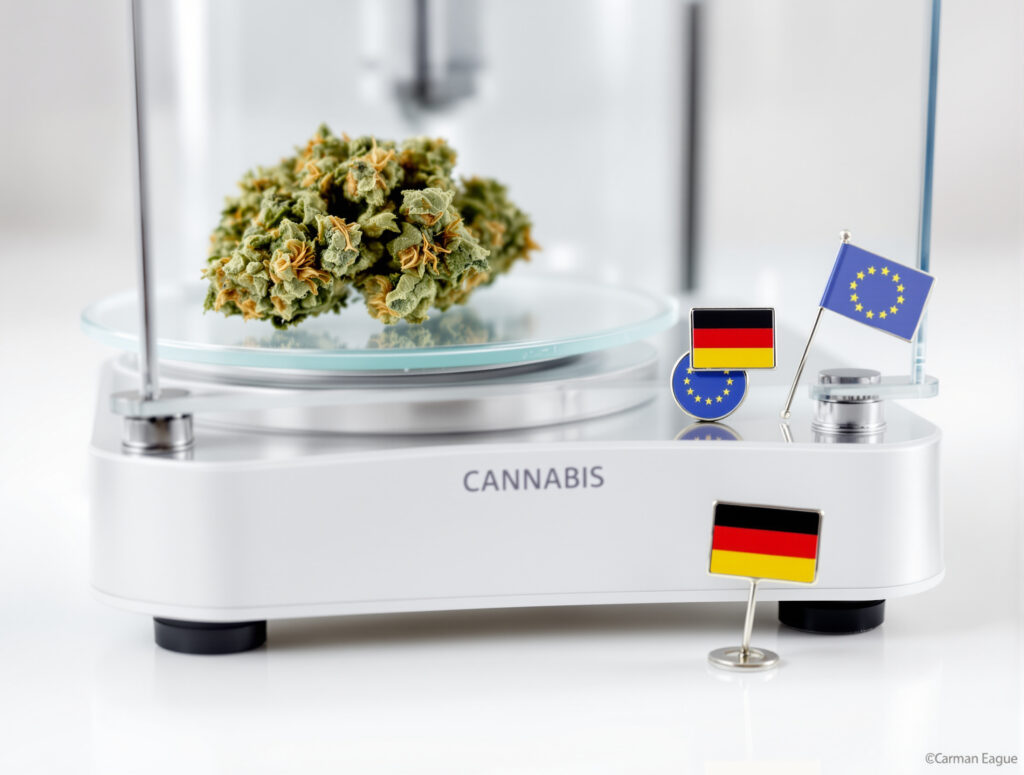
In Germany, permissible hemp content remains based on the Delta-9-THC value of 0.3 percent in dry matter. A shift to Total THC, as Congress has now enacted, would be compatible with EU law and politically not excluded in Berlin once substances like HHCPO, THCP, or Delta-8 enter public debate. Anyone currently producing or distributing intoxicating hemp products in Germany should factor in at least the risk of similar definitional shifts in their planning. The criminal severity of the American model—with federal liability beginning day one after the transition period—is rare in EU law. The regulatory mechanism itself—shifting definitions rather than drafting new criminal statutes—is not.
We previously examined the broader US context when the DEA formalized cannabis rescheduling to Schedule III in May. Both developments run parallel and together represent true US policy in 2026: less restriction in medicine, sharper definitional constraints on the hemp frontier. More context in our analysis of the US Schedule III decision and our reporting on France’s Novel Food tightening, which frames the EU tension field.
Frequently Asked Questions
When does the US hemp law take effect?
The new definition from Section 781 of the FY2026 Agriculture Appropriations Act was signed by President Trump on November 12, 2025. After a twelve-month transition period, it takes effect on November 13, 2026. Until then, existing contracts, inventory, and sales licenses remain formally valid.
Which products are specifically affected?
Essentially all hemp-derived products with psychoactive potential are affected: Delta-8-THC gummies and vapes, Delta-9-THC edibles derived from hemp, THCA-rich flower, semi-synthetic cannabinoids like HHC or HHCPO, plus tinctures and beverages with relevant THC content. Fiber hemp, hemp seeds, and industrial hemp products without psychoactive properties remain legal.
What distinguishes Total THC from Delta-9-THC?
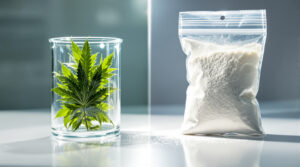
Delta-9-THC is the directly psychoactive form of the compound. Total THC additionally sums the precursor THCA, which converts to Delta-9-THC through heating (decarboxylation), plus related isomers such as Delta-8-THC. The new US calculation captures the potential cannabinoid content of a sample rather than only the currently active portion.
Does this affect the German cannabis market?
There are no direct legal consequences for Germany, since US federal law does not apply in the EU. Indirectly, however, market displacement effects are expected: US manufacturers will seek new sales markets, and the regulatory methodology—shifting to Total THC—is conceivable in EU member states. Anyone distributing intoxicating hemp products in Germany should prepare for a political debate.
Will Trump fix the law?
Trump has urged Congress to make corrective adjustments after signing the spending bill, particularly regarding veterans and small businesses. Whether this succeeds remains open. A standalone legislative fix requires majorities in both chambers; a solution through a future appropriations round is more likely, but not guaranteed.
Sollte die EU ähnlich strenge THC-Grenzwerte für Hanfprodukte einführen?
Sources: Akerman LLP (Recriminalization of Hemp-Derived THC Products in Federal Spending Bill, November 2025), Cannabis Business Times (Trump Calls on Congress to Fix Law Imposing a Forthcoming Hemp Product Ban, 2026), Vicente LLP (2026 Federal Hemp Ban: What It Means for the Future of Consumable Hemp Products), MPP Blog (President Trump Signs Ban on Most Hemp Products), Hanfjournal (Trump, THC und der Hanf-Hammer, 26.05.2026).



Branchen-Update
News, Analysen und Reportagen — mehrmals im Monat direkt in dein Postfach.