
What Tennessee Actually Banned
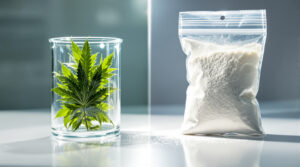
Tennessee enacted its smokable hemp prohibition in July 2026, after delaying implementation from the originally planned January 2026 date. The ban specifically targets smokable hemp products, with THCA-rich flowers bearing the brunt. THCA—tetrahydrocannabinolic acid—is the non-intoxicating precursor to THC that converts to THC when heated.
📑 Inhaltsverzeichnis
This chemical loophole had become the backbone of America’s hemp market. Federal law defines hemp solely by Delta-9-THC content, meaning THCA-dominant flowers legally qualified as hemp despite producing a cannabis-like effect when smoked. Industry estimates suggest such products represented roughly 75% of Tennessee’s market, worth approximately $250 million annually.
To address the issue, Tennessee simultaneously introduced a state excise tax on hemp products. The dual strategy aimed to regulate the market while generating revenue. The second objective failed spectacularly.


$425,000 Instead of $9.4 Million
Tennessee budgeted $130 million in hemp tax revenue for fiscal year 2026/27. July—the first full month under the new rules—generated just $425,000, less than 5% of projections. These figures come from the state’s Department of Finance and Administration.
The previous fiscal year already fell $55.8 million short of forecasts. Public broadcaster WPLN calculates total losses since implementation at approximately $54 million. Extrapolated over a full fiscal year, the shortfall reaches at least $110 million—a collapse exceeding 90%.
Your decisions have abandoned all those who depend on hemp for chronic pain relief. Everyone else now bears the tax burden.
Nashville Representative Aftyn Behn frames the crisis this way. Hemp farmer Lee Crabtree reports to WPLN that his operation can no longer sustain itself, with revenues never recovering to CBD-era levels.
Why Bans Can’t Eliminate Demand
The revenue collapse illustrates one critical reality: demand hasn’t disappeared—it’s simply become unmeasurable. Tennesseans seeking THCA flowers now shop in neighboring states, through mail order, or via unregulated channels. None of these routes generate tax revenue or require lab testing.
For state budgets, this creates a double burden. Anticipated revenue evaporates while enforcement and compliance costs persist. Licensed retailers that once performed age verification and maintained lab certificates lose their competitive advantage. Customer traffic shifts to vendors operating outside regulatory frameworks—a phenomenon prohibition researchers have documented for decades.
Implications for International Cannabis Policy
Germany faces analogous challenges under different circumstances. The nation grapples with hemp products that technically fall below legal THC thresholds yet still produce intoxication. HHC became subject to Germany’s Novel Psychoactive Substances Act in June 2024, while the „intoxication clause“ for industrial hemp remains contentious. Our modeling of actual industrial hemp misuse and the acquittal of an industrial hemp retailer in Bavaria underscore this debate. Portugal encountered the same conflict when banning HHC, as detailed in our analysis of its Schedule II-A classification.
The critical distinction lies in fiscal structure. Tennessee dismantled a legal, taxed market. Germany never established such a market for intoxicating hemp derivatives, so no revenues are at risk. Nevertheless, Tennessee’s experience demonstrates how expensive prohibition can become. Our reporting on financial reparations for previous cannabis bans illustrates the long-term fiscal consequences.
For policymakers analyzing the fiscal dimensions of cannabis regulation, Tennessee provides unusually clear data. Rarely does a single prohibition decision generate such clean tax-line accountability. The resulting figures are uncomfortable for both sides of the debate: they prove bans carry real costs while remaining silent on whether consumption actually declined.
Frequently Asked Questions
What is THCA?
THCA—tetrahydrocannabinolic acid—is the acidic precursor to THC found in living cannabis plants. In this form, it produces no intoxication. Heat application (smoking, vaping, or cooking) causes decarboxylation, transforming THCA into THC. This conversion mechanism was the entire premise of the American THCA market.
Why Does a Ban Generate Less Tax Revenue, Not More?
Because tax collection depends on legal sales channels. When legal sales disappear, the tax base vanishes. Consumer demand shifts to untaxed channels—neighboring states, mail order, unregulated suppliers. The state loses revenue while retaining enforcement and compliance expenses.
Are THCA Flowers Legal in Germany?
No. The American loophole exists because federal law defines hemp exclusively by Delta-9-THC content. German law adds an additional requirement: whether misuse for intoxication purposes can be excluded. Flowers intended for smoking fall outside the legal hemp exemption.
What’s the Precise Revenue Shortfall?
For July 2026, the finance department recorded approximately $425,000 against a projection of $9.4 million. Since implementation, WPLN’s investigation tallies roughly $54 million in losses. The current fiscal year is projected to miss targets by at least $110 million.
What Happens to Affected Businesses?
The pre-ban Tennessee market was valued at roughly $250 million annually. Retailers primarily selling smokable hemp lost their business foundation. Some operations are transitioning to non-smokable products. Reliable data on closures and job losses remains unavailable.
Sollten THCA-Blüten in Deutschland legal bleiben?
Sources: Tennessee Lookout, WPLN News, Marijuana Moment, Ganjapreneur, Tennessee Department of Finance and Administration.





Branchen-Update
News, Analysen und Reportagen — mehrmals im Monat direkt in dein Postfach.