Anyone looking to insulate their home ecologically will quickly encounter a raw material with a long tradition. Hemp is one of the oldest building materials of all and is experiencing a renaissance as a modern insulation material. Hemp insulation stores heat in winter, keeps heat out in summer, and regulates moisture in building components. This guide explains what thermal values this natural insulation material achieves, what the material costs per square meter, and what really matters when processing it.
📑 Inhaltsverzeichnis
- What is hemp insulation and how is it made?
- What thermal values does hemp insulation achieve?
- What does hemp insulation cost per square meter?
- How is hemp insulation processed in practice?
- What are the advantages and disadvantages of hemp insulation?
- Hemp insulation compared to mineral wool, wood fiber, and cellulose
- Frequently Asked Questions
- 💬 Fragen? Frag den Hanf-Buddy!
What is hemp insulation and how is it made?
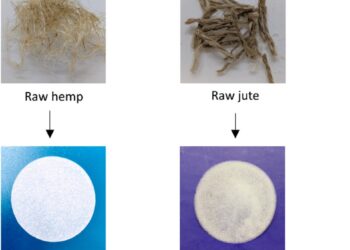
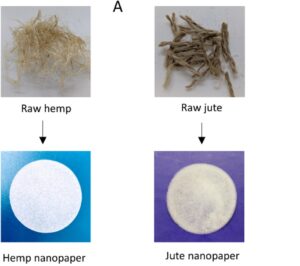
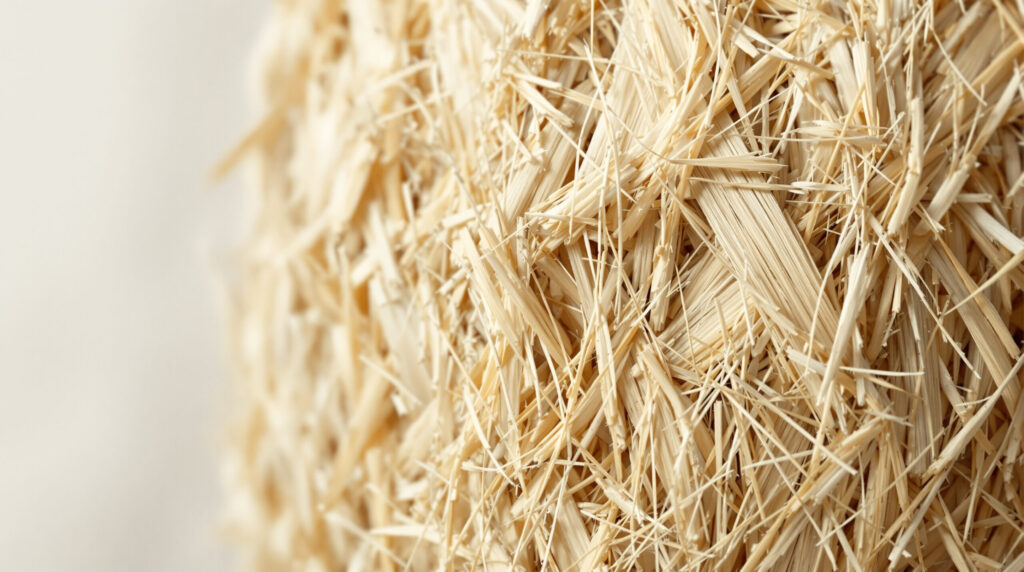
Hemp insulation consists of fibers from the utility hemp plant. After harvest, the stalks are retted and mechanically processed. This separates the long, tear-resistant bast fibers from the woody hemp shives. For insulation material production, the fibers are primarily used, matted into nonwovens and then further processed into mats or boards.
To keep the soft mats in shape, they need a support structure. Manufacturers typically mix in a small amount of polyester support fibers or use starch-based binders. The natural insulation material is available in several forms on the market. Most common are flexible compression felts and rolls for insulation between rafters and beams. There are also pressure-resistant boards, loose filling wool for cavities, and in some systems blow-in flakes.


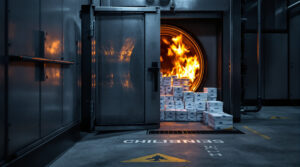
Fire protection is an important consideration. Pure plant fibers are flammable, so products are treated with a fire retardant. Many manufacturers use soda, or sodium carbonate, which is ecologically harmless. Older formulations relied on borate salts, which are now viewed more critically. When purchasing, it’s worth checking which fire retardant is used.
What thermal values does hemp insulation achieve?
The decisive value for any insulation material is thermal conductivity, specified as the Lambda value. Hemp insulation ranges from 0.040 to 0.045 W/(m·K) depending on the product. Particularly good mats achieve values around 0.040 W/(m·K). This places hemp in the solid middle range of natural insulation materials and just behind wood fiber, which achieves 0.038 to 0.040 W/(m·K) depending on the board.
The material’s true strength shows in summer heat protection. Hemp has high heat storage capacity. The insulation layer absorbs a lot of heat during the day and releases it only with significant delay. This so-called phase shift ensures that attic rooms under hemp insulation remain pleasantly cool in summer. This is precisely where mineral insulation materials like fiberglass fall clearly short.
Moisture is another strength of this raw material. The water vapor diffusion resistance is very low at a value of 1 to 2. This means the insulation is diffusion-open and allows moisture to pass through unimpeded. Hemp can absorb moisture, store it temporarily, and release it again without losing its insulating effect. In a carefully designed building physics wall assembly, this property prevents mold and building damage. Additionally, the fibers dampen sound, which is why hemp is often used for impact sound and room acoustics.
What does hemp insulation cost per square meter?
The pure material costs for hemp insulation in 2026 are approximately 15 to 30 euros per square meter. The price depends heavily on the insulation thickness. A 10-centimeter-thick mat costs around 15 euros per square meter, while a 20-centimeter-thick variant quickly reaches 25 euros or more. This makes hemp more expensive than conventional mineral wool, but is within the normal range for ecological insulation materials and roughly comparable to flax and wood fiber.
Installation costs must be added to the material costs. Those who insulate themselves save considerably, as hemp mats are relatively easy to install. If you hire a specialist contractor, you should expect an additional 20 to 50 euros per square meter for labor, depending on the building component and effort involved. The exact amount depends on whether a roof slope, facade, or floor is being insulated.
Government subsidies are an important aspect. The Federal Funding for Efficient Buildings, or BEG, supports insulation measures regardless of material. Through BAFA there is a subsidy of 15 percent of eligible costs. If you implement the measure as part of an individual renovation roadmap, you receive an additional 5 percent bonus, bringing total support up to 20 percent. This applies to hemp as well as any other approved insulation material and noticeably reduces effective costs.
How is hemp insulation processed in practice?
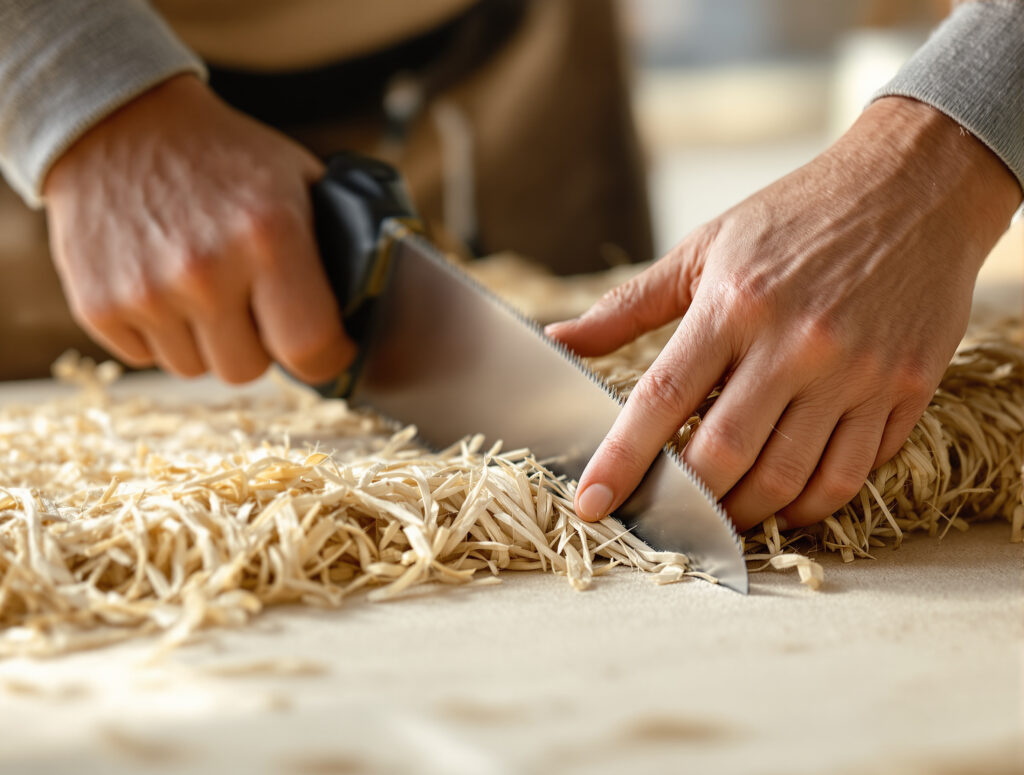
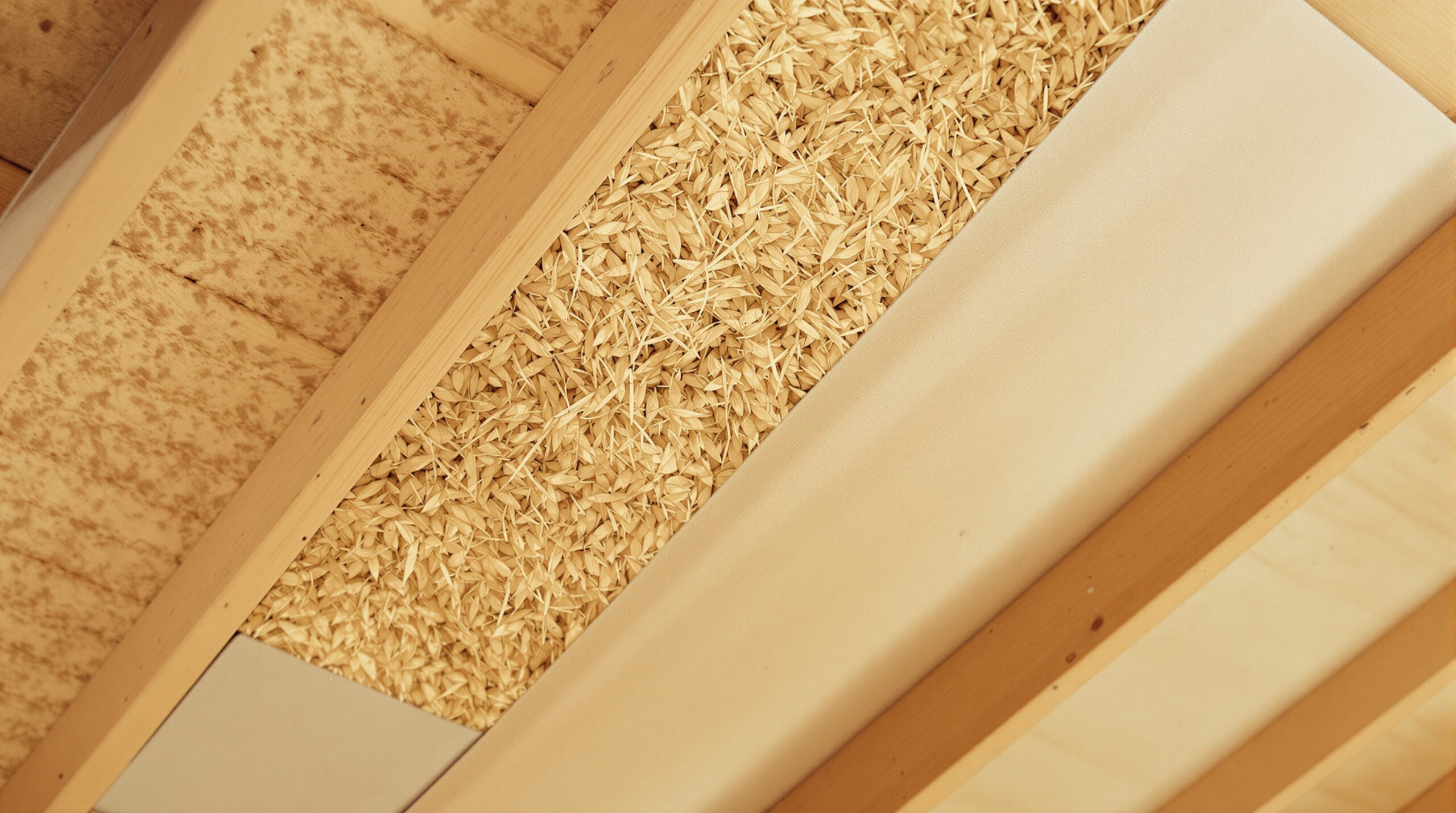
The most common installation location for hemp mats is between-rafter roof insulation. The flexible compression felts are cut approximately two centimeters wider than the clear distance between the rafters. This allows them to clamp themselves in place without creating gaps where heat escapes. A simple insulation knife or handsaw with coarse teeth is sufficient for cutting.
A major advantage over mineral wool shows in handling. The hemp fibers don’t itch and don’t irritate skin or airways. Gloves, safety glasses, and respiratory masks are therefore usually unnecessary, making the work far more pleasant for home improvers. The typical construction dust is also largely avoided.
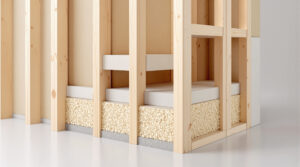
Besides roofs, hemp is excellent for insulating timber frame walls, interior insulation, and dry construction. Our article on wall assembly in timber frame construction with hemp insulation shows how such a system works in detail. Proper moisture protection is crucial in any case. The room-side requires an appropriate vapor barrier to prevent uncontrolled moisture entry into the structure. With proper planning, the insulation remains functional for decades.
What are the advantages and disadvantages of hemp insulation?
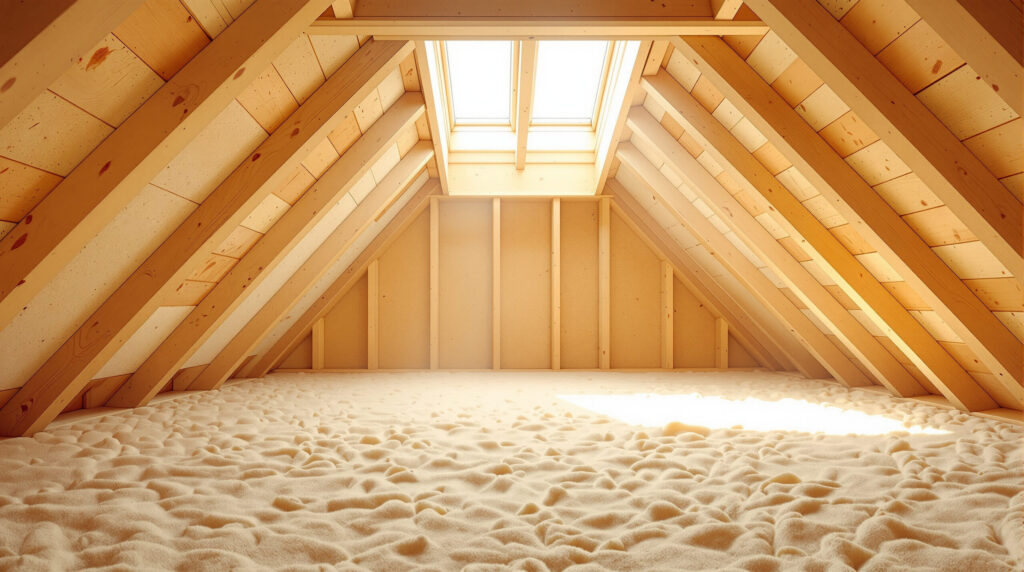
The greatest advantage of hemp insulation is its environmental impact. The hemp plant grows quickly, requires little pesticide treatment, and binds large amounts of carbon dioxide during growth. This CO2 remains stored in the installed insulation material throughout its entire service life. At the end of its lifecycle, the material can be composted or thermally recovered. Add to this the already-described summer heat protection, moisture regulation, and pleasant processing.
Another plus is natural resistance. Pests and rodents avoid the material because the plant naturally offers little nutritional value to them. Hemp is also robust against mold, as long as the wall assembly remains diffusion-open.
There are some disadvantages to consider. The most obvious is the price, which exceeds that of conventional insulation materials. Without additives, hemp achieves only building material class B2 for fire protection and is thus considered normally flammable. Only treatment with soda or another fire retardant ensures acceptable fire behavior. Additionally, the natural insulation material is sensitive to permanent moisture penetration. A wall assembly without carefully planned moisture protection can reduce insulating effect. However, those who consider these points during planning receive a durable and healthy insulation material.
Hemp insulation compared to mineral wool, wood fiber, and cellulose
In direct comparison with mineral wool, hemp performs slightly worse in pure insulating performance, as its thermal conductivity is somewhat higher. In heat protection, indoor health, and environmental impact, however, the relationship clearly shifts in favor of the natural product. Mineral wool is cheaper and non-combustible, but causes itching during processing and is harder to recycle at end of life.
Within ecological insulation materials, hemp competes with wood fiber and cellulose. Wood fiber is the market leader among natural insulation materials and offers slightly better thermal conductivity and high bulk density for heat protection. Cellulose from recycled waste paper is the most economical option and can be blown in particularly well. Hemp scores points with its excellent moisture regulation and skin-friendly processing. For many builders, it represents the ideal compromise between ecology, comfort, and performance.
Hemp is far from being present in construction only as an insulation material. Our guide on building with hemp provides a comprehensive overview of all applications. Those interested in the solid building material will find further information in our article on hemp concrete and hempcrete. A special form of interior insulation is represented by hemp-lime for interior insulation. Our complete guide to hemp and industry shows how this entire raw material fits economically.
Frequently Asked Questions
How well does hemp insulate compared to mineral wool?
Hemp’s thermal conductivity ranges from 0.040 to 0.045 W/(m·K), slightly above good mineral wool. At equal insulation thickness, mineral wool therefore insulates minimally better. Hemp compensates for this small disadvantage through its significantly better summer heat protection and moisture regulation.
What does hemp insulation cost per square meter?
Material costs range from approximately 15 to 30 euros per square meter depending on insulation thickness. Installation by a specialist contractor adds another roughly 20 to 50 euros per square meter. Through BEG subsidies, up to 20 percent of costs can be recovered.
Is hemp insulation flammable?
Pure hemp fibers are flammable and achieve building material class B2, thus considered normally flammable. For this reason, insulation products are treated with a fire retardant, usually with ecologically harmless soda. Treated mats show significantly improved fire behavior and are approved for residential construction.
Can you install hemp insulation yourself?
Yes, hemp mats are very suitable for installation as a DIY project. The fibers don’t itch and don’t irritate airways, so no special protective equipment is necessary. For between-rafter insulation, cut the mats slightly wider so they clamp themselves in place.
Is hemp insulation really sustainable?
Hast du schon einmal mit Hanfdämmung gebaut oder gedämmt?
Hemp ranks among the most sustainable insulation materials available. The plant grows back quickly, binds carbon dioxide during growth, and requires minimal pesticide treatment. The stored CO2 remains bound in the building component throughout its service life, and the material is compostable or thermally recoverable at the end.






Branchen-Update
News, Analysen und Reportagen — mehrmals im Monat direkt in dein Postfach.
Folge uns