• Kolumnen
    • Interviews
  • Hanf Allgemein
    • Gesellschaft & Soziales
  • Drogenkunde
    • Safer Use
    • Pflanzliche Drogen
  • Produkte
  • Strain Reviews
  • Print Magazin
  • Tools
Mittwoch, Juni 24, 2026
Hanf Magazin
  • News
  • Medizin
    • Cannabinoide
    • Erkrankungen
    • Cannabis bei Tieren
    • Erfahrungsberichte
  • Recht & Politik
    • Deutschland
    • Österreich
    • Schweiz
    • International
    • Rechtslage DE
    • Rechtslage International
  • Wissenschaft
    • Studien
    • Forschung
  • Growing
    • Indoor-Growing
    • Outdoor-Growing
    • Strains & Reviews
    • Equipment
  • Nutzhanf
    • Baustoffe
    • Rohstoffe
    • Lebensmittel
    • Kleidung
    • Kosmetika
  • Wirtschaft
  • Konsum & Lifestyle
    • Rauchen
    • Vaporisieren
    • Essen & Rezepte
    • Kultur & Szene
    • Termine & Events
No Result
View All Result
  • News
  • Medizin
    • Cannabinoide
    • Erkrankungen
    • Cannabis bei Tieren
    • Erfahrungsberichte
  • Recht & Politik
    • Deutschland
    • Österreich
    • Schweiz
    • International
    • Rechtslage DE
    • Rechtslage International
  • Wissenschaft
    • Studien
    • Forschung
  • Growing
    • Indoor-Growing
    • Outdoor-Growing
    • Strains & Reviews
    • Equipment
  • Nutzhanf
    • Baustoffe
    • Rohstoffe
    • Lebensmittel
    • Kleidung
    • Kosmetika
  • Wirtschaft
  • Konsum & Lifestyle
    • Rauchen
    • Vaporisieren
    • Essen & Rezepte
    • Kultur & Szene
    • Termine & Events
No Result
View All Result
Hanf Magazin
No Result
View All Result
Home Nutzhanf für verschiedene Anwendungen Baustoffe aus Hanf einsetzen

Building with Hemp: Insulation, Concrete, and Composites Overview

von Jonas Reuter
24.05.2026
in Baustoffe aus Hanf einsetzen, Nutzhanf für verschiedene Anwendungen
Lesezeit: 8 Minuten
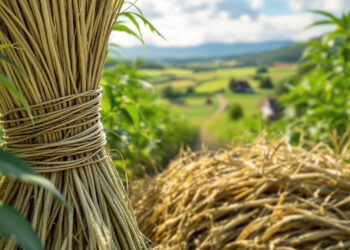
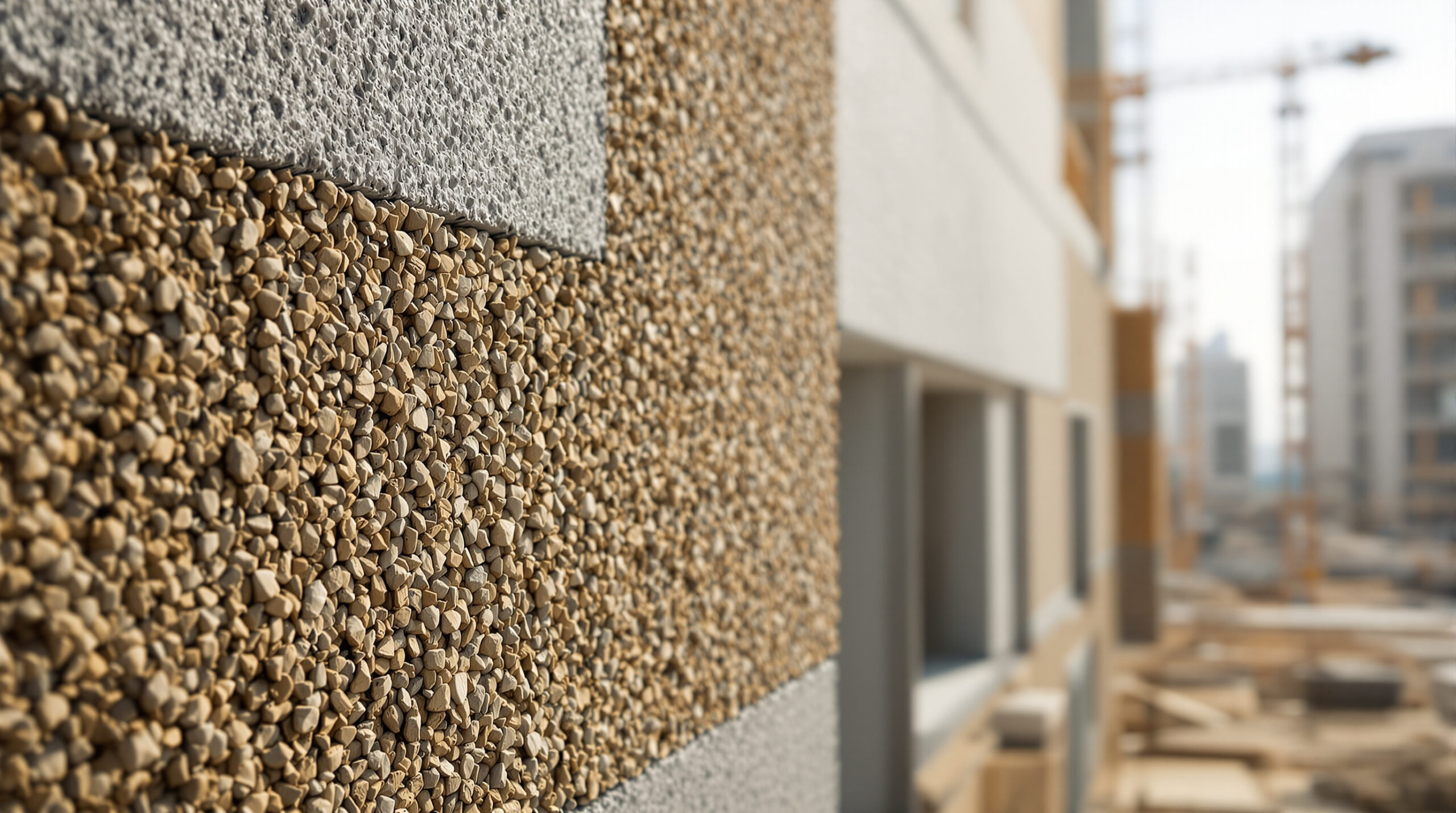
Nahaufnahme von Hanfschäben als Baustoffzuschlag auf Baustelle
⏱ 11 Min. Lesezeit·2.099 Wörter
Teilen:WhatsAppFacebookXLinkedInE-Mail
🌐 This article was automatically translated from German. Browse all English articles

Building with hemp is no longer eco-romanticism in 2026, but an established branch of resource-efficient construction. Architects, building physicists, and renovation planners turn to hempcrete, hemp insulation, and fiber-reinforced composites when a building’s CO₂ balance must add up over its entire lifespan. This overview shows which hemp building materials are market-ready today, where their building physics strengths lie, and where planning and funding structures still need to catch up.

📑 Inhaltsverzeichnis

  1. From Field to Building Material: What the Hemp Plant Delivers to Architecture
  2. Hempcrete and Hemp Lime: The Non-Load-Bearing Multipurpose Solution for Walls and Ceilings
  3. Hemp Insulation in Comparison: Lambda Values, Summer Heat, and Room Climate
  4. Hemp in Composites: From Car Body Parts to Furniture Panels
  5. Economics, Funding, and Standardization: Where Hemp Building Stands in 2026
  6. Practical Tips for Building Owners and Planners
  7. Frequently Asked Questions
  8. 💬 Fragen? Frag den Hanf-Buddy!

The plant supplies not only shives for wall assemblies or fibers for insulation mats, but also flour for bio-resins and pellets for dry screed. Building with hemp therefore means: a single raw material can be processed in a building from the foundation connection through infill insulation to door paneling. Those who understand the material plan more precisely and weigh additional costs against long-term benefits in room climate and deconstruction.

From Field to Building Material: What the Hemp Plant Delivers to Architecture

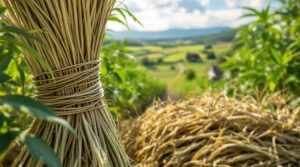
Fiber hemp is one of the oldest cultivated plants in Central Europe, and this regional cultivation is precisely what makes it architecturally interesting. The plant grows in about 100 days, requires minimal crop protection, and binds considerable amounts of carbon dioxide during growth. Depending on variety and weather, up to 15 tons of dry matter per hectare land as stalk material in the field, of which approximately 65 percent are shives and 30 percent fiber. Both fractions are directly usable in construction.


GanjaFarmerGanjaFarmer

The woody shives are chopped, dedusted, and calibrated before being bound in mineral binders. The long bast fibers go into nonwovens, insulation mats, or injection-molded granulates. Even the fine residual dusts from processing find use as pellets or as an additive in clay plasters. This high degree of utilization is what sets hemp’s ecological footprint so clearly apart from conventional building materials. More on the material logic behind this can be found in our background article Carbon storage with hemp and wood.

Important for sizing in building construction is that hemp products are naturally grown materials. Property variation is therefore greater than with industrial foams. Reputable manufacturers document their batches with data sheets according to DIN EN 13171 for fiber insulation materials or corresponding approvals for hempcrete. Reading the data sheet immediately shows whether bulk density, thermal conductivity, and fire behavior meet the requirements of the building task.

Hempcrete and Hemp Lime: The Non-Load-Bearing Multipurpose Solution for Walls and Ceilings
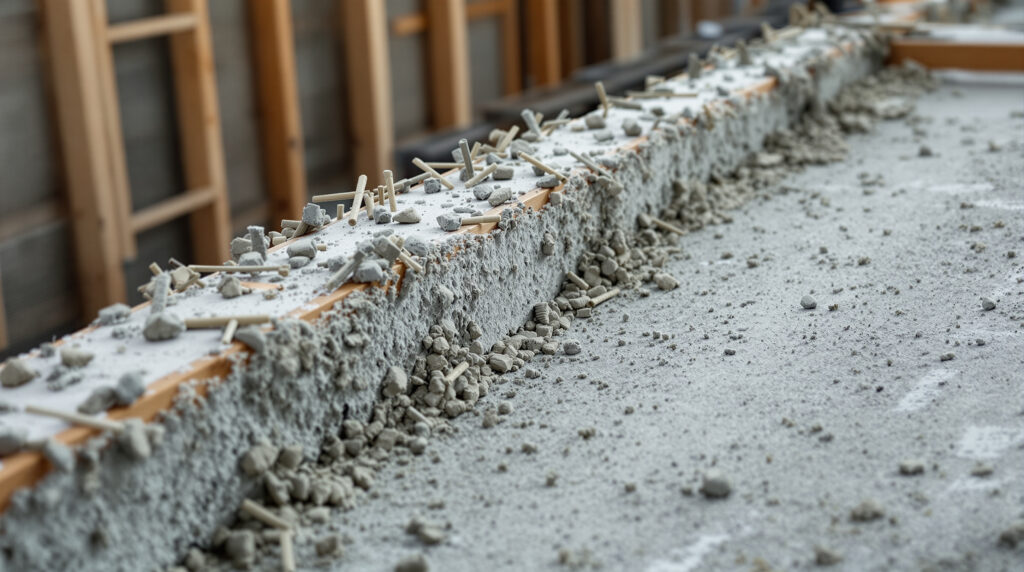
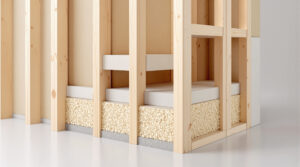
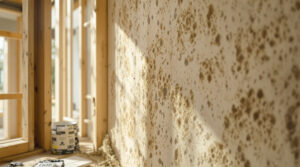
Formwork with fresh hempcrete in wall assembly, visible texture

Hempcrete, often called hemp lime in German-speaking technical terminology, is the best-known application. The material consists in the classical recipe of hemp shives, fat lime or hydraulic lime, and water. Some mixes also contain trass cement or pozzolanas to accelerate carbonation. The material is either placed on-site in formwork, applied as sprayed concrete, or mortared as prefabricated hemp stone.

From a building physics perspective, it is a composite material in the literal sense. The shives form an air-filled load-bearing skeleton, the lime envelops each grain and ensures durability. This results in a bulk density of 220 to 500 kilograms per cubic meter, depending on the recipe. Thermal conductivity ranges between 0.06 and 0.09 watts per meter and kelvin. Hempcrete is thus more insulating than any ordinary masonry brick, but not as efficient as a pure insulation material.

The decisive point for statics: hempcrete is non-load-bearing. It assumes no load transfer and is therefore almost always used in combination with a timber frame structure, occasionally also with a reinforced concrete skeleton. The load-bearing layer handles load transfer, the hemp lime takes on thermal protection, sound insulation, and moisture buffering in a single layer. This bundling of functions is what architects appreciate, as it saves wall assemblies and layers. A detailed presentation of material properties is provided in our technical article on hempcrete and its applications.

The carbonation of the lime binds additional carbon dioxide from the air. Over the entire lifespan of a house, this results in a negative greenhouse gas balance per square meter of wall. The ecological cost advantage is offset by two practical disadvantages. First, hempcrete dries slowly—depending on weather, hardening takes several weeks. Second, a cubic meter costs between 80 and 160 euros in material value, roughly 10 to 15 percent more than conventional lightweight concrete. Labor costs, however, are often lower due to simple processing.

Hemp Insulation in Comparison: Lambda Values, Summer Heat, and Room Climate
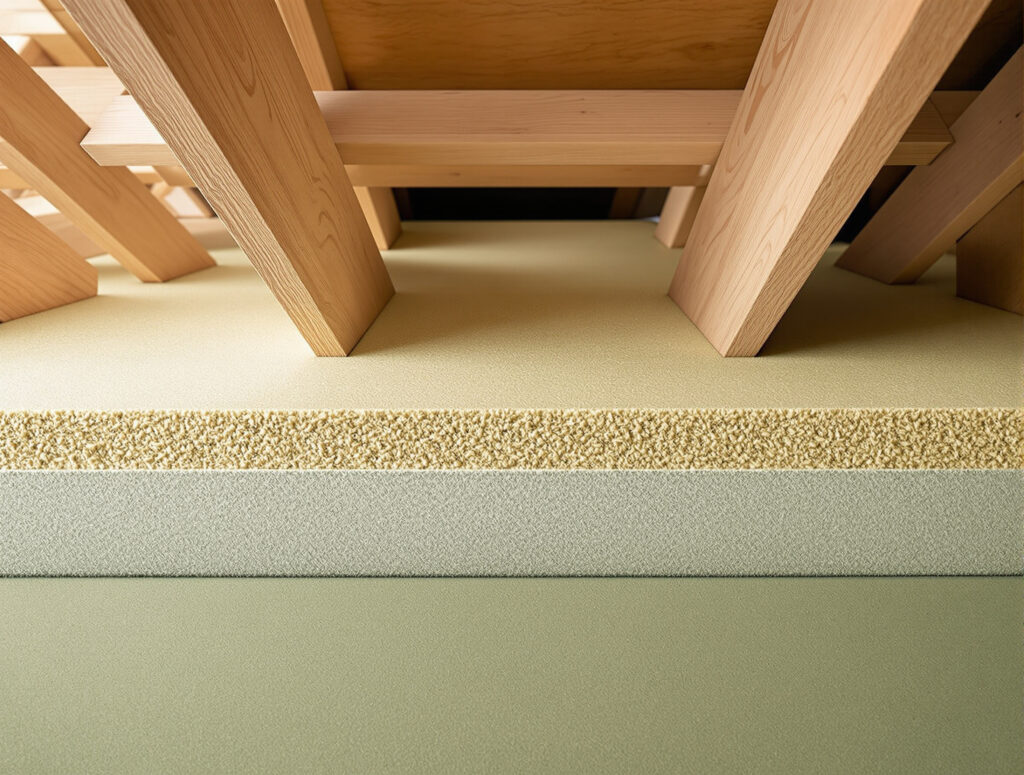
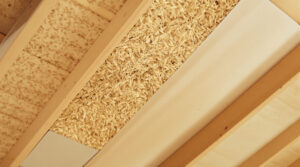
Cross-section of roof insulation with hemp fiber mat between rafters

Hemp insulation materials are available as mats, felts, loose fiber, and blown flocks. Thermal conductivity values between 0.038 and 0.042 watts per meter and kelvin are in the range of classical mineral wool. To achieve a U-value of 0.15 watts per square meter and kelvin, hemp must be installed approximately 15 to 25 percent thicker than high-performance EPS. In most building components, this corresponds to two to four centimeters of additional thickness, which is easily achievable in the rafter field of a pitched roof.

The real strength of hemp insulation shows itself in summer thermal protection. Specific heat capacity is around 1700 joules per kilogram and kelvin, nearly double that of mineral wool. This means: roof spaces insulated with hemp heat up noticeably later on hot days. The phase shift moves the maximum temperature under the roof to late evening hours, when ventilation becomes possible again anyway. In 2026, in the context of increasingly frequent heat waves, this is a hard functional advantage.

Hemp is hygroscopic and regulates moisture in building components without significantly losing its insulating effect. This reduces mold risk in vapor diffusion zones, where synthetic insulation materials frequently cause condensation problems. In terms of fire performance, most hemp products achieve class E according to DIN EN 13501-1; in combination with clay or gypsum cladding, wall assemblies up to F90 are possible. This makes hemp unrestricted for residential construction and smaller commercial buildings.

In deconstruction, hemp plays its decisive trump card. Mats can be removed from the building component, shredded, and either re-blown or composted. No special waste is created, and no pollutants reach the soil. Those planning to deconstruct or repurpose a building in 50 years calculate this point today. More on the ecological positioning of various building materials is found in the guide Hemp as an ecological building material.

Hemp in Composites: From Car Body Parts to Furniture Panels

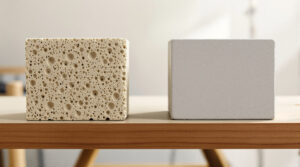
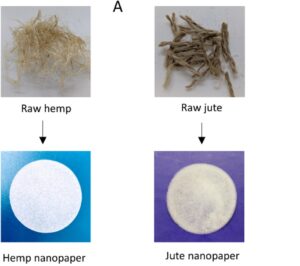
Hemp fiber composite panel in studio, visible fiber structure

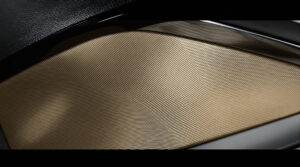
Beyond conventional building construction, hemp plays a growing role in technical composites. Bast fibers are processed with bio-resins or thermoplastic matrices into pressed parts finding their way into furniture manufacturing, interior design, and automobile production. On average, a German new vehicle contains around 3.6 kilograms of natural fibers from hemp, flax, or cotton, installed in door panels, parcel shelves, and seat padding. Manufacturers appreciate the low density, good sound-damping properties, and significantly better CO₂ balance compared to glass fiber.

In construction, hemp fiber-reinforced pressed panels are offered as furniture carriers, acoustic panels, or dry-lining boards. Manufacturers work with PLA, polyurethane, or lignin-based binders, depending on required moisture resistance. Such panels are formaldehyde-free, lighter than particle boards of equal thickness, and offer an interesting property profile for interior fit-out in schools, kindergartens, and hospitals. In dry-lining work, they increasingly replace OSB where living space health matters.

Exciting is the development of bio-based injection-molding granulates. These pellets consist of hemp flour or fine shives and a biodegradable matrix. They process on standard injection-molding machines and enable components from wall brackets to ventilation grilles. The market is still young, but the transition from research laboratory to series production has accelerated noticeably in recent years. The background of this development is illuminated in our article on the hemp fiber megatrend.

💬 Hanf-Buddy — dein Cannabis-Experte
🌿 Fragen zu diesem Thema? Schreib einfach los — ich helfe dir!

Bitte verifiziere deine E-Mail. Wir haben dir einen 6-stelligen Code geschickt.

Danke für den Chat! 😊 Abonniere unseren Newsletter für mehr:

Zum Newsletter

Economics, Funding, and Standardization: Where Hemp Building Stands in 2026

The cost question is the most common stumbling block in hemp building. Raw hempcrete costs roughly 20 to 40 euros per cubic meter more than conventional wall systems, a finished hemp fiber insulation mat runs approximately 30 percent higher in material price than comparable mineral wool. Additional costs are partially offset by reduced heating and cooling expenses, but especially by higher resale values of sustainable properties. Banks and insurers are beginning to assess the ecological standard as a risk parameter.

On the funding side, 2026 offers no special bonus for hemp, but general programs apply. Through the Federal Funding for Efficient Buildings, individual measures such as roof or exterior wall insulation can receive subsidies of up to 20 percent, provided the required U-values are achieved. Those planning an Efficiency House standard according to KfW-261 can additionally claim the bonus for renewable raw materials or the Sustainable Building quality seal. Expert energy consultation is mandatory here.

The second major constraint is standardization. Hempcrete currently lacks a harmonized product standard in Germany and is instead placed on the market via general building authority approvals or individual case permits. Even European CE marking through a European Technical Assessment is only available for individual systems. This makes planning and tendering more complex than with standardized building materials. The current discussion status on the standardization bottleneck is found in our article on hemp in the building materials industry.

At the same time, the supplier landscape is growing. In Germany, Austria, and Switzerland, several facilities for hemp stones, spray concrete systems, and fiber insulation materials are in operation, with additional capacity being built in 2026. The real bottleneck currently is less the fiber than the slaked fat lime needed for high-quality recipes. Those planning a larger project should secure delivery quantities with adequate lead time. With each completed building, the database for building physics grows, and with each data series, the confidence of structural planners and building authorities increases.

Practical Tips for Building Owners and Planners

Those considering building a house with hemp or tackling a renovation with hemp building materials should bring the right specialists to the table early. An architecture firm with timber construction experience is a good starting point, as the structural logic of hemp-filled timber frame buildings is familiar there. Additionally, a building physicist who calculates the hygrothermal simulation of exterior walls is worthwhile. In hemp assemblies, the critical dew point level shifts relative to conventional construction, and only a properly calculated simulation shows whether the assembly actually remains dry during winter.

Three criteria play a role in selecting suppliers. First, availability of data sheets with bulk density, lambda value, sd-value, and fire behavior. Second, approval status—whether the chosen system has general building authority approval or a European Technical Assessment. Third, regional proximity, as transporting heavy wall building materials over large distances noticeably worsens the ecological footprint. A hemp stone plant 200 kilometers away is climatically far better than a shipment from overseas.

Those wishing to take the first step on a smaller scale often begin with interior insulation. Hemp lime interior insulation on an uninsulated exterior wall measurably improves comfort and is achievable with manageable effort. Building owners often notice the improved room climate already in the first heating season. This experience frequently leads to the decision to consistently pursue renewable raw materials in the next construction phase. In this way, a small renovation step gradually becomes a thoroughly sustainable building.

Frequently Asked Questions

Is hempcrete load-bearing?

No. Hempcrete assumes no load transfer and is therefore almost always built on a load-bearing skeleton of timber or reinforced concrete. The load-bearing layer carries floor loads, while hempcrete provides thermal protection, sound insulation, and moisture buffering in one layer. This combination has been proven for years in timber construction.

How high are the additional costs compared to conventional construction?

In material, hempcrete and hemp insulation run roughly 10 to 30 percent above conventional products. Add lower labor costs during processing and long-term benefits from heat storage and moisture buffering. Viewed over the life cycle, the gap often closes, especially in well-insulated new construction or renovation of older buildings with high comfort demands.

How does hemp insulation perform in a fire?

Most hemp insulation materials achieve fire class E according to DIN EN 13501-1, treated with soda or borate salt. In combination with gypsum board, clay, or wood fiber panels, tested wall assemblies of fire-resistance class F90 can be realized. This fulfills requirements for residential construction and many special buildings.

Is hemp suitable for renovation of existing buildings?

Yes, the material shows particular strengths there. Hempcrete can be sprayed onto existing masonry interiors and creates diffusion-open interior insulation without critical dew point problems. Hemp mats can be wedged into rafter fields without requiring complete gutting. This makes the system particularly interesting for timber frame, natural stone, and pre-war buildings.

Is there special KfW funding for hemp building materials in 2026?

📊 Deine Meinung zählt

Kannst du dir Hanf als Baustoff für dein Zuhause vorstellen?

✓
Danke für deine Stimme!

No dedicated hemp funding exists, but general programs under the Federal Funding for Efficient Buildings apply. Those achieving the required U-values and efficiency standards with hempcrete or hemp insulation receive standard subsidies or subsidized loans through KfW and BAFA. In combination with the Sustainable Building quality seal, bonus tranches are possible. Certified energy consultation is a prerequisite and should be commissioned before construction begins.


HE Abverkauf
Kannabia
Dr. Mang
MedCanOneStop
Khalifa Genetics
Royal Queen Seeds #1

Das könnte dich auch interessieren

  • → Wasserrohre abdichten: Warum dichtet Hanf, ist Hanf besser?
  • → Hanf wächst weltweit
  • → Revolution im Wind – Hanf als nachhaltiges Material für Windräder der Zukunft

Branchen-Update

News, Analysen und Reportagen — mehrmals im Monat direkt in dein Postfach.

Folge uns

Was dich auch interessieren könnte...

Whey-Protein und Hanfprotein-Pulver in separaten Schalen nebeneinander

Hanfprotein vs. Whey: Der große Proteinvergleich

17. Juni 2026
CBD-Öltropfen auf Pipette über Hautoberfläche in Makroaufnahme

CBD in der Hautpflege: Was die Forschung wirklich zeigt

14. Juni 2026
InstagramYouTubeFacebookLinkedIn
Tags: HanfbetonhanffaserhanfschäbenindustriehanfNachhaltigkeitnutzhanf

Related Posts

Whey-Protein und Hanfprotein-Pulver in separaten Schalen nebeneinander
Lebensmittel aus Hanf

Hanfprotein vs. Whey: Der große Proteinvergleich

von Mara König
17. Juni 2026
Hanfsamen in Nahaufnahme mit typischer marmorierter Musterung
Lebensmittel aus Hanf

Hanfsamen: Nährstoffprofil, Anwendung und die besten Produkte

von Mara König
10. Juni 2026
🛠️ Tool-Tipp
⚗️EC / PPM Konverter
Nährlösungs-Stärke umrechnen
→ Alle 10 Tools im Werkzeugkasten

Folge uns bei:

  • 38.8k Fans
  • 52.8k Followers
  • 3.5k Followers
  • 573 Followers
📰

Seit 2015

📝

4647+ Artikel

👥

180.000+ Leser/Monat

🏆

DACH #1 Cannabis-Magazin

Über uns

Hanf Magazin ist das führende deutschsprachige Fachmagazin für Cannabis — von der Pflanze bis zur Politik, von der Medizin bis zum Genuss.

Instagram Facebook LinkedIn

Themen

Cannabis News Medizin & Forschung Growing & Anbau Strain Reviews Nutzhanf & Rohstoffe Konsum & Rezepte Recht & Politik Wissenschaft & Studien

Beliebte Artikel

Sanity Group und Astrasana: avaay-Medizinalcannabis für den Schweizer MarktWie vaporisiere ich richtig?Warum Vaporisieren gesünder istWas ist Cannabidiol?Kiffen in der Schwangerschaft?

Branchen-Update

Cannabis-News direkt in dein Postfach.

Für Unternehmen

Werben auf Hanf Magazin Mediadaten HM Ventures Jobs & Karriere Tools & Rechner

Weitere Themen

  • Kolumnen
  • Hanf Allgemein
  • Drogenkunde
  • Produkte
  • Strain Reviews
  • Print Magazin
  • Tools

© 2026 Hanf Magazin

Impressum Datenschutz AGB Kontakt Presse
WhatsAppFacebookXE-Mail
No Result
View All Result
  • News
  • Medizin
    • Cannabinoide
    • Erkrankungen
    • Cannabis bei Tieren
    • Erfahrungsberichte
  • Recht & Politik
    • Deutschland
    • Österreich
    • Schweiz
    • International
    • Rechtslage DE
    • Rechtslage International
  • Wissenschaft
    • Studien
    • Forschung
  • Growing
    • Indoor-Growing
    • Outdoor-Growing
    • Strains & Reviews
    • Equipment
  • Nutzhanf
    • Baustoffe
    • Rohstoffe
    • Lebensmittel
    • Kleidung
    • Kosmetika
  • Wirtschaft
  • Konsum & Lifestyle
    • Rauchen
    • Vaporisieren
    • Essen & Rezepte
    • Kultur & Szene
    • Termine & Events
  • Kolumnen
  • Interviews
  • Hanf Allgemein
  • Gesellschaft & Soziales
  • Drogenkunde
  • Safer Use
  • Pflanzliche Drogen
  • Produkte
  • Strain Reviews
  • Print Magazin
  • Tools

©2026 Hanf Magazin

Datenschutz-Einstellung

Wir nutzen Cookies auf hanf-magazin.com. Einige von ihnen sind essenziell notwendig, andere helfen unsere Website und deine Nutzer-Erfahrungen zu verbessern. Wenn Sie unter 16 Jahre alt sind und Ihre Zustimmung zu freiwilligen Diensten geben möchten, müssen Sie Ihre Erziehungsberechtigten um Erlaubnis bitten. Wir verwenden Cookies und andere Technologien auf unserer Website. Einige von ihnen sind essenziell, während andere uns helfen, diese Website und Ihre Erfahrung zu verbessern. Personenbezogene Daten können verarbeitet werden (z. B. IP-Adressen), z. B. für personalisierte Anzeigen und Inhalte oder Anzeigen- und Inhaltsmessung. Weitere Informationen über die Verwendung Ihrer Daten finden Sie in unserer Datenschutzerklärung. Sie können Ihre Auswahl jederzeit unter Einstellungen widerrufen oder anpassen.

  • Essenziell
  • Marketing
  • Externe Medien

Alle akzeptieren

Nur essenzielle Cookies akzeptieren

Individuelle Datenschutzeinstellungen

Cookie-Details Datenschutzerklärung Impressum

Datenschutzeinstellungen Datenschutzeinstellungen

Wenn Sie unter 16 Jahre alt sind und Ihre Zustimmung zu freiwilligen Diensten geben möchten, müssen Sie Ihre Erziehungsberechtigten um Erlaubnis bitten. Wir verwenden Cookies und andere Technologien auf unserer Website. Einige von ihnen sind essenziell, während andere uns helfen, diese Website und Ihre Erfahrung zu verbessern. Personenbezogene Daten können verarbeitet werden (z. B. IP-Adressen), z. B. für personalisierte Anzeigen und Inhalte oder Anzeigen- und Inhaltsmessung. Weitere Informationen über die Verwendung Ihrer Daten finden Sie in unserer Datenschutzerklärung. Hier finden Sie eine Übersicht über alle verwendeten Cookies. Sie können Ihre Einwilligung zu ganzen Kategorien geben oder sich weitere Informationen anzeigen lassen und so nur bestimmte Cookies auswählen.

Alle akzeptieren Speichern Nur essenzielle Cookies akzeptieren

Zurück

Datenschutzeinstellungen

Essenzielle Cookies ermöglichen grundlegende Funktionen und sind für die einwandfreie Funktion der Website erforderlich.

Cookie-Informationen anzeigen Cookie-Informationen ausblenden

Name
AnbieterEigentümer dieser Website, Impressum
ZweckSpeichert die Einstellungen der Besucher, die in der Cookie Box von Borlabs Cookie ausgewählt wurden.
Cookie Nameborlabs-cookie
Cookie Laufzeit1 Jahr

Marketing-Cookies werden von Drittanbietern oder Publishern verwendet, um personalisierte Werbung anzuzeigen. Sie tun dies, indem sie Besucher über Websites hinweg verfolgen.

Cookie-Informationen anzeigen Cookie-Informationen ausblenden

Akzeptieren
Name
AnbieterGoogle Ireland Limited, Gordon House, Barrow Street, Dublin 4, Ireland
ZweckCookie von Google für Website-Analysen. Erzeugt statistische Daten darüber, wie der Besucher die Website nutzt.
Datenschutzerklärung https://policies.google.com/privacy?hl=de
Cookie Name_ga,_gat,_gid
Cookie Laufzeit2 Jahre

Inhalte von Videoplattformen und Social-Media-Plattformen werden standardmäßig blockiert. Wenn Cookies von externen Medien akzeptiert werden, bedarf der Zugriff auf diese Inhalte keiner manuellen Einwilligung mehr.

Cookie-Informationen anzeigen Cookie-Informationen ausblenden

Akzeptieren
Name
AnbieterMeta Platforms Ireland Limited, 4 Grand Canal Square, Dublin 2, Ireland
ZweckWird verwendet, um Facebook-Inhalte zu entsperren.
Datenschutzerklärung https://www.facebook.com/privacy/explanation
Host(s).facebook.com
Akzeptieren
Name
AnbieterSoundcloud
ZweckWird verwendet, um Soundcloud Inhalte zu entsperren.
Datenschutzerklärung https://soundcloud.com/pages/privacy
Host(s)soundcloud.com
Akzeptieren
Name
AnbieterMeta Platforms Ireland Limited, 4 Grand Canal Square, Dublin 2, Ireland
ZweckWird verwendet, um Instagram-Inhalte zu entsperren.
Datenschutzerklärung https://help.instagram.com/519522125107875/?maybe_redirect_pol=0
Host(s).instagram.com
Cookie Namepigeon_state
Cookie LaufzeitSitzung

Datenschutzerklärung Impressum

HE Abverkauf
Kannabia
Dr. Mang
MedCanOneStop
Khalifa Genetics
Royal Queen Seeds #1

Mehr aus Baustoffe aus Hanf einsetzen

  • Hempcrete: Warum Hanfbeton die Zukunft des nachhaltigen Bauens ist

    Hempcrete: Warum Hanfbeton die Zukunft des nachhaltigen Bauens ist

    20.05.2026 — Christian Schäfer
  • Hanf in der Baustoffindustrie: Zwischen Kalkmangel und Normierungschaos

    Hanf in der Baustoffindustrie: Zwischen Kalkmangel und Normierungschaos

    17.03.2026 — Leo Hartmann
  • Nutzhanf im Bauwesen: Zwischen Ökofolklore und Hightech-Material

    Nutzhanf im Bauwesen: Zwischen Ökofolklore und Hightech-Material

    15.04.2025 — Christian Schäfer
  • Bauen mit Hanf: Hochschule will höher hinauf

    Bauen mit Hanf: Hochschule will höher hinauf

    20.02.2025 — Matthias mze Meyer
  • Island: Erstes Hanfhaus auf der kalten Insel

    Island: Erstes Hanfhaus auf der kalten Insel

    20.12.2023 — Matthias mze Meyer

Mehr aus Nutzhanf für verschiedene Anwendungen

  • Hanfprotein vs. Whey: Der große Proteinvergleich

    Hanfprotein vs. Whey: Der große Proteinvergleich

    17.06.2026 — Mara König
  • Nutzhanf & Industrie: Der komplette Guide 2026

    Nutzhanf & Industrie: Der komplette Guide 2026

    06.05.2026 — Mara König
  • Nutzhanf im Praxistest: Chancen und Risiken aus Sicht deutscher Landwirte

    Nutzhanf im Praxistest: Chancen und Risiken aus Sicht deutscher Landwirte

    24.01.2026 — David Glaser
  • Hanfmehl: Warum das Nischenprodukt zum Lebensmittel der Zukunft wird

    Hanfmehl: Warum das Nischenprodukt zum Lebensmittel der Zukunft wird

    18.01.2026 — Leo Hartmann
  • Hanfstroh als Rohstoff: Vom Abfallprodukt zum Schatz der Industrie

    Hanfstroh als Rohstoff: Vom Abfallprodukt zum Schatz der Industrie

    18.12.2025 — Leo Hartmann

Beliebte Artikel

  • Stecklinge oder Samen? Der Praxis-Guide für Eigenanbau-Einsteiger

    Stecklinge oder Samen? Der Praxis-Guide für Eigenanbau-Einsteiger

    16.06.2026 — Leo Hartmann
  • Cannabis-Extraktion und Konzentrate: Der komplette Guide

    Cannabis-Extraktion und Konzentrate: Der komplette Guide

    14.06.2026 — Christian Schäfer
  • CSC Lizenzen in Deutschland: Bundesland-Vergleich und Status

    CSC Lizenzen in Deutschland: Bundesland-Vergleich und Status

    07.06.2026 — Leo Hartmann
  • Vollspektrum-Hanf-Harz mit „CBX“: Was hinter den angeblich legalen Produkten steckt

    Vollspektrum-Hanf-Harz mit „CBX“: Was hinter den angeblich legalen Produkten steckt

    13.06.2026 — Leo Hartmann
  • Hanfsamen: Nährstoffprofil, Anwendung und die besten Produkte

    Hanfsamen: Nährstoffprofil, Anwendung und die besten Produkte

    10.06.2026 — Mara König

Aktuelle News

  • Bayern blockiert Cannabis-Anbau: Hanfverband und CSC Inntal klagen

    Bayern blockiert Cannabis-Anbau: Hanfverband und CSC Inntal klagen

    13.06.2026 — Christian Schäfer
  • VER-01 von Vertanical: FDA-Breakthrough-Status für Cannabis-Schmerzmittel aus München

    VER-01 von Vertanical: FDA-Breakthrough-Status für Cannabis-Schmerzmittel aus München

    05.06.2026 — Leo Hartmann
  • Alsdorfer Lunte: Unter 2 Euro pro Gramm, MwSt-Klage, KI im Backend

    Alsdorfer Lunte: Unter 2 Euro pro Gramm, MwSt-Klage, KI im Backend

    03.06.2026 — Christian Schäfer
  • Schweizer Cannabis-Regulierung: IG Hanf fordert Tempo statt Verzögerung

    Schweizer Cannabis-Regulierung: IG Hanf fordert Tempo statt Verzögerung

    13.05.2026 — Christian Schäfer
  • DIW-Studie: Cannabis bleibt stabil – Kokain ist auf das Vierfache gestiegen

    DIW-Studie: Cannabis bleibt stabil – Kokain ist auf das Vierfache gestiegen

    12.05.2026 — Christian Schäfer
  • 9 Jahre CBD VITAL: Erkenntnisse aus über 1 Million Kundenstimmen

    9 Jahre CBD VITAL: Erkenntnisse aus über 1 Million Kundenstimmen

    05.05.2026 — Lucas Nestler
  • Cannabis-Medizin 2026: Bilanz vom dritten Circle of Experts in Paderborn

    Cannabis-Medizin 2026: Bilanz vom dritten Circle of Experts in Paderborn

    03.05.2026 — Mara König
  • Wie viele Cannabis-Clubs gibt es in Deutschland? Warum die Zahlen weit auseinandergehen

    Wie viele Cannabis-Clubs gibt es in Deutschland? Warum die Zahlen weit auseinandergehen

    30.04.2026 — Christian Schäfer
  • Amsterdam dreht Touristen den Joint ab: Das Coffeeshop-Verbot kehrt zurück

    Amsterdam dreht Touristen den Joint ab: Das Coffeeshop-Verbot kehrt zurück

    23.04.2026 — Christian Schäfer
  • 1.300 Sorten, 58 Anbieter: Sortenvielfalt bei Medizinalcannabis – Fluch und Segen zugleich

    1.300 Sorten, 58 Anbieter: Sortenvielfalt bei Medizinalcannabis – Fluch und Segen zugleich

    22.04.2026 — Christian Schäfer

Produktvorstellungen

  • Wenn Aktivkohle auf Tip-Gefühl trifft

    Wenn Aktivkohle auf Tip-Gefühl trifft

    03.02.2026 — Christian Schäfer
  • „Warum wir wieder Boxen machen“ – der Hanf Magazin Shop

    „Warum wir wieder Boxen machen“ – der Hanf Magazin Shop

    15.01.2026 — Leo Hartmann
  • AirVape Legacy Pro 2 – Der Klassiker neu definiert

    AirVape Legacy Pro 2 – Der Klassiker neu definiert

    29.10.2025 — Dieter Klaus Glasmann
  • Der Begleiter für dein Wohlbefinden - Hanfosan CBD-Öl 10 %

    Der Begleiter für dein Wohlbefinden - Hanfosan CBD-Öl 10 %

    09.07.2025 — Dieter Klaus Glasmann
  • Kontrolle über Körper und Geist - Renact REST und RELIEF

    Kontrolle über Körper und Geist - Renact REST und RELIEF

    06.06.2025 — Dieter Klaus Glasmann
🇩🇪 Deutsch 🇬🇧 English ✓ 🇪🇸 Español 🇫🇷 Français 🇧🇷 Português 🇮🇹 Italiano 🇵🇱 Polski 🇹🇷 Türkçe 🇳🇱 Nederlands 🇨🇿 Čeština 🇯🇵 日本語 🇰🇷 한국어 🇷🇺 Русский 🇸🇦 العربية 🇹🇭 ไทย 🇮🇳 हिन्दी