How Timber Frame Construction Works in Detail
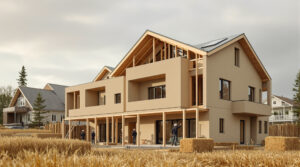
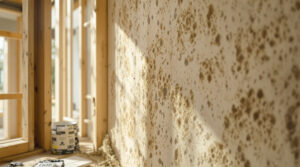
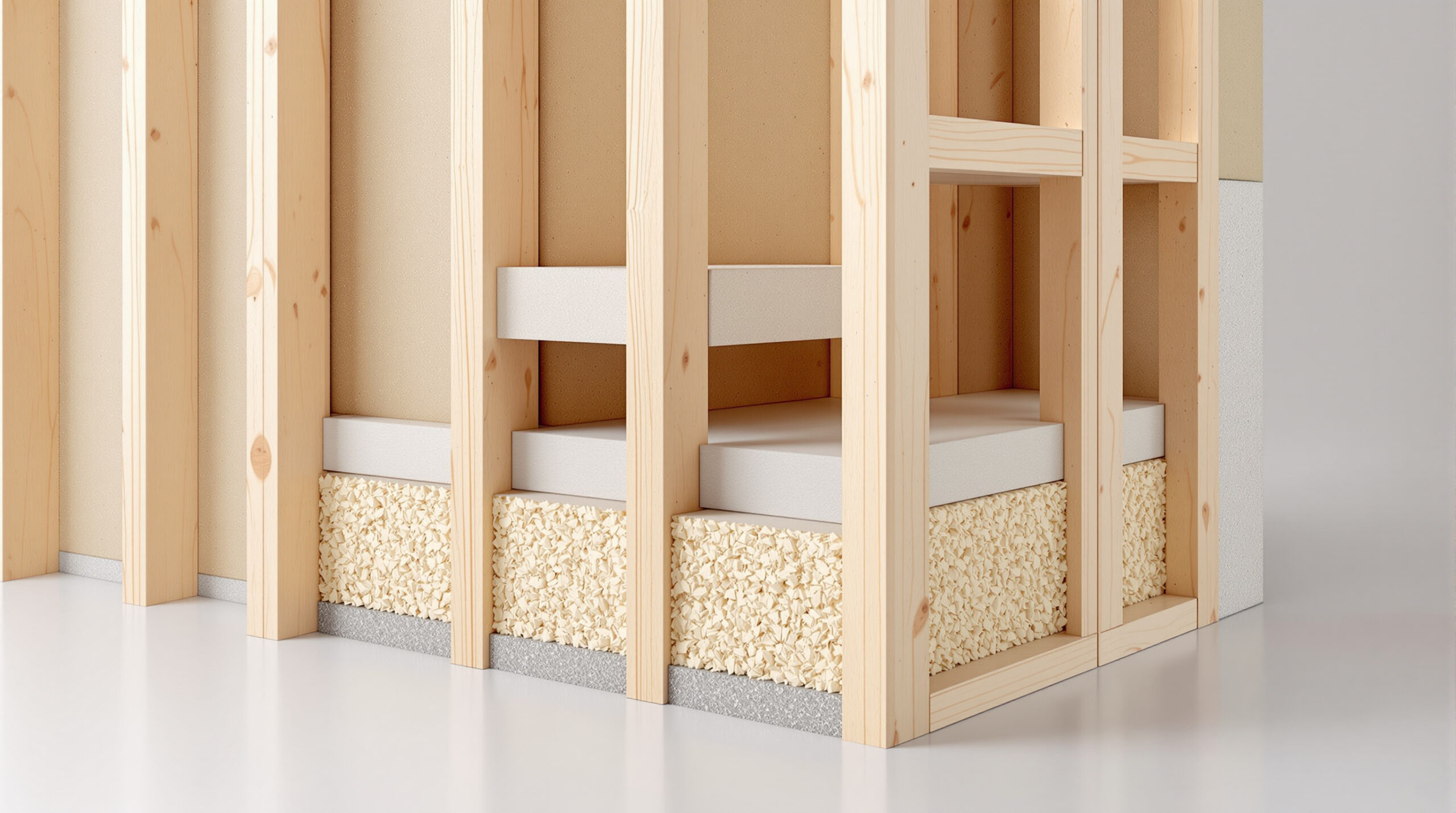
Timber frame construction, often called timber frame building, relies on a load-bearing skeleton of vertical studs. These wooden posts stand at regular intervals between a lower sole plate and an upper top plate. Between the individual studs are rectangular cavities, known in technical terms as bays. These bays create the space that is later completely filled with insulation material.
📑 Inhaltsverzeichnis
- How Timber Frame Construction Works in Detail
- Why Hemp Insulation Fits Perfectly in the Bays
- Summer Heat Protection and Moisture Regulation in Detail
- Blown-in Insulation or Compression Mats: Proper Installation
- Life Cycle Assessment and Costs Examined in Detail
- Frequently Asked Questions
- 💬 Fragen? Frag den Hanf-Buddy!
Looking from inside to outside, the wall assembly follows a clear logic. On the room side, sheathing made of gypsum fiber or wood-based materials provides the necessary bracing. Behind this sits a vapor barrier that regulates moisture flow from the interior space. The load-bearing stud framework with its insulated bays forms the middle of the wall. On the outside, a diffusion-open wood fiber board and the actual facade complete the assembly. This keeps the wall slim while still providing excellent insulation performance.
For those interested in diving deeper into various material options, our overview of building with hemp provides a classification of insulation materials, concrete, and composite materials. For solid wall variants, hempcrete remains an interesting alternative to pure stud framing.


Why Hemp Insulation Fits Perfectly in the Bays
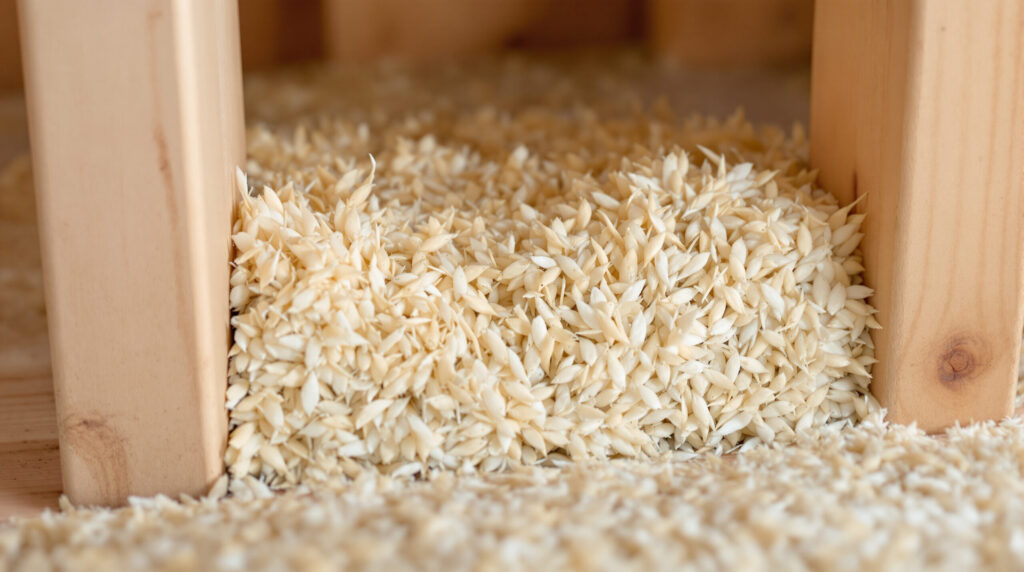
The bays in a timber frame structure demand an insulation material that fills the cavities without gaps and remains permanently in place. Hemp meets exactly these requirements. The fibers are naturally tacky—they interlock with one another and therefore do not slip. Hemp insulation achieves a thermal conductivity of approximately 0.040 to 0.045 watts per meter and kelvin. This puts it at a performance level that enables modern exterior walls to achieve a low U-value.
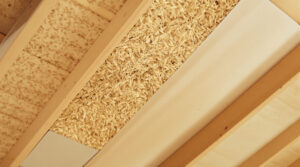
For timber frame construction, hemp comes in several forms. Compression mats and batts are cut to fit and wedged between the studs. Loose hemp fibers can be blown in as cavity insulation into closed bays. Both variants share the same advantage. The insulation material remains pure and can be separated again at the end of its service life. This aligns with the core concept of timber construction—designing a building to be as dismantleable and circular as possible.
Summer Heat Protection and Moisture Regulation in Detail
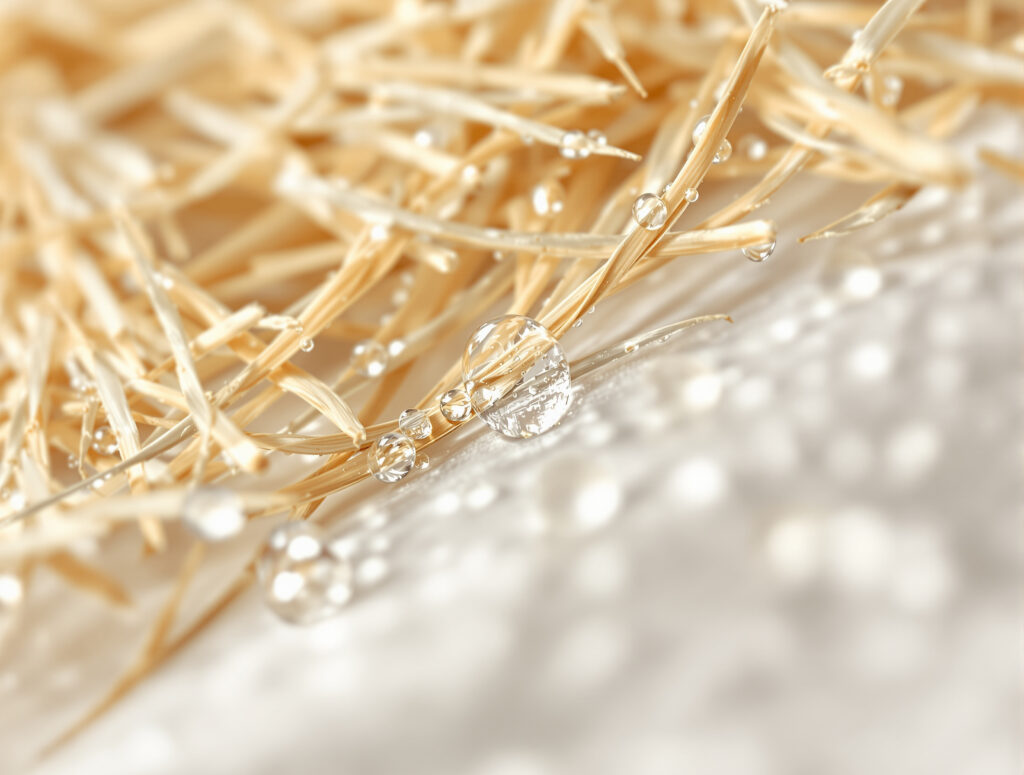
A weakness of lightweight timber constructions is summer heat. Thin walls heat up quickly when the insulation lacks sufficient thermal mass. Here, hemp showcases one of its greatest strengths. The fibers possess comparatively high heat storage capacity. They delay heat passage, so daytime warmth reaches the interior space only with a delay. This phase shift ensures that living and sleeping spaces under the roof remain cooler for longer even on hot days.
Equally important is how the insulation handles moisture. Hemp insulation is diffusion-open and moisture-regulating. It absorbs water vapor, buffers it internally, and releases it in a controlled manner. Combined with diffusion-open sheathing, this creates a wall assembly that safely transfers moisture loads outward. Since hemp fibers are also naturally resistant to mold, the risk of hidden structural damage in the cavity decreases noticeably. To match this approach, hemp fiber boards for interior finishing follow the same building physics logic.
Blown-in Insulation or Compression Mats: Proper Installation
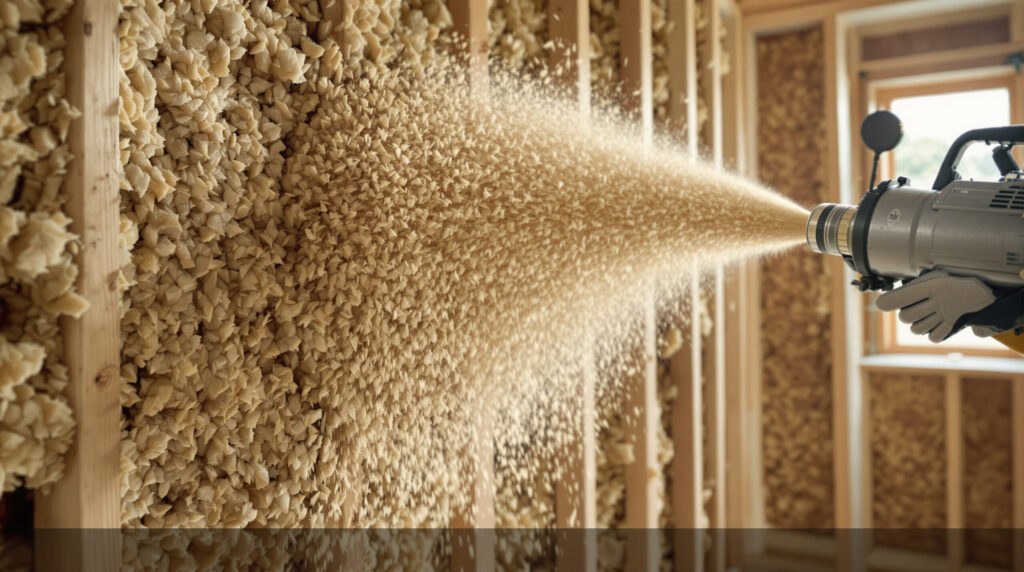
Which processing method works best depends on the specific building project. Compression mats are especially suitable for open, easily accessible bays on site. The mats are cut oversized and pressed firmly between the studs to prevent gaps. For prefabricated wall elements from the factory or complex geometric constructions, blown-in insulation shows its strengths. Loose hemp fibers are machine-loosened and introduced under air pressure into the closed bay without voids.
In both cases, careful workmanship determines the result. Every remaining void acts like a thermal bridge and can reduce the insulation performance of the entire wall. Another aspect concerns fire safety, which is often underestimated with natural insulation materials. Why hemp performs better than its reputation suggests is shown in our article about how fire-safe hemp insulation actually is. For timber frame construction, this represents a combination that brings together ecological requirements and building physics safety.
Life Cycle Assessment and Costs Examined in Detail
A common misconception concerns price. Hemp insulation usually costs more than conventional mineral fiber insulation in pure material costs. However, this premium evens out quickly when considering the bigger picture. Hemp grows regionally in just a few months and binds carbon dioxide in the process, which remains permanently stored in the installed material. Manufacturing consumes significantly less energy than producing many synthetic insulation materials. Over the lifetime of a building, the life cycle assessment therefore clearly favors the natural insulation material.
There is also the matter of deconstruction. At the end of its service life, hemp insulation installed as a pure material can be removed from the bays and reused or composted. No special waste is created. For builders who consciously choose timber frame construction as a sustainable building method, this closes the loop. A construction of wood and filling of hemp follows the same principle—creating a building that arises in harmony with natural material cycles and can return to them.
Frequently Asked Questions
What are the bays in timber frame construction?
Bays are the rectangular cavities between the vertical studs of the construction. They are completely filled with insulation material and form the heat-insulating layer of the wall. Their size depends on the stud spacing and the planned wall thickness.
What U-value does a wall with hemp insulation achieve?
The exact U-value depends on the insulation thickness. With a thermal conductivity of 0.040 to 0.045 watts per meter and kelvin and typical cavity depth, a timber frame building easily meets current new construction requirements. Additional wood fiber boards on the outside improve the value further.
Is hemp suitable as blown-in insulation in timber construction?
Yes, loose hemp fibers can be processed as blown-in insulation. They are machine-blown into closed bays and fill even complex cavities without voids. This method is particularly suitable for prefabricated wall elements from the factory.
Does hemp insulation protect against summer heat?
Hemp possesses high heat storage capacity and significantly delays the passage of daytime heat. This phase shift keeps rooms under the roof cooler for longer on hot days. This way, the insulation material offsets a typical weakness of lightweight timber constructions.
Is hemp insulation susceptible to mold?
Hast du schon einmal mit Hanfdämmung gebaut oder saniert?
No, hemp fibers are naturally resistant to mold and pests. Combined with a diffusion-open wall assembly, moisture remains in balance. This significantly reduces the risk of hidden structural damage in the cavity.








Branchen-Update
News, Analysen und Reportagen — mehrmals im Monat direkt in dein Postfach.
Folge uns