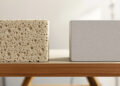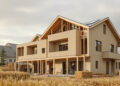
While steel concrete and cement are responsible for around eight percent of global CO2 emissions, an age-old building material is gaining new attention: hempcrete. Known in English-speaking regions as hempcrete and in German-speaking areas as Hanfbeton or Hanfkalk, this material made from hemp shives, lime, and water binds more carbon during its lifecycle than is released during manufacturing and processing. This property makes hempcrete one of the few truly carbon-negative building materials in the world.
📑 Inhaltsverzeichnis
- What is Hempcrete? Composition, Formula, and Manufacturing
- Climate Balance: Why Hempcrete is Carbon-Negative
- Building Physics in Detail: Insulation, Moisture, Fire Protection
- Practice and Projects: Where Hempcrete is Already Standard in Europe
- Hurdles in Germany: Standards, Price, and Availability
- Frequently Asked Questions
- 💬 Fragen? Frag den Hanf-Buddy!
In France, the United Kingdom, and Belgium, thousands of finished buildings with hempcrete already exist. In Germany, the first flagship projects are just beginning to receive building authority approval. This article explains what hempcrete can do, where its limitations lie, and why architectural firms, renovation contractors, and building owners are increasingly taking its advantages seriously.
What is Hempcrete? Composition, Formula, and Manufacturing
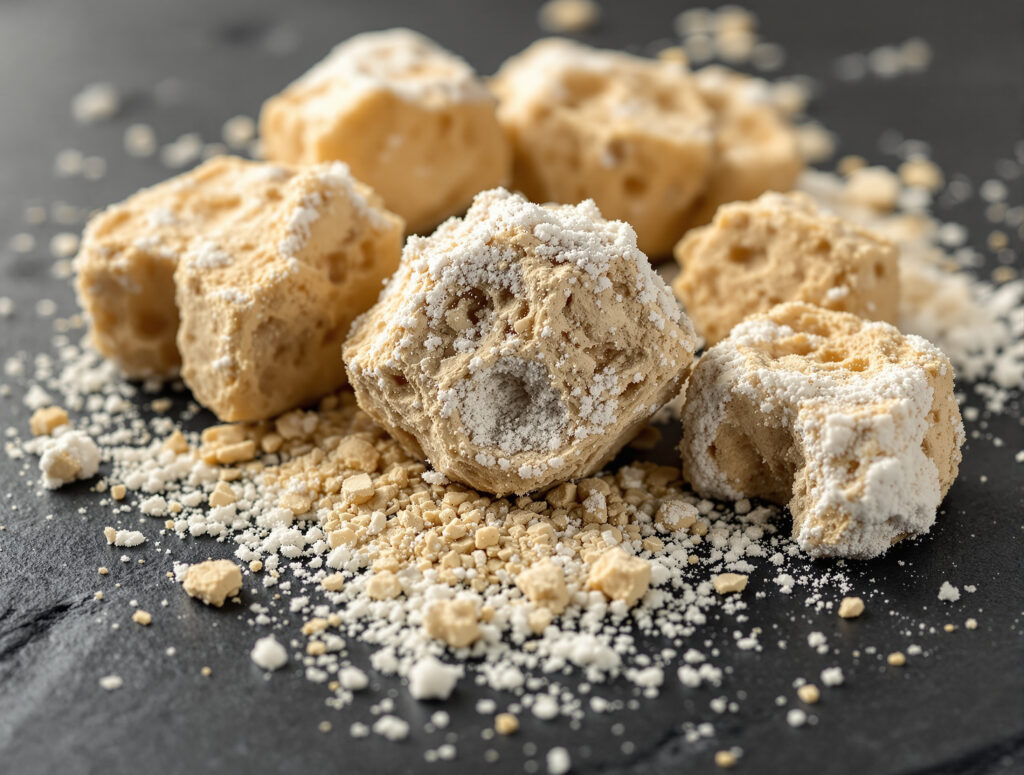
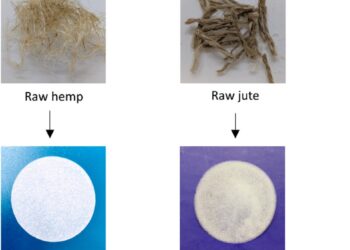
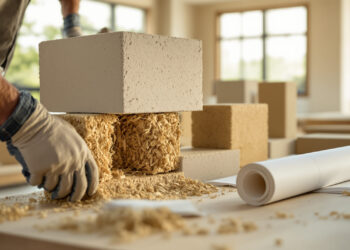
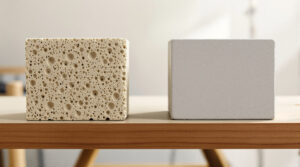
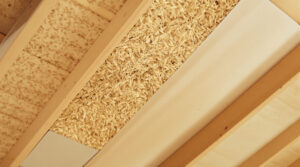
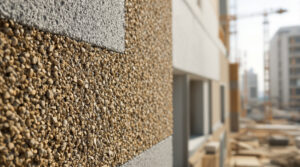
Hempcrete is a mineral-bound lightweight building material made from three basic components. Approximately 75 percent of the volume consists of hemp shives—the shredded woody inner core of the hemp stalk. A hydraulic lime serves as the binder, often combined with pozzolanas such as ground pumice, calcined diatomaceous earth, or metakaolin. Water activates the reaction and leads to the characteristic silicification of the lime on the surface of the shives.


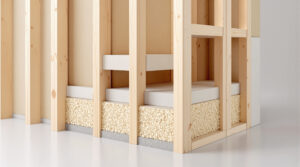
The raw density of the finished material ranges between 220 and 450 kilograms per cubic meter, depending on the formula. This makes hempcrete a lightweight concrete, but without the use of polystyrene, expanded clay, or foam glass. Processing occurs either as a cast material into a sacrificial formwork, as prefabricated blocks, or as a spray application onto a wooden load-bearing structure. The latter is the typical construction method because hempcrete itself cannot support structural loads.
For a deeper dive, our background on industrial hemp in construction provides a comprehensive material and process overview. It is important to distinguish hempcrete from classical hemp insulation made from mats or felts: hempcrete is a monolithic, dimensionally stable building material that simultaneously provides insulation and thermal mass.
Climate Balance: Why Hempcrete is Carbon-Negative
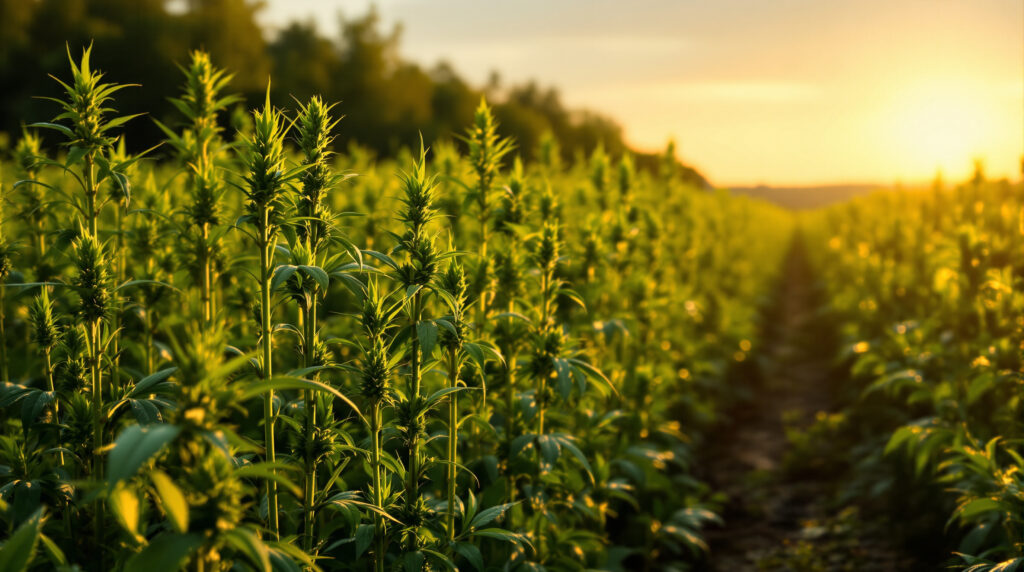
The hemp plant binds substantial amounts of carbon dioxide during its growth. According to calculations by the European Industrial Hemp Association, one hectare of fiber hemp absorbs approximately nine to fifteen tons of CO2 from the atmosphere. A portion of this carbon ends up as bound carbon in the shives used for hempcrete. Estimates according to EN 15804 show that one cubic meter of installed hempcrete stores between 80 and 110 kilograms of CO2 permanently.
Against this must be set the emissions from lime burning. This is the largest lever for the climate balance, as classical burnt lime produces approximately 750 to 900 kilograms of CO2 per ton. When manufacturers use more modern natural-hydraulic limes or formulated limes with a high pozzolan content, the value drops significantly. In total, life cycle assessments show a net effect of minus 30 to minus 100 kilograms CO2-equivalent per cubic meter, depending on the formula and energy mix of production.
A second climate lever is carbonation. The air lime used reacts over years with the CO2 in the surrounding air and hardens further. A hempcrete wall thus absorbs additional carbon after installation. The carbon storage of hemp and timber raw materials has thus established itself as a noteworthy pillar of climate-neutral building methods.
Building Physics in Detail: Insulation, Moisture, Fire Protection
Thermal Insulation and Thermal Mass
Hempcrete achieves thermal conductivity between 0.06 and 0.12 watts per meter and kelvin, depending on raw density and degree of compaction. This places the material between classical wood fiber insulation and mineral lightweight concretes. A 30-centimeter-thick exterior wall achieves U-values around 0.28 watts per square meter and kelvin, sufficient for the KfW 55 energy standard in combination with good windows and connection details. The additional thermal mass dampens summer temperature peaks, an increasingly important argument during today’s heat waves.
Moisture Regulation and Indoor Climate
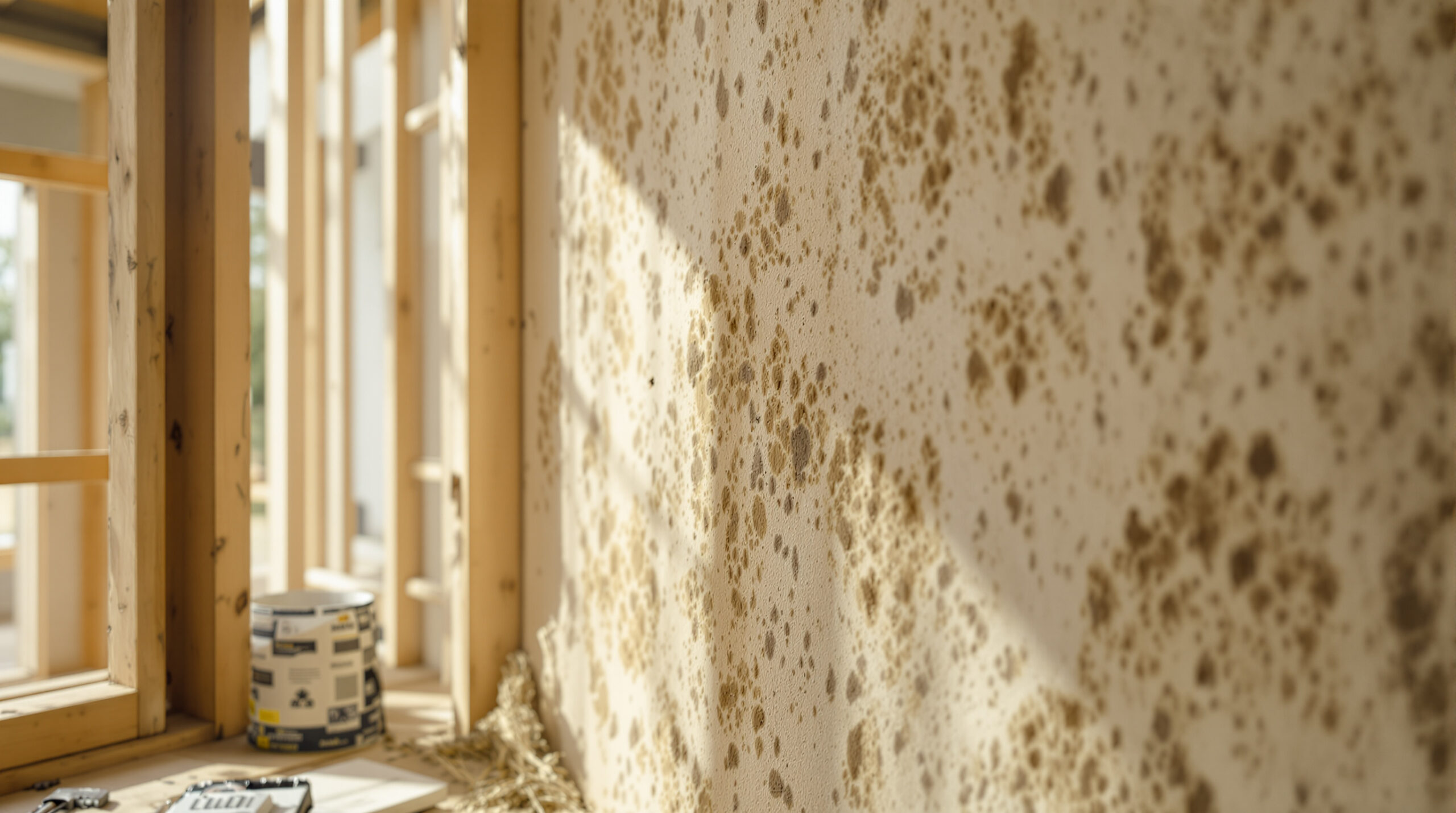
The porous structure actively absorbs water vapor and releases it again with a delay. Thus, a hempcrete wall buffers peaks in indoor air humidity and stabilizes the indoor climate. In studies from France and the United Kingdom, relative humidity in hempcrete houses rarely fell below 45 percent even in winter. Mold formation is additionally inhibited by the alkaline lime content. Those who must regularly open windows for ventilation benefit here from building physics principles without active technology.
Fire Protection and Sound Protection
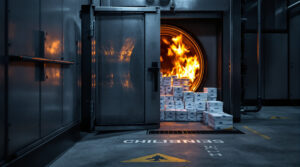
Hempcrete achieves fire resistance class REI 120 in certified tests, meaning 120 minutes of fire protection at a material thickness of twelve centimeters. The mineral lime prevents the organic shives from burning through and simultaneously protects the internal wooden load-bearing structure. The open porosity provides, as a bonus, a usable sound absorption coefficient, making the material interesting for partition walls in schools, offices, and rowhouses.
Practice and Projects: Where Hempcrete is Already Standard in Europe
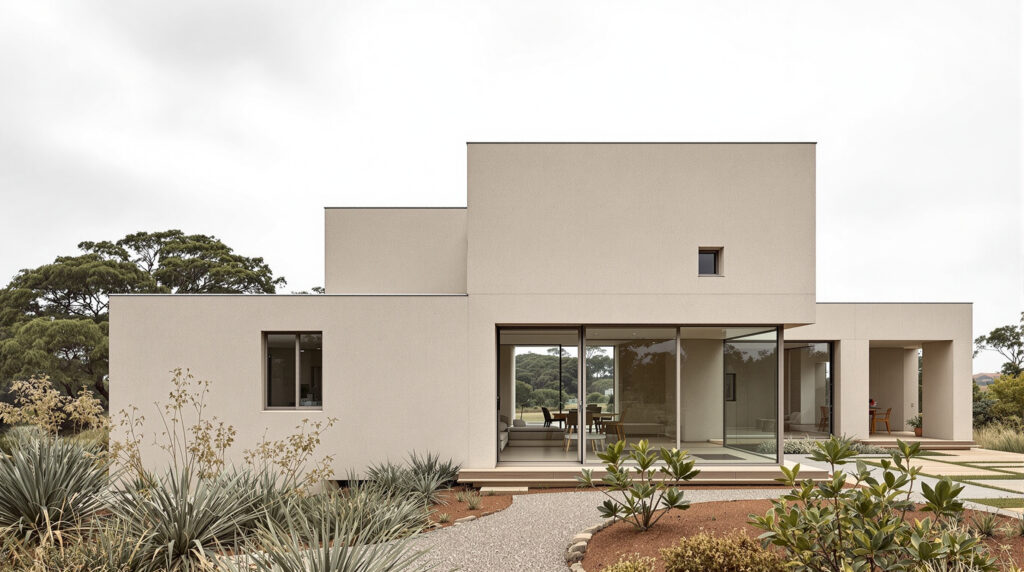
France is considered the homeland of modern hempcrete. Since the 1990s, several thousand residential buildings have been constructed there using the technology, including public housing, schools, and renovations of historic timber-frame buildings. Belgium operates IsoHemp, the largest automated production facility for prefabricated hempcrete blocks in Europe. The United Kingdom has recognized hempcrete in its national building codes as an approved building material since 2018.
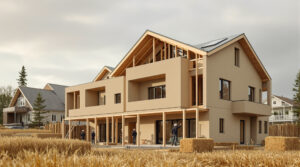
In Germany and Austria, the first flagship projects are currently emerging. Architecture firms such as LXSY in Berlin, timber construction companies from southern Germany, and cooperative housing associations in Switzerland use hempcrete primarily in renovation projects. A Vienna-based start-up is also developing carbon-negative hemp bricks, produced using a dry process without water. The megatrend of hemp fibers in the economy is helping to establish the necessary raw material supply chains regionally.
Hurdles in Germany: Standards, Price, and Availability
Despite all its advantages, hempcrete is not yet regulated in classical German building product standards. Building projects currently require approval on a case-by-case basis from the respective building authority or general building authority approval from the DIBt. Both incur additional costs and time delays. A federally recognized technical code of practice is lacking, although ASTM standards in the USA and French Régles Professionnelles are now practical and could serve as templates. The detailed report on the German building material industry describes the structural hurdles in detail.
Price also remains a point of contention for skeptics. Pure material costs for hempcrete range from 90 to 130 euros per square meter of wall surface and thus exceed classical masonry. However, when insulation, interior plaster, and summer heat protection are factored in, the gap is often completely closed. If the EU Construction Products Regulation introduces mandatory climate indicators for building materials as planned from 2027 onwards, the calculation will shift further in favor of biogenic materials.
The third hurdle concerns raw material supply. German fiber hemp cultivation is growing but remains in the low four-digit hectare range according to the Federal Office for Agriculture and Food. Processing facilities are lacking for a nationwide supply of shives to the construction industry. Several federal funding programs have set their sights on this, with programs since 2025 explicitly supporting investments in hemp processing lines.
Frequently Asked Questions
Is Hempcrete Load-Bearing Enough for an Entire House?
Hempcrete does not bear structural loads and is therefore combined with a load-bearing structure made of wood, steel, or masonry. Wooden frame constructions are typical, into which the hempcrete is poured or sprayed. The result is a monolithic wall with simultaneous load-bearing, insulation, and thermal mass functions.
How Long Does Hempcrete Last?
The oldest documented applications in France date back to the early 1990s and show no significant damage to this day. Since the lime continues to carbonate over decades, the wall actually gains strength. A service life of eighty to one hundred years is considered realistic, without requiring significant maintenance.
Can I Recycle Hempcrete Later?
Yes, hempcrete can be deconstructed at the end of its service life, shredded, and used as a soil improver on agricultural land. Alternatively, the material is shredded and reused as loose-fill insulation in new construction. This circular economy is not yet possible with classical steel concrete, where downcycling to recycled gravel dominates.
What Funding is Available in 2026 for Hempcrete Buildings?
KfW has been promoting biogenic building materials since 2025 under the BEG 261 program with a repayment grant of up to fifteen percent for demonstrably carbon-storing wall assemblies. Additionally, state programs in Baden-Württemberg, Bavaria, and Lower Saxony support renovation projects with hempcrete, provided a life cycle assessment according to DIN EN 15978 is included.
Is Hempcrete Suitable for Historic Building Renovation?
Kannst du dir vorstellen, mit Hanfbeton zu bauen?
Hempcrete particularly shines in renovation work because the material is diffusion-open and harmonizes with historic wall assemblies made of clay, rubble stone, or timber-frame. Renovations using hempcrete avoid condensation problems that frequently occur with mineral or synthetic insulations. More on this can be found in our overview of the industrial hemp industry and its fields of application.







Branchen-Update
News, Analysen und Reportagen — mehrmals im Monat direkt in dein Postfach.
Folge uns