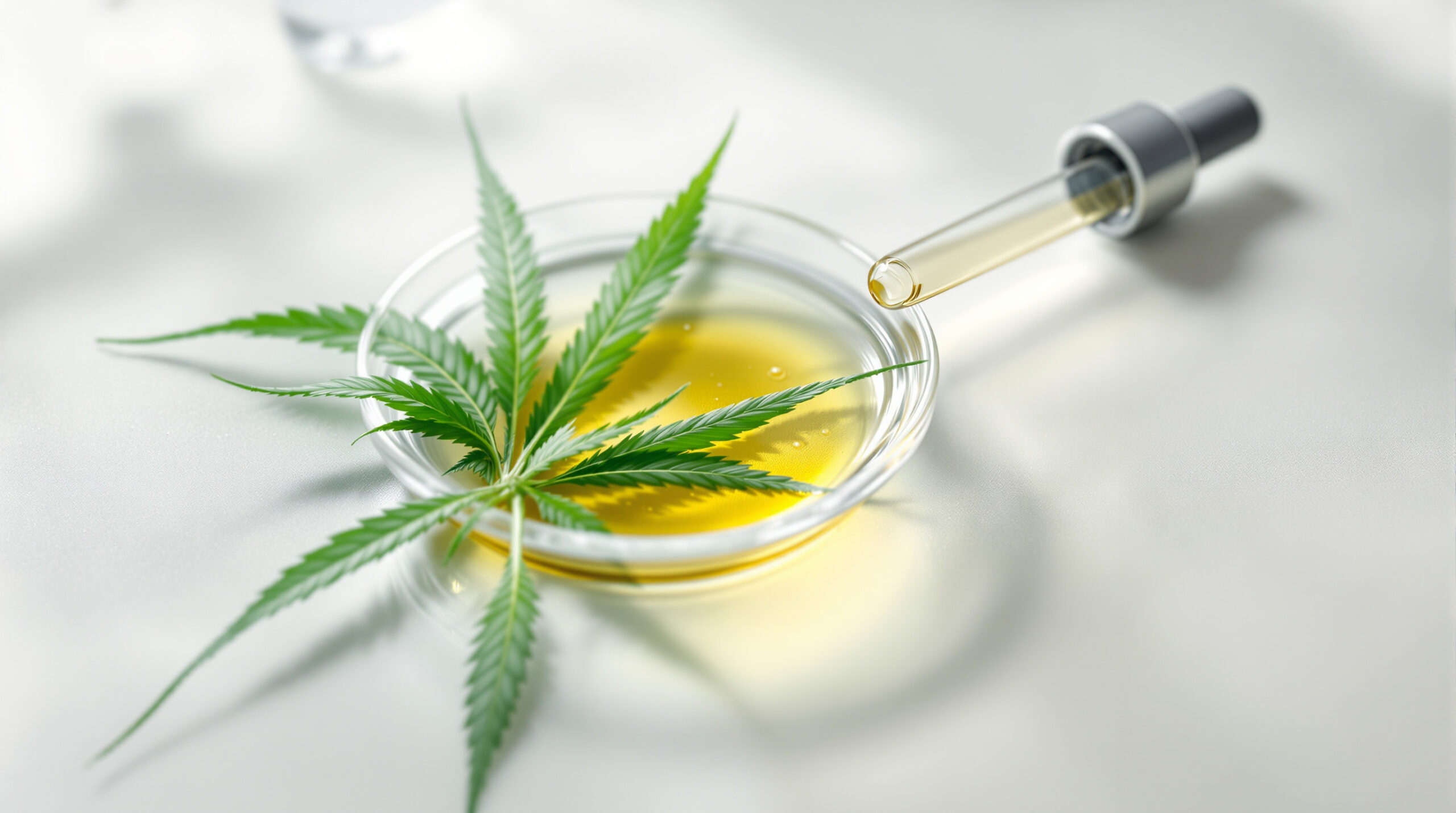
The United Kingdom is on the verge of its first CBD food approvals. The British Food Standards Agency considers up to 10 milligrams per day acceptable, while the EU authority EFSA preliminarily considers only around 2 milligrams safe. And an agreement with the EU could overturn British approvals as early as 2027.
📑 Inhaltsverzeichnis
What the FSA Will Decide on September 16
The British Food Standards Agency, or FSA, is presenting paper FSA 26/09/05 to its Board on September 16. The recommendation: advise ministers in England and Wales to approve the first three CBD applications as novel foods. The Board doesn’t decide on approval itself, but whether to forward this recommendation to the government. Ministers make the final decision; Scotland decides separately.
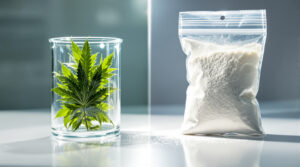
The three applications involve highly pure substances with at least 98 percent CBD each: one synthetically manufactured CBD and two CBD isolates. According to the FSA and its independent expert panel on novel foods, they are safe under the proposed conditions of use. These three applications are linked to around 3,000 individual products on the FSA’s public list.


The Specific Conditions
Any approval would come with strict conditions. The FSA paper specifies:
- Daily maximum dose: 10 milligrams CBD, labeled as the provisionally acceptable daily dose
- Warning labels: for people under 18, pregnant women, nursing mothers, those planning pregnancy, anyone taking medication, and immunocompromised individuals
- Specifications: tight limits for Delta-9-THC and other controlled cannabinoids
Economically significant is data exclusivity. If submitted study data is protected, only the applicant can market the approved product for five years under UK rules. Others can only enter if they obtain separate approval without this data or if the applicant consents. Approval for three dossiers doesn’t automatically open the market to all competitors.
Why London Settles on 10mg While the EFSA Sets 2mg
In February 2026, the European Food Safety Authority published a preliminary safe level of 0.0275 milligrams CBD per kilogram of body weight per day—roughly 2 milligrams for a 70-kilogram adult. We reported when the EFSA established its safety threshold. The opinion reveals how cautious this value is: EFSA applied an uncertainty factor of 400. The value applies only to food supplements with at least 98 percent purity, without nanoparticles, and with an approved manufacturing process. For people under 25, pregnant and nursing women, and those taking concurrent medications, EFSA could not establish any safe amount.
The FSA nonetheless maintains its 10 milligrams—five times higher. In its Board paper, it justifies this by noting both values are based on different datasets but considered the same adverse effects and data gaps. Its own value was developed using established risk assessment principles and independent expertise. Notably, the paper states: no positive EFSA safety opinion for a specific CBD food product has been published to date. The applicant’s announcement of a first favorable EFSA opinion, which we reported in July, remains unconfirmed by official EFSA publication.
Approval With an Expiration Date: The EU Trade Agreement
A political timeline hangs over UK approvals. The United Kingdom and the EU are negotiating a Sanitary and Phytosanitary (SPS) Standards Agreement. In a second paper for the same Board meeting, the FSA states it is preparing for implementation in summer 2027. The agreement includes dynamic alignment with EU law. The consequence is unambiguous: once the agreement takes effect, all UK approvals cease to be valid, and companies would need authorization under EU law.
The FSA explicitly names CBD applications as an example of a British divergence, since these products aren’t approved in the EU. Whether CBD could qualify for one of the rare exceptions allowing the UK to maintain separate rules remains unclear. If not, the EU would become responsible for the British market—and its authority works from 2, not 10 milligrams.
What This Means for Germany and Austria
For German- and Austrian-speaking markets, nothing changes immediately. The EU has no CBD approval as a novel food to date. Germany’s Federal Office of Consumer Protection and Food Safety states it is currently unaware of any legal circumstances that would make CBD marketable in foods. Either pharmaceutical approval or novel food authorization is required before market entry. Austria’s AGES expresses it equally bluntly: without approval, market distribution is not permitted. In retail, CBD oils are therefore often sold not as foods but as aroma oils or cosmetics. Our article on the legal status of CBD flowers in Austria demonstrates how unclear the situation remains.
Yet the British pathway is instructive because it shows what approval actually requires: a fixed daily limit, warning labels, and costly safety dossiers whose data remain exclusively protected. Should the EU ever approve CBD foods while adhering to EFSA’s threshold, manufacturers would have five times less room to maneuver than in Britain.
Note: This article reflects the status of September 15, 2026 and is not legal or medical advice. It contains no health claims or efficacy statements regarding CBD products. The amounts mentioned are regulatory safety assessments for foods, not consumption or dosage recommendations. The FSA recommendation is not yet an approval.
Sources: Food Standards Agency, Board paper FSA 26/09/05 „CBD novel food applications: recommendations to ministers on first authorisations“ and SPS program Board paper, September 2026 Board meeting (gov.uk); EFSA: Update of the statement on safety of cannabidiol as a novel food, EFSA Journal 2026, DOI 10.2903/j.efsa.2026.9862; German Federal Office of Consumer Protection and Food Safety, FAQ Cannabidiol; AGES, Cannabidiol (CBD); original reporting.



Welche Tageshöchstmenge CBD in Lebensmitteln findest du angemessen?
Branchen-Update
News, Analysen und Reportagen — mehrmals im Monat direkt in dein Postfach.