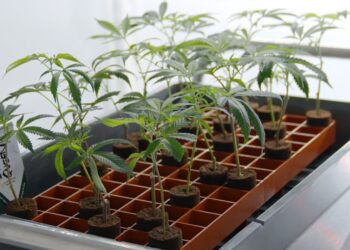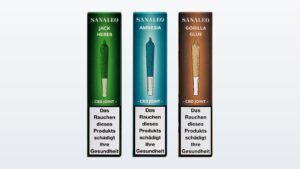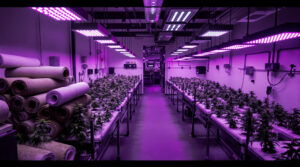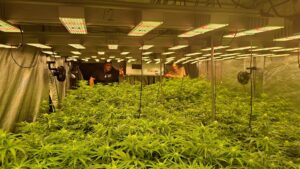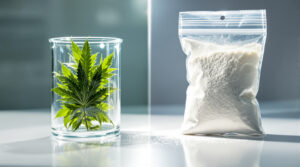
CBD flowers, which contain only marginal amounts of THC, are now legal in many countries. These flowers are typically smoked. CBD flowers are also frequently used as a carrier material for other substances in legal gray zones that exist precisely because hemp products remain illegal in most countries.
📑 Inhaltsverzeichnis
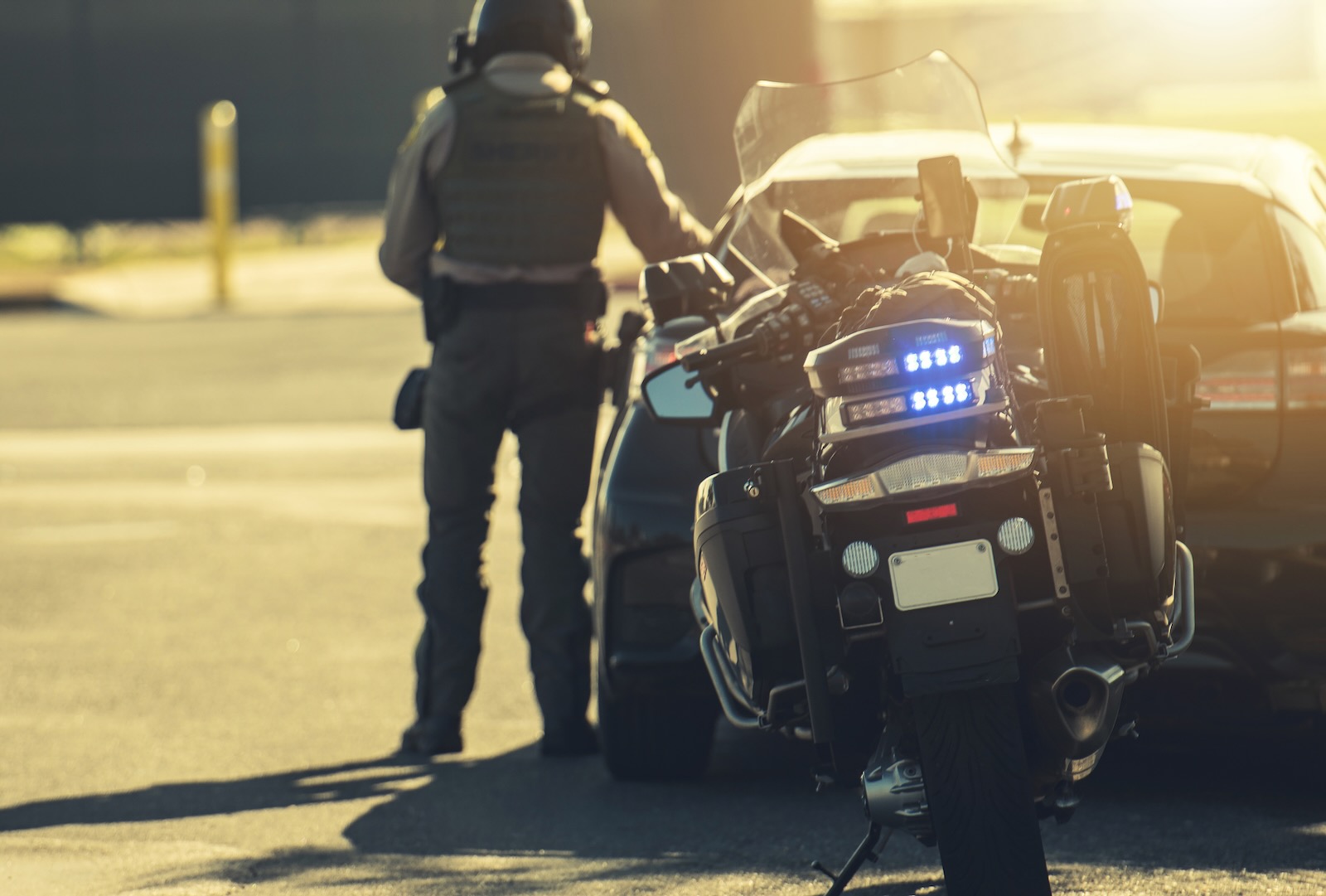
The serious problem with CBD flowers: despite lacking psychoactive effects, they can trigger a positive drug test. Since traffic police cannot determine where the THC originated during a traffic stop, your driver’s license is at risk once the threshold is exceeded. Multiple studies have shown that consuming legal CBD flowers can temporarily cause THC levels to exceed permissible driving limits by several times over.
THC Threshold Exceeded Even Below 0.2%
Tip: What’s your concrete risk of exceeding the limit in a police check? Our THC Driving Fitness Risk Classifier provides a scientifically-based assessment based on published pharmacokinetics studies—with clear disclaimer and sources.


A smaller study published in 2019 examined blood THC concentrations in six volunteers after they smoked legal CBD flowers containing only 0.16% THC. Participants consumed four joints of 1 gram each of CBD flowers within a four-hour period.
Blood samples were taken both 30 minutes after the first joint and 30 minutes after the last joint. The first measurement showed values between 7.0 ng/ml and 10.8 ng/ml. Half an hour after the last joint, concentrations rose to 14.1 ng/ml to 18.2 ng/ml. Despite no psychoactive effects whatsoever, driving limits were exceeded by several times over.
The study did not measure how long it took for THC to be completely metabolized. Since breakdown does not occur linearly, it’s difficult to make blanket statements about when the threshold is safely undercut. In Austria, this question doesn’t even arise, as there is still no legal threshold. Anyone in Austria who consumes CBD products is generally prohibited from participating in traffic.
No Driving Impairment Despite High Measurements
A placebo-controlled study from Switzerland demonstrated that even CBD flowers with significantly higher THC content cause no driving impairment. Switzerland allows up to 1% THC in legal hemp. The absurdity: road traffic effectively operates under zero tolerance. While a 1.5 ng/ml limit exists in whole blood, it’s set so low that even occasional consumption almost always exceeds it.
In pure theory, Swiss law would allow the threshold to be 30% higher due to measurement uncertainty provisions. Nevertheless, it’s not advisable to rely on this—legally, the situation remains risky.
Swiss Study: No Difference from Placebo Group
In the study, 33 participants smoked either a placebo smoking mixture or a joint containing 0.5 grams tobacco and 0.5 grams CBD flowers with 0.9% THC. Immediately afterward, measured THC values in the CBD group’s blood ranged between 6.7 ng/ml and 102 ng/ml. After 45 minutes, levels were 0.9 ng/ml to 38 ng/ml. These values were determined using capillary blood, which in traffic stops often corresponds to higher venous blood values.
Ten minutes after smoking, participants completed a standardized driving fitness assessment test. The study used an internationally recognized system from Vienna’s Schuhfried GmbH, employed in 26 countries for traffic psychology evaluations.
The result: no measurable difference could be detected between the placebo group and the CBD group.
Restrictive Thresholds Unrelated to Traffic Safety
These study results make clear that restrictive THC thresholds have nothing to do with genuine improvements in road safety. Instead, hemp remains stigmatized. Medical-psychological evaluations (MPU) have become a proven business model—and therein lies the real reason why tougher restrictions are pushed, even if officially presented differently.

Hast du nach dem Konsum von CBD-Blüten schon Auto gefahren?
Branchen-Update
News, Analysen und Reportagen — mehrmals im Monat direkt in dein Postfach.
Folge uns